

The digital landscape of daily brain teasers has a new titan, and it is firmly rooted in the New York Times’ ever-expanding stable of word games. Since its inception, Strands has captured the attention of millions, standing alongside stalwarts like Wordle, Spelling Bee, and Connections. As we delve into game #855, players are once again testing their lexicon and pattern-recognition skills against a grid that is as challenging as it is rewarding.
For those navigating the complexities of game #855, this guide serves as your comprehensive companion. Whether you are seeking a subtle nudge in the right direction or require the final answers to maintain your winning streak, we have you covered.
The Evolution of Daily Word Puzzles
The New York Times has successfully gamified the morning routine for a massive global audience. The trajectory began with the viral explosion of Wordle, a simple yet addictive five-letter guessing game that transformed how people interact with their morning coffee. Connections followed, introducing a layer of lateral thinking that challenged even the most seasoned linguists.
Strands, the latest addition, introduces a unique mechanic: a grid-based word search that requires players to identify a theme and connect letters in a winding, "stranding" path. Unlike a standard word search, Strands requires you to use every single letter on the board, with the final word—the "Spangram"—acting as a conceptual bridge that describes the overarching theme.
Game #855: The Theme and Strategic Approach
For today’s puzzle, game #855, the theme is: "The growing season."
This theme immediately shifts the player’s focus toward botanical, agricultural, and seasonal terminology. When approaching a Strands puzzle, the initial strategy should always involve scanning for high-frequency letters or suffixes. Given the theme, words associated with development, maturation, and the natural cycle of plant life are likely to populate the grid.
Clue Strategy
If you find yourself stuck, remember that the game allows you to play words that aren’t necessarily part of the final solution to unlock the in-game hint system. If you hit a wall, look for smaller, common words that might be fragments of larger, thematic ones.
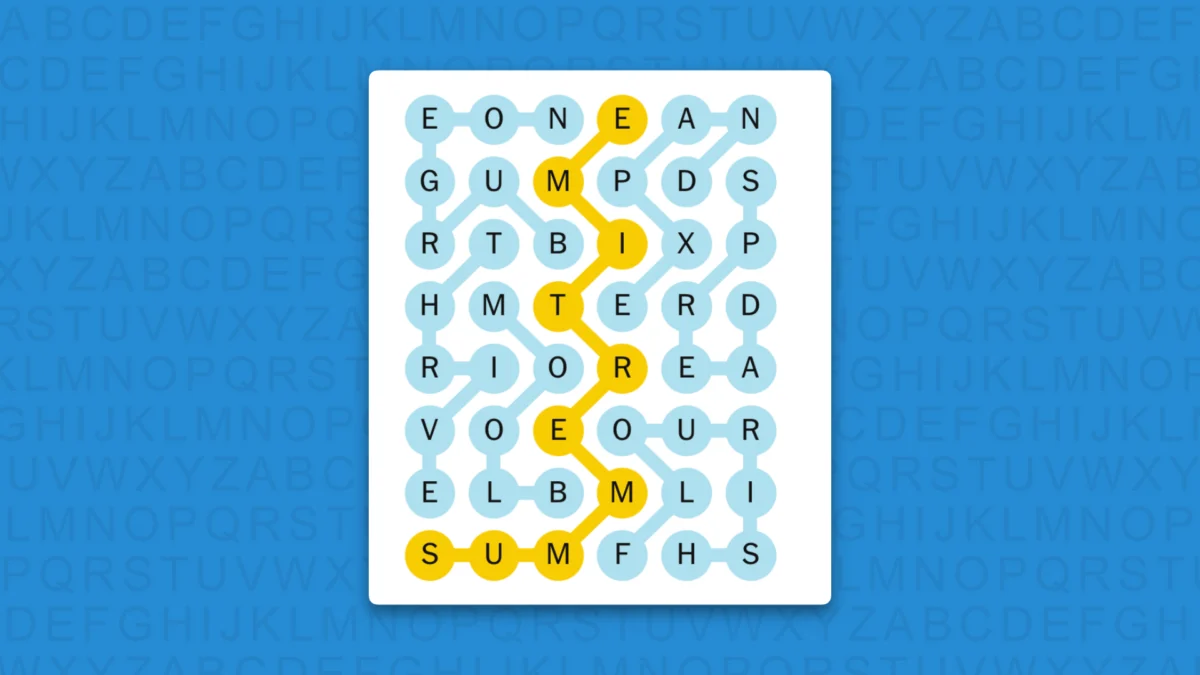
For game #855, the Spangram is a 10-letter word that serves as the anchor for the entire board. It stretches across the grid, starting at the bottom of the first column and ending at the top of the fourth column. Identifying this Spangram is often the "aha!" moment that causes the rest of the board to fall into place.
Chronology of Today’s Solve
The experience of solving game #855 was a lesson in patience. With "The growing season" as the guiding light, the first word to emerge was SUMMERTIME. The double "M" is a distinct visual marker on the grid, and once identified, it becomes the anchor for the upper section of the board.
Following this, the process moved to the more complex, "corkscrew" connections. These are the words that snake through the grid in non-linear patterns. A particularly tricky discovery was BURGEON. It was well-concealed, sandwiched strategically between the word THRIVE and the primary Spangram. This specific placement is a hallmark of the NYT design team, who intentionally create "bottlenecks" to test the player’s ability to see past the most obvious letter clusters.
Supporting Data and Technical Nuances
For the data-driven player, Strands is not merely a game of vocabulary; it is a game of spatial awareness.
- Grid Dimensions: The standard Strands board is a dense, interconnected grid where no letter is wasted.
- The Spangram: In game #855, the 10-letter Spangram is essential. Without it, the grid remains a chaotic jumble of seemingly disconnected vowels and consonants.
- Difficulty Rating: Today’s puzzle sits at a medium-high difficulty level. While the theme is intuitive, the spatial pathing required to isolate the words demands a high level of focus.
Implications for the Future of NYT Games
The success of Strands underscores a broader shift in digital media consumption. Readers are no longer just passive consumers of news; they are active participants in the platform’s ecosystem. By integrating these games into the daily experience, the New York Times has created a "sticky" user base that returns every 24 hours, regardless of the news cycle.
This has significant implications for how media companies will approach user retention in the coming decade. The "gamification of everything" is a trend that is unlikely to slow down, as users demonstrate a clear preference for daily, low-stakes intellectual engagement that provides a sense of accomplishment.
Expert Tips for Consistent Success
If you aim to improve your Strands performance, consider these three professional tips:
- Prioritize the Theme: Always keep the daily theme at the forefront of your mind. If you are struggling to find a word, brainstorm synonyms related to that theme and search for those specific letter combinations on the grid.
- The "Border First" Strategy: Similar to a jigsaw puzzle, start by identifying words along the edges. These are often easier to isolate because the pathing options are naturally restricted by the boundary of the board.
- Look for Suffixes: Many Strands puzzles rely on common English suffixes like "-ING," "-ED," or "-TION." Identifying these chunks can help you clear space on the board and reveal the hidden structures underneath.
Final Thoughts on Game #855
Game #855 was a quintessential Strands experience—clever, challenging, and ultimately satisfying. The transition from the frustration of an empty board to the clarity of a completed puzzle is what keeps the Strands community coming back.
As we look toward future installments, the New York Times shows no sign of resting on its laurels. The puzzles are becoming more intricate, the themes more varied, and the requirement for "lateral thinking" more pronounced. Whether you are a casual player or a daily devotee, the key to success is, and will always be, the ability to look past the obvious and embrace the "strand."
Disclaimer: This article contains spoilers for NYT Strands game #855. If you prefer to solve the puzzle independently, we recommend visiting the official NYT Games website before reading further. For those seeking yesterday’s solutions or additional word game hints, our archives provide extensive coverage of all recent puzzles.











