

In the hyper-connected landscape of modern social media, the phenomenon of “going viral” is often viewed as the ultimate metric of success. For influencers, brands, and content creators, the algorithmic spotlight is a coveted commodity. However, for the average user, the sudden, uncontrollable explosion of a post—often taken out of context—can quickly turn into a digital nightmare. Recognizing this, the decentralized social platform Bluesky has introduced a new privacy setting designed to offer users a measure of protection against the unpredictability of algorithmic discovery.
This latest update allows users to opt out of having their posts recommended to non-followers in the platform’s algorithmic "Discover" feed. While it stops short of creating fully private, gated profiles, it represents a significant pivot in how decentralized platforms balance openness with user agency.
The Mechanics of the Update: How It Works
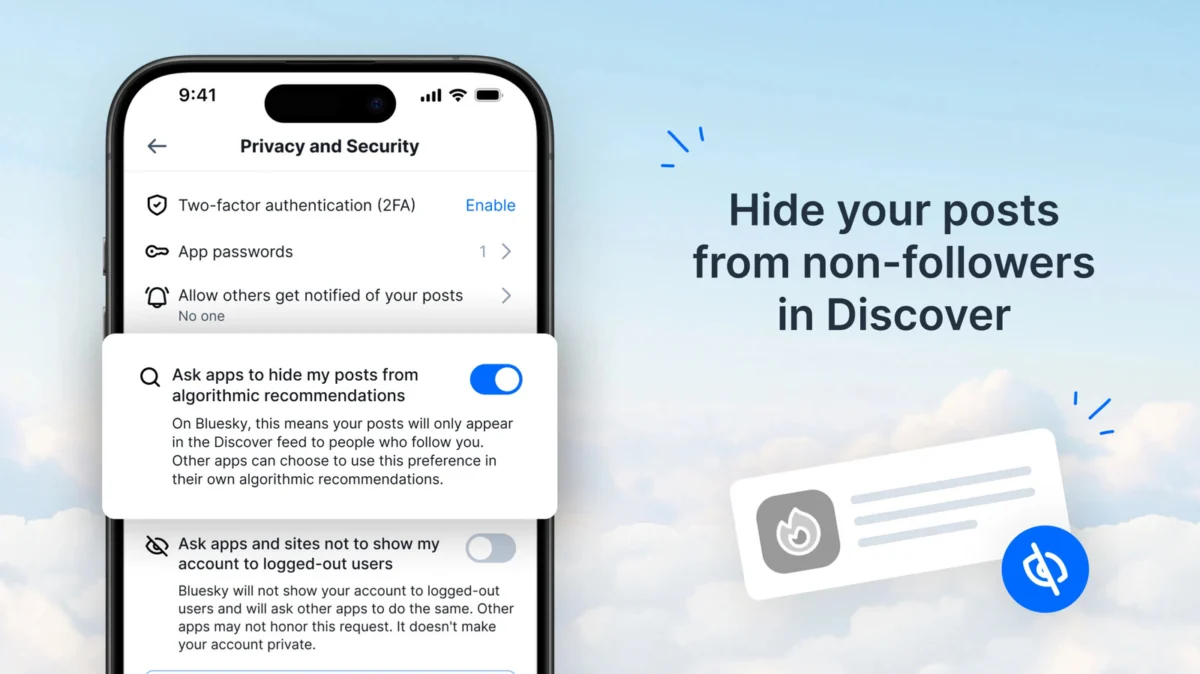
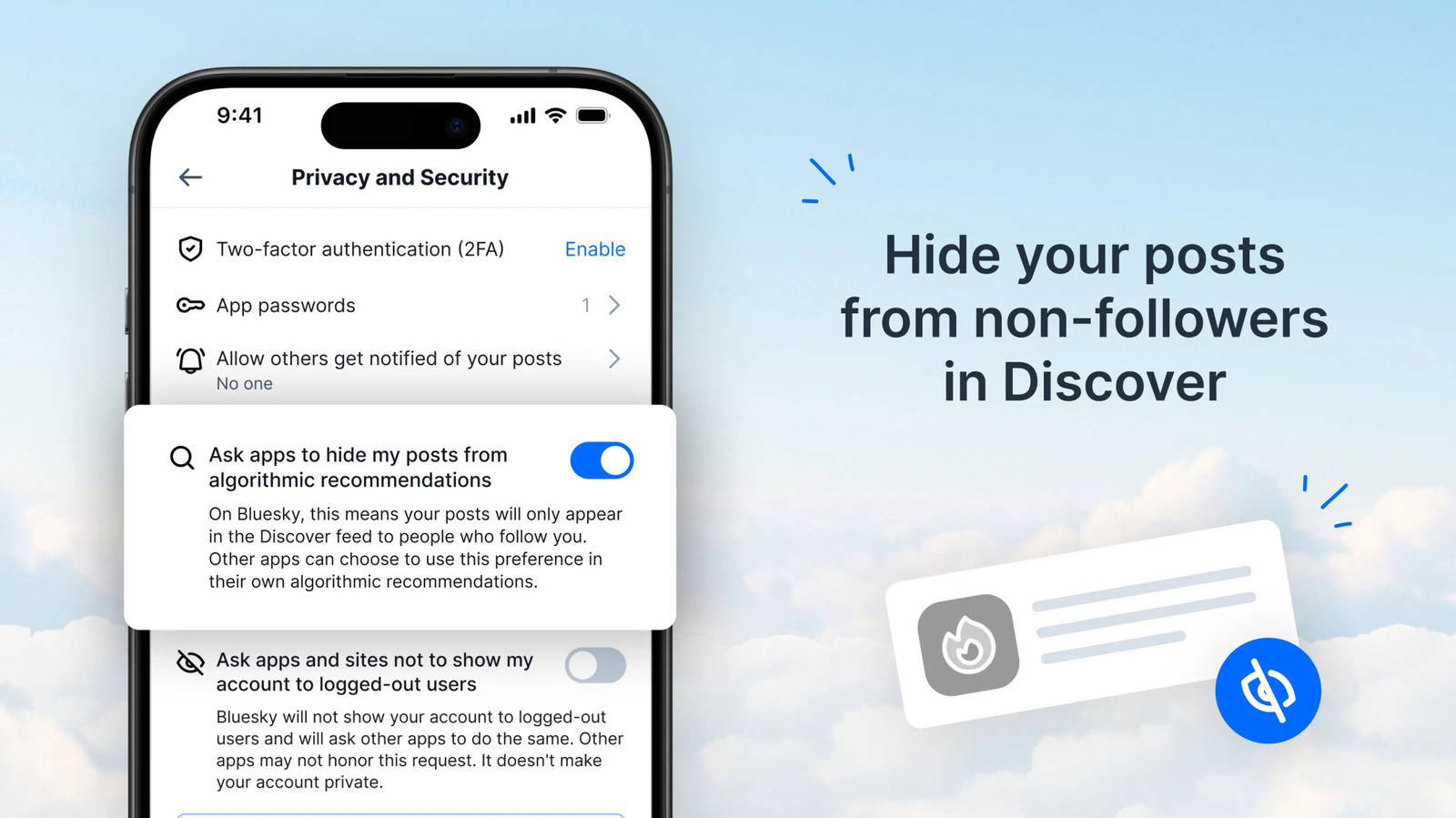
The new privacy tool is straightforward in its implementation but marks a structural shift in how Bluesky handles content distribution. Located within the application’s "Privacy and Security" settings, the feature functions as an account-level toggle rather than a granular, per-post control.
When a user enables the setting, they are essentially instructing Bluesky’s recommendation engines to exclude their posts from the general "Discover" feed. This feed, which serves as the primary gateway for users to encounter content from accounts they do not follow, is the most common engine for rapid, uncontrolled virality. By checking the box labeled "ask apps to hide my posts from algorithmic recommendations," users can effectively shrink their potential audience to their existing follower base and those who visit their profile directly.
It is important to note the limitations of this tool. The feature is not a “private account” mode. Unlike X (formerly Twitter) or Instagram, where users can lock their profiles so only approved followers can view their content, Bluesky remains fundamentally committed to an open, public-facing architecture. The AT Protocol, which powers Bluesky, is built on the philosophy of public, interoperable data. Consequently, even with the new setting enabled, a user’s posts remain visible to anyone who navigates to their profile or follows them.
A Chronology of Bluesky’s Privacy Evolution
To understand the significance of this update, one must look at the trajectory of Bluesky’s growth over the past two years.
The Initial Phase: Building the Protocol
Bluesky began as a project within Twitter to develop an open, decentralized standard for social media. In its infancy, the focus was entirely on architecture: building the AT Protocol and ensuring that users could own their identity and data. Privacy was a technical concern regarding data portability, not necessarily a user-experience concern regarding social moderation.
The Migration Wave
As X (formerly Twitter) underwent significant management changes, Bluesky saw massive influxes of users seeking a more stable, moderated, and community-focused environment. With this influx came the classic social media problem: the "Main Character" phenomenon. Users who were accustomed to small, intimate circles suddenly found themselves in a global town square where a single stray thought could reach millions, often inviting vitriol from strangers.
The Response to User Feedback
In early 2024, Bluesky’s leadership began signaling that they were listening to concerns about harassment and the lack of traditional privacy tools. Throughout the middle of the year, the platform rolled out improved block lists, muting features, and enhanced reporting tools. The latest update, released this week, is the culmination of months of community feedback requesting a way to "opt-out" of the platform’s viral discovery mechanisms.
Supporting Data and the Algorithmic Landscape
The necessity for this feature is backed by the current dynamics of social media engagement. Data from various social media studies indicates that algorithmic feeds prioritize high-velocity engagement—comments, quote-posts, and shares—regardless of whether that engagement is positive or negative.
On platforms like X, the "For You" feed has frequently been criticized for boosting inflammatory content, as controversial posts often generate the most "time spent" on the app. By providing a manual override, Bluesky is effectively empowering the user to choose their own level of exposure.
According to internal sentiment analysis shared by Bluesky developers, a significant percentage of new users express hesitation about posting due to fear of "dunking"—a social media term where a post is shared by many users specifically to mock or critique it. By insulating users from the Discover feed, Bluesky is attempting to foster a "slower" social media environment that encourages authentic interaction over performance-based virality.
Official Responses and Corporate Philosophy
In a post on the platform, the official Bluesky account framed the update as a response to the inherent tension between discovery and privacy.
"We want you to feel comfortable sharing your thoughts," the company stated in its announcement. "While our platform is designed to be open and public, we recognize that not every post is intended for a global audience. This is one of a few updates we’re working on to give you more control over your experience and help you find your people."
Industry analysts have noted that Bluesky is taking a "middle-ground" approach. By refusing to implement private, locked accounts, they maintain the integrity of the AT Protocol’s public ledger. However, by granting users control over the distribution of their content, they acknowledge that the "openness" of the web should not mean a total loss of privacy for the individual.
Implications for the Future of Social Media
The introduction of this setting has profound implications for the future of decentralized social networks.
1. The Redefinition of "Public"
Bluesky is redefining what it means to participate in a public network. By separating "publicly available" from "algorithmically promoted," they are creating a new category of social participation. Users can be public in the sense that they are accessible, but private in the sense that they are not seeking broad amplification.
2. A Shift Away from Growth-at-All-Costs
Most social media platforms are built on growth models that require maximizing the reach of every piece of content to keep users engaged. By allowing users to opt out of the recommendation engine, Bluesky is prioritizing user retention and psychological safety over raw, uncurated reach. This could serve as a model for other emerging platforms that wish to avoid the toxicity often associated with viral growth.
3. The Challenges of Interoperability
Because Bluesky is built on the AT Protocol, the platform is technically "open." This means that other apps or services built on the same protocol could potentially access the data that Bluesky chooses to hide. While the current update applies to the official Bluesky app and its primary feed, the company faces the challenge of ensuring that these privacy preferences are respected across the entire ecosystem of the AT Protocol. This is a technical hurdle that will likely require further protocol-level updates in the coming months.
4. The Potential for "Digital Taming"
As users gain more granular control over their digital footprint, we may see a decrease in the "performative" nature of social media posting. If users know they can control the blast radius of their content, they may feel freer to express nuanced, controversial, or personal thoughts, knowing they won’t be thrust into a global spotlight without their consent.
Conclusion: A Measured Step Toward User Sovereignty
Bluesky’s latest update is a modest, pragmatic step forward. It does not solve the fundamental challenges of social media—harassment, misinformation, and the polarization of discourse—but it does address a core user anxiety: the loss of agency over one’s own voice.
As the platform continues to evolve, it remains a test case for whether decentralized social media can sustain a healthy, thriving community without relying on the aggressive, often intrusive, algorithmic engines that define the current era of Big Tech. For the millions of users who are tired of the "Main Character" syndrome and the unpredictable reach of algorithmic discovery, this new setting offers a welcome shield.
The future of social media may well lie not in how many people we can reach, but in how much control we have over the circles we choose to inhabit. Bluesky’s recent pivot suggests that the company understands this—and that for a growing segment of the internet, privacy is the new killer feature.











