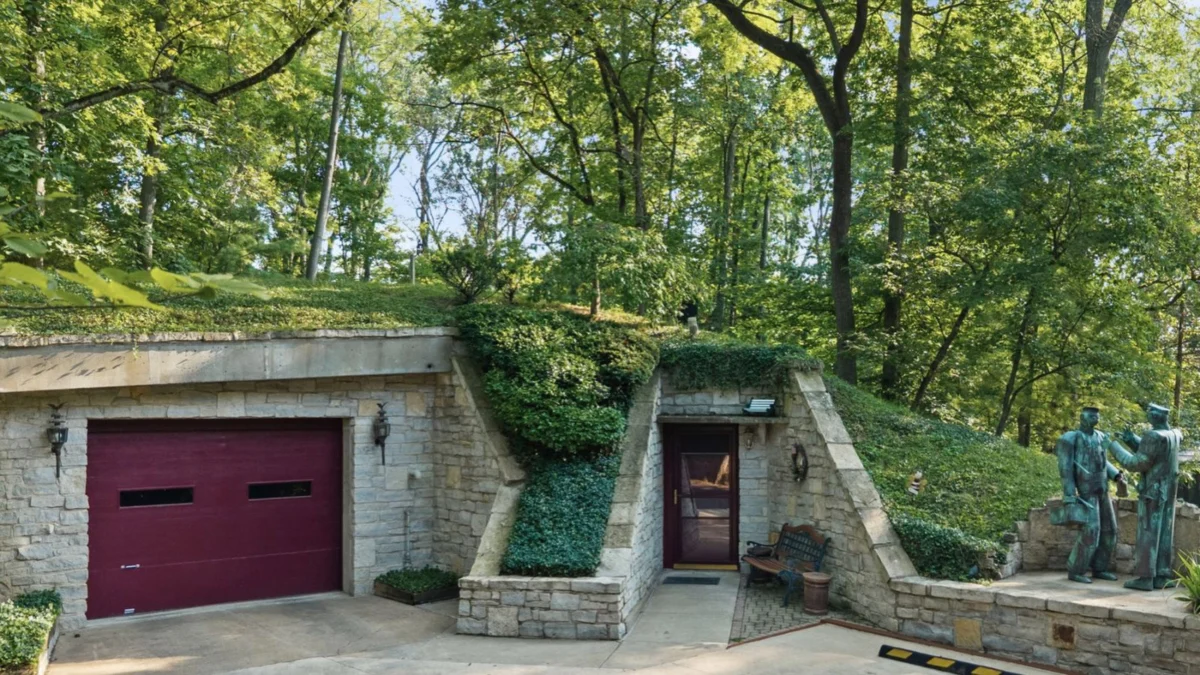
In the quiet landscape of Huron, Ohio, a residence that defies conventional architectural norms has captured the collective imagination of the real estate market. Located at 10510 Mudbrook Road, this 2,100-square-foot "earth-sheltered" home—frequently dubbed the "Hobbit House"—has hit the market with an asking price of $850,000. While the moniker suggests a whimsical trip to J.R.R. Tolkien’s Middle-earth, the reality is a robust, concrete-fortified structure that blends seamlessly into the surrounding 7.93 acres of verdant riverfront property.
Main Facts: Architecture Meets the Environment
The residence, constructed in 1977, is a prime example of mid-century experimental architecture. Designed to exist in harmony with the landscape rather than merely atop it, approximately 90% of the structure is encased in earth and living vegetation. The roof, which requires the same maintenance as a suburban lawn, is regularly manicured by the owners using a standard mower.
The property is more than just a novelty; it is a functional living space featuring three bedrooms and two bathrooms. The interior aesthetics, however, diverge sharply from the fantasy-world expectations of its exterior. Rather than rounded doors and rustic hearths, the home offers a contemporary, open-concept living space that leans heavily into a "sportsman’s lodge" aesthetic. A standout feature is the taxidermy bear that greets guests, complemented by a wood-burning fireplace that serves as the centerpiece of the communal area.
Beyond the main structure, the property is an expansive estate. It includes an attached two-car garage, a security system, and dual water sources (public water and a private well). The grounds are replete with supplemental structures, including a detached log cabin, a pole shed, and a dedicated workshop. Perhaps most significantly, the property boasts 250 feet of frontage on the Huron River, offering boaters a scenic 30-minute passage directly into the open waters of Lake Erie.
A Chronological Journey: From Blueprint to Viral Phenomenon
The story of 10510 Mudbrook Road began in the mid-1970s. The original owner, having initially planned to construct a conventional, above-ground suburban residence, pivoted to an earth-sheltered design. This decision was largely driven by a desire for structural longevity and thermal efficiency—a foresight that feels particularly relevant in today’s era of volatile energy costs.
Decades later, the property has transitioned from a local architectural curiosity to a national viral sensation. In August 2026, the home was featured on the popular Instagram account Zillow Gone Wild, a digital forum known for spotlighting eccentric and unconventional real estate listings. The feature ignited a firestorm of debate, with commenters divided between those who admire the eco-friendly, "underground" lifestyle and those who find the subterranean nature of the home claustrophobic.
This is not the first time the home has been offered to the public. The current owners previously listed the estate for $900,000 in 2023. The price adjustment to $850,000 in the current market reflects a strategic effort to find a buyer who appreciates the specific, niche value of an earth-sheltered home, rather than a general residential buyer.
Supporting Data: The Science of Earth-Sheltered Living
While the "Hobbit House" is often marketed through the lens of aesthetic charm, the engineering behind it is grounded in high-performance construction. Earth-sheltered homes offer several distinct advantages that traditional wood-frame houses cannot match:
- Thermal Mass and Energy Efficiency: By using the earth as an insulator, the home maintains a stable internal temperature year-round. The soil acts as a thermal buffer, shielding the interior from the extremes of the Ohio climate—biting winter winds and intense summer heat. This results in significantly lower utility bills for heating and cooling.
- Structural Integrity: The use of reinforced concrete renders the structure highly resistant to the severe weather events, including tornadoes and high winds, that can plague the Midwest.
- Privacy and Soundproofing: The thick earthen walls provide a natural sound barrier, creating an atmosphere of total silence and seclusion that is increasingly rare in modern residential settings.
However, these benefits come with maintenance considerations. The owner must manage potential moisture intrusion and the upkeep of the vegetation on the roof. The integration of modern technology, such as the included security system and reliable water access, ensures that the home balances its rustic design with the necessities of 21st-century life.
Official Responses and Market Context
The listing agent and the current homeowners have positioned the property as a "once-in-a-lifetime" opportunity for a buyer who values privacy and sustainability. By emphasizing the storm-resistant nature of the home, they are appealing to a specific subset of the market interested in resilience and self-sufficiency.
Real estate analysts often point to homes like the Huron "Hobbit House" as outliers in the broader market. When a property is this unique, traditional comparable sales (comps) are difficult to find. The value is not just in the square footage, but in the lifestyle it enables—the ability to live in a house that functions as part of the ecosystem, with direct access to the Huron River for recreation.
The viral nature of the listing also speaks to a broader cultural shift. In an era of cookie-cutter suburban developments, buyers are increasingly drawn to properties that offer a narrative. Whether or not the owner actually intends to live like a Tolkien character, the "Hobbit House" label serves as a powerful marketing tool that separates the property from the thousands of other listings on platforms like Zillow.
Implications for the Future of Residential Design
The Huron property serves as a case study for the potential of earth-sheltered architecture in the modern era. As concerns about climate change and energy independence grow, architects are increasingly looking back at 1970s-era earth-sheltering techniques to inform new, sustainable building practices.
However, the path to homeownership for such properties is rarely straightforward. As evidenced by the recent trend of viral real estate, the process of buying and selling unconventional homes is fraught with unique challenges. For example, earlier this year, a Colorado property went viral when it was revealed that the buyer would be responsible for the legal and logistical nightmare of removing a current tenant from the premises.
Compared to such high-stakes legal entanglements, the Huron "Hobbit House" represents a more stable, albeit eccentric, investment. It offers a tangible vision of how to live with the land rather than merely on it. Whether the next owner is a fan of fantasy literature or simply a pragmatist looking for a low-energy, high-durability residence, the home remains a testament to the fact that some of the most interesting houses in America are hiding in plain sight—or, in this case, beneath a layer of grass and ivy.
The sale of this property will be closely watched by observers of the real estate market. If it sells at or near its $850,000 asking price, it will confirm that there is a robust, dedicated audience for homes that dare to be different. For now, the house on Mudbrook Road continues to wait, partially submerged in the Ohio hillside, ready for a new steward to take up the mantle of its unique, earthen legacy.
Key Considerations for Prospective Buyers
- Maintenance: Beyond standard home maintenance, owners must account for lawn care on the roof and specialized care for the exterior vegetation.
- Financing: Potential buyers should ensure their lender is comfortable with the unconventional nature of an earth-sheltered home, as traditional appraisals may struggle to account for the unique construction.
- Lifestyle Compatibility: The property is ideal for those who value privacy, nature, and waterfront recreation, but it may require a shift in perspective for those used to the layout and lighting of traditional ranch or colonial-style homes.
As the property remains on the market, it serves as a reminder that the definition of a "dream home" is constantly evolving. In a world of increasing complexity, the appeal of a sturdy, quiet, and earth-bound shelter has never been more relevant.