Anne Rice’s The Vampire Chronicles has long been considered the gold standard of Gothic literature, defining the modern vampire aesthetic for decades. With the premiere of AMC’s The Vampire Lestat, the network has embarked on the ambitious task of translating the series’ second, and perhaps most pivotal, novel into a serialized television format. While the show remains deeply rooted in the source material, it has introduced a series of creative departures, structural shifts, and narrative expansions that distinguish it significantly from the printed page.
For fans of the literature, the series serves as both a faithful companion and a daring reimagining. As the show continues to unfold, it becomes essential to examine how AMC navigates the complex lore of Rice’s universe, where it honors the prose, and where it ventures into uncharted territory.

Main Facts: The Scope of the Adaptation
AMC’s The Vampire Lestat does not merely adapt the titular novel; it functions as an expansive synthesis of Rice’s thirteen-book saga. While the primary narrative arc is drawn from the 1985 novel The Vampire Lestat, showrunners have woven in threads from The Queen of the Damned and Interview with the Vampire, creating a non-linear tapestry that bridges the gap between the books and the modern, televised medium.
The series is characterized by a "meta-narrative" approach. By grounding the story in the wake of the publication of Interview with the Vampire—the in-universe book written by Daniel Molloy—the series creates a platform for Lestat to "reclaim" his narrative. This framing device allows the show to address the contradictions in the original novel, positioning Lestat as an unreliable narrator whose version of events often clashes with the established history of Louis de Pointe du Lac.

Chronology and Narrative Shifts
The adaptation takes significant liberties with the timeline, shifting events that originally spanned centuries into a compressed, high-stakes present-day reality.
Episode 1: "Detroit" and the Relocation of Origins
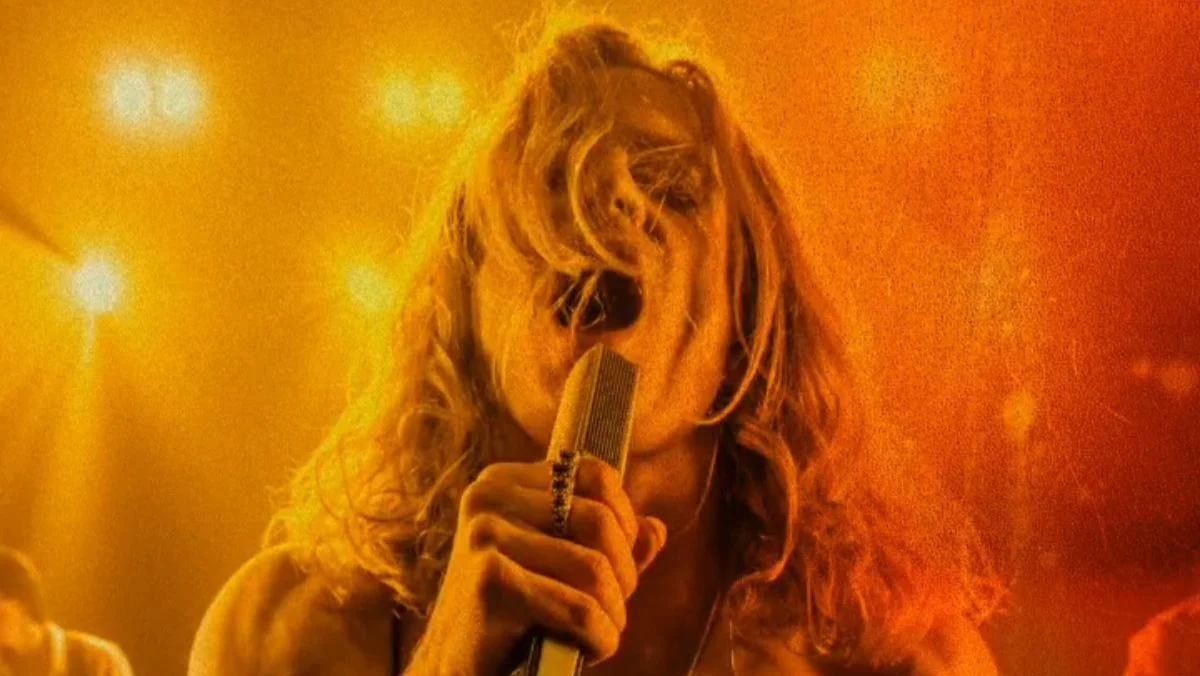
In Rice’s novel, the opening sequence—Lestat’s involvement with a garage band—occurs in 1984 New Orleans. AMC’s adaptation moves this to a gritty, modern-day setting. Furthermore, the catalyst for Lestat’s re-emergence is modernized: rather than a slow crawl toward fame, it is triggered by an email alert regarding Louis’s memoir, which serves as the primary wedge in their fractured relationship. In the books, Louis is a background character in The Vampire Lestat; in the series, he is central, transforming the narrative from a solo autobiography into a complex, toxic romance.

Episode 2: The Invention of Trauma
The series delves into Lestat’s 18th-century French upbringing with meticulous attention to detail, specifically the cruel dynamics between Lestat, his father, and his brothers. However, the show introduces a critical departure: Lestat’s struggle with a stutter. While this condition is absent from the novels, it provides a psychological anchor for the character, offering a tangible manifestation of his childhood vulnerability and his desperate desire for a voice—literally and figuratively.
Episode 3: The Tragedy of Nicholas de Lenfant
The relationship between Lestat and his mortal companion, Nicholas de Lenfant, is one of the most faithful arcs in the show, yet the circumstances of their tragic end are heavily revised. In the book, Nicholas’s mutilation at the hands of the Paris coven and his subsequent suicide are historical events that Lestat learns about through letters. The series, however, places Lestat in the immediate vicinity, casting him as a witness to the cruelty of Armand. This shift intensifies the animosity between Lestat and Armand, raising questions about truth and culpability that the books left more ambiguous.

Supporting Data: Character Revisions and Lore
The series utilizes several "lore-bending" techniques to keep the audience guessing about the reliability of the narrative.
- The Fang Gang: In The Queen of the Damned, the Fang Gang are peripheral figures who idolize Lestat. The AMC series flips this dynamic entirely; here, they are antagonists who view Lestat as a heretic for breaking "The Great Laws." By positioning them as enforcers of vampiric tradition, the show raises the stakes of Lestat’s public visibility.
- The Transformation of Magnus: The ancient vampire Magnus, who creates Lestat, remains a haunting, fleeting presence. While the series captures his kidnapping of Lestat, it omits the scene of Magnus bestowing his fortune, leaving the origins of Lestat’s wealth more mysterious.
- The Death of the Patriarch: A major deviation occurs regarding Lestat’s mortal family. In the novels, Lestat’s blind father flees to New Orleans and survives the revolution. In the show, Lestat and his mother, Gabriella, orchestrate a cold-blooded execution of the family. This change highlights the hardening of Lestat’s soul, stripping away the lingering human tether he maintained in the books.
Official Responses and Creative Direction
The production team, led by executive producer Rolin Jones, has been vocal about the intent behind these changes. In several interviews, the creative team noted that the goal was not to replicate the books word-for-word, but to "interrogate" the source material. By placing Daniel Molloy in the room with these immortal beings, the show effectively turns the interview process into a battle for truth.

The showrunners have emphasized that Lestat’s claim—that much of what Louis wrote in Interview with the Vampire was a fabrication—is a deliberate narrative choice. This allows the series to explore the subjectivity of memory. When Daniel and Louis debate the "train incident" (where Lestat supposedly attacked them), the show leaves the audience in a state of epistemological uncertainty, mirroring the characters’ own confusion about their shared history.
Implications: The Future of the Vampire Chronicles
The success of The Vampire Lestat on AMC rests on its ability to balance the grandiosity of Anne Rice’s prose with the intimacy of modern character drama. By deviating from the text, the show creates a sense of danger for fans who think they know how the story ends. If the series continues to diverge—particularly regarding the fate of characters like Baby Jenks and the evolving bond between Armand and Daniel—it risks alienating purists, but it simultaneously secures its place as a fresh, vital interpretation of the mythos.

The implications for the franchise are profound. If the show establishes that the "truth" of the Vampire Chronicles is malleable, it opens the door for future seasons to explore alternate versions of iconic events. The "Devil’s Minion" arc, which hints at a deeper, reality-warping connection between Armand and Daniel, suggests that the series is moving toward a supernatural scope that goes beyond the gothic romance of the early books.
As we look toward the remainder of the season, the central question remains: Whose story are we actually watching? Is it the history of the vampires, or is it a carefully constructed lie designed to preserve a legacy? Regardless of the answer, the AMC adaptation has successfully breathed new life into the undead, ensuring that the legacy of Lestat de Lioncourt remains as provocative and divisive as ever.

Whether you are a longtime reader of the Vampire Chronicles or a newcomer to the world of the undead, the series serves as an essential, if contentious, expansion of Rice’s vision. By daring to rewrite the past, the show guarantees that the future of the franchise will be anything but predictable.