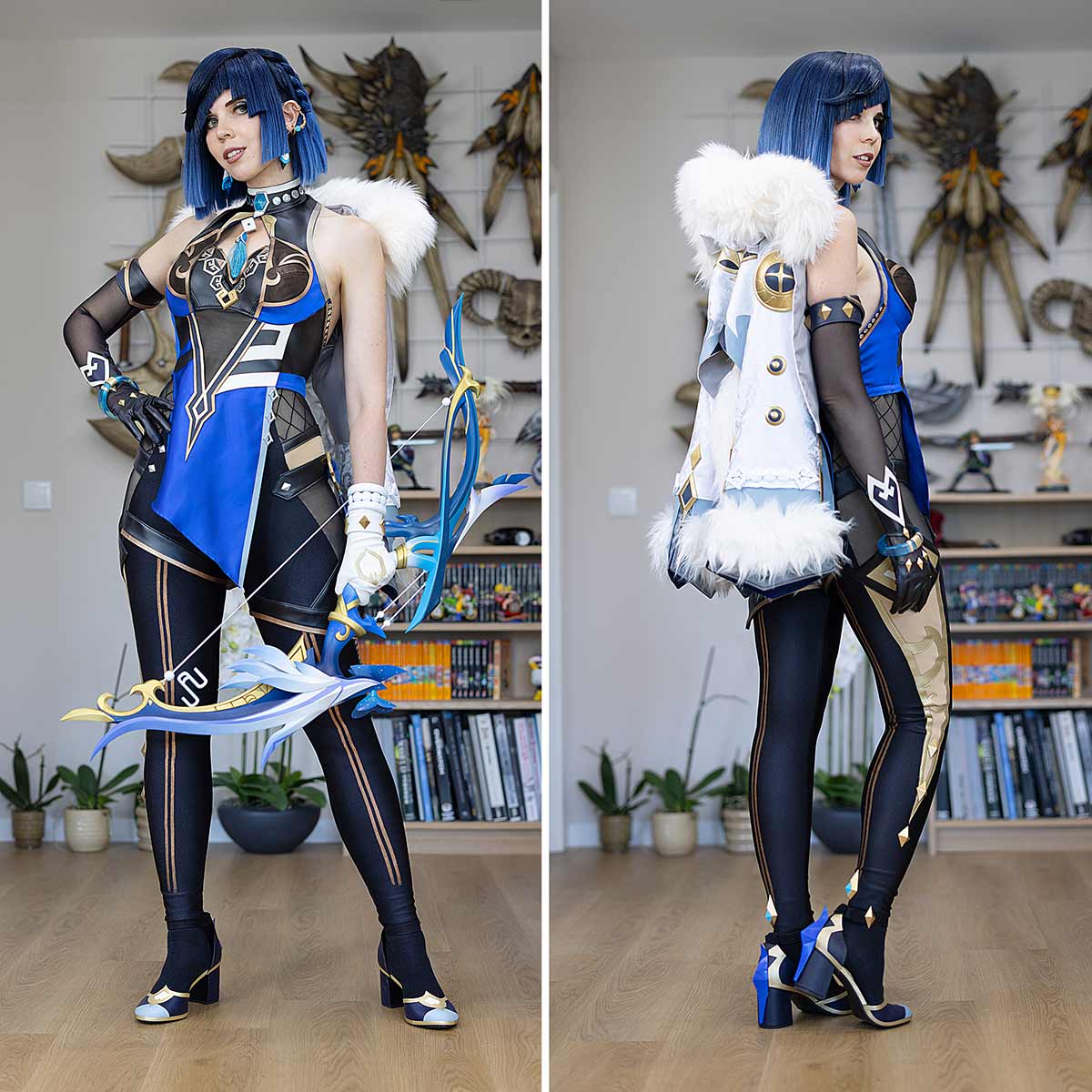
In the high-stakes world of professional cosplay, few names carry the weight and technical reputation of Kamui Cosplay. Known for pushing the boundaries of craftsmanship, the duo behind the brand—Svetlana and Benni—recently undertook one of their most ambitious projects to date: bringing the mysterious and elegant Yelan from HoYoverse’s global phenomenon, Genshin Impact, to life for Gamescom 2023.

What began as a collaborative invitation from HoYoverse blossomed into a five-week technical marathon. The resulting ensemble—a masterclass in structural engineering, material science, and high-fashion sewing—serves as a benchmark for what is possible when digital artistry meets physical fabrication.

The Genesis: A Blueprint for Perfection
The project was born out of a deep-seated appreciation for Yelan’s character design. Known for her sleek, noir-inspired aesthetic and her signature bow, the Aqua Simulacra, Yelan presents a deceptive simplicity. However, beneath the surface lies a complex array of asymmetrical layers, intricate fabric textures, and structural challenges that would intimidate even seasoned costumers.

The foundation of the project relied on a resource often overlooked by hobbyists: official 3D models. HoYoverse maintains an extensive library of character assets on the platform aplaybox.com. By utilizing these raw data files, Kamui was able to study the geometry of Yelan’s outfit from every conceivable angle, ensuring that the physical build remained faithful to the developer’s original vision. This accessibility, as noted by the creators, is a testament to the symbiotic relationship between game developers and their creative communities.

Chronology of a Masterpiece: Five Weeks of Intensive Labor
The construction process was not linear; it was a series of tactical problem-solving sessions. With a ticking clock leading up to Gamescom, the team adopted a "silo" methodology, focusing entirely on one component at a time to mitigate the risk of feeling overwhelmed.

Phase I: The Structural Foundation
The dress served as the first major hurdle. To achieve a perfect fit, the team employed the "duct tape mannequin" technique—a tried-and-true method where the creator is wrapped in tape to create a custom-fitted mold. This allowed for the precise drafting of patterns that would later be transferred to high-end, heavy royal blue satin. The primary challenge here was the dress’s open-back design; maintaining both the aesthetic integrity and the physical security of the garment required a custom-engineered internal support system.

Phase II: The Jacket and Textile Complexity
Yelan’s white jacket presented a paradox: in-game, it appears to float on her back, defying the physics of gravity. Achieving this in reality required a clever combination of hidden structural supports and meticulous tailoring. The team utilized white brocade with subtle floral patterns to add a tactile richness, opting for faux leather accents to add weight and realism to the sleeves. The result was a marriage of high-fashion construction and practical engineering, featuring laser-cut pleather and 3D-printed embellishments.

Phase III: Leggings and Gloves
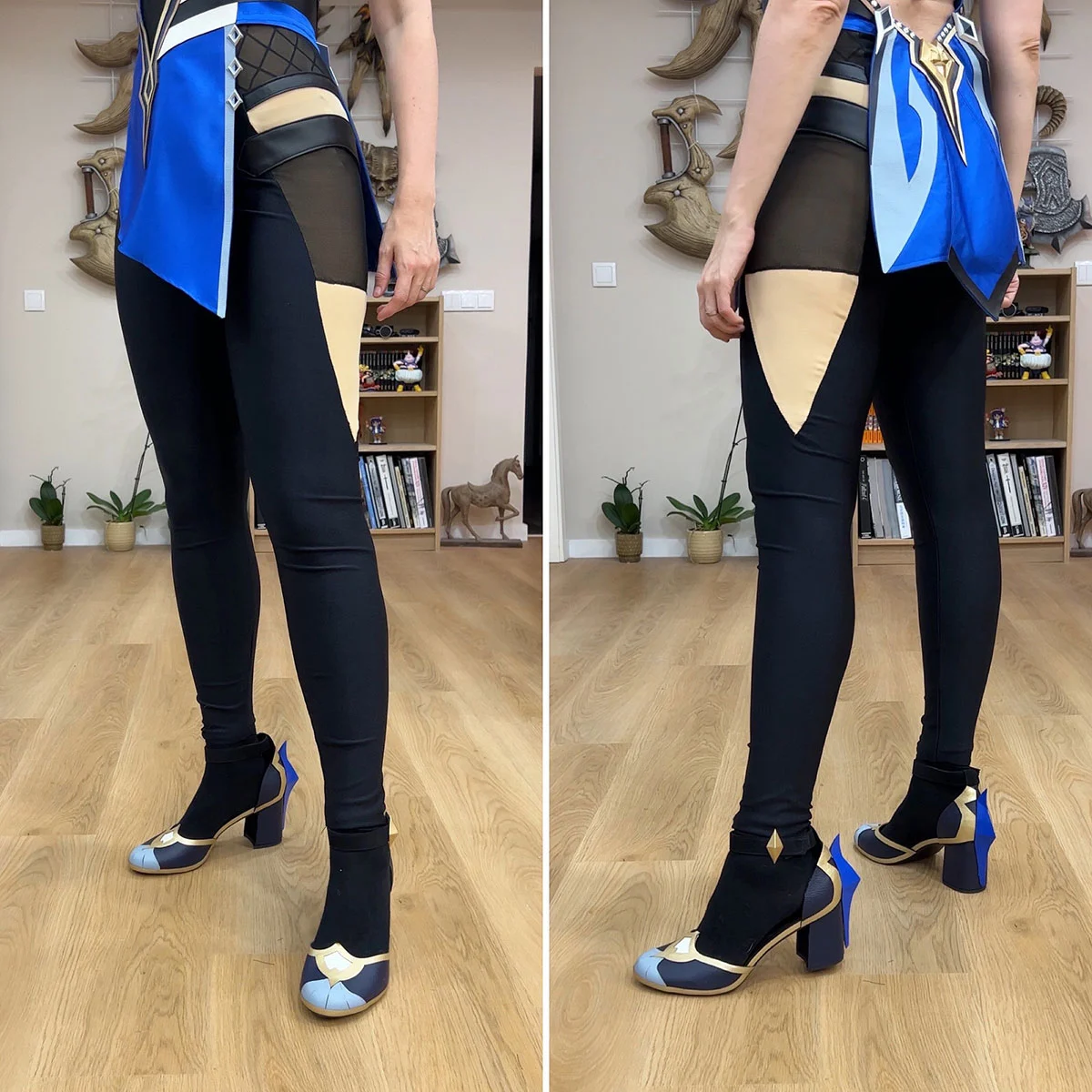
The leggings proved to be the most labor-intensive textile component. Because Yelan’s design is entirely asymmetrical—with distinct patterns on each leg—the team was forced to treat each limb as a separate project. The process involved integrating over five different types of fabric, including delicate netting and thick faux leather, requiring a level of precision sewing that pushed the limits of their equipment.

Supporting Data: The Tools of the Trade
The success of the build relied on a suite of professional-grade tools. The team’s workshop is a testament to the modern era of cosplay:

- Fabrication: A Brother CS7000X computerized sewing machine handled the heavy lifting, while Gütermann HT2 fabric glue ensured the permanent bonding of disparate materials.
- Precision Cutting: A Flux Beambox Pro laser cutter allowed for the creation of intricate, razor-sharp leather details.
- Additive Manufacturing: An Anycubic Photon Mono M5s 12K resin printer was used for the delicate, high-detail accessories, while an Elegoo Saturn 2 8K printer handled the structural requirements of the Aqua Simulacra bow.
- Finishing: The paintwork was executed with a Master Airbrush G22 kit, utilizing Vallejo metallic paints to achieve the iridescent, gradient finish seen on the character’s weapon.
The Weaponry: A Collaborative Engineering Feat
While Svetlana focused on the textiles, Benni and his brother, Jakob, spearheaded the creation of the Aqua Simulacra. The bow was sculpted from scratch in Blender, a process that spanned over a week of digital modeling alone. To ensure durability during the chaotic environment of a convention floor, the bow was reinforced with an internal PVC pipe and designed to be detachable for easier transit. The final result—a stunning, gradient-painted prop—stands as a prime example of how digital sculpting can translate into tangible, high-quality display pieces.

Official Recognition and Community Impact
HoYoverse’s ongoing support for its community, particularly through the provision of official 3D assets, has set a new industry standard. By empowering creators with the same tools used in development, the studio fosters a culture of high-quality fan content. This collaboration is not merely marketing; it is an acknowledgment of the role cosplayers play in the longevity of a live-service title.

During Gamescom 2023, the response to the Yelan cosplay was overwhelming. The presence of numerous other Yelan cosplayers at the event highlighted the vibrant, interconnected nature of the Genshin Impact community. The ability to swap techniques and share experiences with fellow creators was noted by the team as one of the most rewarding aspects of the entire five-week project.

Implications for the Future of Cosplay
The Yelan project highlights a shifting paradigm in the world of cosplay. As gaming characters become increasingly complex and physics-defying, the gap between traditional sewing and industrial engineering is rapidly closing.
Key Takeaways for Aspiring Creators:

- Iterative Design: Never be afraid to start with a "mock-up" in cheap fabric. The time invested in testing patterns saves hours of potential failure on expensive materials.
- Modular Construction: Breaking a massive project into smaller, manageable tasks prevents burnout and allows for higher focus on detail.
- Cross-Disciplinary Skills: The integration of 3D modeling, laser cutting, and airbrushing alongside traditional tailoring is the new standard for "high-end" professional cosplay.
- Resource Utilization: Using official character models as a reference point is essential for accuracy, especially for complex designs that may appear different from varying camera angles.
Ultimately, the Yelan build by Kamui Cosplay is more than just a costume; it is a case study in dedication. For those who view cosplay as a mere hobby, the 1,000+ hours and the integration of advanced manufacturing processes might seem extreme. However, for the professional community, it is the standard required to honor the source material. As gaming graphics continue to evolve, so too will the ingenuity of the cosplayers who bring these digital heroes into the physical world, proving that with enough technical prowess, even the most impossible designs can be worn.