Pevita Pearce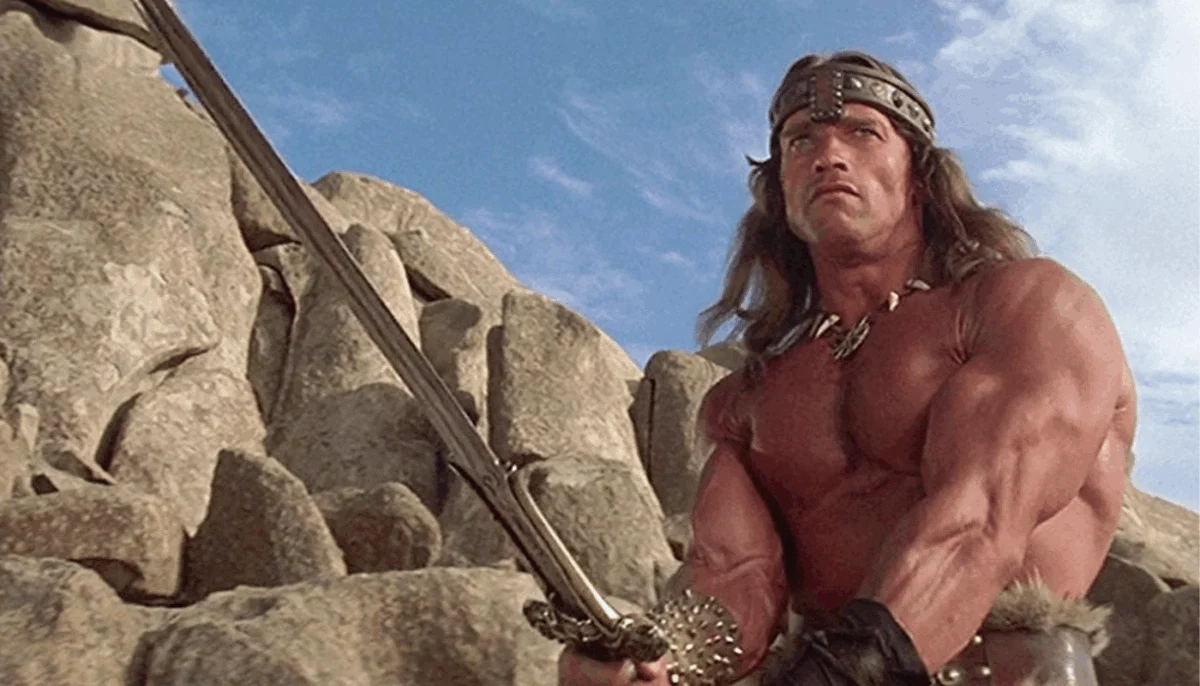
When film historians look back at the 1980s, they often identify a singular, high-octane era of fantasy cinema—a decade where practical effects, muscle-bound protagonists, and sword-and-sorcery tropes collided to create a unique aesthetic. While the genre largely retreated into the shadows during the 1990s, only to be resurrected by the glossy, CGI-heavy epics of the 2000s, the films of the eighties remain distinct. They were weirder, grittier, and possessed a tactile, unpolished charm that modern digital spectacles often struggle to replicate.
Central to this canon is the Conan franchise. Following the critical success of 1982’s Conan the Barbarian—a film celebrated for its surprisingly nuanced exploration of stoic masculinity and grim survivalism—the production team returned in 1984 with Conan the Destroyer. While the original film was a somber, Nietzschean odyssey, the sequel marked a pivot toward a more irreverent, comic-book-inspired romp. As we continue our retrospective on 1980s fantasy, it is time to dismantle the myths and memories surrounding this polarizing sequel to determine whether its cult status is earned or merely a byproduct of eighties nostalgia.
The Shift in Vision: From Milius to Fleischer
The transition from Conan the Barbarian to Conan the Destroyer was marked by a significant change in leadership. John Milius, the architect of the first film’s mythic, operatic tone, stepped aside, making room for Hollywood veteran Richard Fleischer. Tasked with steering a sequel that favored pace and spectacle over the brooding, philosophical pacing of its predecessor, Fleischer brought a different energy to the screen.
The narrative follows the Cimmerian wanderer, played once again by Arnold Schwarzenegger, as he traverses the lands of Shadizar. He is soon ensnared by the machinations of Queen Taramis, portrayed with delectable malice by Sarah Douglas. Taramis offers a tantalizing bargain: she claims the power to resurrect Valeria, the love of Conan’s life who perished in the previous film. The cost? Conan must escort the sheltered Princess Jehnna (Olivia d’Abo) across perilous lands to retrieve a mystical jewel.
The cast of supporting characters expanded the film’s "party-based" adventure dynamic. The lineup included Malak the Thief (Tracey Walter), the returning wizard Akiro (Mako), the stoic Captain of the Guard Bombaata (basketball icon Wilt Chamberlain), and the fierce Amazon warrior Zula (Grace Jones). This ensemble provided the film with its lighthearted, almost episodic rhythm—a stark departure from the solitary, internal journey Conan undertook in the 1982 original.
A Chronology of Chaos: The Quest for Dagoth
The narrative trajectory of Conan the Destroyer is a textbook example of the "hero’s quest" gone sideways. The entire mission is, of course, a duplicitous ruse. Taramis intends to sacrifice her niece, Jehnna, to the god Dagoth the Dreamer, while simultaneously ordering her bodyguard, Bombaata, to dispose of Conan once the jewel is secured.
The journey takes the team through various high-fantasy set pieces, including a confrontation with the sorcerer Toth-Amon, who kidnaps Jehnna to his crystalline fortress. This leads to one of the film’s most memorable sequences: a battle in a hall of mirrors against a monstrous, ape-like beast, again played by the prolific stuntman Pat Roach.
The climax of the film reaches peak 1980s absurdity. Upon returning to Shadizar, the heroes interrupt the sacrificial ceremony, leading to a showdown where the statue of Dagoth comes to life. In a piece of casting trivia that has since become legend, the mutated, Lovecraftian version of the god was performed by none other than André the Giant. The ensuing battle, featuring a flurry of practical effects and desperate swordplay, culminates in the destruction of the idol. Jehnna ascends to the throne, and despite her offer to rule by his side, Conan declines, choosing instead to remain a wanderer—a "lovelorn monk" tethered to his grief, setting the stage for the recurring tease of his future kingship.
Supporting Data and Production Context
From a commercial standpoint, Conan the Destroyer performed modestly, grossing $31 million against a budget of approximately $30.1 million. While it was not the massive box-office juggernaut that some studios hoped for, it maintained the viability of the Conan brand for the time being.
The film’s critical reception, however, was mixed. Roger Ebert, in his contemporary review, famously noted his preference for the lighter, more playful tone of the sequel compared to the intense, humorless atmosphere of the original. Modern critics, however, often point to the film’s "flat" characters and episodic structure as weaknesses. Malak, in particular, is frequently cited as a grating element, serving as little more than a vehicle for low-brow comic relief.
Furthermore, the film’s treatment of its supporting cast and its reliance on dated, colonialist tropes—such as the "primitive" depiction of certain tribes and the occasionally awkward handling of its female leads—have drawn criticism in recent years. Yet, beneath the B-movie veneer, there is an undeniable aesthetic brilliance. John Bloomfield’s costume design remains a high point of 80s fantasy, utilizing leather, fur, and intricate metalwork to create a world that feels both grounded and fantastical.
Official Responses and Behind-the-Scenes Lore
Despite the film’s relative success, it effectively served as the end of the Conan road for both producer Dino De Laurentiis and star Arnold Schwarzenegger. While plans for a trilogy were discussed, the franchise eventually pivoted toward the spinoff Red Sonja in 1985.
The behind-the-scenes stories surrounding the production are as legendary as the film itself. The "lost" scene regarding the "seduction of a statue" remains a point of intense curiosity for fans, and the chemistry—or lack thereof—between the diverse cast members often bled into the performances. Wilt Chamberlain, in his attempt to break into acting, relied heavily on his imposing stature, creating a visual contrast with Schwarzenegger that remains one of the film’s most enduring images. Mako, the film’s undeniable MVP, managed to inject genuine personality into every scene, his expressive reaction shots providing a necessary anchor for the film’s more chaotic moments.
Implications: The Enduring Cultural Footprint
To speak of the "legacy" of Conan the Destroyer is to speak of the wider impact of 80s sword-and-sorcery cinema. The film did not exist in a vacuum; it was part of a multimedia blitz that included Marvel comic adaptations and a novelization by Robert Jordan, who would later go on to achieve global fame with The Wheel of Time.
Most significantly, the film played a pivotal role in cementing Grace Jones as a trans-media icon. Her performance as Zula was a masterclass in physicality and screen presence, establishing a character archetype that would influence pop culture for decades. From the spoofing of her persona on In Living Color to her continued influence in the worlds of music and high fashion, Jones’s turn in Conan the Destroyer remains one of her most recognizable roles.
Furthermore, the influence of "Dagoth" persists in modern speculative fiction. The name itself, clearly inspired by H.P. Lovecraft’s Dagon, has appeared in countless games and novels. Most notably, the antagonist of The Elder Scrolls III: Morrowind, Dagoth-Ur, bears a striking resemblance to the film’s demonic deity, right down to the themes of dreaming, divine ascension, and the corruption of a faithful priesthood.
Conclusion: Was it Worth the Quest?
Looking back at Conan the Destroyer, one must balance the scales. Is it a "better" film than the original? Objectively, no. It lacks the thematic depth and the singular, visionary commitment of the 1982 Conan. However, to view it solely through the lens of its predecessor is to miss the point. Destroyer is an exuberant, messy, and fundamentally "fun" piece of entertainment that embraces its own silliness.
It remains a touchstone for those who appreciate the tactile, practical-effect-heavy era of fantasy. Whether it is the exquisite costume design, the bizarrely charismatic performance by Mako, or the sheer audacity of a Lovecraftian god-statue fight, the film continues to capture the imagination. It is a reminder that even in the world of high-concept fantasy, sometimes the most memorable legacy isn’t the one that takes itself the most seriously, but the one that leaves the audience with a sense of wonder, a few laughs, and a desire to see what lies beyond the next horizon.
As the franchise potentially eyes a return with a long-rumored King Conan sequel, the lessons of the past remain clear: the strength of the Cimmerian lies not just in his sword, but in his ability to survive—and even thrive—in stories that refuse to be anything other than exactly what they are.

 Rifan Muazin
 Raul Delapena Setiawan