In an era of rapid technological advancement and historical reflection, the news cycle continues to offer a complex tapestry of scientific breakthroughs, cultural retrospection, and significant milestones. This week, we examine the intersection of deep space discovery, the preservation of horror history, and the sobering lessons of Earth’s ancient mass extinctions.
1. Cultural Preservation and the History of Censorship
Banned Comics in Ireland
The National Library of Ireland (NLI) is set to host a pivotal discussion on the history of censorship in the country. Comic scholar James Bacon will present "Banned Comics at the NLI: A history of censorship of comics in Ireland" on Thursday, August 6, at 6:00 p.m.
The talk addresses the unique landscape of the 1950s, a period defined by a global "Moral Panic" regarding comic books. Unlike other nations, Ireland’s experience was characterized by a distinct, state-sanctioned distrust of foreign publications and an aggressive censorship apparatus. Bacon, utilizing the extensive archives of the National Library, will explore how these materials were suppressed and what that reveals about mid-century Irish society. Given the nature of the archival content, the NLI has marked the event as suitable for ages 16 and older.

2. Scientific Milestones: The Legacy of Voyager 1
A Half-Century of Exploration
As it approaches its 50th year in space, NASA’s Voyager 1 continues to defy expectations. Launched in 1977, the probe is the farthest man-made object in history, currently traversing the interstellar medium. According to recent reports, the spacecraft remains functional, though it is operating on a significantly reduced power budget.
- The Power Crisis: Originally powered by three radioisotope thermoelectric generators (RTGs) producing 470 watts, the probe now operates on just 230 watts. This decay forces mission controllers at the Jet Propulsion Laboratory (JPL) to systematically shut down scientific instruments to preserve core functions.
- The "Big Bang" Strategy: To extend the mission through the 2030s, NASA is planning an ambitious maneuver dubbed the "Big Bang." By disabling heaters on the thruster lines, engineers hope to save 10 watts of power. This risky operation is essential for maintaining the probe’s orientation—without it, Voyager 1 would lose its ability to point its antenna toward Earth, resulting in permanent signal loss.
3. Paleontology and the Economics of History
The $50.1 Million T. Rex
The fossil market reached a new zenith this week as a near-complete Tyrannosaurus rex skeleton, affectionately nicknamed "Gus," sold at a Sotheby’s auction in New York for $50.1 million. The price far exceeded the pre-sale estimate of $20 million to $30 million.
Unearthed in Harding County, South Dakota, by the commercial firm Theropoda Expeditions, Gus is considered one of the most complete specimens ever discovered. The sale highlights the ongoing tension between private collection and public scientific access, as high-value fossils increasingly migrate into private hands, often beyond the reach of traditional museum study.

4. Environmental Science: Decoding the "Great Dying"
New Insights into the Permian-Triassic Extinction
A study published on July 6 in the Proceedings of the National Academy of Sciences has provided long-awaited answers regarding the "Great Dying" 252 million years ago. This event, which wiped out 96% of marine life and 70% of terrestrial species, was triggered by massive volcanic activity in the Siberian Traps.
- The Mechanism: While scientists long knew that greenhouse gas-induced warming was the culprit, the specific biological "kill mechanism" was unclear. Researchers have now confirmed that the primary factor was the combination of rising ocean temperatures and plummeting oxygen levels.
- The Warning: Warm water holds significantly less oxygen than cold water. The study found that species with metabolisms intolerant of warm, hypoxic environments were the first to perish. This finding serves as a stark warning for modern climate change, as current ocean warming trends mirror the conditions that preceded the greatest extinction in Earth’s history.
5. Arts and Literature: StokerCon and the Muppets
40 Years of Horror
The Horror Writers Association (HWA) is preparing to celebrate its 40th anniversary with the upcoming 2027 StokerCon. Artist Dan Sauer, who has been commissioned to design the commemorative logo, reflected on the importance of the organization in an interview with Maxwell Gold. Sauer noted that for many creative "misfits," the HWA provides a crucial sense of belonging that is often absent in mainstream literary circles.
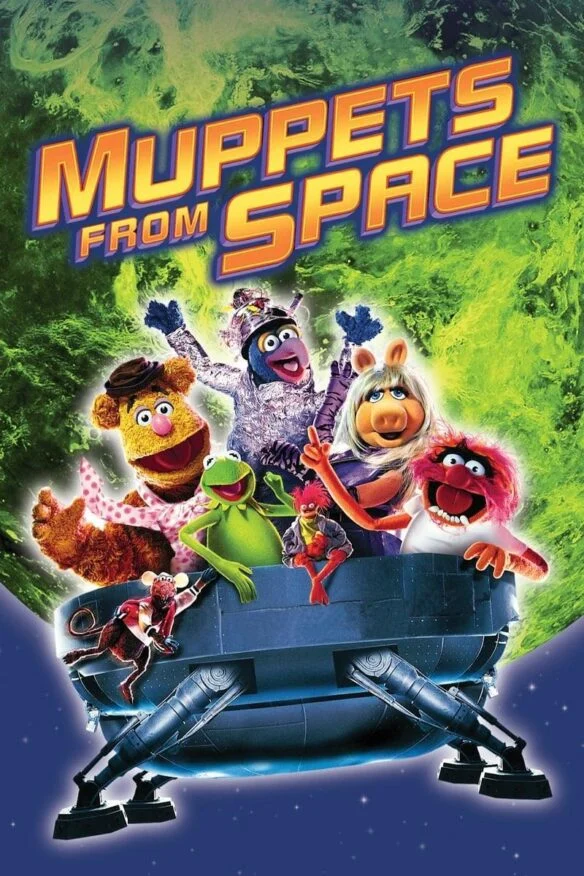
Memory Lane: Muppets from Space
Reflecting on the 1999 release of Muppets from Space, film historian Cat Eldridge notes the film’s complicated legacy. As the first Muppet production following the death of Jim Henson, it faced intense scrutiny and mixed critical reception. Despite its star-studded writing team—including veterans from Sesame Street and earlier Muppet films—the project struggled at the box office, grossing roughly $2 million less than its $24 million production budget. The film remains a case study in the difficulties of maintaining a creative legacy after the loss of a foundational visionary.

6. Breakthroughs in Astrochemistry
The Detection of Interstellar Sugar
In a discovery that bridges the gap between physics and biology, researchers have reported the detection of a four-carbon sugar, erythrulose, in the interstellar medium (ISM). The study, published in Nature Astronomy, represents a major milestone in origin-of-life research.
- Why it Matters: Sugars are essential for metabolic fuel and the structural components of nucleic acids. Previously, scientists struggled to explain how monosaccharides formed on a primitive Earth. The presence of these molecules in the ISM suggests that the building blocks of life may be delivered to planets via asteroids and meteorites, rather than being solely a product of terrestrial chemistry.
7. Obituary: Honoring Andrew Nisbet III (1949–2026)
The science fiction community mourns the loss of Andrew Nisbet III, who passed away on July 4 at the age of 77. A veteran of the Vietnam War and a graduate of Reed College, Nisbet was a fixture in the Pacific Northwest SF scene.
Known for his storytelling and his dedication to board gaming, he led the Empire Association for over 50 years. He was also a foundational figure in local and regional conventions, including OryCon and Westercon, and served on the board of Oregon Science Fiction Conventions, Inc. (OSFCI). Alongside his wife, Cecilia Anne Eng, Nisbet was a tireless advocate for the filk music community, helping to secure funding and support for musicians at conventions nationwide.

8. Summary of Implications
The events of the past week underscore a fundamental theme: the necessity of preservation. Whether it is the physical preservation of Voyager 1 through ingenious engineering, the intellectual preservation of history at the National Library of Ireland, or the study of the Earth’s ancient extinction events to prevent future catastrophe, the common thread is the effort to understand and sustain what we have inherited.
As we look toward the 2026 Student Academy Awards—which continue to highlight the dominance of European film schools in animation—and the ongoing evolution of our literary and scientific communities, it is clear that the interplay between the past and the future remains our most vital pursuit.
Chronological Reference of Key Events
- 1977: Launch of Voyager 1.
- 1999: Release of Muppets from Space.
- July 4, 2026: Death of Andrew Nisbet III.
- July 6, 2026: Publication of PNAS study on the Permian-Triassic extinction.
- July 14, 2026: Announcement of the Tæhtifantasia Award winner.
- August 6, 2026: NLI talk on comic censorship in Ireland.
For more information on these topics, including ticket availability for the NLI event and the full list of Student Academy Award finalists, readers are encouraged to visit the respective institutional websites.