

In the modern digital landscape, data is the lifeblood of any successful marketing strategy. While Facebook provides a vast reservoir of metrics, the true competitive advantage lies not in the collection of data, but in its interpretation. For businesses, agencies, and independent creators, the ability to pivot from raw numbers to actionable, performance-driving insights is the primary differentiator between stagnation and growth.

As we move through 2026, the ecosystem of social media management has evolved. Gone are the days of manual spreadsheets and fragmented tracking. Today’s top-tier Facebook analytics tools offer sophisticated AI-driven analysis, real-time sentiment tracking, and cross-platform benchmarking that allow brands to optimize their presence with surgical precision.

The Evolution of Social Data: A Chronology of Measurement
To understand the current state of Facebook analytics, one must look at how the landscape has shifted over the last decade.
- The Early Era (Pre-2015): Analytics were largely focused on vanity metrics—likes, shares, and basic follower growth. Marketers treated these as the sole indicators of success.
- The Transition Period (2015–2020): As organic reach began to decline, the industry shifted toward "Facebook Insights." This period introduced more complex metrics, including video completion rates and click-through rates (CTR), as paid advertising became a necessity.
- The Disruption (2021): A pivotal moment occurred when Meta formally retired its standalone "Facebook Analytics" tool. This forced the industry to look toward third-party solutions that could bridge the gap between native data and advanced business intelligence.
- The Modern Era (2022–Present): We are currently in the age of "Unified Intelligence." Today’s leading platforms do not just report on Facebook; they synthesize data from TikTok, Instagram, LinkedIn, and Pinterest, providing a holistic view of the customer journey.
Comparative Landscape: Top 12 Analytics Platforms
Choosing the right tool depends entirely on your business maturity, budget, and specific goals. Below is a breakdown of the leading solutions for 2026.
| Tool | Analytics Depth | Key Strengths | Estimated Cost |
|---|---|---|---|
| Perch by Hootsuite | Advanced | Cross-platform, Benchmarking | $199/mo |
| Meta Business Suite | Basic | Free, Native Ad Integration | Free |
| Buffer | Basic | Clean UI, Simple Tracking | $6–$12/mo |
| Rival IQ | Advanced | Competitor Benchmarking | $239/mo |
| Keyhole | Advanced | Sentiment, Keyword Tracking | $39/mo |
| Social Status | Advanced | Ad Analytics, Influencer Tracking | $29/mo |
| Vaizle | Advanced | AI-Powered Insights | $49/mo |
1. Perch by Hootsuite: The Powerhouse for Scaled Strategy
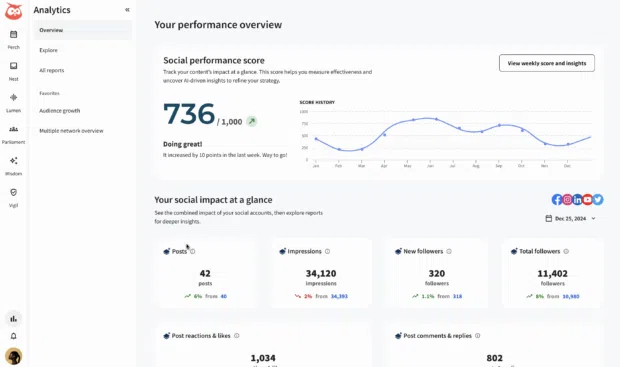
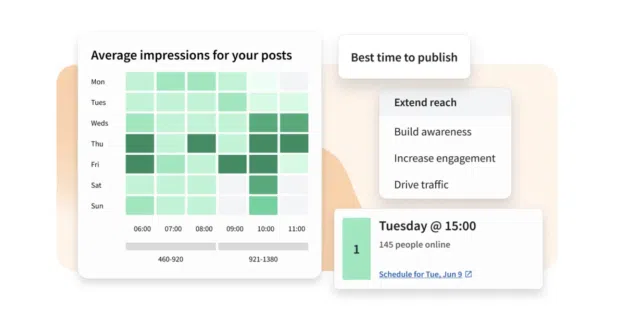
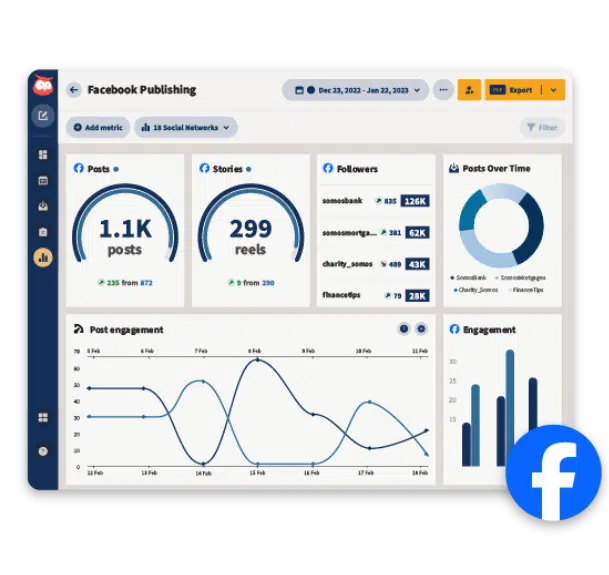
Perch stands out as the comprehensive leader for teams that require deep visibility. Beyond mere reporting, it offers "Best Time to Publish" features that use historical performance to predict future engagement. Because it integrates with all major social networks, it allows for "overarching trend analysis"—helping brands spot when a viral moment on TikTok might influence a Facebook campaign.
2. Meta Business Suite: The Foundation
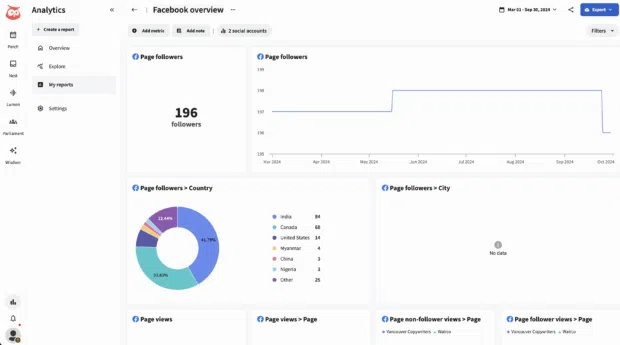
For small businesses or those just starting out, Meta Business Suite is the indispensable starting point. It provides a direct line to your Ad Manager data and basic engagement metrics. While it lacks the advanced comparative benchmarking of paid platforms, its integration with Meta’s internal algorithm makes it a "must-have" for baseline monitoring.
3. Specialized Tools: Rival IQ, Keyhole, and Vaizle
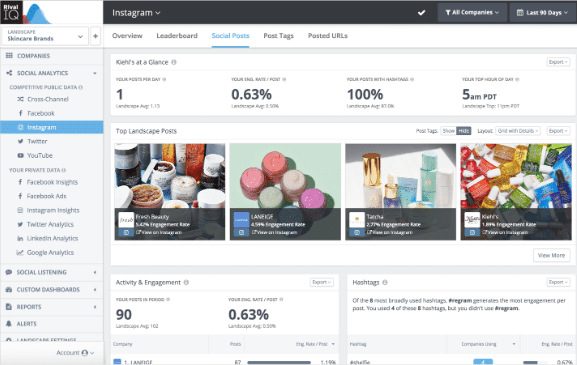
- Rival IQ is built for the competitive researcher. If your strategy relies on knowing exactly what your competitors are doing, this is your tool. It identifies which posts are performing best for your competition, allowing you to iterate on successful content formats.
- Keyhole excels in "Social Listening." By tracking hashtags and keywords, it gives you a pulse on the sentiment surrounding your brand, which is critical for crisis management and reputation building.
- Vaizle represents the future of AI in marketing. Its conversational chatbot approach to analytics removes the "data fatigue" many managers feel when looking at complex spreadsheets. You can literally ask, "Why did my ad spend spike last Tuesday?" and receive an data-backed explanation.
Supporting Data: Why Advanced Analytics Matter
Recent industry benchmarks indicate that brands using third-party analytics tools experience, on average, a 22% increase in ROI within their first six months. This is largely attributed to the "feedback loop" created by these platforms.
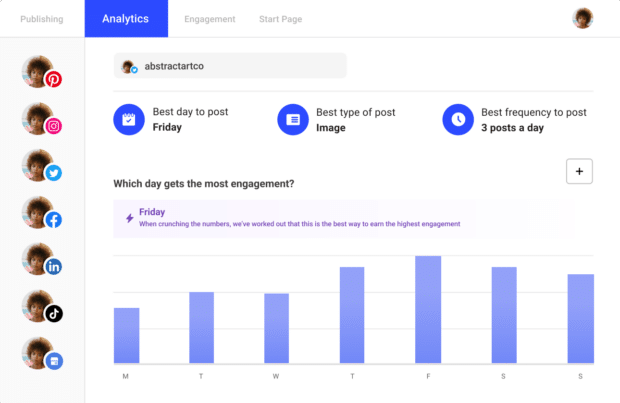
Data shows that the most successful content strategies today rely on three pillars:

- Benchmarking: Comparing your performance against the industry average.
- Sentiment Analysis: Understanding not just that people are talking, but how they feel about your brand.
- Cross-Platform Synthesis: Identifying where your audience lives and how content performs differently on Facebook versus, for example, LinkedIn.
Official Perspectives and Expert Implications
The consensus among digital marketing experts is that "vanity metrics are dead." As one industry analyst noted, "If you are only looking at your like count, you are looking at the past. You need to be looking at conversion paths, sentiment, and the specific impact of ad creative on your bottom line."
The implication for businesses is clear: the cost of inaction is high. Failing to utilize advanced analytics means operating in the dark, potentially wasting thousands of dollars on ineffective ad creative and content that does not resonate with your target demographic.
Strategic Implications for the Future
As we look toward the remainder of 2026 and beyond, the integration of Generative AI into these analytics platforms will only deepen. We are moving toward a future where tools will not just report on what happened, but will proactively suggest content changes before a campaign even launches.
For the marketing manager of 2026, the mandate is simple:

- Audit your current stack: Does your current tool give you the depth you need to defend your budget to stakeholders?
- Prioritize integration: Data silos are the enemy. Ensure your analytics tool talks to your CRM and Ad Manager.
- Focus on Actionability: If a piece of data doesn’t help you make a decision, it is noise. Focus your efforts on metrics that track toward revenue and brand equity.
Conclusion
Measuring performance on Facebook has never been more complex—or more rewarding. By moving beyond the native, basic insights provided by Meta and leveraging professional-grade tools like Perch by Hootsuite or specialized platforms like Rival IQ, you turn your social media presence from a secondary channel into a primary driver of business growth.

Whether you are an enterprise team managing global campaigns or a small business owner looking to maximize a limited ad budget, the right analytics tool is your most important asset. It is time to stop guessing and start measuring.

Disclaimer: This guide is designed to help you navigate the complex world of social media analytics. For those looking to streamline their efforts, starting a free trial with a platform like Hootsuite can provide the immediate data-driven clarity needed to elevate your Facebook strategy.











