

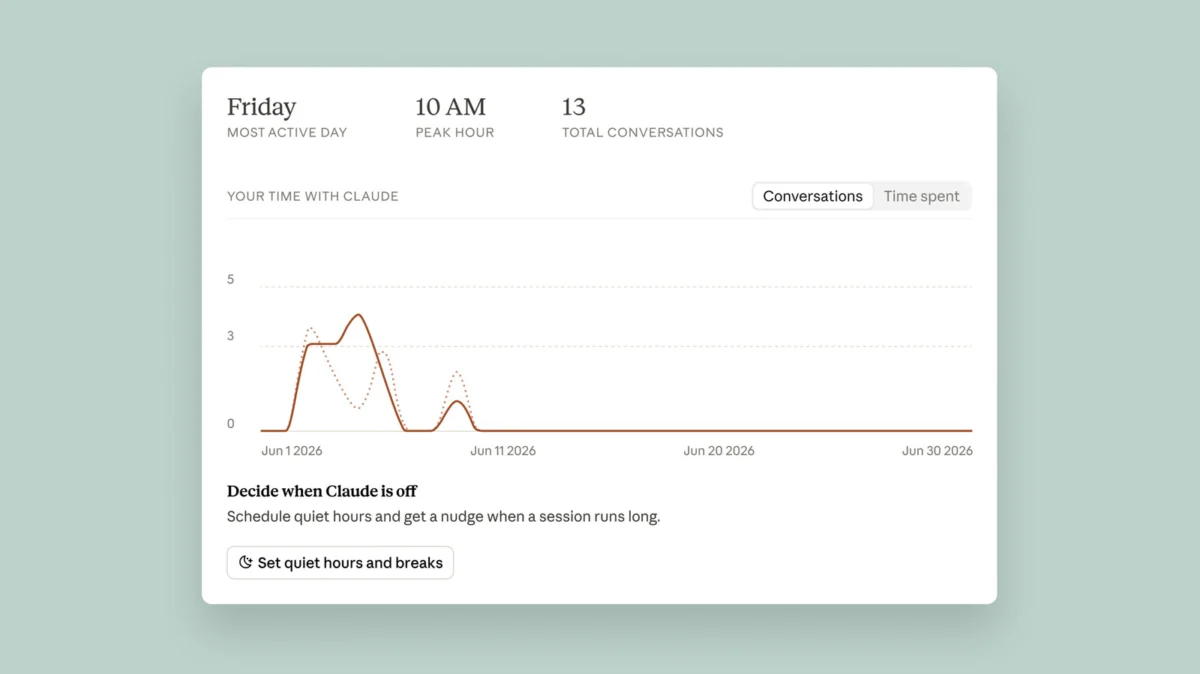
In an era defined by the rapid integration of artificial intelligence into the professional and personal spheres, the line between "productivity tool" and "digital dependency" is becoming increasingly blurred. Anthropic, the developer behind the popular Claude chatbot, has taken a proactive step toward addressing the potential for digital fatigue. With the introduction of the "Reflect" dashboard—a feature suite that draws design inspiration from both Spotify Wrapped and Apple’s Screen Time—the company is encouraging users to analyze their AI usage patterns and, perhaps more importantly, learn when it is time to "touch grass."
The Core Concept: Why Reflect Matters
Anthropic’s Claude has established itself as a cornerstone for coders, writers, and analysts. However, the accessibility of a high-functioning AI can lead to "over-prompting," where users default to the chatbot for tasks that might be better suited for human intuition or extended periods of deep, uninterrupted focus.
The Reflect dashboard is designed to provide a mirror for user habits. By surfacing data about how often and in what context users engage with the chatbot, Anthropic is shifting the narrative from "maximum usage" to "intentional usage." The tool is housed directly within the settings menu, acting as a gentle checkpoint for those who feel they might be spending more time conversing with an LLM than executing on the tasks the AI was meant to support.
Chronology of Development and Release
The arrival of Reflect marks a significant shift in how AI companies view user health. For much of the early generative AI gold rush, the industry metric for success was almost exclusively "time on platform."
- Early Development: As Claude’s user base expanded, internal discussions at Anthropic shifted toward the sustainability of long-term AI interaction. The company identified a growing cohort of "power users" who exhibited signs of high-frequency interaction that mirrored common smartphone addiction patterns.
- Internal Testing: During the testing phase, the development team focused on the challenge of quantifying human interaction with a Large Language Model. Unlike social media apps, which measure scroll time, quantifying "meaningful" AI interaction proved technically complex.
- Public Launch: The official rollout of the Reflect dashboard occurred recently, positioning Anthropic as one of the first major AI players to build "guardrails" directly into their flagship product. This launch is part of a broader, ongoing effort to refine the user experience as the platform evolves from a research tool to a daily utility.
The Mechanics of the Reflect Dashboard
Understanding how to interact with the dashboard is straightforward, though it requires a shift in mindset from "querying" to "reflecting."
Accessing Your Usage Data
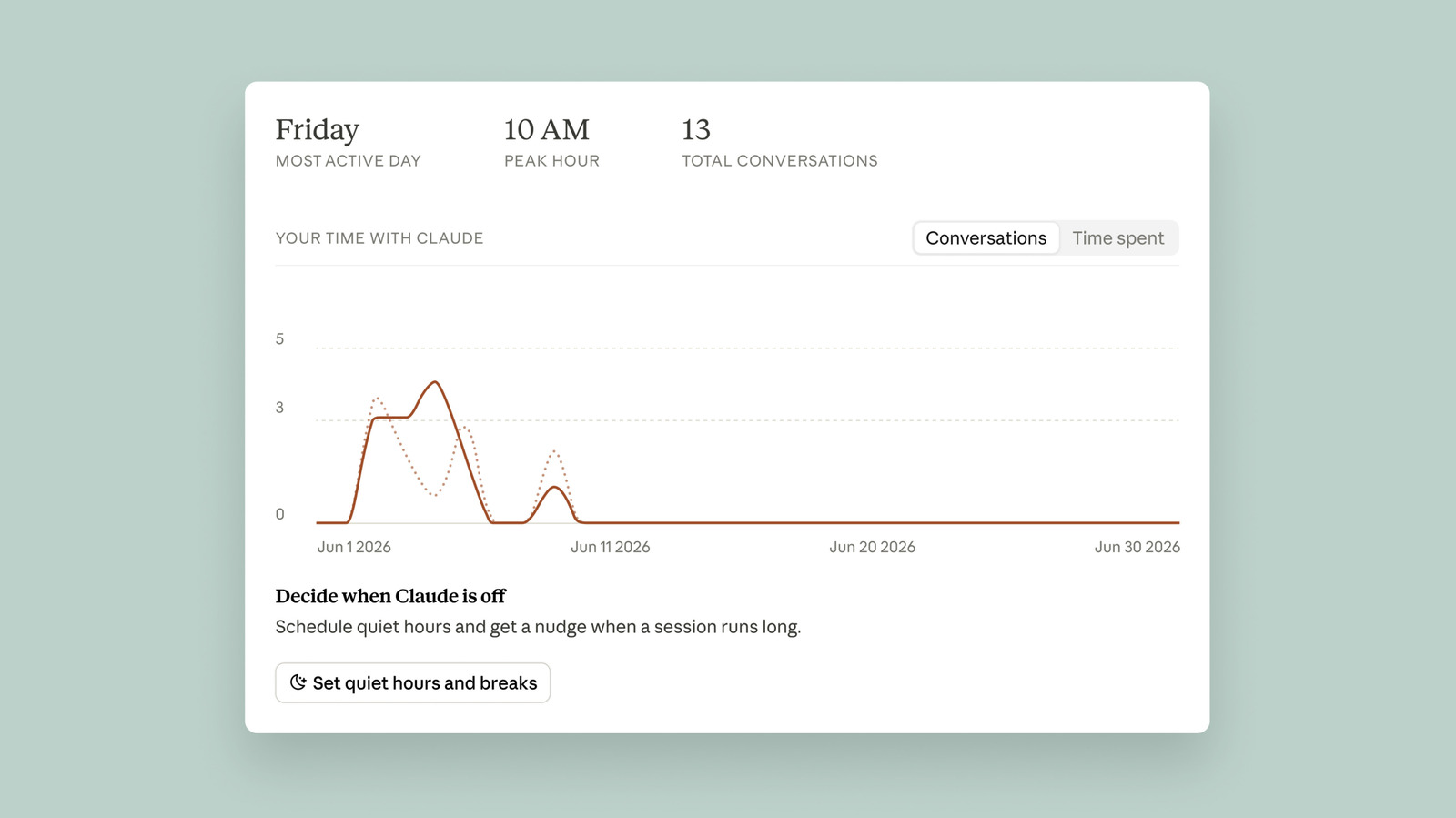
To begin, users navigate to their account settings, where they can initiate a "Reflect Report." The system processes previous engagement data to create a summary of activity. By default, the interface provides a one-month snapshot, though users have the agency to toggle between three-month, six-month, and annual views. This longitudinal data is crucial for identifying seasonal spikes in usage—for instance, identifying if your AI dependency increases during high-pressure work quarters or academic deadlines.
The "Time Spent" Dilemma
It is important to note that the dashboard is currently a work in progress. While users can see interaction frequencies, the "Time Spent" tab currently reads "Coming Soon." According to Ryn Linthicum, Anthropic’s head of wellbeing policy, this gap exists because the company did not initially architect its systems to track the duration of individual sessions. As the company refines its backend telemetry, this feature is expected to become the most critical component of the dashboard, finally giving users a tangible number—in minutes or hours—to compare against their daily goals.
Setting Boundaries: Break Reminders and Quiet Hours
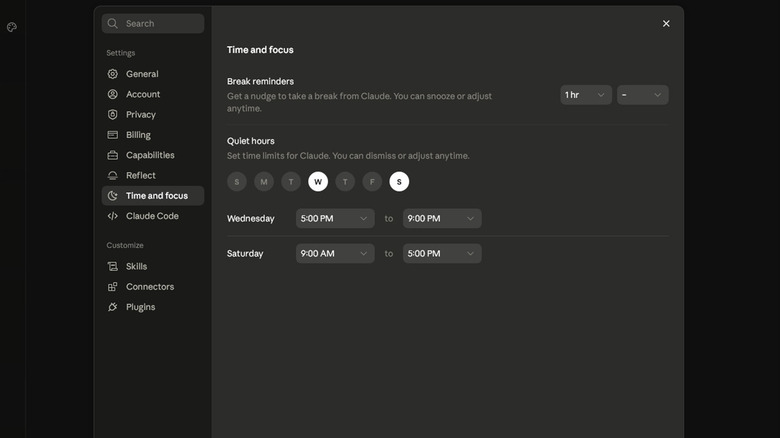
The most actionable features within the Reflect dashboard are the "Break Reminders" and "Quiet Hours" settings. These are not merely passive notifications; they are designed to disrupt the "flow state" that often leads to hours of continuous, mindless prompting.
Tailored Nudges
Break reminders function as a digital tap on the shoulder. Users can customize the interval—every 15, 30, or 45 minutes, or even longer—to suit their workflow. The goal is to break the cycle of "prompt-response-prompt" that can lead to cognitive exhaustion.
Enforced Quiet Hours
For those who struggle with "late-night prompting," the Quiet Hours feature is a powerful tool for work-life balance. Users can configure independent schedules for every day of the week. For example, a user might set a restriction from 5:00 PM to 8:00 PM on weekdays to ensure family time, while allowing for different, or no, restrictions on the weekend. These roadblocks serve as a psychological barrier, reminding the user that the AI is a tool, not a constant companion.
Official Perspectives: The Philosophy of "Human-Centric AI"
Anthropic’s decision to build these features stems from a specific philosophy: that a tool is only as good as the human who uses it. Ryn Linthicum has emphasized that these features are not meant to restrict access, but to "empower autonomy."
The company recognizes that the "infinite scroll" model of many tech platforms is detrimental to mental health. By intentionally adding friction—through reminders and scheduled downtime—Anthropic is bucking the trend of "engagement at all costs." This is a calculated move that may actually increase brand loyalty; by showing that they care about the user’s wellbeing, Anthropic fosters a relationship based on trust rather than addiction.
AI Fluency: Working Smarter, Not Harder
Beyond the wellbeing features, the Reflect dashboard includes an "AI Fluency" section. This is a clever integration that turns the AI into a consultant for its own usage.
If the dashboard detects that a user is consistently re-explaining context or asking redundant questions, it will suggest utilizing "Projects." By grouping related tasks, users can reduce the number of prompts required to get a high-quality output. This feature serves two purposes:
- Efficiency: It makes the user more productive by reducing the "chat overhead."
- Sustainability: By teaching the user how to get better results in fewer steps, it naturally reduces the total time spent interacting with the chatbot.
The Broader Implications for the AI Industry
The introduction of Reflect is a bellwether for the future of the LLM market. As AI becomes ubiquitous, the industry will inevitably face a reckoning regarding the psychological impact of these tools.
A New Standard for Digital Hygiene
We are likely to see competitors like OpenAI (ChatGPT) and Google (Gemini) follow suit. Just as the smartphone industry was forced to implement screen time controls under public and regulatory pressure, the AI industry is preemptively adopting these standards. This is a positive development that treats the user as an adult capable of setting their own boundaries, while providing the necessary data to make those decisions.
Moving Toward "Mindful AI"
The long-term implication is a transition from "AI as a toy" to "AI as a disciplined assistant." If users can successfully manage their usage through tools like Reflect, they are less likely to experience burnout or dissatisfaction with the technology. This creates a more stable user base and encourages developers to focus on quality-of-life improvements rather than just increasing the raw intelligence of the model.
Conclusion: Mastering the Tool
The Reflect dashboard is an invitation to take control of your relationship with technology. While it is easy to dismiss reminders as mere software notifications, they represent a significant step in the evolution of human-computer interaction. By monitoring your usage, setting boundaries, and leveraging fluency recommendations, you can ensure that Claude remains a tool that serves you—rather than a digital loop that controls you.
In the final analysis, "touching grass" is not just a meme; it is a vital component of sustained human cognitive function. With Anthropic’s new dashboard, you now have the data to decide exactly when that break is necessary. The tools for balance are now at your fingertips—the challenge, as always, lies in the discipline to use them.











