Sagoh
Sagoh
In the contemporary art landscape, few artists interrogate the intersection of perception and representation as pointedly as Los Angeles-based painter Madeline Ludwig-Leone. Her work, which deliberately strips away the romanticism traditionally associated with landscape painting, offers a stark, intellectualized counterpoint to the sublime. By flattening the visual field and emphasizing the mediation of the natural world through cultural bias, Ludwig-Leone invites the viewer to reconsider not just what they see, but how they have been conditioned to view it.
The Genesis of an Artistic Vision: Biography and Background
Born in the coastal environment of Newport, Rhode Island, Ludwig-Leone’s early exposure to the interplay of light and water likely informed her later preoccupations with the natural world. Her academic journey reflects a rigorous dedication to both the theory and practice of fine art. After completing her Bachelor of Arts at Yale University in 2015, she spent several years refining her voice before pursuing an MFA at the prestigious ArtCenter College of Design, which she completed in 2024.
This educational trajectory has positioned her at the forefront of a new generation of artists who bridge the gap between academic conceptualism and traditional painting techniques. Her upcoming residencies—a testament to her rising influence—include a stay at the esteemed Millay Arts in August 2026 and a follow-up engagement at the Vermont Studio Center in June 2027. These milestones suggest a career trajectory that is both deliberate and highly regarded within the institutional art world.
The Philosophy of the Flat Image: Deconstructing the Sublime
At the core of Ludwig-Leone’s practice is a critical inquiry into the "systems of representation" that dictate our relationship with nature. Historically, Western landscape painting has been dominated by the sublime—the vast, lush, and awe-inspiring vistas that demand submission from the viewer. Ludwig-Leone rejects this trope, opting instead for a "simplified and flattened" aesthetic that denies the viewer the comfort of immersive escapism.
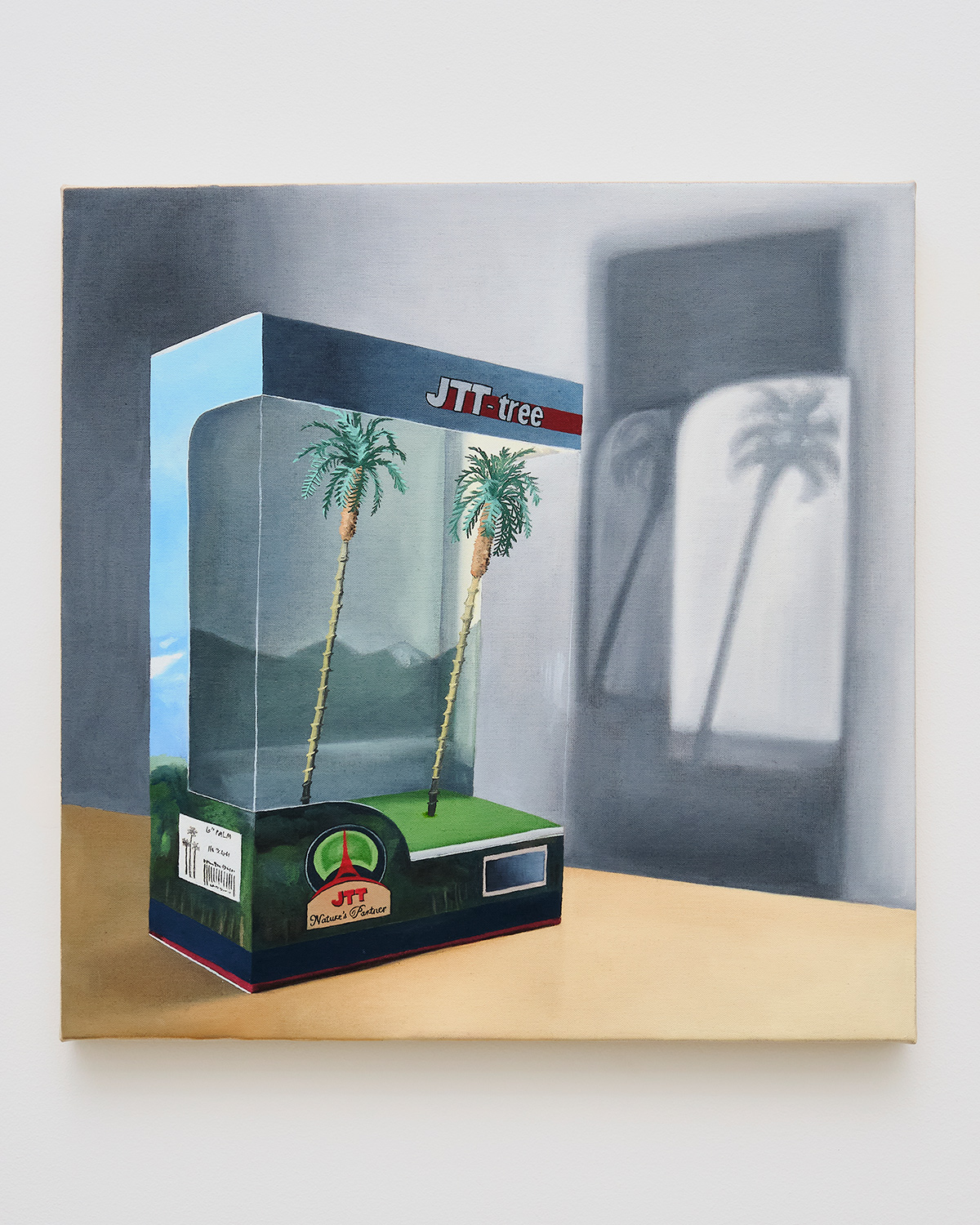
By removing the depth of field, she forces a confrontation with the canvas as a surface, a constructed object rather than a window into a reality. When elements of nature do emerge in her work, they are never presented directly. They appear as mediated glimpses: filtered through windows, captured in mirrors, or existing as faint, distorted reflections. This approach serves as a visual metaphor for the human condition in the Anthropocene, where our primary contact with the natural world is increasingly mediated by screens, glass, and the structures of our own making.
Chronology of Development
- 2015: Ludwig-Leone earns her BA from Yale, establishing the foundation for her analytical approach to painting.
- 2015–2023: A period of professional development and exhibition, during which the artist transitions from exploring formal properties to the thematic focus on human-nature relationships.
- 2024: Completes her MFA at the ArtCenter College of Design, solidifying her conceptual framework regarding cultural bias in art.
- 2026 (August): Scheduled commencement of residency at Millay Arts.
- 2027 (June): Scheduled commencement of residency at the Vermont Studio Center.
The Graphic Silhouette: Shadows as Narrative Agents
Perhaps the most compelling aspect of Ludwig-Leone’s recent work is her use of shadow. In her paintings, shadows are not merely stylistic additions meant to create volume; they are protagonists. They often take the form of flat, graphic shapes that assert their own physical presence, independent of the objects that cast them.
As the artist herself notes: "Shadows are prominent in many of the works, implying a solid form that is often unseen or out of view but asserting themselves as flat, graphic shapes. These silhouettes are also transient and ephemeral—a moment captured before the light changes."
This treatment of the shadow as a "solid form" creates a tension between the ephemeral nature of the light source and the permanence of the paint on the canvas. While her scenes are famously devoid of human figures, the shadows act as "ghosts" of presence. They suggest that while the living world may be absent, the cycle of time continues, marked by the inevitable shift of light and the darkening of space. This absence of life, rather than creating a void, creates a vacuum that the viewer is compelled to fill with their own anxieties and expectations regarding the environment.
The Cultural Implications of the "Mediated View"
The implications of Ludwig-Leone’s work extend beyond the gallery walls. By highlighting how we use "cultural bias" to frame our environment, she touches upon a critical issue in contemporary discourse: the climate crisis and our psychological distance from it. When nature is treated as a distant, flattened, or mediated image, it becomes easier to ignore its degradation.
Her work suggests that our current mode of viewing the natural world—distanced, compartmentalized, and filtered—is part of the problem. By forcing viewers to look at the "window" rather than the "view," she exposes the artifice of our perception. She is not merely painting landscapes; she is painting the act of observation itself. This makes her work vital for a contemporary audience that consumes reality through a series of digital and physical filters.
Supporting Data and Comparative Analysis
In the context of the current art market, there is a growing trend toward "minimalist landscape" painting, yet few artists possess the rigorous theoretical underpinning of Ludwig-Leone. While many contemporaries focus on the aesthetic qualities of abstraction, her work remains rooted in the dialectic of the real vs. the represented.
Her recent focus on "simplified spaces" places her in conversation with the tradition of modernist hard-edge painting, yet her thematic commitment to the natural cycle keeps her work tethered to the environmental concerns of the 21st century. The upcoming residencies at Millay Arts and the Vermont Studio Center indicate that curators and institutions are increasingly interested in artists who can synthesize these disparate modes of inquiry.
The Intersection of Digital and Physical Engagement
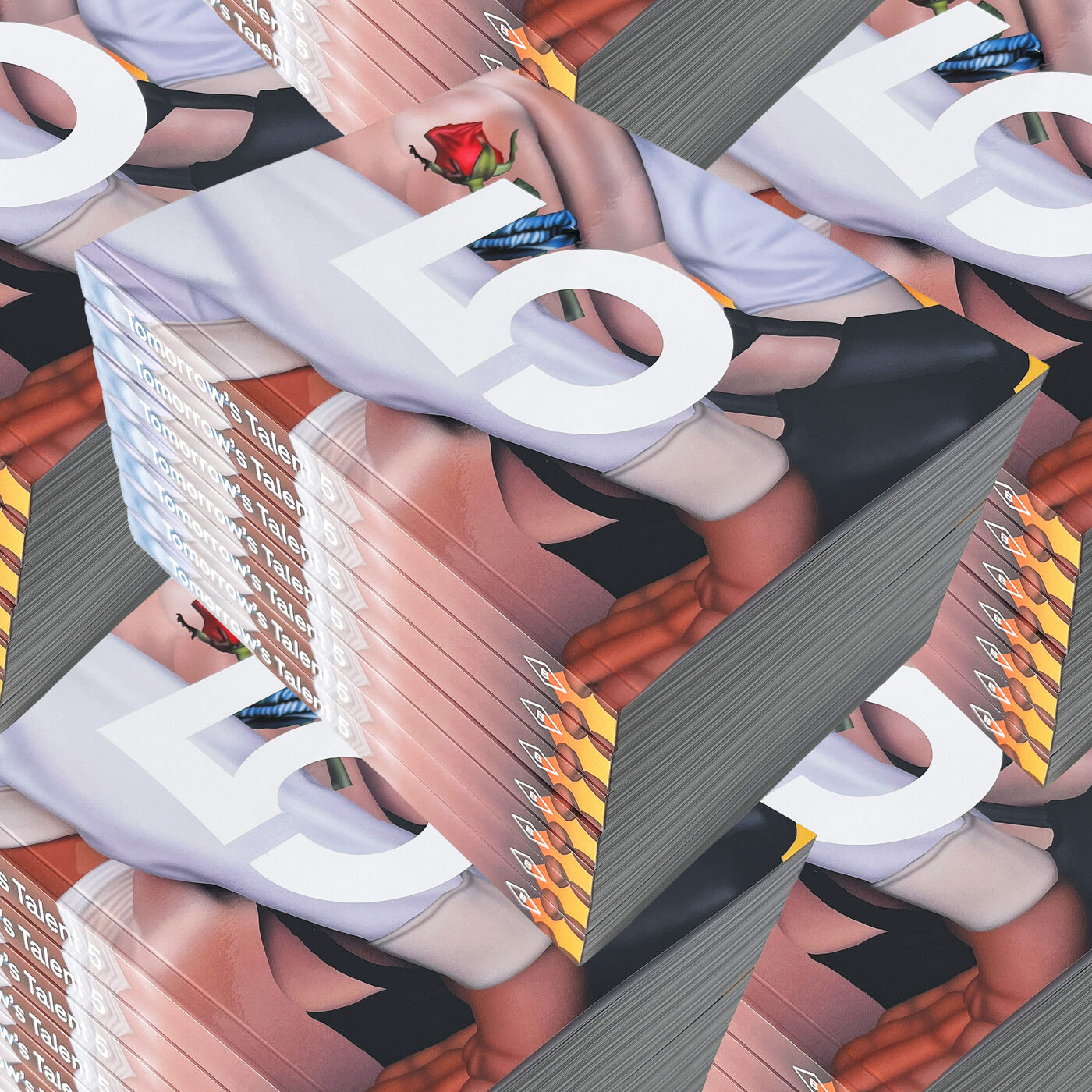
As the art world continues to evolve, platforms like Booooooom have become essential in bridging the gap between studio practice and public discourse. The recent developments surrounding the Booooooom Studio initiative—which aims to foster community engagement—and the release of the Tomorrow’s Talent 5 volume, which features over 60 artists, highlight the need for platforms that contextualize emerging voices like Ludwig-Leone’s.
For the serious collector or student of art history, keeping pace with such artists requires more than just observing their output; it requires engaging with the dialogues they are initiating. Projects such as the Secret Email Club serve as vital conduits for this information, ensuring that the critical theories underpinning the work of artists like Ludwig-Leone reach a wider, more informed audience.
Conclusion: The Future of the Landscape
As we look toward 2026 and 2027, Madeline Ludwig-Leone’s work will likely become a touchstone for discussions on the future of representational painting. She has successfully navigated the transition from student to professional artist by refusing to provide easy answers. Instead, she provides a lens through which we can examine our own cultural biases.
Whether through her upcoming residencies or future exhibitions, the trajectory of her career suggests a continued deepening of her inquiry. Her paintings, with their quiet, shadowed rooms and distant views of nature, offer a profound reflection on what it means to exist in a world that is rapidly changing—a world we often watch, but rarely truly see. By turning our gaze away from the "sublime" and toward the "shadow," Ludwig-Leone reminds us that the most significant truths are often those hidden in plain sight, captured for a fleeting moment before the light changes.


 Asro
Asro
 Reynand Wu