Asro
Asro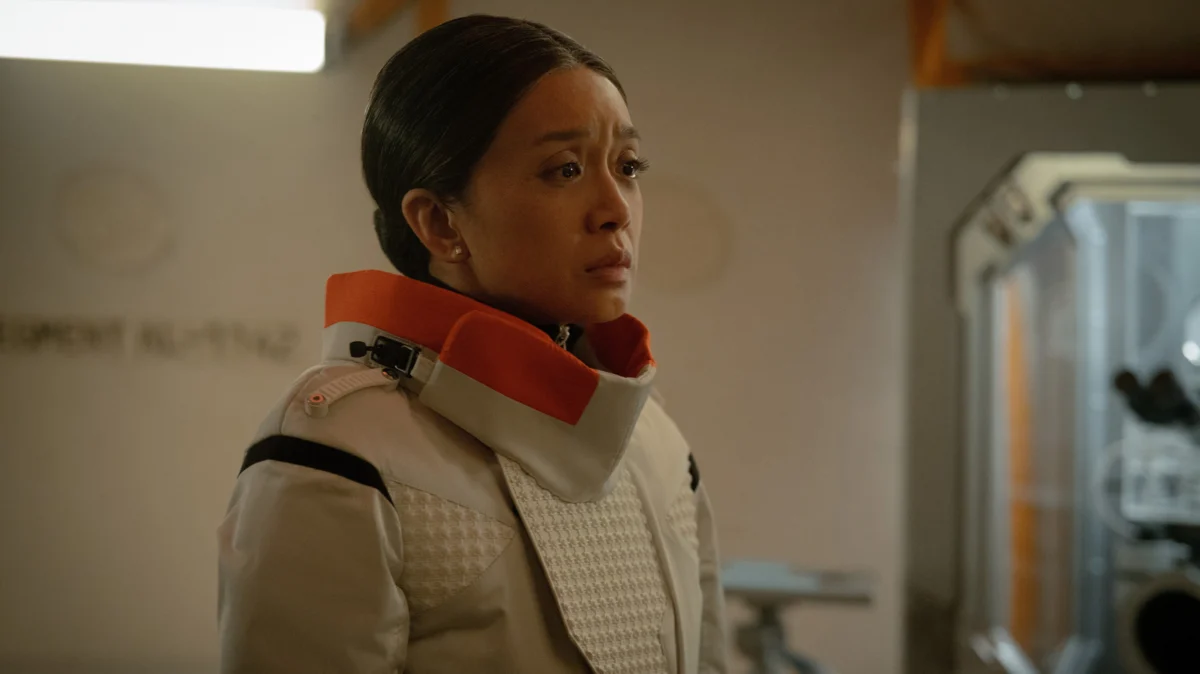
The season five finale of Apple TV+’s critically acclaimed alternate-history series, For All Mankind, has fundamentally shifted the trajectory of the narrative, moving the show from a grounded exploration of Cold War space race politics into the vast, uncharted territory of biological discovery. With the discovery of microbial life on Titan, the series has reached a thematic apex that writers Ben Nedivi and Matt Wolpert have been meticulously planning since the show’s inception.
As the series barrels toward its sixth and final season, the question on the minds of both critics and fans is clear: Is the show transitioning from its "hard sci-fi" roots into a Star Trek-esque space opera? According to the showrunners, while the scope is expanding, the commitment to scientific plausibility remains the series’ North Star.
The Chronology of Discovery: From Moon Bases to Titan’s Methane Lakes
The narrative arc of For All Mankind has always been defined by its aggressive acceleration of human achievement. In this timeline, the Soviet Union reached the moon first, forcing the United States to escalate its space program with a level of urgency that birthed decades of technological breakthroughs.
By season five, the focus shifted from the lunar surface to the colonization of Mars and the high-stakes resource extraction on the moons of Jupiter. The season’s penultimate conflicts—a harrowing, Dune-inspired war for Martian independence—served as the crucible for the final discovery. The mission to Titan, led by Kelly Baldwin (Cynthy Wu), was initially framed as a scientific scouting expedition. However, the discovery of methane-based microorganisms on the surface of the moon represents the "final frontier" the writers have long teased.
The finale’s climax sees Kelly Baldwin making the ultimate sacrifice, choosing to remain behind on Titan to save her crew. In her final moments, she discovers that the methane lakes are not merely geological features, but vast, bioluminescent ecosystems teeming with life. This reveal acts as a bridge between the show’s historical grounding and its future aspirations.
![Will For All Mankind Season 6 Go Full Star Trek? The Showrunner Tells Us [Exclusive]](https://www.slashfilm.com/img/gallery/will-for-all-mankind-season-6-go-full-star-trek-the-showrunner-tells-all-exclusive/l-intro-1780070597.jpg)
Supporting Data: The Science Behind the Fiction
While the discovery of alien life is the ultimate sci-fi trope, Nedivi and Wolpert insist that the show’s writers continue to work with researchers to maintain a high level of scientific rigor. The bioluminescence depicted in the finale, for instance, is rooted in the concept of extremophiles—organisms that thrive in conditions that would be lethal to terrestrial life.
The production team, known for their obsession with technical accuracy regarding orbital mechanics, ship design, and communication latency, has applied the same scrutiny to the Titan discovery. As Matt Wolpert explained, the intention was never to create "little green men" or sentient civilizations that could engage in interstellar diplomacy. Instead, they aimed for a realistic depiction of what humanity’s first encounter with extraterrestrial biology might actually look like: simple, silent, and profound.
"We still drive our researchers crazy trying to make sure the physics makes sense," Nedivi noted. By grounding the discovery in microbial life, the show maintains its intellectual honesty, ensuring that the shift toward the fantastical is earned through the lens of evolutionary biology rather than space-fantasy tropes.
Official Responses: The Showrunners’ Vision
In an exclusive discussion with the creative leads, it became clear that the discovery of life was not a sudden pivot, but the inevitable culmination of the series’ core question: Are we alone?
"We always knew we were going to get here," Ben Nedivi stated. "It felt like it needed to be earned, and this journey to Titan, with all the twists and turns and the sacrifices made—especially by Kelly—made this discovery feel like an uplifting moment for us as writers."
![Will For All Mankind Season 6 Go Full Star Trek? The Showrunner Tells Us [Exclusive]](https://www.slashfilm.com/img/gallery/will-for-all-mankind-season-6-go-full-star-trek-the-showrunner-tells-all-exclusive/intro-1780070597.jpg)
The showrunners are acutely aware of the "Star Trek" comparisons. The transition from terrestrial politics to the exploration of deep-space phenomena creates a tonal shift that could alienate viewers who tuned in for the geopolitical maneuvering of the early seasons. However, the creative team views this not as a genre-jump, but as the natural evolution of a space-faring civilization. As humans push further from the sun, the narrative must necessarily expand to encompass the mysteries of the cosmos.
The Final Frontier: Implications for Season 6
As the show heads into its sixth and final season, the stakes have been raised to an unprecedented level. The season five finale closed with an ominous and intriguing cliffhanger: a Russian spaceship from the 1990s, long presumed lost, is seen drifting in orbit around a ringed planet—presumably Saturn—detecting mysterious gravitational wells.
1. The Technological Leap
The discovery of these gravitational anomalies suggests that humanity is on the verge of mastering advanced propulsion or navigation technologies. In the context of the series, this implies that the final season will likely focus on the race to understand these "wells," potentially leading to breakthroughs that could allow for travel beyond our solar system.
2. The Final Bow
With the confirmation that Season 6 will conclude the series, the pressure to deliver a satisfying finale is immense. The transition from the "War on Mars" to "First Contact" (even if only with microbes) and now to "Deep Space Exploration" mirrors the growth of the human spirit in the show. The final season is expected to provide closure to the characters who have sacrificed everything for the sake of progress.
3. Philosophical Shifts
The show has always balanced the "how" of technology with the "why" of human nature. The final season will likely force a confrontation between the political entities (the U.S., the U.S.S.R., and the Martian colonies) as they realize that the discovery of life and the unlocking of gravitational technology might render their terrestrial conflicts irrelevant. The question remains: Will humanity unite in the face of the infinite, or will they carry their baggage into the stars?
![Will For All Mankind Season 6 Go Full Star Trek? The Showrunner Tells Us [Exclusive]](https://www.slashfilm.com/img/gallery/will-for-all-mankind-season-6-go-full-star-trek-the-showrunner-tells-all-exclusive/a-discovery-for-all-mankind-1780070600.jpg)
Conclusion: A Legacy of Innovation
For All Mankind has proven itself to be one of the most ambitious television projects of the modern era. By weaving actual historical events with high-concept sci-fi, it has created a unique narrative space. While the show is certainly leaning into more speculative territory, it remains anchored by the emotional journey of its characters.
Whether the sixth season "goes full Star Trek" or maintains its gritty, grounded roots, the legacy of the series is already cemented. It has successfully argued that the pursuit of knowledge—even at the cost of our lives or our political stability—is the defining characteristic of our species. As Kelly Baldwin stands alone on the surface of Titan, bathed in the glow of alien microbes, the audience is reminded that the journey is never just about reaching the destination; it is about what we become along the way.
As we await the final chapter, one thing is certain: the vision of the future presented by Nedivi and Wolpert will continue to challenge our perceptions of space, science, and the limits of human ambition. The stars are no longer the limit; they are the next step.


 Jia Lissa
 Muslim