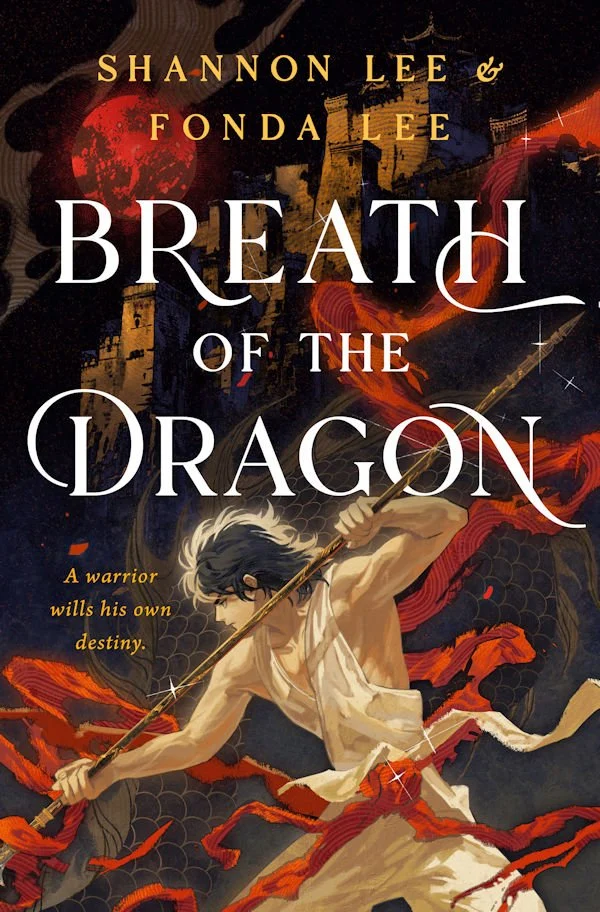
In the landscape of modern Young Adult (YA) fantasy, the challenge of blending high-stakes martial arts action with profound philosophical inquiry is a daunting one. Yet, Breath of the Dragon—the opening installment of the Breathmarked duology—manages to navigate this terrain with surprising grace. Released in January 2025, the novel represents a unique collaboration between Shannon Lee, CEO of the Bruce Lee Family Companies, and award-winning novelist Fonda Lee. Together, they have crafted a narrative that serves both as a compelling coming-of-age odyssey and a vessel for the enduring wisdom of the late martial arts icon, Bruce Lee.
Main Facts: A Tale of Ambition and Identity
At its core, Breath of the Dragon is the story of sixteen-year-old Jun Li, a young man defined by his lack of a "Breath Mark." In a world where the god known as Dragon bestows magical, scale-like markings upon a chosen few—granting them extraordinary physical and psychological abilities—Jun finds himself on the outside looking in. His twin brother, Sai Li, is a marked individual, seemingly destined for greatness, while Jun is left to navigate a world that views his lack of magic as a lack of potential.
The narrative hook is the "Guardian’s Tournament," a high-stakes competition held every six years to determine the protector of the magical Scroll of Earth. Driven by a desire to restore his father’s tarnished honor and rectify the banishment that tore his family apart, Jun defies his father’s strict prohibition and stows away in the wagon of a troupe of traveling performers—Chang and his daughter, Ren. As Jun steps onto the tournament stage, the story transcends his personal vendetta, evolving into a broader struggle for the soul and stability of the entire nation.
Chronology: The Evolution of a Literary Collaboration
The project’s genesis is as much about legacy as it is about storytelling. The collaboration between Shannon Lee and Fonda Lee was built on a shared desire to translate the foundational philosophies of Bruce Lee into a fictional universe.
- Pre-2025: Conceptualization and development of the Breathmarked world, focusing on incorporating themes of self-actualization, discipline, and the rejection of self-serving power.
- January 2025: Breath of the Dragon is released to critical interest, particularly regarding its departure from traditional Western-centric fantasy tropes.
- Late 2025 – Mid 2026: The novel gains traction for its accessible prose and unique world-building, which draws heavily from Ancient Chinese aesthetics and mythology.
- October 27, 2026: The scheduled release date for the conclusion of the duology, Mark of the Warrior, marking the culmination of Jun Li’s current arc.
Supporting Data: Stylistic Choices and World-Building
The Prose: Accessibility as a Strength
For many readers, the "flowery" prose often found in epic fantasy can serve as a barrier to entry. Breath of the Dragon takes a different approach. The writing is intentionally crisp, clean, and direct. This stylistic choice serves two purposes: it honors the fast-paced, disciplined nature of martial arts, and it makes the genre significantly more accessible to younger readers or those new to fantasy. While some purists may miss the ornate descriptions of high-fantasy stalwarts, the clarity here allows the reader to focus on the intricate power dynamics and the internal growth of the protagonist.
A Departure from Western Tropes
The world-building is a refreshing deviation from the standard medieval European settings that dominate the shelves. Inspired by the landscapes and cultural touchstones of Ancient China, the book provides a vibrant, albeit occasionally disorienting, backdrop. While the lack of familiar cultural signifiers—such as corsets or towers—can leave a reader struggling for orientation in the early chapters, the immersion into a non-European paradigm is a necessary step in the diversification of the fantasy genre.
The Role of Philosophy
The text functions as a narrative exploration of Bruce Lee’s core tenets: the importance of a clear mind, the value of physical fitness, and the necessity of unity over division. The character of Ren acts as the philosophical anchor of the story, delivering poignant lines such as, "Marked or not, every one of us has Breath enough to will our own destiny into being." These sentiments provide a moral backbone to the action, elevating the text from a simple tournament story to a meditation on what it means to lead a purposeful life.
Official Responses and Philosophical Implications
The reception of the novel has been largely defined by how the authors handle the heavy responsibility of Bruce Lee’s legacy. By weaving these philosophies into the narrative, the authors avoid the pitfalls of "preachy" literature. Instead, the wisdom is baked into the plot; the characters must learn these lessons through failure, sweat, and conflict.
The Problem of Corruption and Power
A recurring theme throughout the novel is the critique of systemic corruption. As Jun competes, he uncovers a darker side to the Tournament—a reality where wealth and bloodlust are prioritized over the integrity of the Guardianship. This subplot serves as a warning against the dangers of institutional rot. As the text notes, "there was money to be made, and bloodshed entertained the masses," a cynical but realistic assessment of how power is maintained at the expense of the common good.
The Dangers of Division
The book’s moral climax centers on the concept of unity. Jun’s realization that people on the other side of the political wall are not inherently "weak or evil" acts as a direct rebuke to the tribalism often found in fantasy conflicts. By choosing to emphasize shared humanity rather than "us-versus-them" rhetoric, the authors align the story with the broader, humanitarian vision that defined Bruce Lee’s own life and career.
Analysis: Why ‘Breath of the Dragon’ Resonates
The Target Demographic
While marketed as a Young Adult novel for ages fourteen and up, the book’s appeal is remarkably broad. The mature themes regarding political stability and personal honor provide enough depth for older readers, while the accessible language ensures it remains a top-tier recommendation for younger fantasy enthusiasts. The presence of moderate, occasionally harsh language and the intensity of the martial arts sequences are the primary limiting factors for the age group, though the authors arguably could have reached an even wider audience with the inclusion of world-specific, rather than modern, profanity.
A Standalone Success?
A significant concern for readers is whether Breath of the Dragon holds up on its own. The consensus is affirmative. While the larger conflict regarding the fate of the country remains unresolved, Jun’s personal arc reaches a satisfying, earned conclusion. The reader leaves the book feeling as though they have witnessed a genuine transformation in the protagonist, even if the geopolitical map remains in flux.
The Physical Experience
In an era of digital dominance, the physical presentation of the book has not gone unnoticed. The use of sprayed edges—which require the reader to manually separate the pages—adds a tactile, sensory element to the reading process. This, combined with the "crackly" sound of a new, bound volume, offers an almost ASMR-like quality that enhances the value of owning a physical copy of the book.
Conclusion: The Winds of Change
As the release of Mark of the Warrior approaches, Breath of the Dragon stands as a testament to the power of combining heritage with innovative storytelling. It is a work that manages to be both a tribute to a legend and a fresh, standalone entry into the fantasy canon.
The words of the mentor character, Chang—"These are dangerous times. I can sense the Breath in this city turning bad, like a winter wind"—serve as both a warning for the characters and a promise to the reader. The "winter wind" of political unrest and personal trial is only just beginning to blow. If the quality of the first volume is any indication, the conclusion of the Breathmarked duology will be a significant moment in the fantasy genre, cementing Jun Li’s journey as a modern classic of the coming-of-age subgenre. Whether one is a fan of Bruce Lee’s philosophy or simply looking for a well-paced, meaningful fantasy adventure, Breath of the Dragon offers a path worth walking.