Richard Adams’ Watership Down stands as a titan in the landscape of speculative fiction, a novel that has transcended its origins as a bedtime story to become a foundational text of the SFF Bestiary. Decades after its publication, the work continues to invite critical re-examination, not merely as a tale of talking animals, but as a sophisticated exploration of leadership, totalitarianism, and the construction of myth.
Main Facts: A Modern Classic’s Origins and Impact
The genesis of Watership Down is famously domestic. Richard Adams, while commuting with his daughters, began spinning the tale of a band of rabbits in search of a new home. What began as an improvised oral narrative eventually blossomed into a dense, 470-page epic that would secure its place in the literary canon.
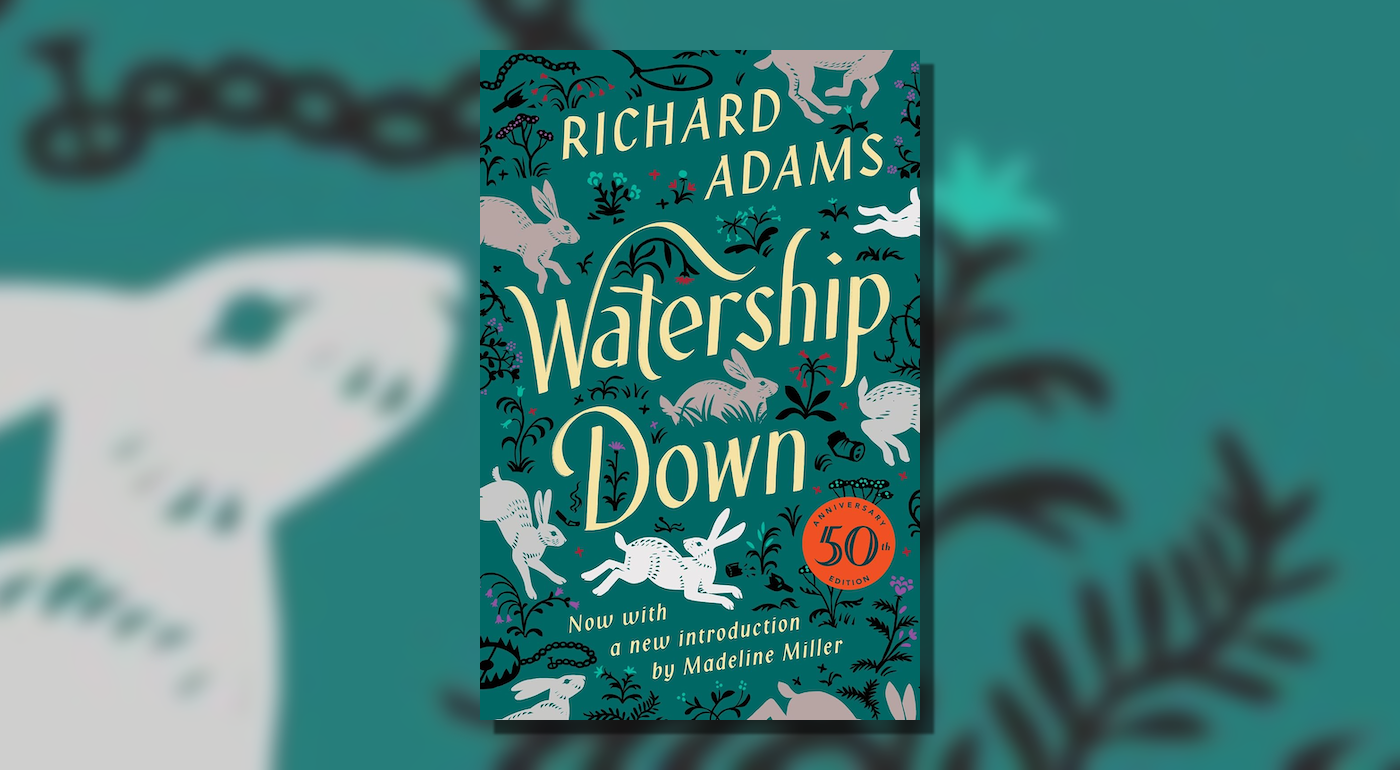
The novel’s recent reissue by Puffin, featuring a poignant introduction by Madeline Miller, has sparked a renewed conversation about the book’s influence on the formative years of readers. Miller describes her first encounter with the text at age twelve—a temporal mirror to the very car rides that birthed the story. This cycle of transmission—from father to daughter, from author to reader, and from generation to generation—highlights the book’s enduring vitality. Whether read as a physical, spine-stretching paperback or as an accessible ebook, the core of the narrative remains unchanged: a desperate, high-stakes journey that balances survivalist realism with profound, mythological depth.
Chronology: The Evolution of a Reader’s Perspective
The relationship between a reader and a book is rarely static. For many, Watership Down serves as a benchmark for personal growth.
- The Formative Encounter: Many readers first encounter the novel in pre-adolescence, drawn in by the surface-level adventure and the unique, anthropomorphic-yet-grounded rabbit society.
- The Academic Transition: For others, the book is a companion during significant life transitions. The narrator of the SFF Bestiary recalls reading the text while traveling alone to Cambridge for graduate studies. In this context, the physical weight of a thick, dog-eared paperback served as a grounding force amidst the upheaval of relocating across the Atlantic.
- The Retrospective Analysis: Re-reading the novel later in life often reveals layers previously obscured by youthful distraction. What once appeared as a simple struggle for survival is now recognized as a complex political and philosophical treatise. The "present-day" reader finds that while the prose remains the same, the capacity to perceive Adams’ construction of societal archetypes—the fascist state, the democratic collective, and the nature of prophetic leadership—is significantly heightened.
Supporting Data: Scientific and Literary Frameworks
Adams was not writing in a vacuum; he grounded his narrative in both biological observation and the literary traditions of the British pastoral.
The Biological Foundation
Unlike many works that utilize "talking animals" as mere proxies for human tropes—often dressing them in clothes or placing them in houses—Adams insisted on biological authenticity. He relied heavily on R.M. Lockley’s 1964 study, The Private Life of the Rabbit. By adhering to the social behaviors of Oryctolagus cuniculus, Adams creates a world that feels simultaneously alien and familiar. The terminology he invented, such as tharn (a state of paralyzed terror), is rooted in the observable, high-stress physiology of rabbits.
The Literary Architecture
Structurally, Watership Down mirrors the classical epic. While critics often point to Homeric parallels, the novel bears a closer resemblance to Virgil’s Aeneid: a displaced group of refugees, led by a doubt-ridden but visionary protagonist, navigating divine (or supernatural) omens to establish a new city. Adams’ inclusion of the trickster-hero El-ahrairah adds a layer of oral history, effectively showing how contemporary struggles become the foundational myths of future generations.
Official Responses: Archetypes of Leadership
The conflict within the novel is defined by two opposing models of leadership, embodied by Hazel and General Woundwort.
The Facilitator: Hazel
Hazel is the antithesis of the "Great Man" theory of history. He is neither the strongest nor the smartest rabbit in the warren. Instead, his brilliance lies in his role as a facilitator. He understands that a functioning society requires the collective intelligence of its members. By integrating the unique skills of his peers—Bigwig’s martial prowess, Fiver’s prophetic insight, Blackberry’s ingenuity, and even the external assistance of Kehaar the seagull—Hazel builds a resilient, collaborative, and ultimately successful community.
The Authoritarian: General Woundwort
In contrast, General Woundwort represents the failure of the totalitarian state. His warren, Efrafa, is a fortress built on fear and rigid control. Woundwort’s inability to imagine a world outside of his own domination leads to the inevitable collapse of his society. He views diplomacy as weakness and compromise as an existential threat. Through this, Adams provides a biting critique of fascist structures, illustrating that such systems are not only cruel but unsustainable.
Implications: The Enduring Power of Myth
The resonance of Watership Down today lies in its ability to operate on multiple levels. It is an adventure story, a meditation on the natural world, and a sophisticated study of political science.
The Medium and the Message
Current debates regarding the "sterility" of ebooks versus the tactile experience of physical books are relevant here. While the physical copy offers the smell of paper and the visceral struggle of holding a binding that is bursting at the seams, the digital medium offers its own advantages: the ability to search, annotate, and reformat. Yet, the implication is clear: the medium is secondary to the world-building. Whether the words are on vellum or screen, the world of the rabbits, the terror of the Black Rabbit of Inlé, and the cleverness of El-ahrairah remain potent.
Lessons for the Modern World
The most lasting implication of Adams’ work is the necessity of community in the face of crisis. Hazel’s realization that their survival depended not on individual heroics, but on the cooperation of diverse, flawed individuals, is a timeless lesson. As we navigate our own "falling cities" and political landscapes, the story of the rabbits of Watership Down remains a vital touchstone.
In conclusion, Watership Down has proven its resilience. It is a book that grows with its reader, offering fresh insights as the world changes. By bridging the gap between the animal kingdom and the human condition, Richard Adams created a myth that, much like the legend of El-ahrairah, will likely endure as long as there are those who need to hear a story about finding a home against all odds.