Lina Hope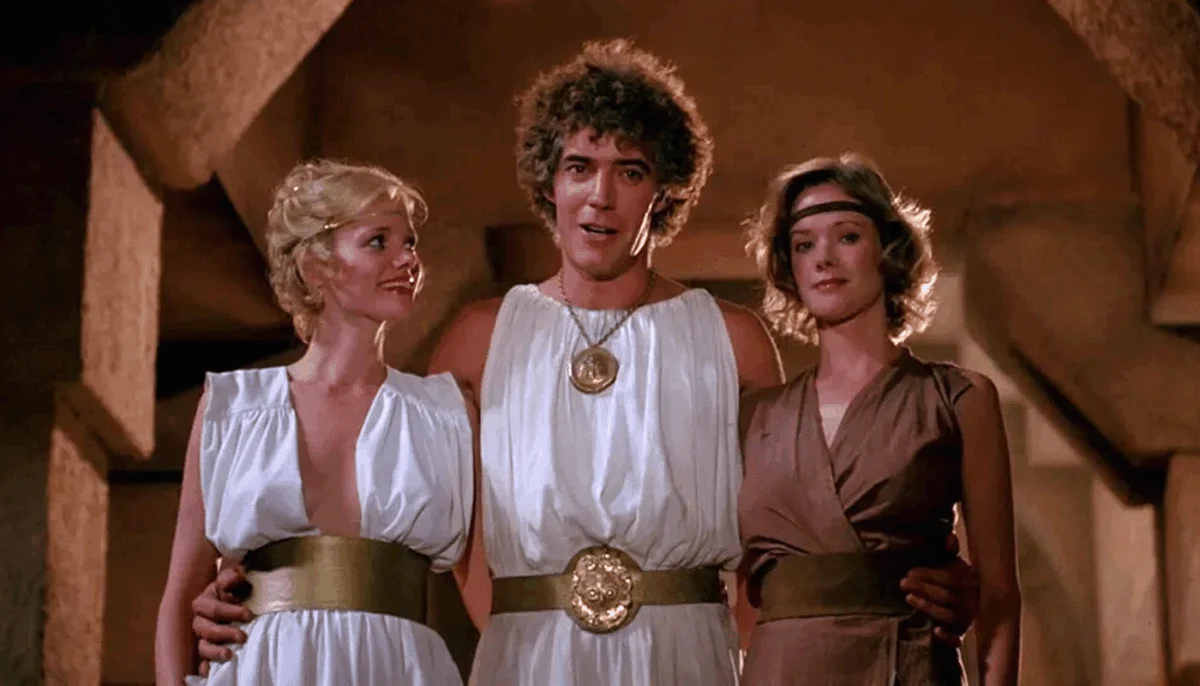
The 1980s occupy a singular, neon-soaked pedestal in the history of fantasy cinema. It was an era where practical effects—rubber masks, stop-motion monstrosities, and elaborate pyrotechnics—defined a genre that was as tactile as it was imaginative. While the 1990s saw a temporary retreat into prestige dramas and high-concept sci-fi, the 2000s eventually resurrected the fantasy epic with high-gloss CGI. However, looking back at the "Age of Eighties Fantasy," one discovers a frontier that was far weirder, grittier, and significantly less polished than the digital spectacles that followed.
In this series, we explore the canonical and the forgotten, tracing the legacy of films released between 1980 and 1989. After analyzing the elevated craft of Dragonslayer (1981) and the grandiose, tonal shifts of John Boorman’s Excalibur (1981), we now turn our attention to the darker, more exploitative corner of the decade: the 1982 Conan-inspired cash-in, Sorceress. Produced by the legendary king of B-movies, Roger Corman, Sorceress serves as a cautionary tale about what happens when industrial efficiency collides with unchecked, jaundiced creative impulses.
The Anatomy of a Cash-In: Main Facts and Production Chaos
Produced and distributed under the banner of New World Pictures, Sorceress was a blatant attempt to capitalize on the massive success of John Milius’s Conan the Barbarian. Directed by Jack Hill, a filmmaker whose resume includes the seminal blaxploitation classic Coffy, the film is a masterclass in how to stretch a shoestring budget until it snaps.
The production was plagued by misfortune from its inception. Hill, who had initially hoped to film in Italy to capture a specific aesthetic, found his ambitions curtailed by Corman’s rigid financial arrangements. Instead, the production was moved to Mexico, a decision that proved disastrous. According to Hill, the project was fraught with systemic failures, including a catastrophic accident where the studio’s film vault exploded, destroying crucial assets. Because the local cast was largely non-union, the final product required extensive post-production looping. The resulting ADR (Automated Dialogue Replacement) lends the film an uncanny, detached quality, as if the actors are constantly fighting against their own dubbed voices.
A Narrative of Mythic Incoherence: Chronology and Plot
The plot of Sorceress is less a cohesive story and more a series of vignettes tied together by a threadbare fantasy framework. The story follows the evil sorcerer Traigon, a man obsessed with three lives—each of which must be extinguished in sequence. Traigon attempts to sacrifice his firstborn child to the goddess Caligara, but his plan is thwarted by the mother’s defiance, the intervention of the wizard Krona, and the revelation that the mother had actually birthed twins.
The mother mortally wounds Traigon before succumbing to her own injuries, ending the sorcerer’s first life. Twenty years later, the twins, Mara and Mira, have grown into young women possessing magical powers of illusion and martial prowess. Following the inevitable destruction of their adoptive home, the sisters embark on a quest, accompanied by a ragtag ensemble: the Viking warrior Baldar, the barbarian prince Erlick, and Pando, a satyr defined by his insatiable, and frankly uncomfortable, libido.
The film’s second act devolves into a string of bizarre, often nonsensical misadventures. There are exploding fruits, attempted executions involving primitive rectal devices, and a psychic bond between the twins that is exploited for what is arguably one of the most cringe-inducing sex scenes in the history of the genre. The climax sees Traigon attempting to force an impregnation of Mara to secure a royal bloodline for future sacrifices. The finale is a chaotic mess involving mummies, a winged lion-centaur from space (summoned by the word "Vital"), and a peasant uprising led by a satyr commanding local goats.
The Male Gaze and the "Sleaze-Fest" Factor: Supporting Data
While many films of the 1980s featured "sword and sorcery" tropes, Sorceress stands out for its particularly vitriolic tone. It is not merely a campy fantasy; it is a film drenched in the male gaze at its most jaundiced.
The film’s treatment of its female leads is profoundly problematic. From the opening act—which features the twins swimming nude while Pando spies from the underbrush—to the torture of their mother using "the talons," the film consistently prioritizes degradation over narrative progression. The aesthetic design often feels like a "Spirit Halloween" version of medieval fantasy, and the frequent inclusion of orgies and sexual violence moves the film from the realm of "fun camp" into something genuinely distasteful.
Critically, the film is a failure by every traditional metric. Even the legendary character actor Sid Haig, who was reportedly desired for the role of Pando, was excluded when Corman refused to meet his salary demands. The production instead opted for a prosthetic mask that appears to be a cruel caricature of Haig, a decision that speaks volumes about the level of professional respect present on set.
Official Responses and Industry Fallout
The industry response to Sorceress was tepid at best. With a box office return of a mere $1.3 million, the film failed to leave a significant commercial footprint. More importantly, it acted as a catalyst for a professional rupture; the friction of the production effectively ended the working relationship between director Jack Hill and producer Roger Corman.
Hill’s later reflections on the film paint a picture of a team that "worked their hearts out" under impossible conditions. However, the finished product suggests that the labor was misdirected. When a film’s director seems to be apologizing for the existence of his own project, it is a clear indicator that the vision was compromised by the very studio system that produced it.
Implications: The Legacy of Low-Budget Excess
What is the legacy of Sorceress in the grand tapestry of 1980s cinema? It served as a grim blueprint for the "sleaze-and-sorcery" subgenre, paving the way for later Corman productions like Deathstalker (1983) and Deathstalker II (1987).
Its existence creates a tension with the "delightful schlock" of the decade. Films like The Beastmaster or various Cannon Films productions certainly leaned into the tropes of the era—bikini-clad warriors and questionable dialogue were standard fare. Yet, those films often retained a sense of charm and earnestness that allowed them to be embraced by audiences as cult classics. Sorceress, by contrast, feels malicious. It is the type of film that inadvertently gave the genre a bad name, feeding into the worst impulses of early 21st-century geek culture, including the objectification of booth babes and the "toxic" side of the fantasy fandom that would eventually be critiqued by modern film theory.
Ultimately, Sorceress is a reminder that camp is a delicate balance. When you remove the heart and replace it with cynical, low-budget exploitation, you aren’t left with a cult classic; you are left with a relic of a darker era of filmmaking. As we move forward in this column, we will shift our focus from the chauvinistic dreck of the mystical past to the charmingly disastrous musical experimentation of 1980’s The Apple. But for now, Sorceress remains in the rearview mirror—a cautionary tale of what happens when the fantasy genre loses its sense of wonder and finds only its baser instincts.


 Raul Delapena Setiawan
 Nila Kartika Wati