Main Facts: The Evolution of Digital Puzzles
In the rapidly expanding universe of Roblox, a platform that has evolved from a simple physics engine into a multi-billion-dollar ecosystem of user-generated content, the "Escape Room" genre has emerged as a cornerstone of community engagement. Among the most prominent titles currently capturing the attention of millions is Project Escape Room, specifically its latest and most challenging iteration: the Prison Map.
Project Escape Room is not merely a game but a complex simulation of logic, spatial awareness, and high-stakes problem-solving. Developed within the Roblox environment, the game places players in meticulously themed environments where the primary objective is to bypass intricate security systems and environmental hurdles before a countdown timer reaches zero. The Prison Map represents a significant difficulty spike for the franchise, tasking players with a multi-staged breakout that mirrors the tension of cinematic escapes.
The game leverages the core strengths of the Roblox platform—accessibility, social interaction, and iterative design—to create a psychological experience that rewards patience and analytical thinking. As digital escape rooms continue to gain traction as a viable alternative to physical entertainment venues, Project Escape Room: Prison stands as a testament to the sophistication of modern indie development within the Roblox Corporation’s infrastructure.
Chronology: A Step-by-Step Walkthrough of the Great Escape
Escaping the high-security confines of the Prison Map requires more than just speed; it requires a systematic approach to the environment. The following chronology outlines the essential steps required to navigate the facility’s defenses, based on the latest gameplay mechanics observed by specialists in the field.
Step 1: The Initial Breach – Escaping the Cell
The journey begins in the claustrophobic confines of a standard detention cell. Unlike many games where the exit is obvious, Project Escape Room demands environmental interaction.
- Search the Bedding: Players must interact with the pillow and mattress. Often, a small metal shim or a hidden note is tucked beneath the textures.
- The Ventilation Shaft: Look for a loose grate. In many instances, the player must find a rudimentary tool—such as a spoon from a meal tray—to unscrew the bolts.
- The Toilet Mechanism: A common trope in prison escapes involves the plumbing. Flushing the toilet in a specific sequence or searching the cistern can reveal the first key item needed to unlock the cell door.
Step 2: Deciphering the Walls – Counting the Tally Marks
Once out of the immediate cell, players encounter a hallway or transition room where the walls are covered in tally marks. This is a classic "logic gate" puzzle.
- The Numerical Code: The tally marks are rarely decorative. Players must count the groupings (e.g., four marks crossed by a fifth) to derive a four or six-digit code.
- The Cipher: Sometimes, the tally marks correspond to the number of letters in a word found elsewhere in the room. Precision is key here; a single miscount results in a lockout.
Step 3: Technical Sabotage – Cutting the Wires
The Prison Map introduces an electrical component that requires players to interact with a circuit breaker or a security panel.
- The Color Sequence: Players will typically find a blueprint or a "maintenance log" nearby. This document dictates the order in which wires must be cut (e.g., Blue, Red, Yellow, Green).
- Risk of Reset: Cutting the wrong wire often triggers an alarm, resetting the puzzle or significantly reducing the remaining time. This step tests the player’s ability to remain calm under the pressure of the ticking clock.
Step 4: Hydro-Logic – Solving the Shower Pattern
The prison’s communal shower area serves as a major environmental puzzle. This section utilizes visual memory and mechanical sequences.
- Steam Revelation: By turning on specific showerheads, the room fills with steam, revealing a hidden code or directional arrow on the mirrors or tiled walls.
- The Pattern Puzzle: Players must activate the shower valves in a specific pattern—often found on a nearby laundry list or etched into the floor—to drain the water and reveal a hidden compartment in the floorboards.
Step 5: Physicality and Numbers – Examining the Dumbbells
Moving into the exercise yard or the prison gym, the puzzles shift toward weight and distribution.
- The Weight Clue: Each dumbbell in the rack has a number engraved on it. Players must find the missing weight or identify a sequence of weights that adds up to a specific total mentioned in a guard’s "workout log."
- The Lever Mechanic: In some versions, placing the correct weight on a pressure plate or rack triggers a secret door behind a weight bench.
Step 6: The Final Hurdle – Finding the ‘Gate Padlock’ Key
The final stage involves the main gate that leads to the outer perimeter. This is the most guarded area of the map.
- The Guard’s Office: Players must navigate a stealth section to reach the warden’s or guard’s desk. The "Gate Padlock" key is rarely just sitting out; it is often hidden inside a locked drawer that requires a keycard found in the previous steps.
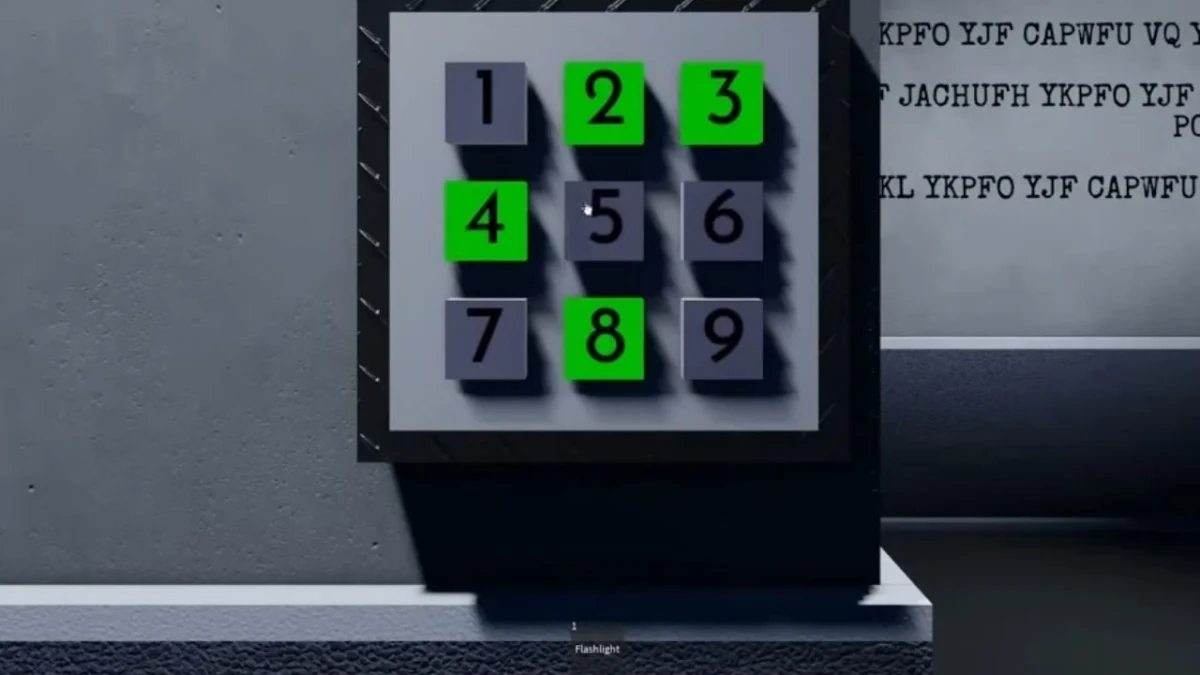
- The Final Combination: Even with the key, the gate may be double-locked with a digital keypad. This final code is usually the culmination of all clues found throughout the previous five steps.
Supporting Data: The Rise of Roblox as a Global Powerhouse
To understand why a game like Project Escape Room: Prison commands such a massive audience, one must look at the underlying data of the Roblox platform. As of 2023 and early 2024, Roblox has maintained a staggering trajectory:
- User Statistics: Roblox boasts over 70 million daily active users (DAUs). A significant portion of this demographic is moving toward "aged-up" content—experiences that are more complex and challenging than the platform’s earlier, simpler offerings.
- Genre Dominance: The "Escape" and "Obby" (Obstacle Course) genres account for approximately 15-20% of the most-played games on the platform at any given time.
- Monetization and Engagement: Project Escape Room utilizes a "Freemium" model. While the game is free to play, data shows that players are increasingly willing to spend "Robux" (the platform’s currency) on hints, cosmetic items, or "skips" for particularly difficult levels. This economic ecosystem allows developers to constantly update maps like the Prison to keep the content fresh.
- Retention Rates: Complex puzzle games have been shown to have higher long-term retention rates compared to "clicker" games, as the community often forms around solving mysteries and sharing walkthroughs on platforms like YouTube and Discord.
Official Responses: Safety and Innovation
Roblox Corporation has been vocal about its commitment to both developer freedom and user safety. In recent statements regarding the evolution of the platform, Roblox executives have highlighted several key pillars:
- Empowering Creators: "Our goal is to provide the tools for anyone, anywhere, to create immersive 3D experiences," a spokesperson for Roblox stated. "Games like Project Escape Room demonstrate the power of our Luau scripting language and the creativity of our community."
- Safety Protocols: Given the "Prison" theme, Roblox ensures that all content adheres to its community standards. The game avoids graphic violence, focusing instead on logic and "cartoonish" peril, ensuring it remains accessible to a broad age range while still providing the tension required for an escape room.
- Platform Stability: Roblox Corp continues to roll out updates to its engine (such as improved lighting and physics), which developers of Project Escape Room have utilized to create the atmospheric, moody lighting found in the Prison Map.
Implications: The Future of Virtual Problem-Solving
The success of Project Escape Room: Prison carries broader implications for the future of digital entertainment and education.
1. The Gamification of Logic
Educational experts have noted that digital escape rooms serve as an informal medium for teaching STEM (Science, Technology, Engineering, and Mathematics) principles. The "Prison Map" requires deductive reasoning, mathematical calculation (tally marks and weights), and an understanding of sequential logic (wire cutting). As these games become more sophisticated, their potential as cognitive training tools grows.
2. The Shift from Physical to Virtual
The physical escape room industry, which saw a massive boom in the 2010s, is increasingly intersecting with the virtual world. Virtual experiences offer "impossible" puzzles—such as rooms that change shape or gravity-defying mechanics—that cannot be replicated in a physical space. Project Escape Room provides a low-cost, high-accessibility alternative to physical venues.
3. The "Prosumer" Economy
The development of the Prison Map highlights the "prosumer" nature of Roblox. The line between player and developer is blurred. As players complete the Prison Map, many are inspired to use the Roblox Studio tools to create their own maps, fueling a self-sustaining cycle of content creation that traditional gaming companies struggle to match.
4. Community and Collaboration
While the walkthrough provided is a guide for individual success, Project Escape Room is fundamentally a social experience. The Prison Map is frequently tackled by groups of friends using voice chat to coordinate actions. This social layer adds a level of complexity—communication—that is essential for modern workplace environments, further cementing the game’s relevance beyond mere entertainment.
In conclusion, Project Escape Room: Prison is more than just a digital distraction; it is a sophisticated puzzle environment that challenges the intellect, fosters community, and showcases the immense potential of the Roblox platform. Whether you are a "specialist" or a novice, the journey through the cell blocks and shower rooms is a masterclass in modern game design.