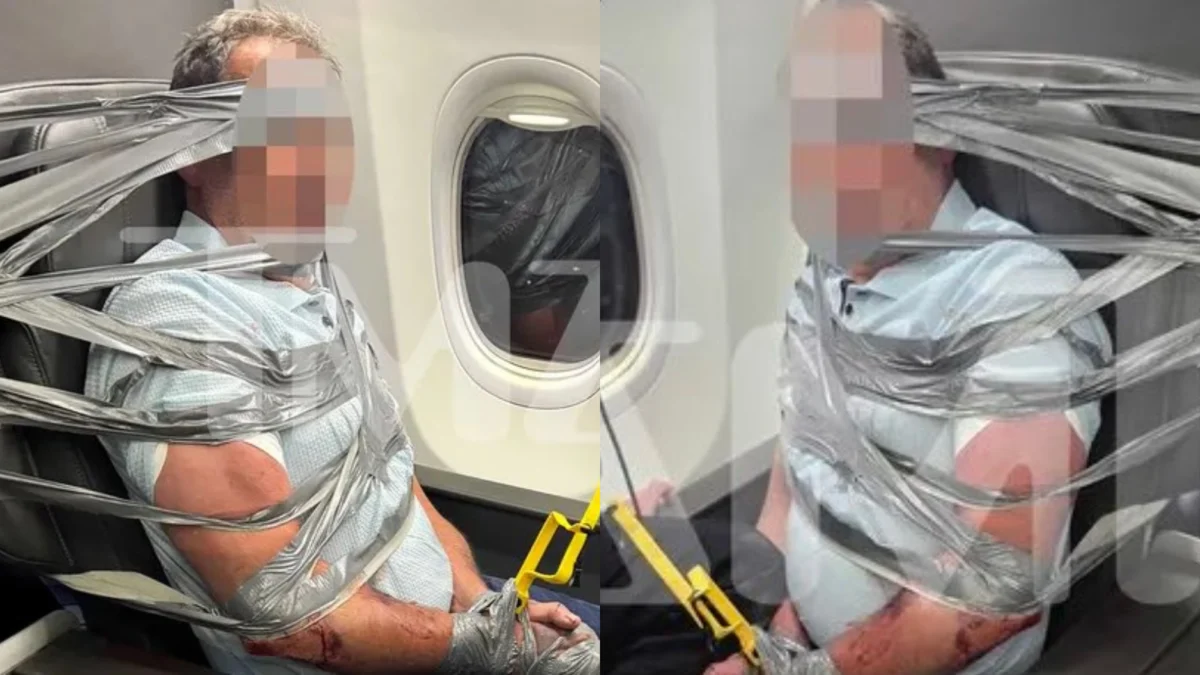
BALTIMORE — A routine cross-country flight turned into a scene of terror and tactical intervention on September 3, 2026, when an American Airlines flight was forced to make an emergency diversion to Baltimore following a violent, hate-fueled outburst by an unruly passenger.
Flight 618, which departed from Dallas Fort Worth International Airport (DFW) bound for Newark Liberty International Airport, was interrupted by a disruptive traveler who, according to eyewitness accounts and subsequent reports, subjected fellow passengers and crew members to a barrage of racist and homophobic slurs before escalating to physical violence. The incident, which necessitated the use of improvised restraints, has once again cast a spotlight on the growing challenges of mid-air security and the limitations of cabin safety protocols.
The Chronology of an Escalating Crisis
The incident began shortly after takeoff. According to witnesses who spoke with TMZ, the unidentified male passenger appeared to be under the influence of alcohol during the early stages of the flight. His behavior quickly devolved from disruptive to dangerous.
The Initial Confrontation
The man reportedly began shouting unsolicited, aggressive rhetoric regarding religion, specifically targeting nearby passengers with warnings about "going to hell." When a Black flight attendant approached the man in a professional attempt to de-escalate the situation and restore order, the passenger’s aggression shifted. Witnesses claim he responded to the crew member with virulent racial slurs and anti-gay epithets.
From Verbal Abuse to Physical Assault
The situation reached a breaking point when the passenger turned his attention toward the person seated directly next to him. Witnesses report that the man struck the passenger and forcefully hit their computer. As the chaos erupted, a female passenger attempted to intervene in a bid to protect those being targeted. The unruly passenger allegedly pushed the woman, a move that prompted an immediate response from three male passengers in the vicinity.
Tactical Restraint
Recognizing that the situation posed an imminent threat to the safety of the aircraft, the crew acted decisively. Flight attendants provided the passengers with zip ties and rolls of duct tape. In a coordinated effort, the three men restrained the assailant, pinning him to his seat and securing his limbs with the provided materials. Despite the restraints, the man reportedly continued to struggle violently, necessitating further intervention.
Diversion and Landing
The pilot of Flight 618 signaled an emergency to air traffic control, diverting the aircraft to Baltimore/Washington International Thurgood Marshall Airport (BWI). The plane touched down safely approximately 15 minutes after the decision to divert was made. Upon landing, Maryland Transportation Police boarded the aircraft to take the suspect into custody.
Official Responses and Legal Implications
The incident has triggered a multi-agency investigation. While Maryland authorities have initiated state-level charges, the federal government is now weighing in on the severity of the passenger’s actions.
American Airlines Statement
In an official statement, American Airlines confirmed the diversion and the nature of the passenger’s behavior. "Upon arrival, law enforcement met the aircraft and assisted with deplaning the customer before the flight continued to its destination," the airline stated. "The safety and security of our customers and team members is our top priority, and we do not tolerate violence."
Law Enforcement and FBI Involvement
While local police have booked the suspect on state-level charges related to assault and disorderly conduct, the presence of the FBI suggests that the case may cross the threshold into federal jurisdiction. The FBI is currently gathering information to determine if the man violated federal laws governing interference with flight crew members and attendants—a charge that carries significant prison time.
Supporting Data: The Rising Tide of In-Flight Unruliness
The incident aboard Flight 618 is not an isolated event but rather part of a troubling trend in commercial aviation. Since the early 2020s, airlines worldwide have reported a marked increase in "unruly passenger" incidents.
Historical Context
Data from the Federal Aviation Administration (FAA) shows that incidents involving unruly passengers surged during the pandemic and have remained consistently high. While the reasons vary—ranging from alcohol consumption to disputes over cabin policies and general travel anxiety—the result is a significant strain on flight crews.
Recent Precedents
This is not the first time that passengers have been forced to take matters into their own hands:
- 2024 Emergency: Six passengers were required to restrain a man who attempted to open an emergency exit mid-flight, a move that could have resulted in a catastrophic decompression.
- Recent Brawl: An easyJet flight was recently forced to turn around after a domestic dispute among family members escalated into a ten-person brawl, endangering everyone on board.
These events highlight a systemic issue: flight crews are trained to manage emergencies and ensure safety, but they are not law enforcement officers. When a passenger becomes physically violent, flight attendants are often forced to rely on the cooperation and courage of fellow passengers to maintain order.
The Broader Implications for Aviation Safety
The incident on Flight 618 invites a deeper examination of how commercial airlines handle the "volatile passenger" scenario.
The Limits of Cabin Security
Unlike the cockpit, which has been highly fortified since 9/11, the passenger cabin remains a space where the only barrier between a violent actor and the rest of the plane is the crew and the other passengers. While duct tape and zip ties are the current "last line of defense," critics argue that more robust, non-lethal restraint systems should be standard equipment on all commercial aircraft.
The Alcohol Factor
The reported intoxication of the passenger on Flight 618 reinforces the long-standing debate regarding alcohol service on airplanes. While airlines view in-flight beverage service as a significant revenue stream, aviation safety advocates have long pushed for stricter enforcement of policies that prohibit serving intoxicated individuals or, in extreme cases, the banning of alcohol consumption entirely on high-risk flights.
The Psychological Toll
Beyond the physical risk, incidents of this nature inflict lasting psychological distress on passengers and crew alike. Being trapped in a pressurized metal tube with a violent individual is a unique form of trauma. Airlines are increasingly facing questions about their duty of care to the passengers who assist in restraining unruly travelers, as these individuals often put their own safety at significant risk.
Conclusion
The terrifying events aboard American Airlines Flight 618 serve as a stark reminder of the fragile nature of air travel. A single individual, acting with malice and aggression, can disrupt the safety of hundreds of people and force an entire flight to deviate from its course.
As the legal proceedings against the passenger move forward, the aviation industry will likely face renewed pressure to bolster security protocols. Whether this involves stricter alcohol policies, enhanced training for flight attendants in de-escalation, or better onboard restraint equipment, the mandate remains clear: the skies must remain a space where passengers are protected from the violent whims of others. For the passengers of Flight 618, the memory of the duct tape and the shouts of hate will linger long after their eventual arrival in Newark, serving as a chilling testament to a flight that was anything but routine.