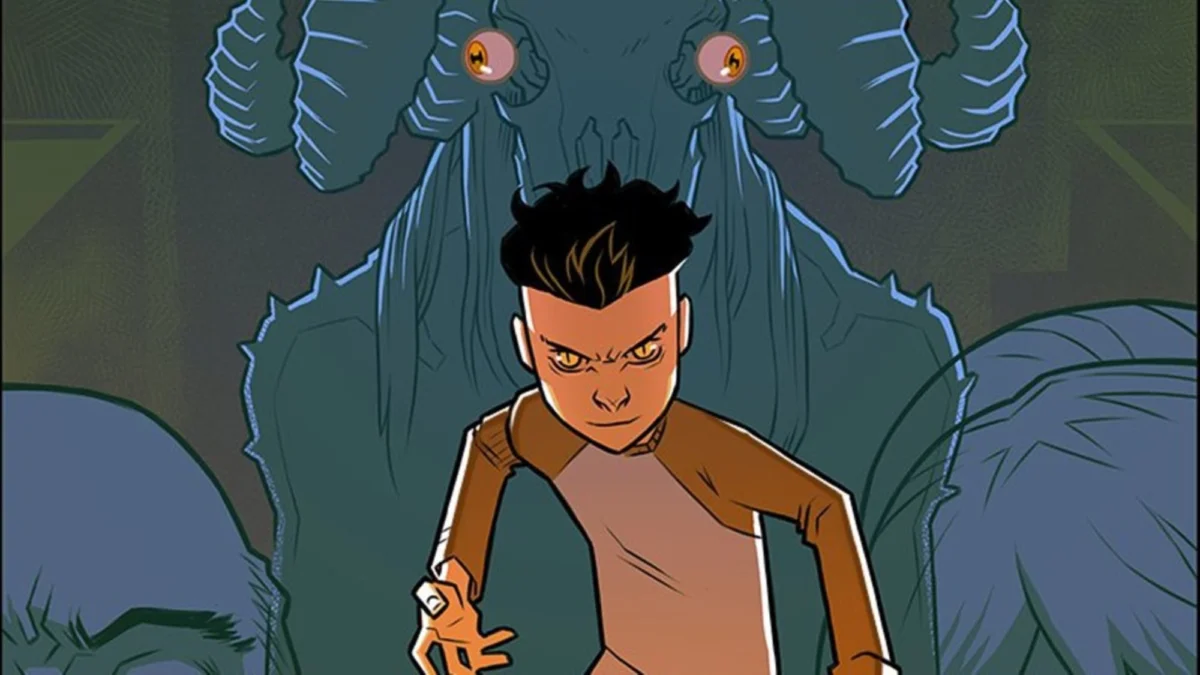
In a major development for the South Korean entertainment industry, Lezhin Entertainment has officially announced an ambitious, star-studded cinematic adaptation of Kim Sung Nyung’s acclaimed webtoon, Happy Boy. Titled Concrete Utopia for the screen, the project has already generated significant buzz by securing an A-list cast, including Lee Byung-hun, Park Seo-joon, and Park Bo-young. This project signals a strategic shift in how South Korean studios are leveraging the immense popularity of webtoons to dominate both local and global box offices.
The Foundation: A Cinematic Powerhouse Assembles
The project, which was formally unveiled on August 5, 2020, brings together some of the most bankable names in Hallyu (the Korean Wave). Lee Byung-hun, a veteran actor known for his work in both domestic hits like I Saw the Devil and international blockbusters such as the G.I. Joe franchise, will lead the cast. He is joined by Park Seo-joon, a global household name following his roles in the Oscar-winning Parasite and the record-breaking drama Itaewon Class, and Park Bo-young, a powerhouse actress celebrated for her versatile performances in A Werewolf Boy and Strong Girl Bong-soon.
The film is set to be directed by Uhm Tae-hwa, whose previous directorial efforts—The Hidden Time and The Fighting—have earned him a reputation for visual storytelling and a deep understanding of psychological tension. With production being handled by Lezhin Studios and distribution overseen by Lotte Entertainment, Concrete Utopia is positioning itself as one of the most anticipated films in the post-pandemic Korean cinematic landscape.
Chronology: From Digital Panels to Physical Sets
The journey of Concrete Utopia began long before the cameras started rolling. To understand the significance of this adaptation, one must look at the timeline of the property’s evolution:
- Original Webtoon Publication: Kim Sung Nyung’s Happy Boy gained massive traction on the Lezhin Comics platform. Known for its stark portrayal of human nature, the webtoon built a dedicated following of millions.
- 2018 Strategic Pivot: Lezhin Entertainment, recognizing the potential for transmedia storytelling, acquired a specialized film production company to form Lezhin Studios. The goal was simple: bridge the gap between their massive library of intellectual property and the growing demand for premium cinematic content.
- August 5, 2020: The official announcement of the film adaptation, now titled Concrete Utopia. The announcement confirmed the core cast and the involvement of director Uhm Tae-hwa.
- 2021 Development Phase: With pre-production logistics settled, the studio set the stage for principal photography to commence in 2021, navigating the complexities of film production during a global health crisis.
Supporting Data: The Anatomy of the Source Material
Happy Boy is divided into two distinct narratives, each exploring the fragility of human social structures. The first arc centers on a group of high school students who find themselves trapped in the rubble of their school following a catastrophic disaster. Through the eyes of Donghyun, a social outcast, the story delves into the visceral terror of confinement and the disintegration of social hierarchy under extreme pressure.
The second arc, titled "Pleasant Neighbors," shifts the focus to the broader adult population. It examines how ordinary, law-abiding citizens can devolve into predatory behavior when the structures of civilization—electricity, water, law enforcement, and supply chains—are stripped away.

While the original webtoon covers these two perspectives, the film adaptation is reported to focus heavily on the themes established in the second arc. It aims to interrogate how power dynamics shift in the vacuum of a disaster, forcing audiences to question how they might behave if the thin veneer of civilized society were suddenly peeled away.
Production Context: The Lezhin Studios Ecosystem
Lezhin Studios is not merely an aggregator of content; it is an emerging powerhouse in the Korean media production ecosystem. Before the announcement of Concrete Utopia, the studio had already made waves with television dramas such as Method and Chomi’s Interest.
Their current production slate is aggressive and diverse. Beyond Concrete Utopia, the studio is currently developing Method: A Second Attempt and is deeply involved in the production of the Netflix original series Hell. Furthermore, the studio has confirmed that another popular Lezhin Comics title, D.P Dog’s Day, is currently in active development for a screen adaptation. This multi-pronged strategy reflects a broader industry trend in South Korea: treating webtoons as "pre-sold" intellectual property that serves as the foundation for a cohesive, cross-platform media empire.
Official Responses and Creative Vision
The creative team behind the project has been vocal about the moral weight of the story. Creator Kim Sung Nyung expressed his enthusiasm regarding the transition from page to screen, noting:
"I’m looking forward to seeing how the movie depicts the change people go through when placed in extreme situations and the themes of preserving one’s humanity in the process."
This statement highlights the philosophical core of the movie. It is not intended to be a traditional disaster film focused on spectacle, but rather a character-driven drama that uses the disaster as a crucible to test the limits of morality, empathy, and social cooperation. Director Uhm Tae-hwa’s selection for the project suggests a commitment to this vision; his previous works have often focused on the isolation of the individual and the friction between the personal psyche and the external environment.

Implications: The Future of Webtoon Adaptations
The production of Concrete Utopia represents a watershed moment for the South Korean entertainment industry. It highlights several key shifts:
1. The Validation of Webtoons as "Prestigious" IP
For years, comics were viewed as niche entertainment. Today, they are the primary source material for some of the highest-budget films in Asia. The commitment of stars like Lee Byung-hun and Park Seo-joon provides a seal of quality that elevates the source material, ensuring that the general public views these adaptations as "event cinema."
2. The Global Export of Korean Dystopia
Following the international success of Parasite and Train to Busan, there is a proven global appetite for high-concept Korean genre films that offer biting social commentary. Concrete Utopia fits perfectly into this paradigm, using a disaster scenario to explore class inequality and the decay of social contracts—themes that are universally resonant in the current global climate.
3. The Integration of Digital and Traditional Media
Lezhin Studios’ model of internalizing the production process—owning both the intellectual property (the webtoon) and the production apparatus (the studio)—allows for a more streamlined transition from script to screen. By maintaining control over the narrative essence of the source material, they minimize the "translation loss" that often plagues adaptations.
Conclusion
As cameras prepare to roll on Concrete Utopia, the eyes of the global film industry are fixed on South Korea. The project is more than just a movie; it is a proof-of-concept for the viability of webtoon-to-film pipelines. With an elite cast, a visionary director, and a source material that probes the darkest corners of human psychology, the film promises to be both a box-office contender and a provocative piece of social commentary.
The transition from a digital scroll on a mobile device to the immersive, high-definition experience of a cinema screen is a testament to the evolving power of Korean storytelling. If Concrete Utopia succeeds in capturing the tension and moral complexity of Kim Sung Nyung’s Happy Boy, it will undoubtedly set a new standard for how the world consumes modern, serialized Asian narratives. Whether or not the characters in the film find their "utopia" remains to be seen, but for the industry at large, the future of the medium has never looked more concrete.