

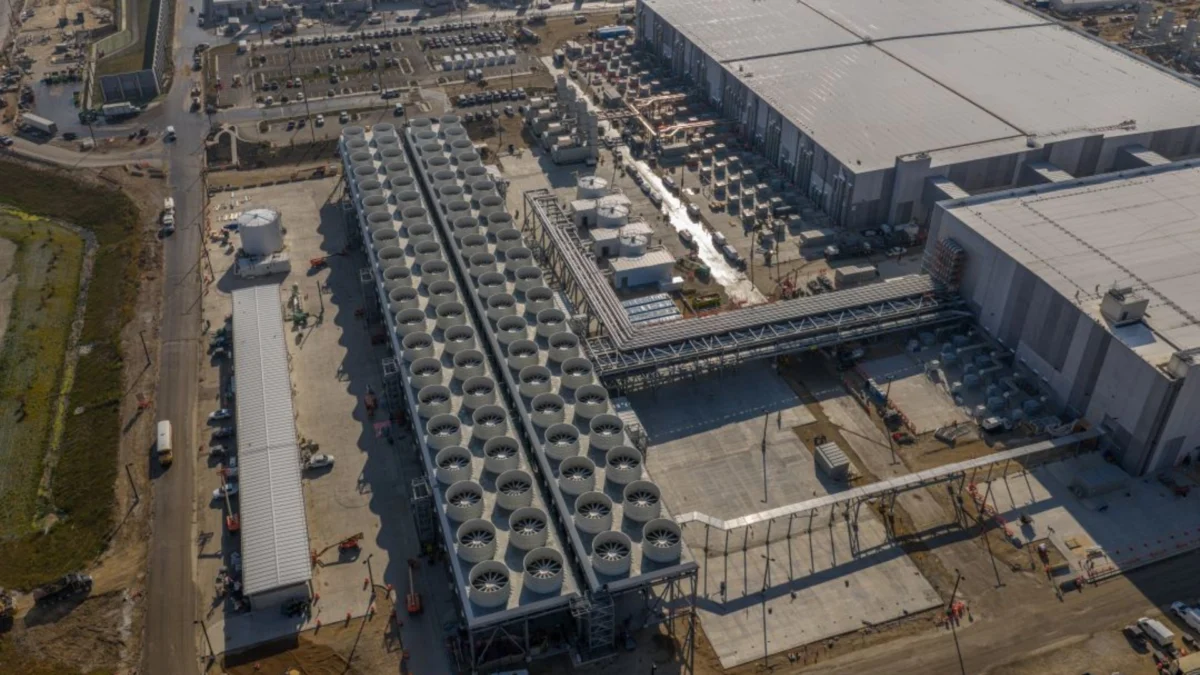
In a landmark development for China’s burgeoning artificial intelligence sector, the AI developer Z.ai—formerly known as Zhipu—has officially brought a massive 1-gigawatt (1GW) data center online. According to reports, the facility operates exclusively on domestically manufactured semiconductors, marking a significant milestone in Beijing’s pursuit of technological self-sufficiency amidst tightening U.S. export controls.
This facility, one of the largest of its kind in China, is designed specifically to train the company’s flagship GLM (General Language Model) family of AI systems. The activation of this site represents not just a triumph of engineering, but a strategic response to the exclusion of Western-made high-performance silicon from the Chinese market.
Main Facts: A Blueprint for Autonomy
The scale of the Z.ai facility is staggering. A 1GW power draw is roughly equivalent to the electricity consumption of 750,000 households. In the context of AI infrastructure, this places the Z.ai site among the most ambitious projects ever undertaken by a domestic Chinese firm.
Key takeaways from the project include:
- Total Reliance on Domestic Silicon: The data center is powered entirely by Chinese-made accelerators, widely believed to be Huawei’s Ascend series.
- Massive Compute Clusters: Z.ai now operates multiple computing clusters, each housing over 10,000 chips, providing the necessary density for large-scale model training.
- Strategic Independence: By utilizing only domestic hardware, Z.ai has effectively circumvented the U.S. Commerce Department’s entity list restrictions, which have banned the company from accessing advanced Nvidia hardware since January 2025.
Chronology of Development
The journey to this 1GW milestone was neither accidental nor swift; it was the result of a multi-year pivot forced by geopolitical realities.
The Shift to Domestic Hardware
- January 2025: Z.ai is placed on the U.S. Commerce Department’s entity list. This was the catalyst for the company to abandon hopes of relying on Western supply chains.
- Early 2026: Reports indicate that Z.ai began aggressive expansion of its compute footprint, focusing on proprietary clusters that could sustain the training of trillion-parameter models.
- June 2026: Z.ai releases GLM-5.2, an open-weight model trained entirely on Huawei Ascend hardware. The model’s rapid ascent to the top of open-weight leaderboards served as a proof-of-concept, signaling that Chinese hardware was reaching a level of maturity sufficient for frontier AI development.
- July 2026: Z.ai achieves its 2026 sales target, pushing the company toward a $1 billion annual recurring revenue milestone, bolstered by successful fundraising via a Hong Kong IPO and follow-on share sales.
- Late July 2026: The 1GW data center reaches its initial operational phase, with portions of the facility coming online to begin training future iterations of the GLM series.
The Hardware Challenge: Performance vs. Scale
While the 1GW figure is impressive, industry experts caution that a direct comparison to Western data centers can be misleading.
The Efficiency Gap
In the world of high-performance computing (HPC), performance is not just about the total number of chips—it is about performance per watt and interconnect efficiency. Huawei’s Ascend accelerators, while highly capable, currently trail Nvidia’s Blackwell-class GPUs in power efficiency.
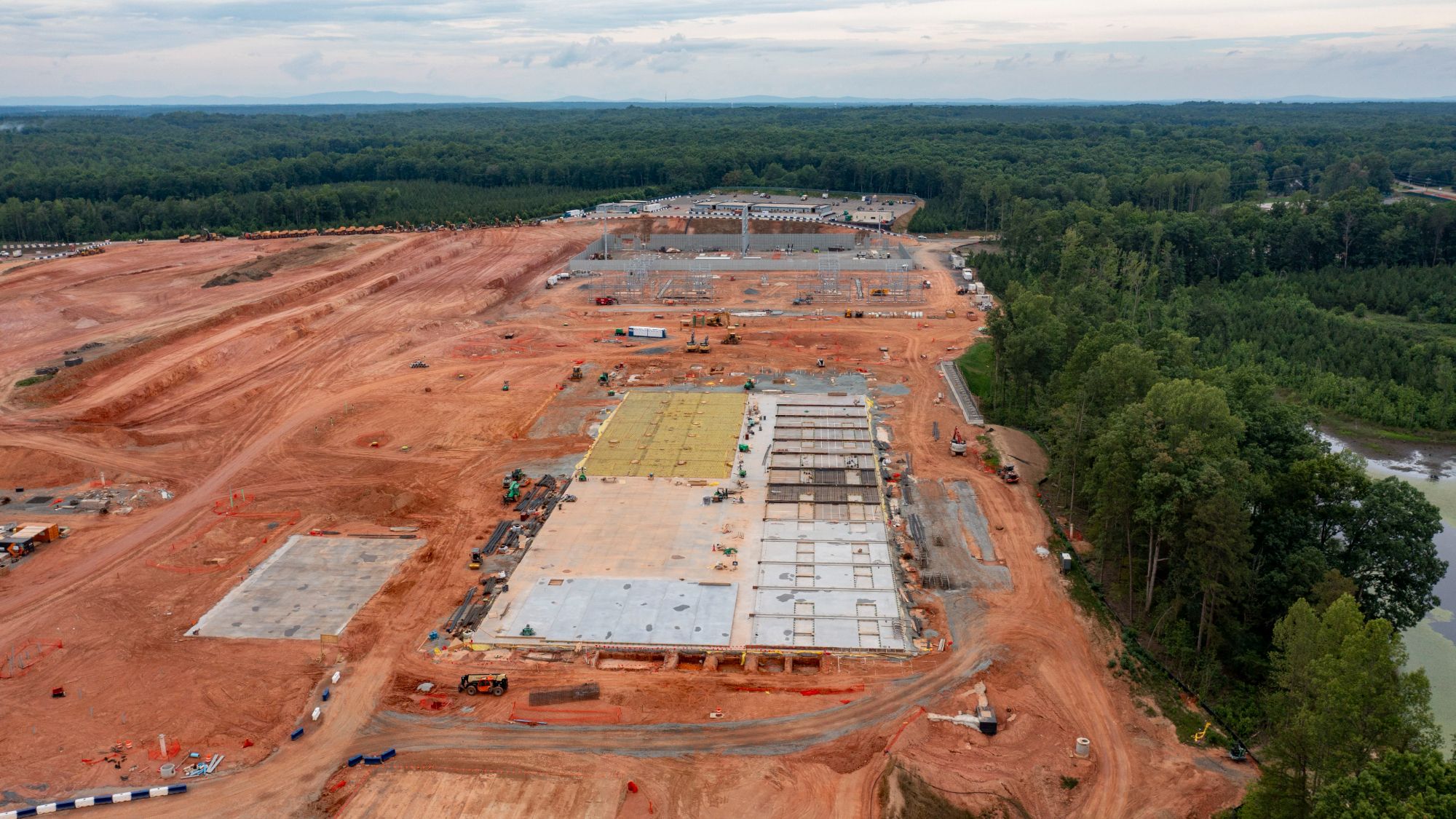
Because domestic Chinese chips generally require more energy to perform the same number of floating-point operations (FLOPs) as their American counterparts, a 1GW Chinese facility likely provides less "effective training compute" than a similarly powered facility in the United States. To compensate for this efficiency deficit, Chinese developers must scale their infrastructure to be significantly larger than their Western counterparts just to achieve parity in model training speed.
The Bottleneck of Fabrication and HBM
The challenge is not merely building the "shell" of a data center, but filling it with high-end silicon. China faces two primary supply-side bottlenecks:
- Foundry Utilization: SMIC, China’s primary advanced chip manufacturer, is currently operating at over 93% utilization for its 7nm-class N+2 process. There is very little "slack" in the system to ramp up production for new, massive data center projects.
- High Bandwidth Memory (HBM): Advanced AI training requires high-speed memory to feed the processors. Domestic HBM production remains in its infancy, and shortages are a significant limiting factor in how many AI accelerators Huawei can feasibly ship. Despite these hurdles, Huawei managed to ship approximately 812,000 AI chips in the previous year, yet demand continues to dwarf supply.
Supporting Data and Industry Context
The Z.ai initiative exists within the broader framework of the Chinese government’s "National AI Data Center Grid." Beijing is reportedly drafting a plan to inject 2 trillion yuan ($295 billion) over the next five years into this effort.
The mandate is clear: at least 80% of the hardware powering these national centers must be sourced from domestic suppliers. This state-led investment is designed to create a "compute moat" that protects Chinese AI firms from further escalation in U.S. trade restrictions.
Competitive Landscape
The race for compute is causing friction across the Chinese AI ecosystem. Z.ai’s primary competitor, Moonshot, recently had to suspend new subscriptions to its Kimi AI service. The stated reason was a desire to prioritize existing users, a move that highlights the scarcity of compute power in the current market. As companies like Z.ai and Moonshot battle for limited domestic chips, the divide between those who can secure large-scale infrastructure and those who cannot is becoming increasingly pronounced.
Implications for the Future
The success of Z.ai’s data center carries profound implications for the global AI race.
A Two-Tiered Global AI Ecosystem
We are moving toward a bifurcated global AI infrastructure. One path, dominated by Nvidia and Western cloud providers, relies on high-efficiency, cutting-edge silicon. The other, dominated by Chinese firms, relies on massive scale and state-supported domestic supply chains.
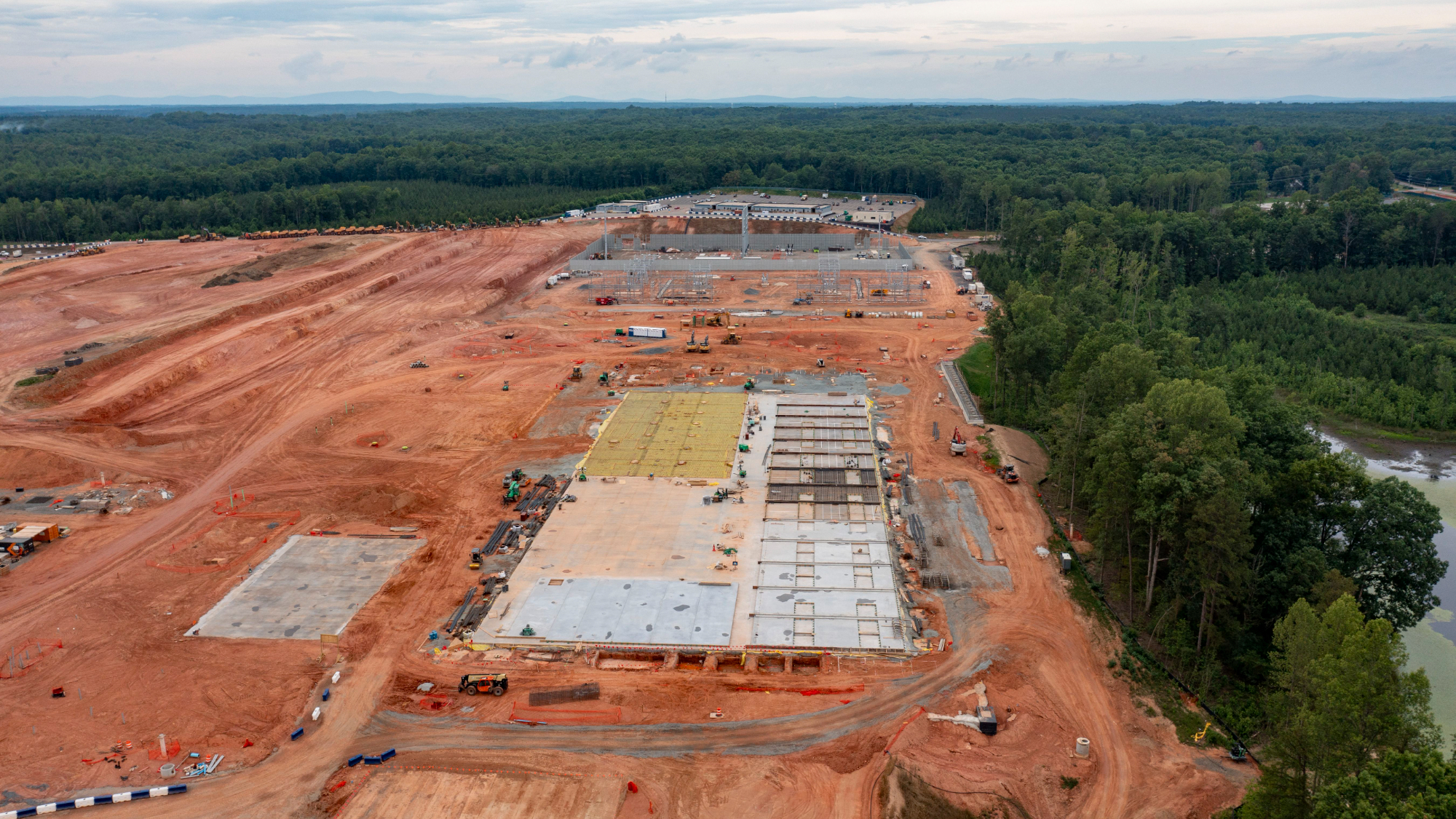
If Chinese firms can continue to optimize their software—as evidenced by the success of GLM-5.2—they may be able to bridge the performance gap through algorithmic efficiency, even if their hardware remains slightly behind.
The Limits of Containment
The Z.ai facility serves as a case study for the "innovation through necessity" thesis. By effectively cutting off access to the world’s best chips, U.S. policy has forced Chinese firms to iterate at a breakneck pace on domestic silicon. While this has undoubtedly slowed China’s progress in the short term, it has also spurred the development of a resilient, domestic AI hardware ecosystem that will likely be much harder to disrupt in the future.
Long-Term Strategic Outlook
As Z.ai continues to scale its operations, the focus will shift from "can we build it?" to "how well can we optimize it?" If the company can successfully manage its power density and software-hardware integration, it will become the template for other Chinese AI firms to follow.
However, the ongoing constraints at SMIC and the difficulties in sourcing HBM suggest that the "1GW club" will remain an exclusive group for the foreseeable future. The companies that can secure these resources will likely define the trajectory of Chinese AI for the next decade, while smaller players may find themselves unable to compete in the high-stakes world of foundation model training.
In conclusion, Z.ai’s new data center is more than just a cluster of servers; it is a physical manifestation of a nation’s refusal to be left behind in the AI revolution. Whether this brute-force approach to infrastructure can overcome the technical hurdles of chip efficiency remains the defining question for China’s technological future.











