Nana Wu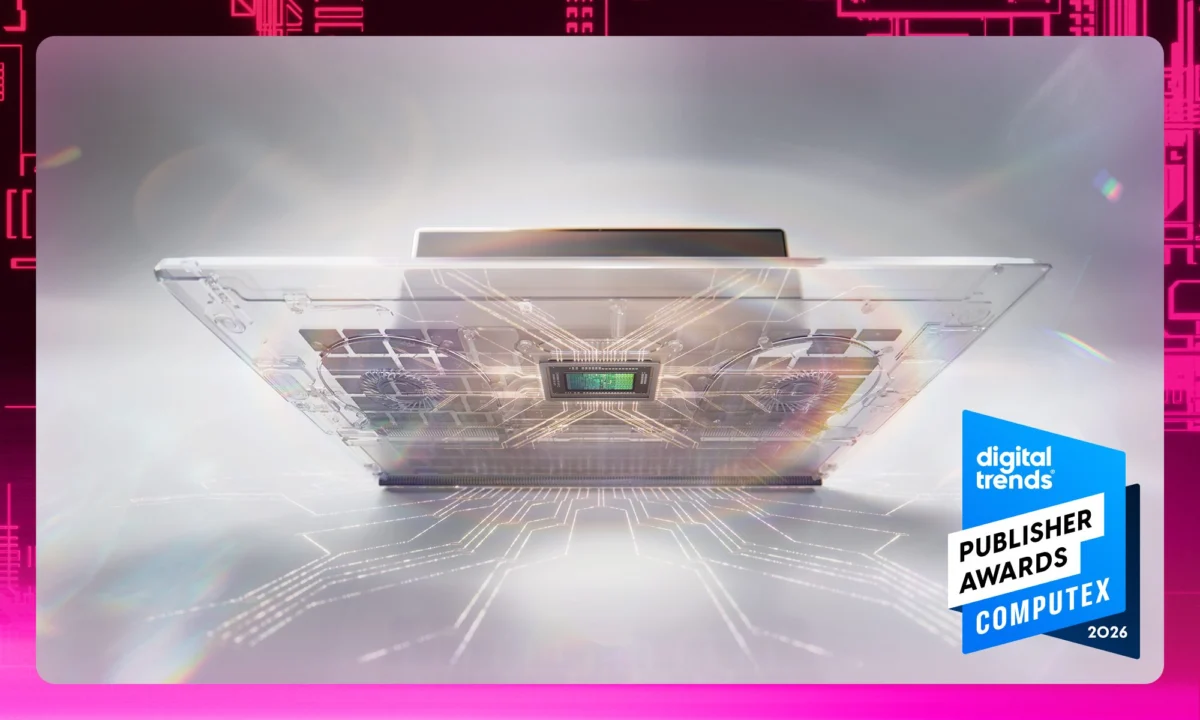
Computex 2026 has officially concluded, leaving behind a wake of innovation that confirms what industry insiders have long suspected: the era of the "AI PC" is no longer a marketing buzzword—it is a functional reality. As the annual pilgrimage to Taipei returned with its signature blend of chaotic energy, over-engineered gaming rigs, and ambitious prototypes, one theme remained consistent. From silicon giants to peripheral manufacturers, the entire ecosystem has pivoted toward a future where local AI compute, high-fidelity gaming, and refined industrial design converge.
The following analysis details the standout products that defined the show, serving as our official Computex 2026 Publisher Awards recipients. These products do not merely iterate on last year’s designs; they redefine the boundaries of what portable, desktop, and visual hardware can achieve.
The Silicon Revolution: NVIDIA’s RTX Spark
The most consequential announcement to emerge from the floor was undeniably the NVIDIA RTX Spark. While the "AI PC" label has been applied liberally to underwhelming hardware over the past two years, the RTX Spark represents a fundamental shift in architecture.

Technical Specifications and Architectural Impact
NVIDIA has positioned the Spark as a true "superchip" for the Windows ecosystem. Built upon a sophisticated 20-core Grace CPU and a Blackwell-architecture RTX GPU, the chip is a powerhouse of integrated efficiency. It boasts 6,144 CUDA cores and up to 128GB of unified memory. Most impressively, the chip is capable of delivering up to 1 petaflop of AI performance.
This isn’t just about raw speed; it’s about unification. By folding CUDA, RTX, DLSS, Reflex, and G-Sync into a single platform alongside dedicated local AI acceleration, NVIDIA is effectively attempting to future-proof the Windows PC. With confirmed adoption from industry titans like Dell, HP, and the Microsoft Surface team, the RTX Spark is poised to become the heartbeat of the next generation of premium computing.
Chronology of the Show: From Prototypes to Production
The week-long event followed a distinct trajectory. The opening days were dominated by industry-wide announcements regarding chip architecture, specifically the battle for AI supremacy between Intel and NVIDIA. Mid-week shifted the focus to consumer-facing applications, as OEMs like MSI and Dell showcased how these chips would manifest in real-world devices. By the final days, the focus had turned to the enthusiast market—the "unhinged" hardware designs that remind us why Computex is the global capital of PC building.

Supporting Data: Why These Products Won
The products selected for this year’s awards were judged on three criteria: performance-per-watt, innovative form-factor utility, and market accessibility.
The Microsoft Surface Laptop Ultra
For years, the Surface lineup has been the benchmark for the Windows experience, but it has occasionally lagged behind in raw power compared to its gaming counterparts. The Surface Laptop Ultra changes this narrative. By leveraging the NVIDIA RTX Spark, Microsoft has created a machine that finally justifies the "Ultra" moniker. With its massive unified memory capacity, it is designed for developers and creators who need to run large local models and massive datasets without relying on cloud-latency. Furthermore, the inclusion of a comprehensive I/O suite—including full-size SD support and HDMI—signifies a return to functional, professional-grade design.
MSI Claw 8 EX AI+
The handheld gaming market is currently experiencing a period of intense saturation. To stand out, MSI looked to Intel’s latest silicon: the Intel Arc G3 Extreme. The MSI Claw 8 EX AI+ is not just a refresh; it is a serious attempt at console-quality gaming on the go. The shift to an 8-inch 120Hz VRR display, combined with refined ergonomics and Hall-effect sticks, shows that MSI has been listening to the community. The integration of XeSS 3 Multi-Frame Generation is the final piece of the puzzle, allowing for high-frame-rate AAA gaming in a form factor that fits in a backpack.

The "Unhinged" Innovators: Thermaltake CAPO X
Computex would not be complete without hardware that pushes the definition of "PC." The Thermaltake CAPO X is a dual-system Micro-ATX chassis that essentially crams two complete computers into a single tower. While this sounds like an enthusiast’s fever dream, it serves a very specific, modern purpose. With the rise of dedicated streaming setups and local AI agent workflows, the CAPO X allows a user to isolate a gaming system from a streaming/AI background system within the same footprint. It is a niche, clever, and ultimately practical solution to the modern power-user’s workflow.
Visual Fidelity: The Dell Alienware AW3926QW
Monitor technology has seen a massive leap this year. The Dell Alienware AW3926QW is the world’s first 39-inch 5K OLED gaming monitor utilizing RGB stripe technology. By opting for a tandem OLED panel, Dell has solved the "text clarity" issue that has long plagued OLED monitors, while simultaneously hitting a staggering 1,300 nits of peak brightness. Whether you are running at 5K for creative work or 1080p at 330Hz for competitive gaming, this display represents the new gold standard for high-end gaming.
Official Responses and Market Implications
The sentiment among manufacturers at Computex 2026 was one of cautious optimism. While the PC market has faced a difficult "memory crunch" over the last 18 months, there is a clear sense that the tide is turning.

The Dell XPS 13: A Lesson in Accessibility
Perhaps the most telling product of the entire show was the Dell XPS 13. While other brands chased the "petaflop" headline, Dell addressed the elephant in the room: affordability. At a starting price of $699 (and $599 for eligible buyers), the XPS 13 proves that premium hardware doesn’t have to be exclusionary. By utilizing Intel’s new "Wildcat" processors, Dell has managed to package a 2.5K touch display and an all-aluminum chassis into a price bracket that was previously thought to be fading away.
Future Implications: Where Do We Go From Here?
The implications of Computex 2026 are far-reaching. We are seeing a distinct movement away from the "cloud-first" approach to AI. By moving heavy compute tasks onto local silicon—like the RTX Spark or the Arc G3 Extreme—manufacturers are providing users with more privacy, lower latency, and greater independence from internet connectivity.
- For the Creative Professional: The integration of 128GB of unified memory in laptops means that professional-grade video editing and local model training are no longer limited to desktops.
- For the Gamer: Handheld devices are rapidly reaching a point of parity with mid-range desktops, thanks to advancements in frame generation and VRR display technology.
- For the Budget-Conscious: The success of the Dell XPS 13 suggests that the industry is finally addressing the middle-market, ensuring that "premium" features are becoming accessible to students and general users alike.
As we look toward the remainder of 2026, the hardware showcased in Taipei provides a roadmap for the rest of the year. The chaotic, experimental nature of the show has, for the first time in a long time, produced a crop of devices that feel like genuine upgrades rather than mere annual refreshes. Computex 2026 wasn’t just about the hardware; it was about defining the next five years of the personal computing experience. The future, it seems, is local, powerful, and surprisingly, more accessible than we expected.

 Asro
Asro
 Rifan Muazin