In the rapidly evolving landscape of digital concept art, few creators have managed to bridge the gap between abstract architectural theory and immersive science fiction as effectively as Marcel Deneuve. Known for his colossal, sprawling cityscapes and meticulously detailed atmospheric environments, Deneuve has carved out a unique aesthetic niche that feels simultaneously alien and hauntingly grounded. Drawing from the visual language of Japanese masters, his work represents a significant milestone in how modern artists leverage 3D workflows to achieve high-concept narrative design.
The Architect of the Digital Void: Main Facts
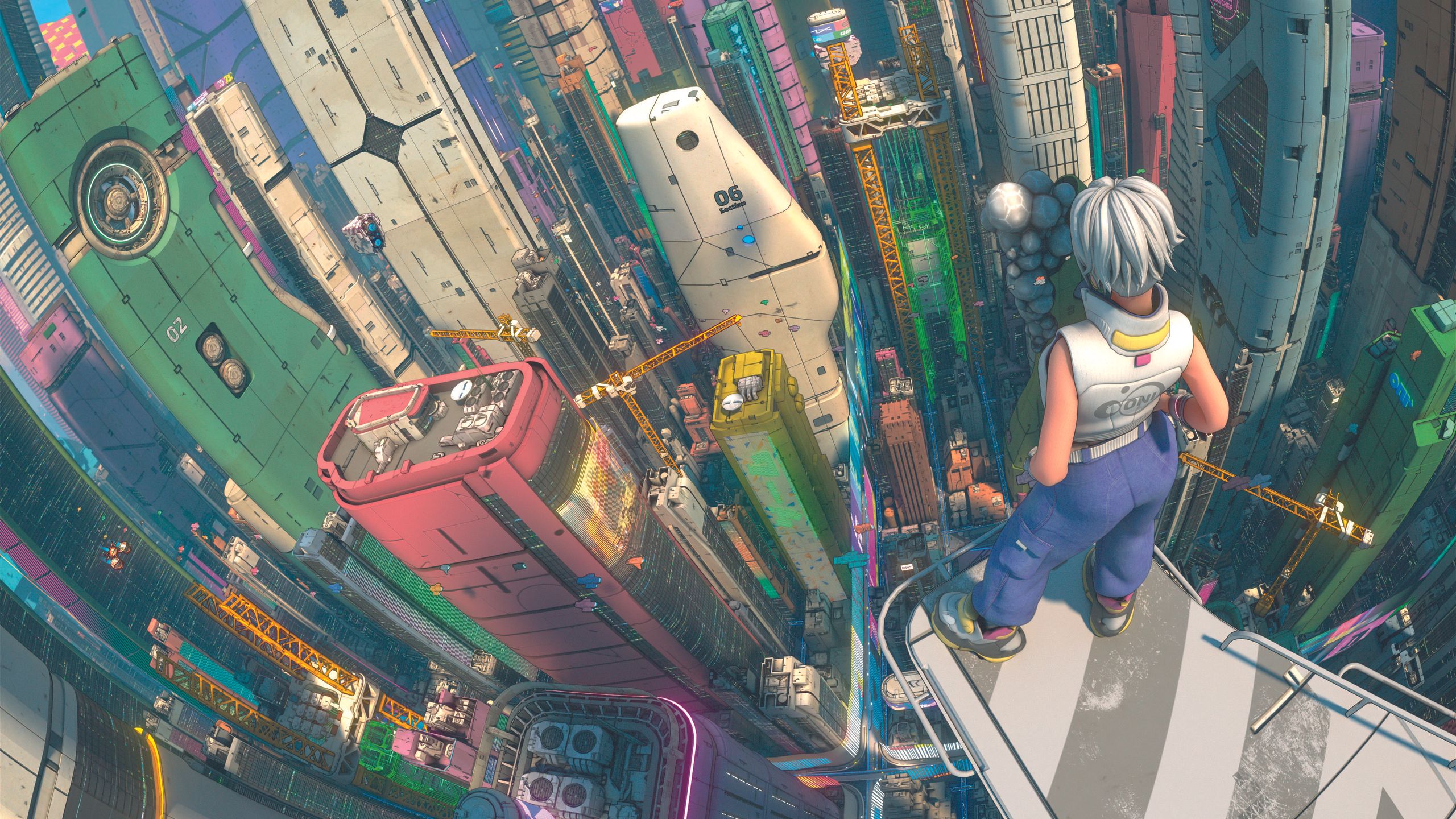
Marcel Deneuve is a digital concept artist whose practice is defined by the intersection of structural innovation and sci-fi world-building. His body of work is characterized by "multi-layered" urban environments, where massive, towering structures pierce the skyline, often shrouded in a sense of scale that renders the human element—if present at all—insignificant.
Deneuve’s process is a masterclass in the contemporary digital pipeline. He utilizes a robust ecosystem of professional-grade software:
- Blender: Serving as the structural backbone for his complex 3D modeling and rendering.
- Adobe Photoshop: Employed for advanced compositing, color grading, and final artistic polish.
- Procreate: His primary tool for initial sketching and conceptual ideation.
- Substance 3D: Used to generate bespoke, hyper-realistic textures that give his metallic and concrete surfaces their distinct, weathered character.
His work is not merely a collection of aesthetic choices; it is a rigorous study of form, light, and composition, heavily influenced by the distinct, high-contrast, and often brutalist sensibilities of Japanese creators such as Tsutomu Nihei, Yoshitaka Amano, and Takashi Murakami.
A Chronological Journey: From Electronic Rhythms to Architectural Vision
The genesis of Deneuve’s artistic career was not rooted in traditional illustration, but rather in the auditory landscape of electronic music. After a period of experimentation with sound design, he discovered a profound resonance in the visual storytelling found in Japanese art and manga.
2017: The Formative Period
Deneuve’s formal journey into visual art began in 2017. Unlike artists who follow a traditional academic trajectory, Deneuve describes his early development as a self-taught pursuit. He immersed himself in a vast library of instructional books and online resources, slowly translating his understanding of rhythm and structure from music into the realm of lines and shadows.
The Shift to 3D Modeling
A pivotal turning point in his career arrived when he integrated 3D modeling into his workflow. Initially, his interests were focused on the technical challenges of mechanical design, such as robots and vehicles. However, as his technical proficiency in Blender increased, his focus began to shift toward "atmospheric environmental design." He realized that the tools could be used to build entire worlds rather than just individual objects, leading to his current obsession with colossal, interconnected cityscapes.
Supporting Data: Deconstructing the Masterpieces
To understand the technical complexity of Deneuve’s work, one must examine the specific methodology behind his most iconic pieces.
Lollipop: The "Futuristic Candy City"
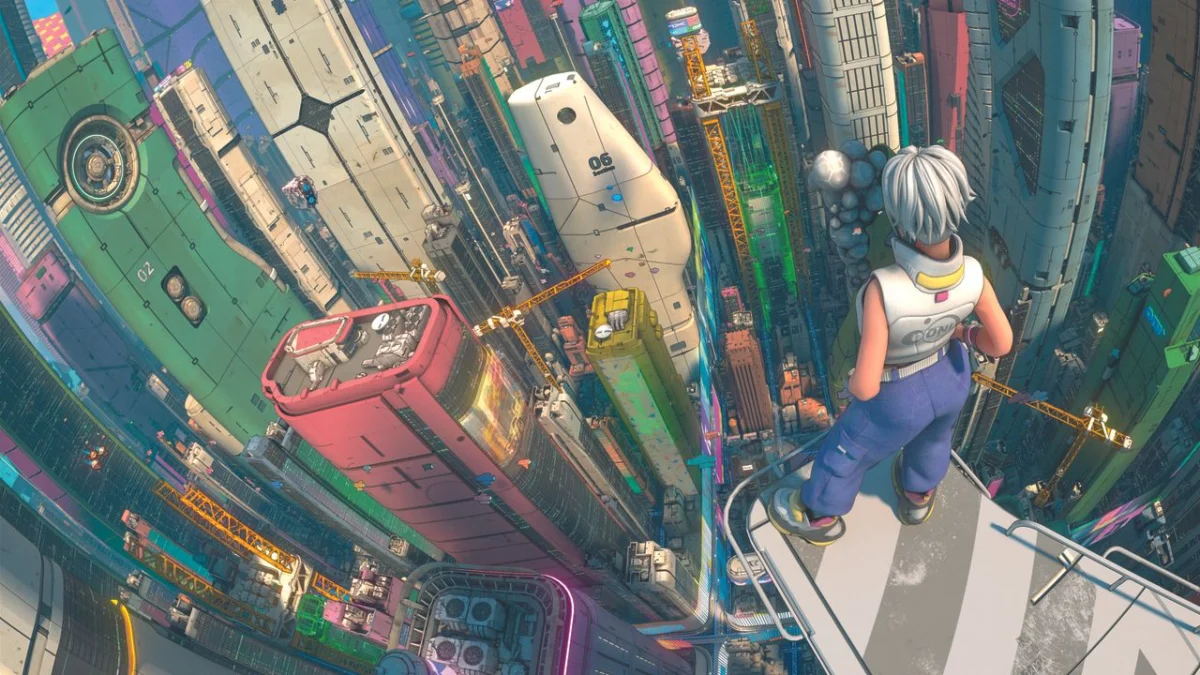
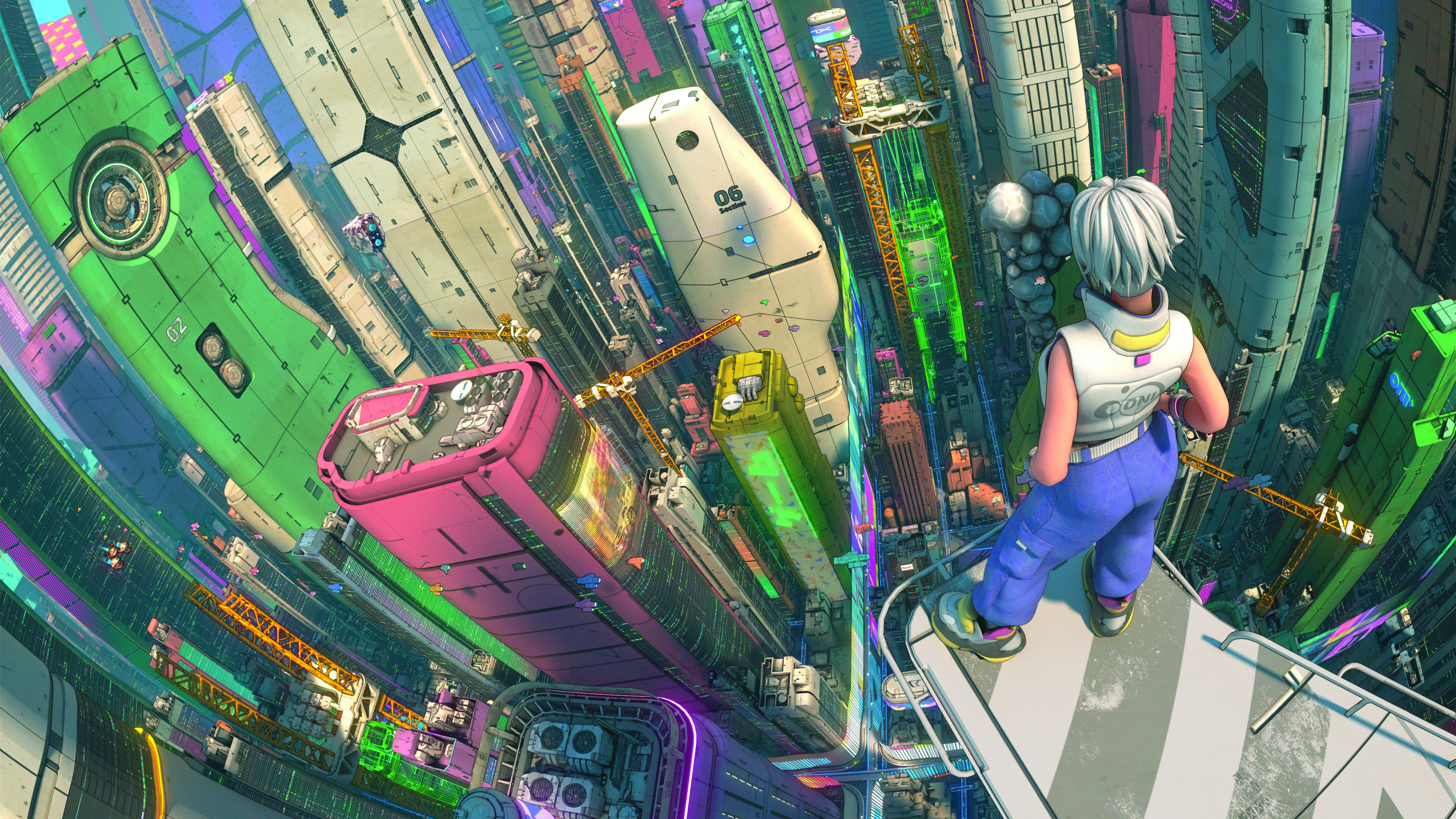
Deneuve’s piece Lollipop serves as a departure from his more austere, dark architectural work. It is a vibrant, neon-soaked exploration of form. Deneuve explains that the goal was to push the boundaries of his traditional style, utilizing exaggerated color palettes to create a "futuristic candy city." This piece is a significant component of his ongoing, expansive world-building project titled Onimeon.
Red Howl: A Tribute to Nihei
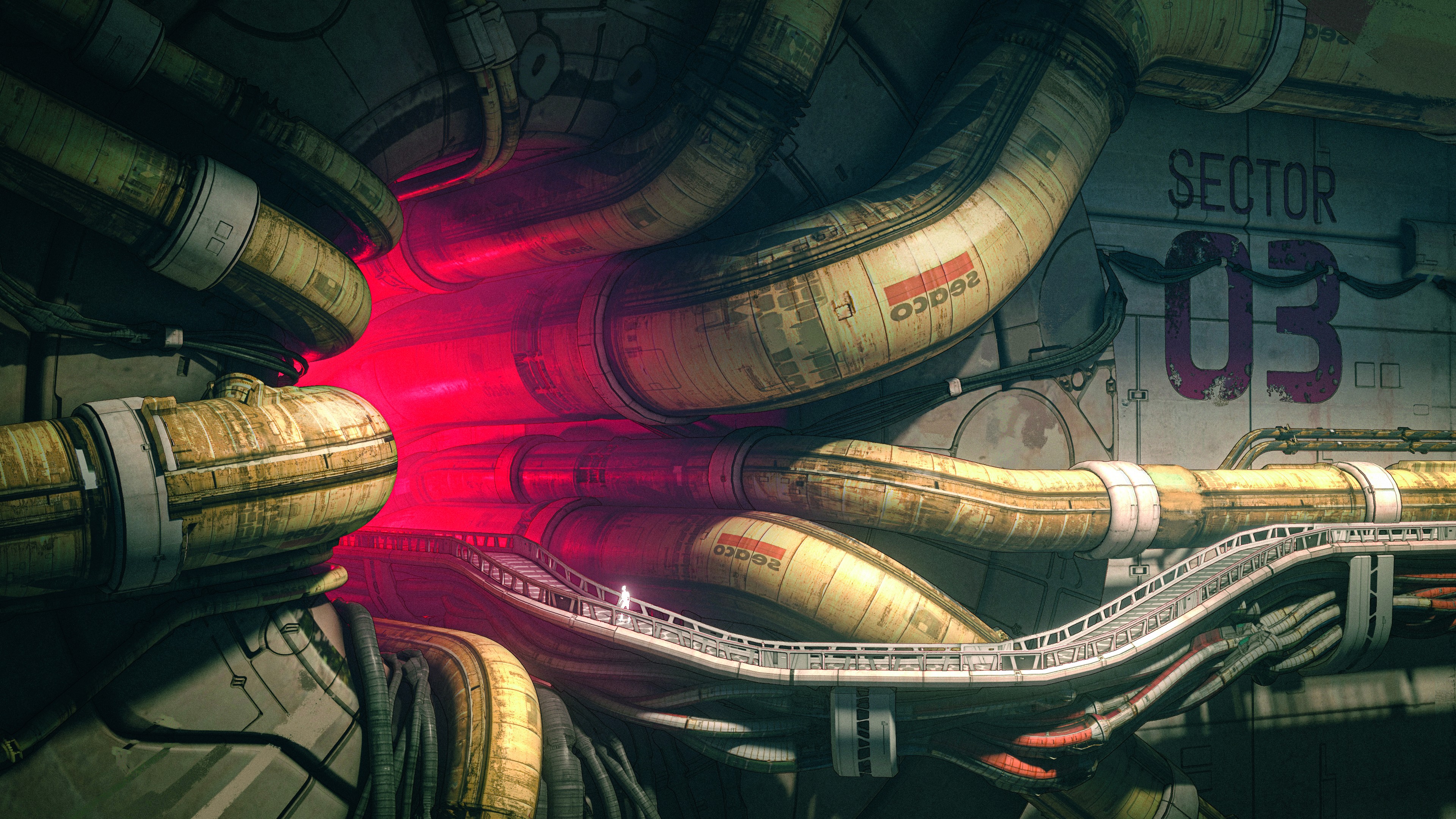
Red Howl highlights Deneuve’s dedication to the masters who influenced him. It is a direct homage to the industrial, vertical, and often labyrinthine architecture associated with Tsutomu Nihei (Blame!). The workflow for this piece is a testament to his "classic" process:
- Ideation: Sketching the foundational composition in Procreate.
- Asset Creation: Developing custom, high-fidelity textures in Substance 3D.
- Synthesis: Assembling the 3D scene and executing the final composite within Photoshop to achieve the atmospheric lighting that defines the piece.
Azzarax: The Multi-Layered Urban Sprawl
Azzarax is perhaps the most illustrative example of Deneuve’s signature style. Creating this piece required the development of an extensive library of modular building assets. By building these components beforehand, Deneuve ensured that the city felt organic and immense rather than repetitive. The technical challenge here was not just modeling, but the management of complexity—balancing the sheer number of polygons with the need for a cohesive, visually stimulating composition.
Implications for the Digital Art Industry
Deneuve’s rise to prominence serves as a case study for the democratization of high-end concept art. By utilizing accessible but powerful software like Blender alongside professional industry standards, he has proven that the barrier to entry for complex environmental design is lower than ever before.
The "Modular" Revolution
Deneuve’s success highlights a broader industry trend: the move toward modularity. Modern digital artists are no longer "drawing" every window, brick, or pipe. They are becoming architects, designing kits of parts that are then assembled in virtual space. This allows for the creation of vast, sprawling environments that would be impossible to illustrate by hand in a reasonable timeframe.
The Influence of Trans-Pacific Aesthetics
The prominence of artists like Deneuve, who cite Tsutomu Nihei and Yoshitaka Amano as primary inspirations, signals a continued shift in Western digital art toward the sensibilities of Eastern science fiction. The blend of "cyberpunk" grit with "brutalist" architectural ambition has become a dominant aesthetic in gaming, film, and editorial concept art, largely thanks to artists who successfully synthesized these influences through digital tools.
The Future of Digital Environmentalism
As Deneuve continues to develop his Onimeon project, the industry watches with interest to see how his approach to "world-building" evolves. His work poses an interesting question: how much detail is required to make a city feel alive? His answer, as demonstrated in Azzarax, is a focus on scale, modularity, and atmospheric lighting.
For aspiring digital artists, Deneuve’s career path offers a clear roadmap:
- Interdisciplinary Learning: Draw inspiration from outside your primary field (like music).
- Master the Pipeline: Don’t rely on one tool. Integrate modeling, texturing, and compositing software to create a flexible, efficient workflow.
- Build Libraries: Invest time in creating your own assets. The "repetitive" nature of digital art can be mitigated by building a deep, personalized library of structures and textures.
Conclusion
Marcel Deneuve represents the new vanguard of digital artists—those who do not just create images, but construct realities. Through his dedication to the interplay of light, shadow, and architectural form, he has demonstrated that the digital canvas is limited only by the artist’s ability to conceive of the impossible. Whether he is building a "candy city" or a dark, Nihei-inspired sprawl, his work remains a vital contribution to the ongoing evolution of sci-fi aesthetics in the 21st century.
For those inspired by his journey, the path is clear: embrace the complexity of the digital medium, look to the masters for inspiration, and never stop building. As the tools for creation become more powerful, artists like Deneuve show us that the only real limitation is the scope of our own imagination.
For more information on Marcel Deneuve’s projects, including his ongoing work on Onimeon, you can visit his official website at marceldeneuve.com. This article was originally featured in ImagineFX, the premier resource for fantasy and sci-fi artists worldwide.