

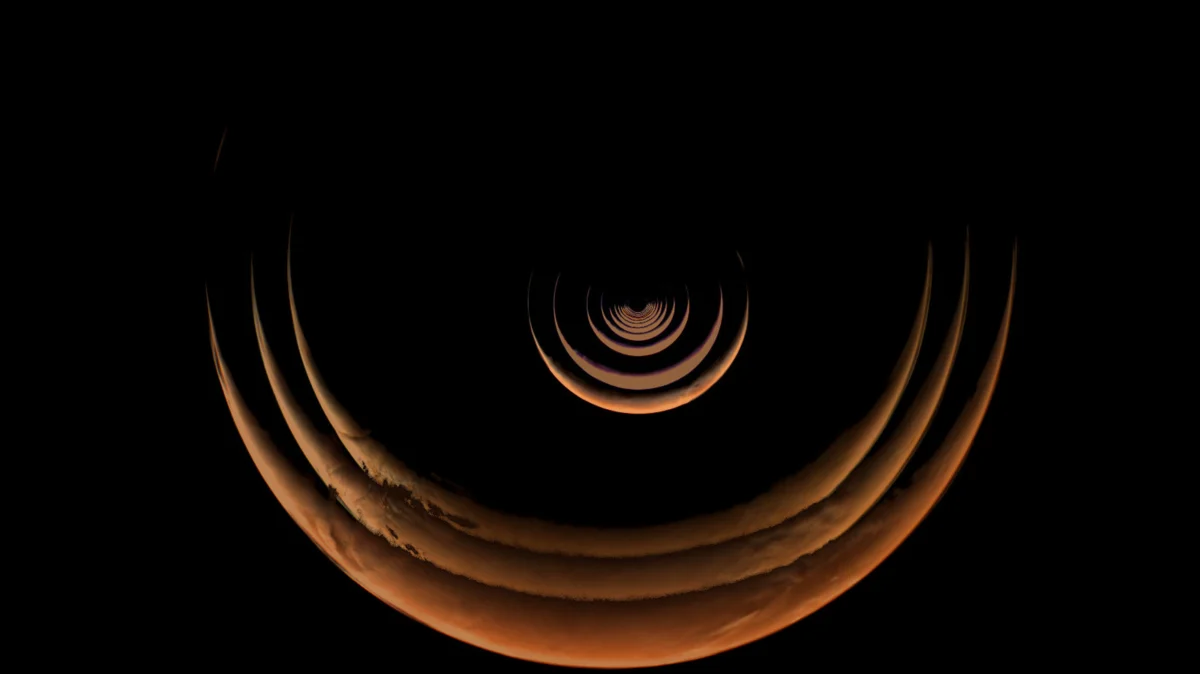
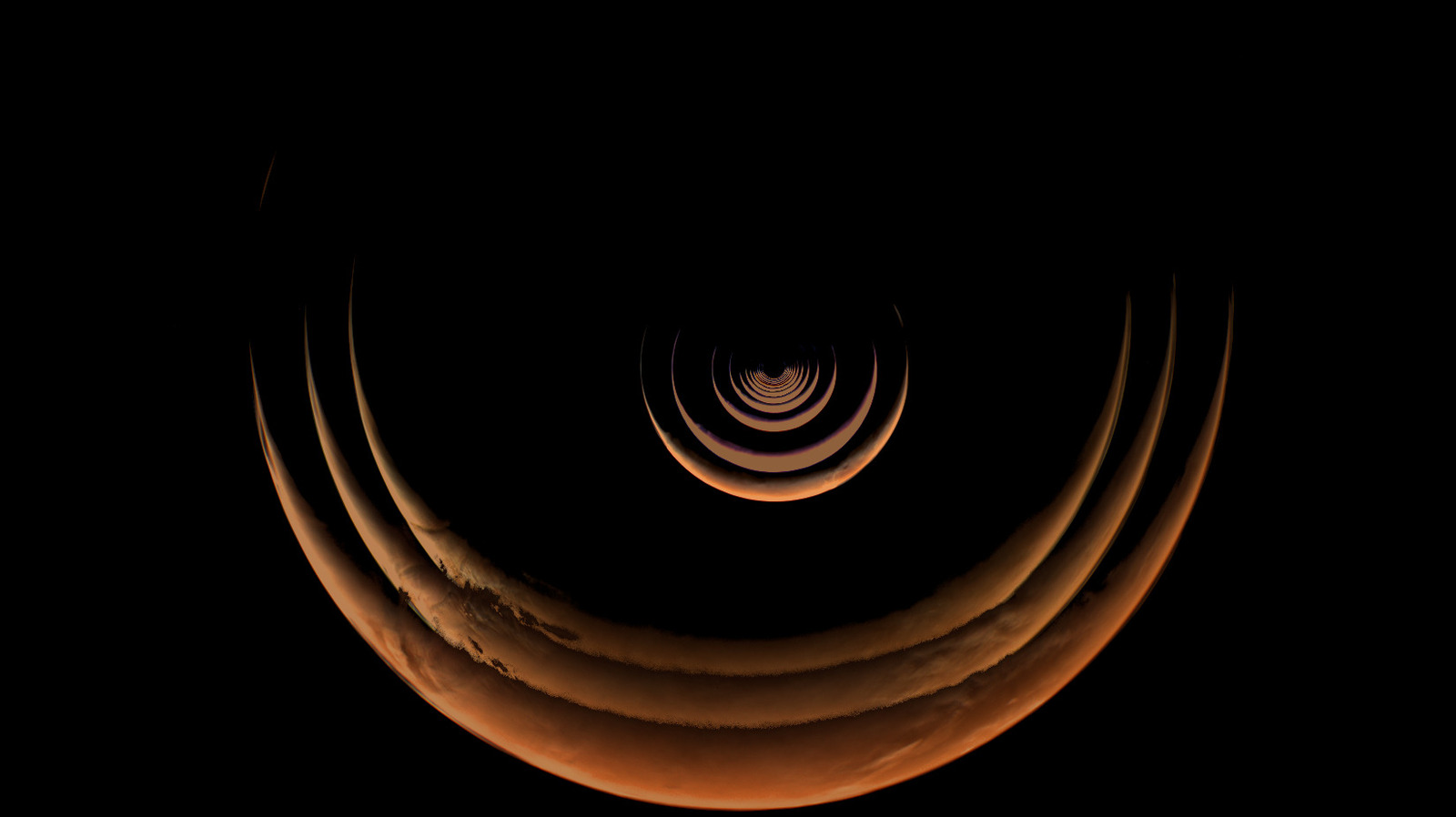
In a remarkable convergence of celestial mechanics and advanced imaging technology, NASA’s Psyche spacecraft has provided the world with a rare, dynamic perspective of the Red Planet. During a high-stakes gravitational assist maneuver this past May, the spacecraft—currently en route to a metal-rich asteroid of the same name—turned its multispectral imagers toward Mars. The resulting data, recently released by the agency, has been synthesized into a captivating timelapse that captures the planet from approach to departure, offering scientists a treasure trove of calibration data and the public an unprecedented view of our neighbor in the solar system.
The Gravity Assist: A Strategic Dance
The primary objective of the encounter, which culminated in a closest approach on May 15, was not photography, but rather navigation. Psyche, which launched in October 2023, is on a multi-year trajectory to reach the asteroid 16 Psyche in the main asteroid belt between Mars and Jupiter. To achieve the necessary velocity and precise alignment for this journey, the spacecraft utilized a "gravity assist" maneuver.
By flying within a specific range of Mars, Psyche effectively “stole” a portion of the planet’s orbital momentum. This maneuver provided the spacecraft with a crucial speed boost, allowing it to alter its trajectory toward its final destination without consuming significant amounts of precious onboard propellant. The savings in fuel are vital for the mission’s longevity, as the spacecraft will require extensive maneuvering once it arrives at the asteroid in 2029 to conduct its primary scientific survey.
Chronology of the Encounter
The interaction between Psyche and Mars was a meticulously choreographed sequence that spanned several weeks.
- May 2, 2024: The spacecraft began its formal approach phase. During this time, mission controllers at NASA’s Jet Propulsion Laboratory (JPL) began activating the multispectral imager to ensure systems were optimized for the upcoming proximity.
- May 15, 2024: The moment of closest approach. During this period, the spacecraft’s velocity relative to the Sun was significantly adjusted by the Martian gravitational field.
- Late May 2024: The departure phase, during which the spacecraft continued to capture imagery as it receded from the planet, documenting the Martian south pole and the receding crescent of the planet.
- July 2024: NASA officially processed and released the stitched-together timelapse, confirming that the hardware performed well beyond initial performance expectations.
The Technical Triumph: Engineering for the Void
The images captured by Psyche are not merely aesthetic; they represent a rigorous engineering test. According to Jim Bell, the Psyche imager instrument lead at Arizona State University, the flyby served as a "stress test" for the spacecraft’s optical systems.
"The imager performed brilliantly, delivering some rarely seen views of the red planet," Bell noted in an official statement. The primary challenge in deep-space photography is managing light sensitivity and calibration in an environment where the lighting conditions change drastically as the spacecraft moves relative to the planetary body.
By testing the camera’s sensitivity to scattered light, the team was able to refine the instrument’s settings. One of the most successful aspects of this testing was the detection of Mars’ two small moons, Phobos and Deimos. Because these moons are dim and physically small, detecting them from such a distance served as a "dry run" for the mission’s secondary objective: searching for potential moonlets orbiting the asteroid Psyche. If the imager can pick out tiny, dark moons against the backdrop of deep space, it significantly improves the mission’s chances of discovering satellite debris around the asteroid.
Supporting Data: Multispectral Imaging Capabilities
The Psyche spacecraft is equipped with a state-of-the-art imager system designed to provide high-resolution views of the asteroid’s surface. By utilizing various filters, the camera can distinguish between different mineral compositions—a critical capability for determining whether the asteroid is indeed the exposed core of an ancient protoplanet.
The Mars flyby allowed the team to verify the following:
- Signal-to-Noise Ratio: Confirming the camera can maintain image clarity under varying levels of solar radiation.
- Calibration Accuracy: Ensuring that color and brightness data captured by the instrument align with known reflectance values of the Martian surface.
- Data Transmission: Testing the spacecraft’s ability to store and downlink large volumes of image data to the Deep Space Network (DSN) while simultaneously performing complex orbital maneuvers.
Official Responses and Scientific Impact
The scientific community has lauded the mission team for maximizing the utility of the gravity assist. While many missions simply "pass through" a planet’s sphere of influence, the Psyche team chose to treat the encounter as a full-scale scientific opportunity.
"Besides the obvious beauty of the photos, we were also able to fully test its calibration and sensitivity to scattered light," Bell explained. This sentiment was echoed by NASA leadership, who view the Psyche mission as a flagship project for understanding the building blocks of our solar system. The data gathered from the flyby will be integrated into the mission’s long-term operational protocols, ensuring that when the craft arrives at its destination in 2029, the imaging systems will be calibrated to the highest possible standard.
Implications for the Psyche Mission
The primary mission remains the study of 16 Psyche, an object composed largely of iron and nickel. Scientists believe that studying this asteroid will provide a "look back in time" at the violent collisions that occurred during the formation of the early solar system. Because we cannot visit the Earth’s core, which is also made of metal, 16 Psyche serves as our only viable laboratory for studying how metallic cores form.
The successful Mars flyby acts as a proof-of-concept for the entire mission. It demonstrates that:
- Reliability: The spacecraft’s autonomous navigation and imaging systems are robust enough to handle high-velocity planetary encounters.
- Operational Flexibility: The team can pivot from navigational maneuvers to complex science data collection without compromising the craft’s safety.
- Pathfinding: By mastering the detection of small, faint objects like Phobos and Deimos, the team has significantly increased the safety margin for the eventual arrival at the asteroid, where avoiding small debris is paramount.
Conclusion: Looking Ahead to 2029
As the Psyche spacecraft continues its silent transit through the vacuum of space, it carries with it the knowledge gained from its brief, intimate encounter with Mars. The timelapse video released by NASA serves as a reminder of the scale and complexity of modern space exploration. What appears to be a simple, elegant video of a planet is, in reality, a collection of thousands of data points, complex gravitational calculations, and the hard work of hundreds of engineers and scientists.
The mission is now in a quiet, cruise phase. The thrusters are powered down to save energy, and the spacecraft continues to traverse the dark expanse of the solar system. While the public may have to wait until 2029 for the next major milestone, the "practice run" at Mars has provided the necessary confidence that the Psyche mission is well-equipped to unlock the secrets of one of the most mysterious objects in our celestial neighborhood.
As humanity looks outward, the Psyche mission stands as a testament to our growing ability to manipulate the laws of physics to explore the unknown, turning the gravitational pull of a planet into a springboard for discovery.











