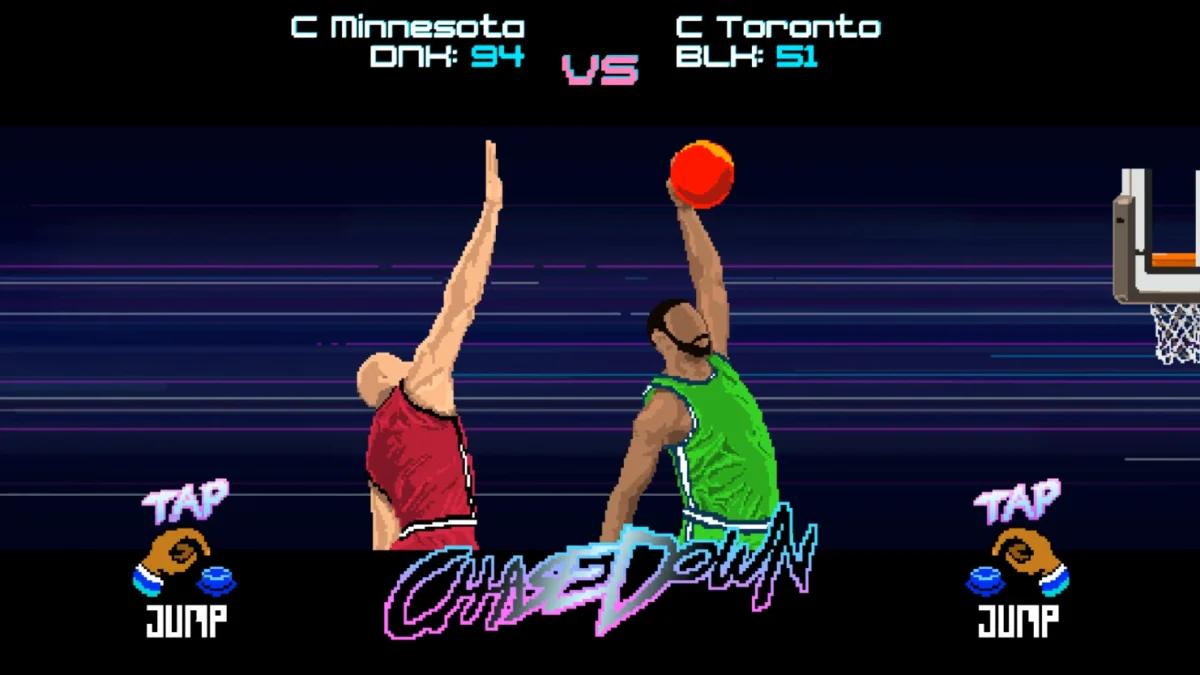
In an era dominated by hyper-realistic sports simulations that require a doctorate in basketball strategy and a subscription-based approach to player upgrades, Basketball Classics arrives as a refreshing, albeit flawed, departure. Developed as a love letter to the 8-bit and 16-bit arcade giants of the late 80s and early 90s, the title intentionally sidesteps the pursuit of photorealism. Instead, it leans heavily into the kinetic, high-octane energy that defined the golden age of couch-cooperative gaming.
For those who miss the days of sitting shoulder-to-shoulder with friends, controllers in hand, Basketball Classics aims to bridge the gap between retro sensibilities and modern accessibility. However, as with any game that leans so heavily on the spirit of the past, the question remains: does it provide enough substance to sustain a modern player’s interest, or is it merely a fleeting trip down memory lane?
The Philosophy of Simplicity: Core Mechanics
Basketball Classics understands its lane, and it stays in it with unwavering commitment. The developers have opted for a streamlined three-button control scheme, a choice that immediately lowers the barrier to entry. While modern AAA basketball sims often require players to memorize complex motion-based shot meters and intricate defensive pivots, this title prizes intuitive action.
Despite its simplicity, there is a surprising degree of depth hidden beneath the surface. Success isn’t merely about mashing buttons; it requires a nuanced understanding of player positioning and precise timing. The game’s engine rewards the observant player—those who understand how to space the floor, time a jump shot at the apex of a release, or anticipate the rhythm of an opponent’s pass. It is a system that is easy to learn but offers just enough mechanical friction to make the "pro" players stand out from the novices.
A Journey Through Time: Chronology of the Arcade Aesthetic
The history of basketball games is a long, storied path that began with titles like Double Dribble and NBA Jam. Basketball Classics occupies a space that acts as a spiritual successor to these icons.
The development philosophy behind the game seems rooted in a "less is more" approach. By utilizing a vibrant, clean pixel-art aesthetic, the game avoids the "uncanny valley" that often plagues modern sports titles, where facial animations can sometimes look more jarring than realistic. Each character sprite, while lacking the official licensing of the NBA, is clearly inspired by historical basketball archetypes. These rosters, spanning decades of fictionalized basketball history, provide a sense of progression. Players can navigate through various eras, effectively playing through a timeline of basketball’s evolution, from the physical, hard-nosed playstyles of the past to the perimeter-focused game of the modern day.

Supporting Data: The Playable Experience
The game’s appeal is anchored in its immediate gratification. Landing a jump shot feels crisp, and the dunk animations—complete with a satisfying "punch" of feedback—deliver that essential arcade dopamine hit.
Key Gameplay Pillars:
- Tactical Depth: Beyond the run-and-gun pace, the inclusion of play-calling adds a much-needed layer of strategy. It prevents the gameplay from devolving into mindless repetition, forcing players to think about mismatches and defensive rotations.
- Visual Flair: The pixel art is not merely a stylistic choice; it serves to keep the game running at a fluid, high frame rate, which is essential for a game that relies on split-second reaction times.
- The Multiplayer Factor: The local competitive mode remains the game’s strongest asset. It captures that "couch competitiveness" that feels increasingly rare in the modern age of online-only matchmaking.
However, the supporting data also reveals the title’s limitations. When analyzing the game’s longevity, the lack of depth in the single-player modes—specifically the "Season" and "Story" campaigns—becomes glaring. While the core loop is addictive for short bursts, the absence of a comprehensive franchise mode means that players who desire long-term team management will find themselves wanting more.
Official Responses and Developer Intent
The development team has been transparent about their intentions: Basketball Classics was never designed to compete with the simulation behemoths that dominate the market. In various community discussions and developer notes, the sentiment is clear: this is a "pick-up-and-play" experience.
They have prioritized the "fun factor" over the simulation of league economics or draft class management. While this focus has resulted in a polished core experience, it has also led to the "rough edges" noted by many players. The lack of online multiplayer, for instance, is a significant omission. In a modern gaming landscape where remote competition is the standard, tethering the game to local-only play is a bold, if potentially limiting, design decision. The developers seem to be banking on the idea that the game’s primary strength is the social, in-person gathering—a high-stakes gamble in the digital age.
Implications: The Verdict on Retro-Revivals
The implications for Basketball Classics are twofold. First, it serves as a testament to the fact that there is still a hungry audience for arcade-style sports titles. The success of the game’s core loop proves that players are tired of the bloat often found in annual sports releases.
Second, the critique of the game highlights the challenges of the "retro-indie" genre. To truly elevate a project from a "good" game to a "great" one, developers must find a way to honor the past while integrating modern expectations. The soundtrack, for example, is noted as being catchy but repetitive, and the inconsistency in defensive AI mechanics suggests that while the "feel" of the 90s is present, some of the technical frustrations of that era have unfortunately been carried over as well.

The Balancing Act
The game finds itself in a precarious middle ground:
- Strengths: Unmatched pick-up-and-play accessibility, charming art direction, and a satisfying, punchy feel to the fundamental actions of shooting and dunking.
- Weaknesses: Shallow long-term progression, inconsistent defensive mechanics, a repetitive audio experience, and the glaring absence of online competitive play.
Final Analysis
Ultimately, Basketball Classics earns a score of 7.0, a rating that reflects a "Like It" status. It is a title that fulfills its promise of providing quick, nostalgic, and easy-to-access fun. For those who want to invite a friend over for a few quick games, it is nearly perfect. For those looking for a deep, 100-hour sports management simulation, it will inevitably fall short.
The game is a reminder that sports titles do not always need to simulate reality to be successful. Sometimes, the goal is simply to capture the excitement of the sport, the speed of the break, and the satisfaction of a buzzer-beater. Basketball Classics succeeds because it never loses sight of its objective. It doesn’t want to be the next big sports sim—it just wants to be the game you reach for when you want to have a good time without the headache of modern gaming complexity.
While it lacks the polish and the feature set of a blockbuster, it carries a sense of character that is often missing from higher-budget productions. It is a flawed, nostalgic, and thoroughly enjoyable experience that serves as a solid reminder of why we fell in love with sports games in the first place. Whether it can hold a player’s attention over the long term remains to be seen, but as an arcade-inspired love letter, it succeeds far more than it fails.