Nana
Nana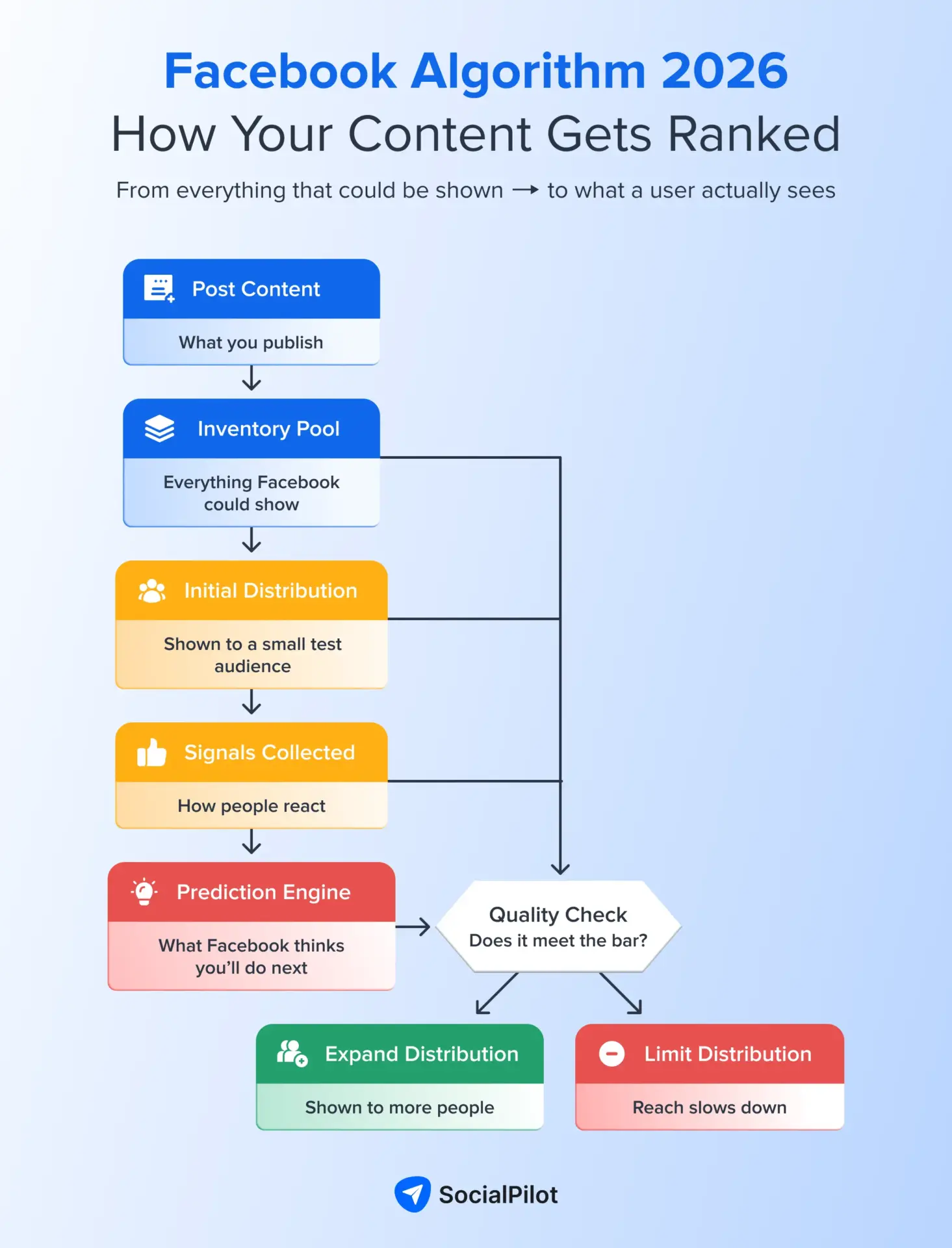
For years, the narrative surrounding Facebook has been one of decline. Marketers frequently lamented shrinking organic reach, unpredictable traffic, and the feeling that maintaining a brand page had become a thankless chore. Many businesses quietly migrated their efforts to newer, "trendier" platforms, concluding that the organic heyday of Facebook was a relic of the past.
However, a closer look at the platform in mid-2026 reveals a different reality: Facebook is not dead; it has simply undergone a radical transformation. The feed is no longer a static list of posts from friends and followed pages. It has evolved into a sophisticated, AI-driven Discovery Engine. This new system prioritizes content based on what a user is predicted to care about, rather than just who they follow. For businesses and creators, this means the rules of the game have fundamentally changed.
The Paradigm Shift: From Social Graph to Discovery Engine
The primary driver of Facebook’s 2026 resurgence is the transition from a traditional "Social Graph"—which primarily serves content from established connections—to a "Discovery Engine." With over 3.07 billion monthly active users, Meta has leveraged massive neural network architectures to redefine the user experience.
The core of this shift is the "Andromeda" update. Unlike previous systems that relied on static interest categories, Andromeda uses deep learning to "read" the content of a post and identify the ideal audience in real-time. This effectively removes the need for marketers to "hack" targeting settings. Instead, the algorithm is designed to find your customers if you provide high-quality, diverse creative that clearly signals the purpose and audience of your brand.
Chronology of 2026 Algorithmic Developments
To navigate the current landscape, it is essential to understand the specific milestones that have shaped the algorithm throughout the first half of 2026.
January 2026: The UTIS Model and Ranking Uplifts
The year began with a significant shift in how Reels are ranked. Meta introduced the User True Interest Survey (UTIS) model. This system randomly prompts a subset of users to rate videos on a 1-to-5 scale regarding interest alignment. These responses train a parallel ranking layer that evaluates audio style, pacing, mood, and production quality. Data from over 10 million users showed a 5.2% lift in total engagement and a 63.2% precision rate in recommendations.
Simultaneously, Q4 2025 improvements, fully realized in early 2026, delivered a 7% increase in organic feed views through a new sequence-learning architecture that processes longer user behavior histories.
March 2026: Friend Bubbles and Originality Enforcement
In March, Meta launched "Friend Bubbles," a feature that prioritizes content interacted with by a user’s close circle of friends. By pulling these videos into the candidate sourcing stage, the algorithm ensures that high-quality content between real-world connections is surfaced.
Also in March, Meta formalized its "Original Creator Reward Policy." This update set a high bar for what constitutes "original" content. The policy explicitly targets commentary-style creators: if you are not physically present on screen adding unique analysis, your content will not qualify for recommendation. Simple voiceovers over third-party clips are no longer sufficient.
May 2026: The SilverTorch Overhaul
The most significant architectural change arrived in May with the "SilverTorch" retrieval overhaul. Meta rebuilt the initial stage of the recommendation pipeline—the phase that narrows millions of posts down to a manageable few thousand—into a single, unified neural network. This allows the system to weigh vastly more candidates and rerank them before final display. The result? Newer content reaches viewers faster, and smaller, unconnected accounts have a significantly higher probability of reaching audiences outside their existing follower base.
June 2026: Stability and Refinement
As of June 2026, no major ranking algorithm shifts have been reported. Meta’s recent newsroom focus has shifted toward AI creator tools, suggesting that the "SilverTorch" and "Friend Bubbles" architectures remain the primary engines governing content distribution.
How the 2026 Algorithm Processes Your Content
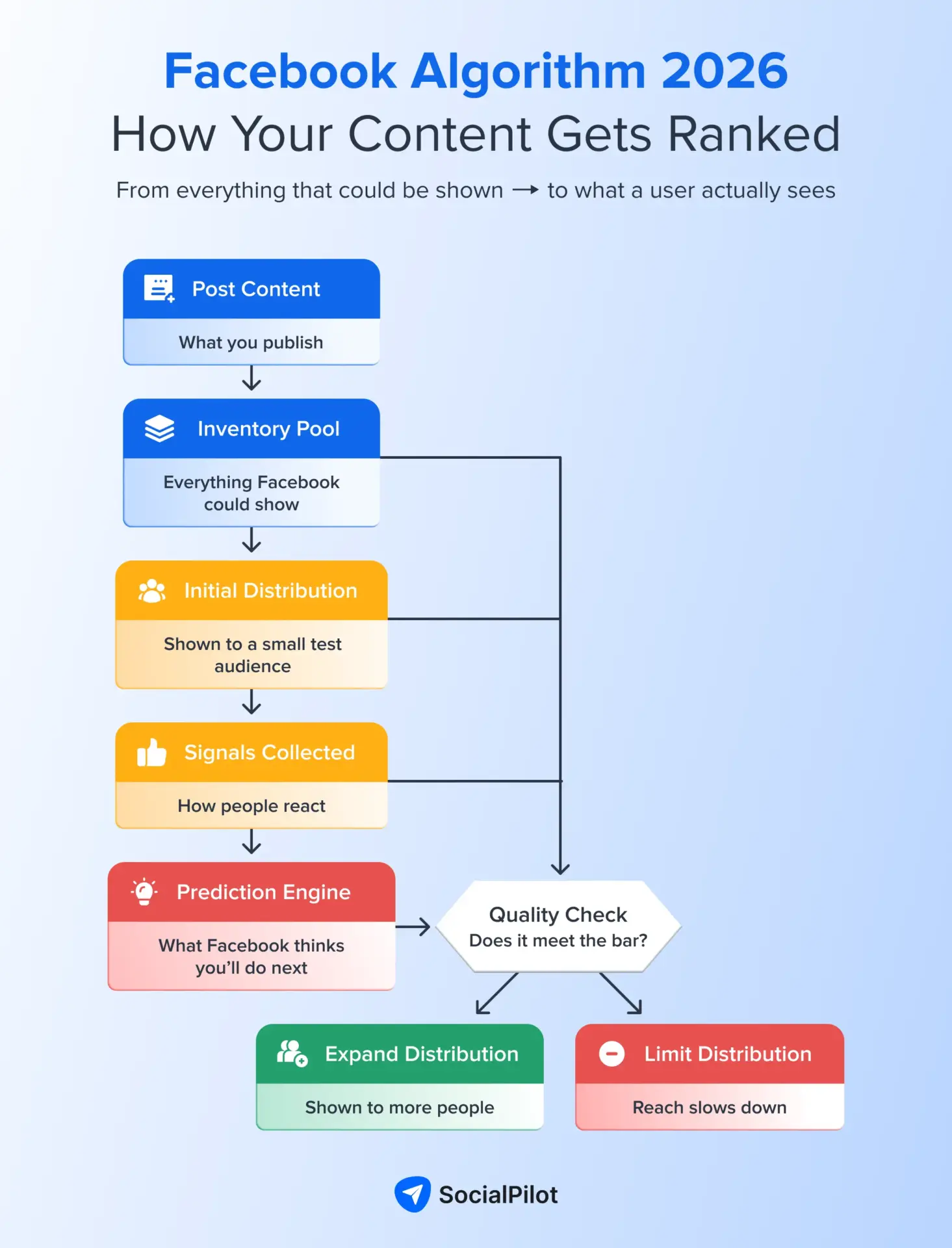
Every time a user refreshes their feed, the algorithm executes a multi-stage process in mere milliseconds:
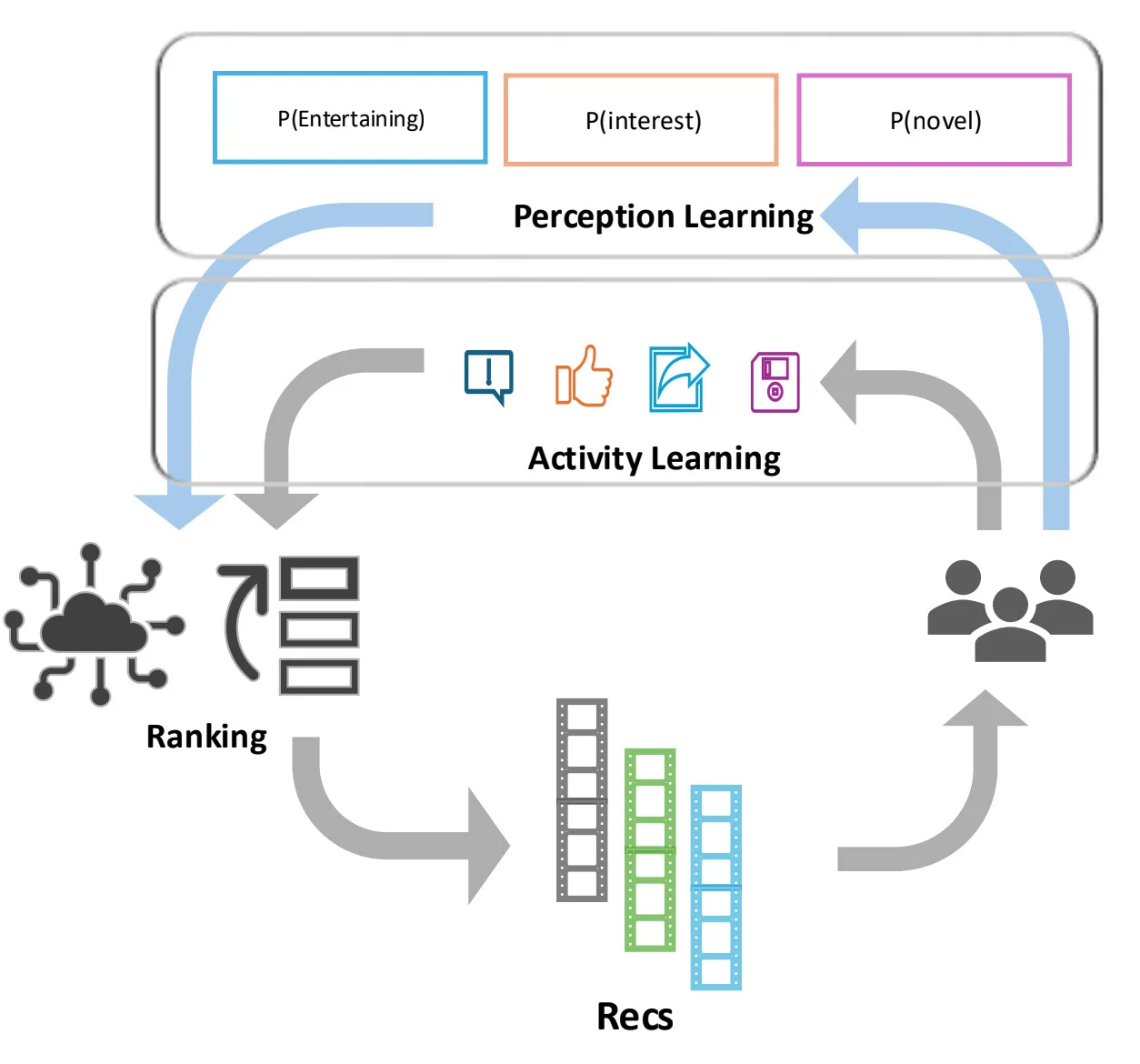
- Inventory: The system gathers a massive pool of candidates, including content from friends, followed pages, and—crucially—recommended content from accounts the user has never engaged with.
- Initial Distribution (The Test): Before a post goes wide, it is shown to a small "test" group to collect data.
- Signals: The system tracks thousands of signals, including dwell time, re-watch rates, and private shares.
- Predictions: Based on the test data, the AI predicts the probability of future user actions (likes, comments, long-form engagement).
- Relevance Scoring: Each post is assigned a personalized score for each user.
- Quality Check: If real-world performance matches the AI’s predictions, distribution expands. If it falls short, the post is demoted.
Implications for Content Strategy
The Death of Vanity Metrics
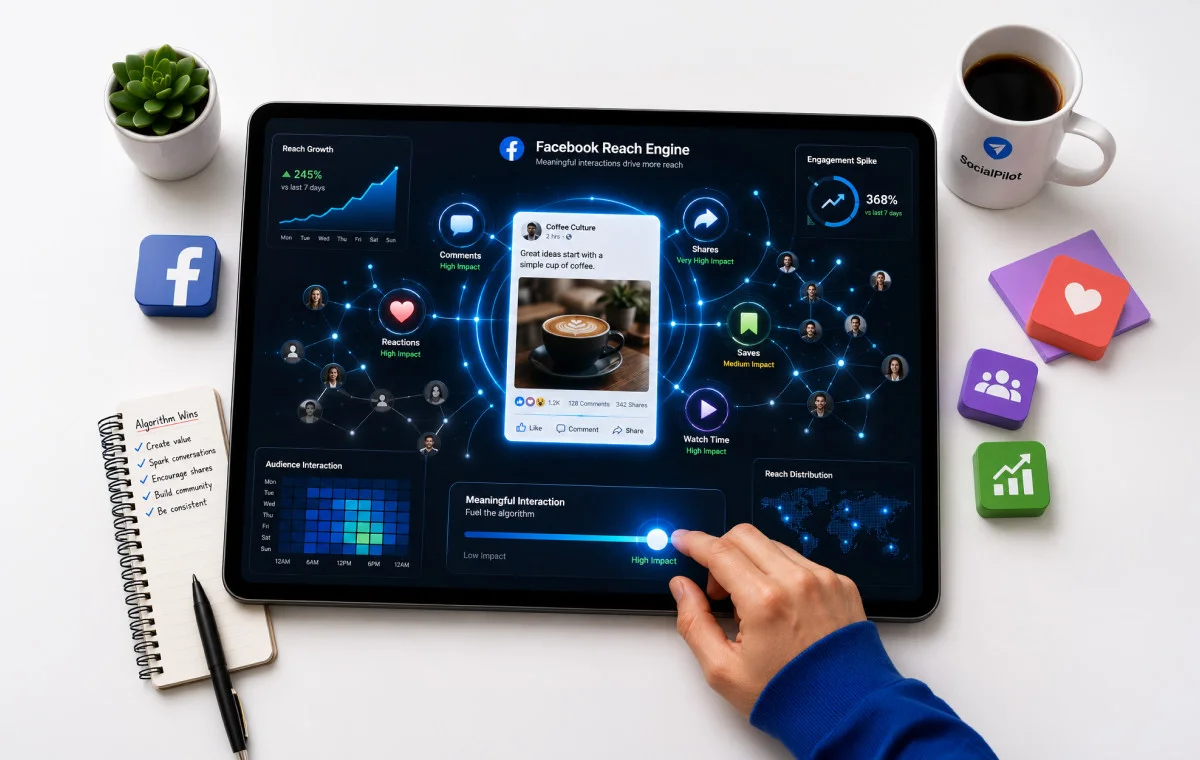
"Likes" are no longer the primary currency of Facebook. In 2026, the algorithm prioritizes "Depth of Interaction." Comments must be substantive—generally five words or more—to be weighted as high-value. Private shares (via Messenger or WhatsApp) are currently considered the strongest indicator of content quality, signaling to the algorithm that the post is "essential."
The 50% Retention Benchmark for Reels
For short-form video, the first three seconds are merely the entry fee. The 2026 algorithm specifically tracks the 50% retention mark. If a user watches at least halfway through, the algorithm classifies the content as high interest, often leading to a massive surge in reach.
The Return of Long-Form Dwell Time
In the main feed, "long-form" content is enjoying a comeback. High-resolution carousels (five or more slides) and text posts that encourage "See More" clicks perform exceptionally well. When a user spends over 15 seconds consuming a post, the algorithm marks it as "High Value."
Why Facebook Groups Remain Essential
Despite the focus on feed discovery, Facebook Groups remain the most reliable way to foster community. With over 1.8 billion monthly active users participating in groups, these spaces allow creators to build micro-communities. Because group interactions are naturally more active and conversational, they provide the algorithm with high-quality signals that translate into better performance when those same creators post to their main pages.
What to Avoid: Algorithmic Penalties
To maintain health in your reach, you must avoid several "modern" traps:
- Unoriginal Aggregation: Simply reposting viral clips with minimal editing is effectively "shadowbanned" from recommendations.
- Engagement Baiting: Explicitly asking for likes, comments, or shares is now detected by the algorithm and penalized.
- Low-Quality Links: If your external links lead to slow, ad-heavy, or spam-filled websites, the algorithm will detect this via the Meta Pixel and suppress your future distribution.
- AI Labeling Failures: While AI-generated content is permitted, failure to label it properly can lead to lower trust scores, especially as new EU regulations mandate stricter disclosure.
A 72-Hour Execution Plan for Growth
For those looking to optimize their reach in 2026, a structured approach is required:
- Day 1 (The Interest Launch): Post a 15-second "closed-loop" Reel. Focus on hitting the 70% retention mark at the 7-second point to signal the algorithm that your content is high-quality.
- Day 2 (The Community Warm-up): Instead of posting to your page, start a discussion in a relevant Facebook group. Ask a specific question that requires a thoughtful, multi-word response to stimulate "active" engagement.
- Day 3 (The Authority Anchor): Post a high-dwell-time Carousel to your main page. This piece should expand on the theme of your Day 1 Reel, encouraging users to pause and read.
Conclusion: The Path Forward
The Facebook algorithm in 2026 is a sophisticated, meritocratic engine. It is no longer interested in "hacking" or "tricking" the system; it is interested in what people actually find meaningful. Brands that succeed in 2026 will be those that stop chasing global virality and start chasing relevance. By prioritizing high-value, original content and fostering genuine, deep interactions, creators can tap into the massive, refreshed audience that Facebook’s Discovery Engine now offers.
Success on Facebook today is not about playing the algorithm; it is about providing the content that the algorithm is engineered to find and elevate.

 Nana Wu
 Neng Nana