

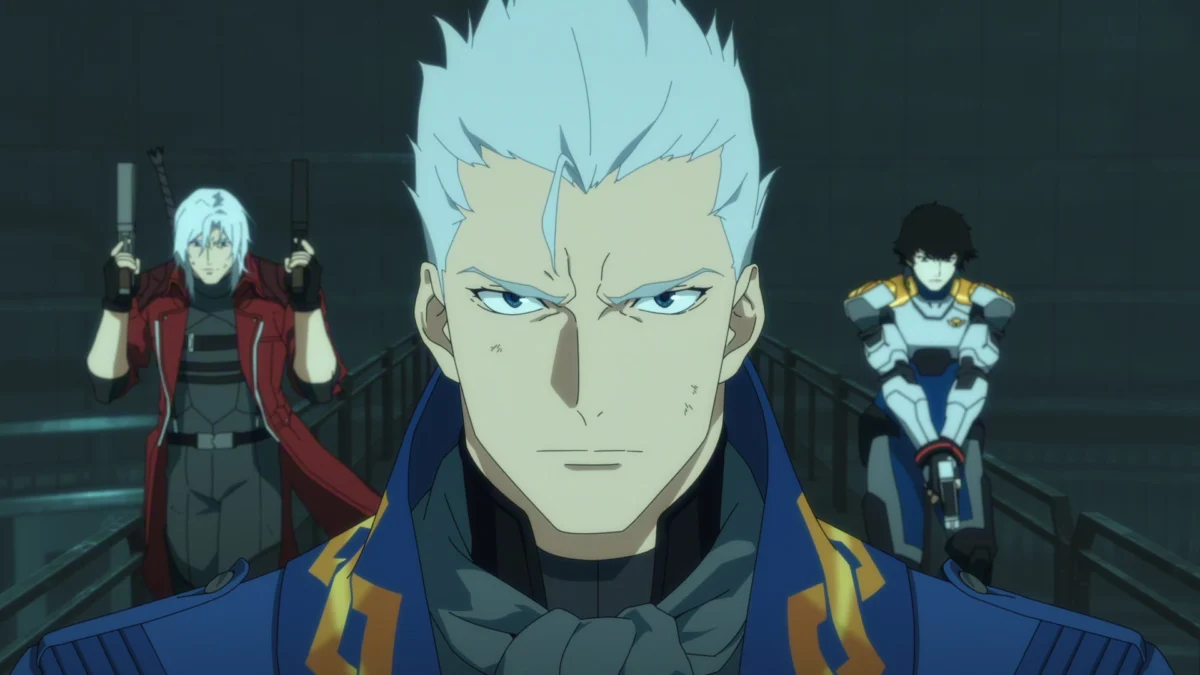
The "Jackpot" has returned to Netflix, but for those expecting a simple, guns-blazing romp, Devil May Cry Season 2 offers something far more visceral. Picking up the pieces from a harrowing cliffhanger, the sophomore outing of this animated adaptation trades some of its initial pulp-action bravado for a deep, philosophical exploration of legacy, paternal abandonment, and the cyclical nature of violence. As Dante Sparda finds himself thrust back into the fray, the series elevates itself from a stylish video game adaptation to a character-driven epic that mirrors the world-building excellence of modern fantasy titans like Castlevania.
The State of the Union: Picking Up the Pieces
Season 2 begins in the chilling aftermath of the Season 1 finale, which saw our hero, Dante (voiced by Johnny Yong Bosch), betrayed by his ally Mary "Lady" Arkham (Scout Taylor-Compton). Lady’s choice to prioritize the agenda of the shadowy demon-slaying organization Uroboros left Dante in a state of cryogenic stasis.
The narrative waste no time in establishing the stakes. With Dante on ice, the war in the demon realm of Makai has spiraled into a humanitarian disaster. The geopolitical landscape is bleak: the head of Uroboros, the Machiavellian Arius (Graham McTavish), has brokered a sickening pact with the opportunistic President Hopper (Jon Gries). This "cowboy president" narrative thread adds a layer of biting political satire, as the manufacturing of a perpetual war in Makai serves dual purposes: providing a boost to domestic polling numbers through manufactured "heroism" and supplying the Uroboros labs with a steady stream of Makai refugees to serve as expendable test subjects.
A Chronology of Conflict
The timeline of Season 2 is tight, focusing on the shifting loyalties that define the Sparda bloodline.
- The Awakening: Dante escapes his cryogenic prison, not merely to seek revenge, but to reclaim the brother he thought lost.
- The Vergil Rebrand: Vergil Sparda (Robbie Daymond), long thought to have perished in the attack that claimed their mother, emerges as one of Mundus’s (Ray Chase) most formidable lieutenants. This version of Vergil is a masterclass in tragic irony; he is a man weaponized by his own trauma, brainwashed into believing that his service to the demon king Mundus is the only path to avenging his mother.
- The Convergence: As the season progresses, the parallel paths of the brothers inevitably intersect. Dante, who spent the first season rejecting his demonic heritage, begins to embrace his humanity as his sole connection to his past. Conversely, Vergil leans into his demonic prowess, discarding his humanity as a perceived weakness.
- The Greater Threat: The introduction of Argosax the Chaos—a primordial entity even more dangerous than Mundus—forces an uneasy, if temporary, alliance between the warring twins.
Analyzing the "Daddy Issues" and Paternal Archetypes
At its core, Devil May Cry Season 2 is a case study in how the absence of a father figure dictates the moral trajectory of his children. Sparda, the legendary demon hero, remains a spectral presence throughout the narrative. He is the ghost at every feast, yet he remains an enigma.
The series brilliantly highlights that neither Dante nor Vergil truly knew their father. They are raised on legends, propaganda, and scraps of memory. This creates a fascinating dynamic where the brothers attempt to emulate a man who may not even exist in the way they perceive him.
This thematic focus extends to the antagonists. Arius is revealed to be a product of a lifetime of paternal abuse—an experience that twisted his childhood curiosity into a sociopathic hunger for power. Even the history of the demon realm itself is built on this foundation of toxic mentorship: Mundus betrayed his mentor, Argosax, only to be betrayed in turn by his own general, Sparda. It is a cycle of patricide and betrayal that suggests no one in this world is truly free from the sins of their predecessors.
Supporting Data: Character Dynamics and World Building
The series excels in its expanded cast. The introduction of Matilda "Mattie," a young girl grieving the loss of her grandfather, the arcane scientist Professor Lucan, serves as a poignant mirror for the protagonists. Through Mattie, we see the corrosive effect of hatred—the same hatred that fueled Lady’s journey.

Lady herself experiences the most significant growth this season. Still reeling from the memory of her father’s transformation into the "Jester," she is forced to confront the reality that her own search for order led her to align with the very corruption she sought to destroy. Her arc is one of the most compelling, grounded by Taylor-Compton’s nuanced performance.
Critical Assessment: The Animation and Aesthetic
While the narrative depth is a massive step forward, the production is not without its hurdles. The transition to larger-scale CGI for entities like Mundus and Argosax, as well as the high-intensity "Devil Trigger" sequences, occasionally suffers from a clunky frame rate that contrasts sharply with the fluid 2D character animation. When the action is focused on the core cast, the fight choreography is breathtaking—reminiscent of the high-octane, stylized violence that fans of the Capcom games have come to expect. However, when the scale shifts to the cosmic, the visual fidelity falters slightly.
Despite these minor technical hitches, the show succeeds in making Makai feel like a lived-in, dangerous, and culturally rich environment. The callbacks to iconic set pieces from the Devil May Cry game franchise are handled with a reverence that will delight long-time fans without alienating those who came for the story alone.
Implications for the Franchise
The second season of Devil May Cry establishes a high watermark for video game adaptations. It proves that the franchise has the legs to support a complex, multi-seasonal narrative that goes beyond simple monster-of-the-week tropes.
By grounding the conflict in the psychology of its leads rather than just the spectacle of the blade, Netflix has turned a "gunslinger" show into a meditation on trauma. The implications for future seasons are clear: the Sparda brothers are now on a collision course not just with demons, but with the very idea of their own identity. Whether they choose to define themselves by their father’s shadow or by their own choices will likely be the driving force of the series moving forward.
Conclusion: A Must-Watch for Genre Fans
Devil May Cry Season 2 is a triumph of character-led storytelling. It manages to balance the high-stakes, chaotic energy of the source material with a somber, reflective tone that explores why we fight, who we fight for, and what we lose in the process. While the CGI-heavy sequences may lack the polish of the character-focused animation, the strength of the script and the depth of the performances more than compensate.
For the "DanLady" shippers, there are moments of profound intimacy; for the "Vergil stans," there is a character study that provides more depth than a decade of gaming lore; and for the general viewer, there is a compelling fantasy drama that demands to be watched. All eight episodes are currently available on Netflix, and they are essential viewing for anyone interested in the evolution of modern animated fantasy. The jackpot has indeed been hit.











No comments yet. Be the first to join the conversation!