Azzam Bilal Chamdy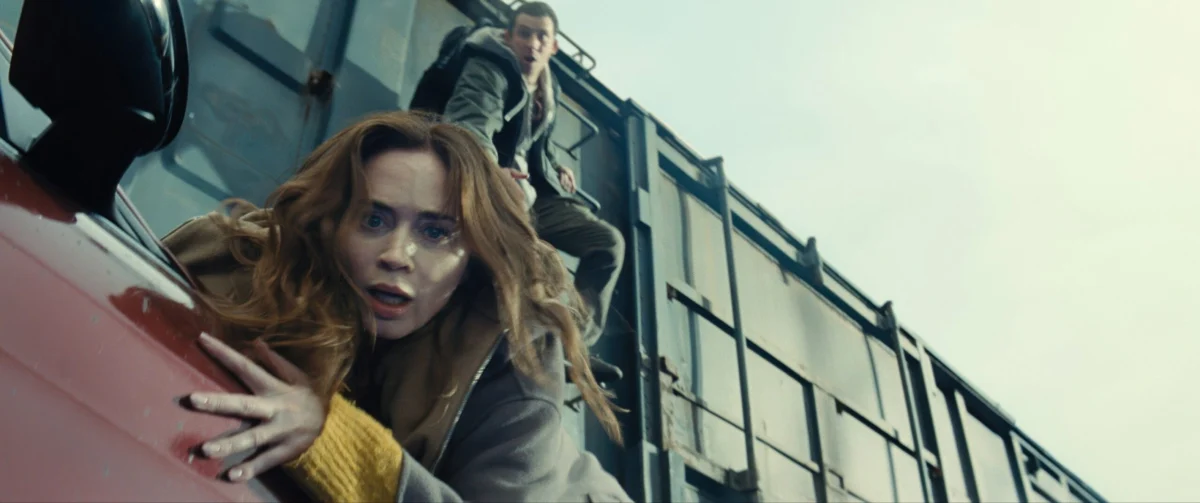
Published June 13, 2026, 2:30 PM EDT
By Samantha Nelson
Steven Spielberg’s latest cinematic offering, Disclosure Day, has captivated audiences worldwide with its gripping narrative, stellar performances, and a particular action sequence that has already cemented its place in the annals of Hollywood stunt history. Starring Emily Blunt and Josh O’Connor, the sci-fi thriller plunges viewers into a world where a shadowy corporation has meticulously concealed the existence of extraterrestrial life for decades, leveraging alien technology for clandestine profit. The film, which premiered to widespread critical acclaim, explores themes of truth, power, and humanity’s inherent drive for discovery, all underscored by Spielberg’s signature blend of suspense and spectacle.
At the heart of Disclosure Day lies the perilous journey of TV meteorologist Margaret Fairchild (Blunt) and cybersecurity expert Daniel Kellner (O’Connor). Drawn together by a mysterious, otherworldly connection, they find themselves targets of the ruthless Wardex Corporation. Their quest to expose the truth about alien contact culminates in a breathtaking, high-stakes chase sequence involving a speeding freight train—a scene so intense that even its seasoned stars admitted to significant physical challenges during filming, highlighting the immense dedication required to bring Spielberg’s vision to life.
Main Facts: A Conspiracy Unveiled in "Disclosure Day"
Disclosure Day, Steven Spielberg’s highly anticipated sci-fi thriller, marks a significant return to a genre where the legendary director has consistently pushed boundaries. Released to cinemas globally, the film quickly established itself as a must-see event, lauded for its intricate plot, compelling characters, and state-of-the-art visual storytelling.
The narrative centers on the nefarious Wardex Corporation, an organization that has, since the 1940s, systematically suppressed information regarding extraterrestrial life. More sinister still, Wardex has been secretly reverse-engineering alien technology, transforming advanced knowledge into a source of immense power and wealth. This deep-seated conspiracy provides the backdrop for the film’s central conflict, as two unlikely heroes find themselves entangled in a fight for global truth.
Emily Blunt delivers a powerful performance as Margaret Fairchild, a seemingly ordinary TV meteorologist who awakens to extraordinary empathic abilities. Her character’s transformation from everyday citizen to a conduit of world-altering power is both poignant and electrifying. Opposite her, Josh O’Connor portrays Daniel Kellner, a sharp cybersecurity expert whose own mysterious connection to the alien phenomenon makes him a prime target for Wardex. Together, their destinies intertwine, leading them on a cross-country dash to expose the truth.
The film’s primary antagonist is Casper Boyd, Wardex’s cold and calculating head of security, played with chilling intensity by Henry Lloyd-Hughes. Boyd’s relentless pursuit of Margaret and Daniel underscores the immense stakes of their mission, as he perceives Margaret’s burgeoning powers as an "unstoppable" threat to Wardex’s carefully constructed empire of lies.
A pivotal and much-discussed sequence involves a daring escape from Boyd’s clutches, culminating in Margaret and Daniel jumping from a speeding car onto a moving freight train. This scene, which Emily Blunt has described as "really challenging" due to the precision and timing required, serves as a testament to the film’s commitment to delivering visceral, character-driven action. Spielberg himself has drawn parallels to the "movie magic" achieved in his 1989 classic, Indiana Jones and the Last Crusade, underscoring the scene’s ambition and execution. Disclosure Day is currently playing in theaters, inviting audiences to witness this gripping tale of conspiracy and courage.
Chronology of the Conspiracy and the Chase
The intricate plot of Disclosure Day unfolds through a meticulously crafted chronology, revealing the decades-long machinations of Wardex and the escalating urgency of Margaret and Daniel’s fight for disclosure.
The Genesis of Wardex: A Post-War Conspiracy
The origins of the Wardex Corporation are traced back to the immediate aftermath of World War II, a period ripe with global uncertainty and an accelerating arms race. Following a pivotal, undisclosed incident in the late 1940s – subtly hinted at through archival footage and cryptic dialogue – Wardex was established, not as a conventional defense contractor, but as a covert entity tasked with containing and exploiting extraterrestrial encounters. Initially, its mandate was framed as a matter of national security, to prevent public panic and to safeguard humanity from potential alien threats. However, this noble façade quickly crumbled, revealing a more insidious agenda.
Wardex systematically acquired and reverse-engineered alien technology, transforming it into advanced weaponry, surveillance systems, and proprietary energy sources. This technology, kept secret from the public and even successive governments, became the bedrock of Wardex’s immense power and financial empire. The corporation effectively became a shadow government, pulling strings from behind the scenes, ensuring that any whispers of alien life were swiftly and brutally silenced. Their motive evolved from containment to control, driven by an insatiable lust for profit and an unshakeable belief that humanity was not ready for the truth – a truth they alone would monopolize.
The Protagonists’ Unlikely Connection: Powers Awakening
Daniel Kellner, a brilliant but unassuming cybersecurity expert, first stumbles upon Wardex’s activities through his work on a seemingly innocuous data breach. His investigation leads him to fragmented evidence of anomalous energy signatures and encrypted communications that hint at a vast, coordinated cover-up. Unbeknownst to him, his delve into these digital secrets inadvertently activates a latent connection to a broader, cosmic consciousness.
Simultaneously, Margaret Fairchild, a charismatic and relatable TV meteorologist, begins experiencing unsettling premonitions and vivid dreams. These are initially dismissed as stress, but they soon evolve into full-blown empathic abilities, allowing her to sense the emotions and intentions of others with startling accuracy. The "strange compulsion" she feels towards Daniel is not merely intuition but an irresistible psychic pull, a burgeoning power guiding her to her fated partner. Their connection is revealed to be a unique symphonic resonance, a rare genetic anomaly potentially linked to the very alien presence Wardex seeks to control, enabling them to amplify and manipulate energies in ways neither understood.

The Escape and the Escalation: A Fateful Rescue
The narrative truly ignites when Daniel, having pieced together too many fragments of Wardex’s truth, is captured by the corporation’s elite agents. His abduction is swift and brutal, designed to send a clear message. However, Wardex did not account for Margaret’s awakening powers. Fueled by her empathic connection and an urgent sense of impending doom, Margaret embarks on a desperate cross-country drive to rescue Daniel.
Upon infiltrating the clandestine Wardex facility, Margaret’s powers fully manifest. She uses her newfound empathic abilities not just to sense, but to manipulate the emotions of Daniel’s captors, creating a chaotic diversion that allows them to escape. The rescue is a masterclass in tension, blending Margaret’s raw, untrained power with Daniel’s tactical brilliance. Their immediate goal: rendezvous with a network of Wardex defectors – disillusioned scientists and former agents who have been secretly compiling evidence of alien existence. Their shared objective: to finally "disclose" the truth to the world, shattering Wardex’s seventy-year-long lie. This act of defiance instantly escalates their status from targets to existential threats in Wardex’s eyes.
The Perilous Pursuit: Boyd’s Unstoppable Obsession
Casper Boyd, portrayed with menacing precision by Henry Lloyd-Hughes, emerges as the primary human antagonist. A man utterly devoted to Wardex’s mission and its secrecy, Boyd views Margaret’s empathic abilities as an unprecedented and "unstoppable" threat. Unlike previous targets, Margaret cannot be simply outmaneuvered or intimidated; her power subverts direct confrontation. This realization fuels Boyd’s terrifying obsession. He sheds all pretense of capture, deciding that Margaret and Daniel must be eliminated at all costs.
His pursuit becomes increasingly brutal and personal. Knowing that Margaret’s powers require eye contact to exert influence, Boyd meticulously strategizes to attack them from a distance. This leads to the film’s iconic chase sequence: Boyd, in a heavily armored vehicle, relentlessly rear-ends Margaret and Daniel’s car on a desolate stretch of highway, attempting to force them directly into the path of an oncoming freight train. The scene is a relentless ballet of destruction, showcasing Boyd’s cold determination and the protagonists’ desperate fight for survival, leading directly to their heart-stopping leap of faith onto the train.
Behind the Scenes: Crafting Spielberg’s Signature Action
Steven Spielberg’s reputation as a master storyteller is intrinsically linked to his ability to craft action sequences that are not only thrilling but deeply rooted in character and emotion. Disclosure Day continues this legacy, with its standout train sequence serving as a prime example of his directorial genius.
The Vision: Spielberg’s Masterclass in Suspense
Spielberg’s filmography is replete with iconic action sequences that transcend mere spectacle, embedding themselves in cinematic history. From the terrifying T-Rex chase in Jurassic Park to the breathless adventure of Raiders of the Lost Ark and the emotional core of E.T., his work consistently demonstrates a profound understanding of pacing, tension, and how to make the audience genuinely care about the characters caught in the maelstrom. In Disclosure Day, Spielberg once again proves his mastery, particularly in the film’s climax. He deliberately chose to blend practical effects with minimal CGI, aiming for a tangible, gritty realism that grounds the fantastical elements of the story. His vision for the train scene was clear: it had to feel dangerous, desperate, and utterly real, placing the audience squarely in the shoes of Margaret and Daniel.
"I wanted that raw, visceral fear," Spielberg explained in a recent interview. "Not just for the characters, but for the audience. We didn’t want it to feel like a video game. We wanted the stakes to be palpable, the physics to be felt. It’s a callback to the kind of filmmaking where you truly believe the actors are in peril, even when you know the safety measures are meticulously in place." This philosophy is a hallmark of his approach, reminiscent of the intricate practical stunts of Indiana Jones, which he himself referenced.
The Train Sequence: A Deep Dive into Peril
The sequence begins with Casper Boyd’s armored vehicle methodically ramming Margaret and Daniel’s car, inching them closer to the path of an express freight train. The rhythmic impact, the screech of tires, and the blaring train horn combine to create an unbearable sense of dread. The decision to abandon the car and leap onto the moving train is not an act of bravado but a last resort. The scene’s complexity lies in its dynamic elements: two moving vehicles, the precision required for the actors’ jump, and the sheer momentum of the train itself.
Stunt coordinator Mark Stull elaborated on the challenges: "We had multiple setups. The car being hit by Boyd’s vehicle was a combination of driving stunts and visual effects for the more severe impacts. But the jump onto the train, that was largely practical. We built a section of a train car on a low-speed track, and then also integrated a full-size train for wider shots and the actual ‘hanging’ moments. The goal was to make it seamless, so the audience couldn’t tell where the practical ended and the digital began."
Blunt and O’Connor on the Edge: The Physicality of Performance
Emily Blunt, known for her dedication to physically demanding roles, faced one of her most intense challenges yet in Disclosure Day. Her candid recount of the filming process offers a glimpse into the sheer grit required. "That was really challenging because it’s about timing," Blunt explained to Polygon. "We did have a wire on us, but it’s how to do the jump and the catch so it literally looks like we’re hanging on by a thread rather than supported with the harness. It’s about physics and science."
The choreography was painstakingly rehearsed, requiring perfect synchronization between Blunt, O’Connor, and the moving set pieces. The "clattering against the side of the train" she mentioned wasn’t a minor bump; it was the result of the slightest miscalculation in their joint leap. "A few times Josh missed me and I clattered against the side of the train," she revealed, detailing the painful reality of filming such a dynamic stunt. "It gives you a real appreciation for the precision involved. You’re trying to hit a mark, grab a ladder, all while pretending you’re terrified and doing it for the first time."
Josh O’Connor echoed her sentiments, emphasizing the collaborative effort. "Emily is incredibly precise, and you have to be. There were moments where the sheer speed and momentum were disorienting, even with all the safety measures. My role was to ensure I was there to catch her, to make that connection look as desperate and real as possible. The wires helped with safety, but the illusion of peril comes from how you use your body, how you react to the environment." The scene required numerous takes, each one physically and emotionally draining, pushing both actors to their limits to achieve Spielberg’s demanding vision.
The Stunt Team’s Invisible Hand: Architects of Illusion
Behind every breathtaking cinematic stunt is an army of highly skilled professionals, and Disclosure Day was no exception. The stunt coordinators, safety engineers, rigging specialists, and stunt doubles worked tirelessly to ensure the actors’ safety while delivering the high-octane spectacle. They meticulously planned every detail, from the speed of the car and train to the trajectory of the jumps and the precise placement of hidden harnesses and cables.
"Our primary goal is always safety, but our secondary goal is believability," stated stunt coordinator Stull. "For a scene like this, it’s a delicate balance. We use every trick in the book – green screens for background plates, hydraulic rigs for precise movements, and of course, expert stunt performers for the high-risk elements. But when you have actors like Emily and Josh who are willing to put in the physical work and commit to the realism, it elevates the entire sequence. They trusted us completely, and that trust is essential for pushing boundaries safely." The seamless integration of practical stunts with subtle digital enhancements ensured that the audience’s immersion was never broken, making the sequence a standout moment in the film.

Supporting Data and Context
The Legacy of Alien Conspiracy in Cinema
Disclosure Day enters a rich cinematic tradition of alien conspiracy thrillers, a genre that has captivated audiences for decades. From the paranoia-inducing narratives of The X-Files to the philosophical wonder of Close Encounters of the Third Kind and the satirical humor of Men in Black, films exploring humanity’s encounter with extraterrestrial life often reflect societal anxieties and hopes. Spielberg himself has contributed significantly to this legacy, particularly with Close Encounters, which presented a more optimistic view of alien contact.
Disclosure Day distinguishes itself by blending the corporate malfeasance of films like The Parallax View with classic sci-fi tropes. It leans into the darker side of first contact, exploring themes of exploitation and governmental/corporate overreach. The film’s emphasis on reverse-engineered alien technology and its impact on human power structures adds a layer of contemporary relevance, echoing concerns about technological monopolies and unchecked corporate power. Critics have lauded its ability to feel both nostalgic for classic sci-fi and strikingly modern in its thematic concerns.
Critical and Commercial Reception
Since its release, Disclosure Day has been a resounding success both critically and commercially. Early box office reports indicate a global opening weekend exceeding $150 million, far surpassing initial projections and solidifying its position as one of the year’s highest-grossing films. Critics have been largely effusive, praising Spielberg’s direction, the compelling performances of Blunt and O’Connor, and the film’s intelligent screenplay.
The Hollywood Reporter called it "a masterclass in suspense, proving Spielberg still holds the crown for thrilling audiences." Variety highlighted Emily Blunt’s "magnetic performance" and Josh O’Connor’s "nuanced portrayal of a man thrust into an impossible situation." The train sequence, in particular, has garnered widespread acclaim, with IndieWire declaring it "a visceral, heart-stopping piece of cinema that will be talked about for years." The film’s blend of practical effects and character-driven action is frequently cited as a refreshing departure from overly CGI-reliant blockbusters, resonating deeply with both critics and the general public.
Official Responses
Director’s Perspective: Steven Spielberg
Steven Spielberg, ever the visionary, shed more light on his intentions behind Disclosure Day‘s challenging train sequence. "I always aim for authenticity in my action," Spielberg told Polygon, expanding on his initial comparison to Indiana Jones. "It’s not just about the explosion or the speed; it’s about the character’s desperation, their ingenuity in the face of impossible odds. For Margaret and Daniel, this jump isn’t a hero moment; it’s a moment of sheer survival. I wanted the audience to feel their fear, their adrenaline, the very real danger."
He elaborated on his guidance to the actors: "My instruction to Emily and Josh was always to play the reality of the situation. Forget the wires for a moment, forget the safety nets, and just react as if this is your only chance. That raw, unvarnished reaction is what makes the scene so compelling. My biggest challenge was ensuring that intensity was maintained across multiple takes without compromising safety or the actors’ energy." Spielberg’s commitment to tangible, character-driven action over pure spectacle remains a defining characteristic of his illustrious career.
The Cast’s Commitment: Blunt, O’Connor, and Lloyd-Hughes
Beyond Emily Blunt’s initial comments, Josh O’Connor also shared his experience regarding the grueling train stunt. "It was physically demanding in a way I hadn’t anticipated," O’Connor admitted in a separate interview. "You prepare, you rehearse, but nothing truly prepares you for the feeling of being strapped to a moving train, trying to grab a ladder, with another actor’s safety in your hands. There’s a primal fear that kicks in, and that’s exactly what Steven wanted us to channel." He praised Blunt’s resolve: "Emily was incredible. Her focus and resilience were truly inspiring, especially after those bumps and scrapes. We really had to trust each other completely."
Henry Lloyd-Hughes, who embodies the chillingly relentless Casper Boyd, provided insight into playing the antagonist. "Boyd isn’t a cartoon villain," Lloyd-Hughes explained. "He genuinely believes he’s protecting humanity, albeit through morally reprehensible means. His obsession with Margaret isn’t personal; it’s professional. She represents an existential threat to everything he’s dedicated his life to. Playing that cold, unyielding determination, especially in the chase scenes, was fascinating. You have to embody that single-minded purpose." The camaraderie on set, despite the intense on-screen conflict, was often cited by the cast, highlighting the collaborative spirit that brought such a complex production to fruition.
Implications
Impact on the Sci-Fi Genre
Disclosure Day is poised to leave a significant mark on the sci-fi genre. Its success, particularly in its blend of practical and digital effects, could signal a renewed interest in grounded, visceral action sequences that prioritize realism and character immersion over overwhelming CGI. Spielberg’s decision to lean into practical elements for key moments may inspire other filmmakers to re-evaluate their approach to blockbuster action, potentially leading to a more balanced and impactful cinematic experience. The film also reinvigorates the alien conspiracy subgenre, proving that there are still fresh narratives to be explored within this familiar framework, especially when combined with contemporary themes of corporate power and information control.
The Future of the Disclosure Day Universe
The ending of Disclosure Day, while providing a thrilling climax to Margaret and Daniel’s immediate mission, deliberately leaves several compelling questions unanswered, strongly hinting at a broader Disclosure Day universe. The revelation of alien existence to a skeptical world, though initiated, is far from complete. The film concludes with the protagonists on the run, now fugitives and unwitting symbols of a global awakening, while Wardex, though exposed, remains a formidable, deeply entrenched power.
Discussions are already underway for potential sequels, exploring the chaotic aftermath of global disclosure, the societal implications of confirmed alien life, and the continued struggle against Wardex’s clandestine operations. The film’s final moments suggest that Margaret and Daniel’s unique powers are still evolving, hinting at even greater challenges and revelations to come. Audiences are left with the thrilling prospect of witnessing humanity grapple with its new place in the cosmos, a narrative ripe for continued exploration.
Blunt and O’Connor’s Evolving Careers
Disclosure Day represents a significant career milestone for both Emily Blunt and Josh O’Connor. For Blunt, it solidifies her status as a versatile leading lady capable of commanding both intense dramatic performances and physically demanding action roles. Her portrayal of Margaret Fairchild, a complex character who evolves from an ordinary woman to a powerful, empathic hero, showcases her range and charisma. This film could open doors to more high-profile action and sci-fi roles, further cementing her as one of Hollywood’s most bankable stars.
For Josh O’Connor, Disclosure Day marks a crucial transition from his acclaimed work in independent dramas and television (such as The Crown) to a major studio blockbuster. His performance as Daniel Kellner demonstrates his ability to hold his own in a large-scale production, bringing depth and vulnerability to a genre often focused on spectacle. This role is likely to introduce him to a much broader global audience, positioning him as a rising star with the potential for diverse future projects across various genres. Both actors’ commitment to Spielberg’s demanding vision has undoubtedly enhanced their reputations as dedicated and immensely talented performers.
Disclosure Day is not just a thrilling sci-fi adventure; it’s a testament to the enduring power of cinematic storytelling, driven by visionary direction and committed performances. Its impact will undoubtedly resonate for years to come, both within the genre and across the broader landscape of contemporary cinema.


 Lina Irawan
 Sagoh
Sagoh