Pevita Pearce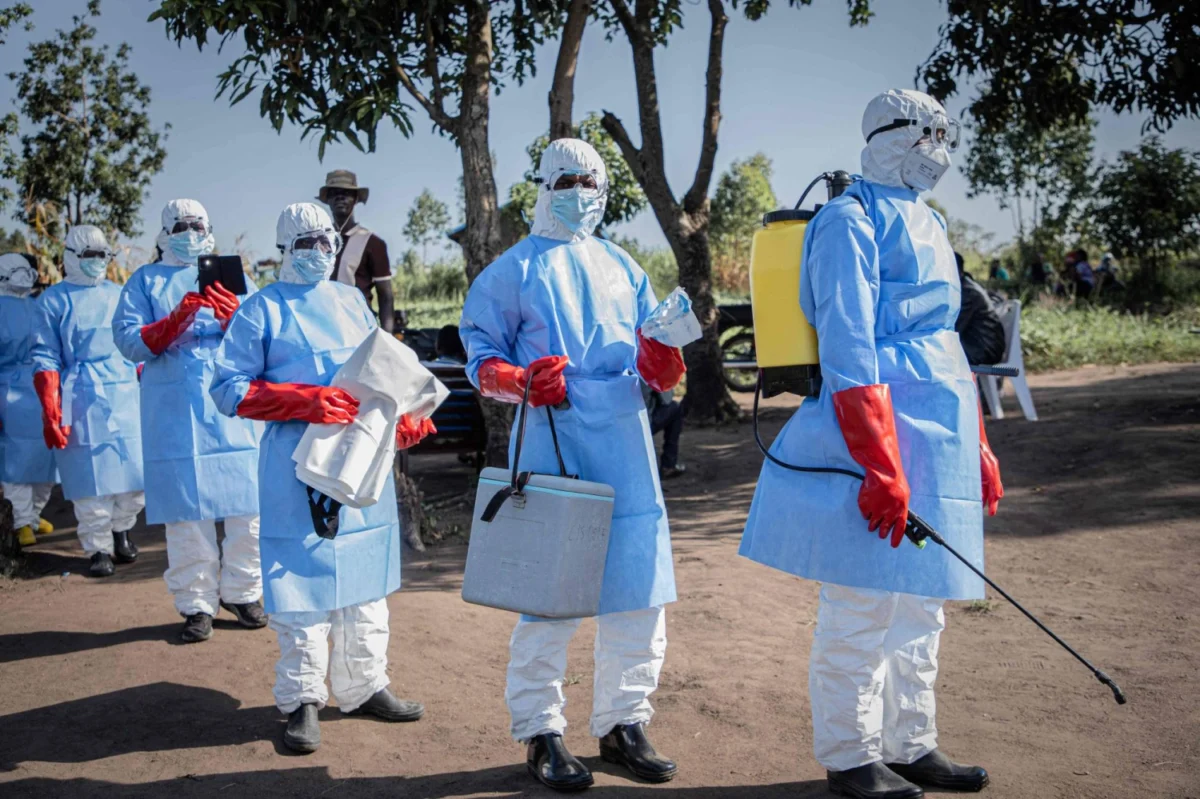
NIZI, Democratic Republic of the Congo — The Kpangba displacement camp, already a site of immense suffering due to years of regional conflict, has become the epicenter of a new and harrowing struggle. Two weeks ago, the camp recorded its first fatalities attributed to the Ebola virus, triggering an emergency response from international health bodies and the provincial government. However, instead of a coordinated medical intervention, frontline workers have been met with hostility, denial, and a profound wall of silence.
The situation has paralyzed the efforts of the World Health Organization (WHO), the Congolese Ministry of Health, and partner NGOs to “break the chains of transmission.” As the virus remains a lethal threat, the inability to trace contacts is raising alarms that the outbreak could spiral out of control in one of the most volatile regions on the planet.
The Chronology of an Escalating Crisis
The current crisis began in mid-June when reports of two sudden deaths emerged from the Kpangba camp, located near the mining town of Nizi in the Ituri province. The victims, both women, exhibited symptoms consistent with Ebola Virus Disease (EVD), including high fever and internal hemorrhaging.
Following standard protocols, rapid response teams were dispatched to the site to conduct safe and dignified burials and to identify individuals who had been in close proximity to the deceased. These contact-tracing measures are the cornerstone of Ebola containment; without them, the virus moves unchecked through crowded living spaces where hygiene and social distancing are near-impossible to maintain.
However, the intervention was short-lived. Upon arrival, health workers were confronted by a large, agitated group of local residents who vehemently rejected the medical diagnosis. The crowd claimed that the women had died of other causes, refusing to accept the clinical assessment provided by health authorities.
"Up to this day, we are not able to follow up on the contacts of these cases," said Dr. Jean-Claude Lonzama, the chief doctor for the Nizi health zone, in a statement to Reuters on Saturday. The standoff forced the medical teams to retreat, leaving the health zone effectively blinded to the potential spread of the virus within the camp’s population.
The Anatomy of Denial: Why Misinformation Takes Root
The resistance in Nizi is not an isolated phenomenon; it is a manifestation of a long-standing "trust deficit" between international aid agencies and the communities they serve. In Eastern Congo, where decades of conflict have destroyed infrastructure and fueled cynicism toward state and international institutions, medical interventions are often viewed with deep suspicion.
The Role of Historical Trauma
For many in the Kpangba camp, the arrival of outsiders in protective gear is not seen as a relief effort, but as a potential threat. Rumors—ranging from theories that the virus was introduced by the government to assertions that the vaccine is a tool for sterilization or exploitation—circulate rapidly through the camp’s informal communication networks.
The Impact of Displacement
Displaced populations are uniquely vulnerable to the spread of misinformation. Living in high-density conditions with limited access to reliable news, residents often rely on community leaders and rumors to navigate threats. When official messaging fails to align with the lived experience of the people—who may prioritize daily survival, food security, and protection from armed militia over an abstract biological threat—the medical response is almost inevitably rejected.
Supporting Data: The Logistics of a High-Risk Environment
The geography of the Nizi health zone adds a layer of complexity to the medical response. It is a heavily populated mining area, characterized by a transient workforce and a lack of formal sanitation infrastructure.

- Population Density: The Kpangba camp holds thousands of individuals who have fled violence elsewhere in the province. High-density housing creates an ideal environment for the rapid transmission of bodily fluids, the primary vector for Ebola.
- Medical Infrastructure: The local health zone is already strained by the treatment of malaria, cholera, and gunshot wounds. Introducing an Ebola response requires dedicated isolation wards, specialized Personal Protective Equipment (PPE), and a robust laboratory network—resources that are currently being stretched to their breaking point.
- The "Invisible" Chain: According to WHO epidemiological models, the "incubation-to-intervention" window for Ebola is critical. Every day that passes without tracing the contacts of the two deceased women increases the likelihood that a new cluster of cases has already emerged in the community, undetected and untreated.
Official Responses and the Burden of Responsibility
The response from the Congolese government and the WHO has been one of frustrated urgency. Health officials are now pivoting toward a strategy of community engagement, recognizing that force or top-down mandates will only deepen the resistance.
Dr. Lonzama and his colleagues are currently attempting to pivot by recruiting influential local leaders—community elders, religious figures, and heads of the displaced groups—to act as intermediaries. The goal is to demystify the medical process and explain the necessity of the "safe burial" protocols, which are often the most contentious aspect of the response because they prevent traditional, physical contact with the deceased.
“We need to win the trust of the population,” a representative from a regional health NGO noted. “If they do not believe the disease is real, they will hide the sick. If they hide the sick, we cannot stop the transmission. It is a simple equation with a very complex social solution.”
Broader Implications: A Regional Health Security Threat
The failure to contain the outbreak in Nizi has implications far beyond the camp. Ituri province borders neighboring countries, and the movement of miners and displaced people across borders presents a risk of internationalizing the outbreak.
The Threat of Pandemic Fatigue
The global health community is currently dealing with the aftershocks of multiple health crises. As resources are diverted to other global priorities, the "forgotten" nature of the Ebola threat in Eastern Congo becomes a dangerous oversight. Without adequate funding for security for health workers and culturally sensitive outreach programs, the medical response will remain perpetually reactive.
The Humanitarian Toll
The immediate humanitarian impact is the most devastating. If the outbreak is not curtailed, the mortality rate of Ebola—which can reach up to 90% in some outbreaks—could turn the displacement camp into a site of a preventable mass casualty event.
Furthermore, the rejection of medical aid threatens to set a precedent that could undermine other essential health initiatives, such as polio vaccinations and maternal health programs, which also rely on the cooperation of the local population.
Conclusion: The Path Forward
The situation in Nizi serves as a stark reminder that in the face of a viral threat, biological solutions are insufficient if the social fabric is fractured. The path forward requires a twofold commitment: first, an ironclad investment in security for medical personnel to ensure they can operate in high-risk zones; and second, a fundamental shift in communication strategy.
Journalism, transparency, and the amplification of local voices are no longer just supporting elements of the response—they are essential components of the medical intervention itself. As the world watches, the residents of the Kpangba camp are at a crossroads. The ability of the medical community to bridge the gap between their protocols and the community’s fears will determine whether this incident remains a small, contained tragedy or blossoms into a broader, uncontrollable crisis.
For now, the volunteers in their protective gear remain on the periphery, waiting for a signal that they will be welcomed into the heart of the camp, not as invaders, but as the only shield between the community and a silent, lethal contagion.


 Neng Nana
 Asro
Asro