

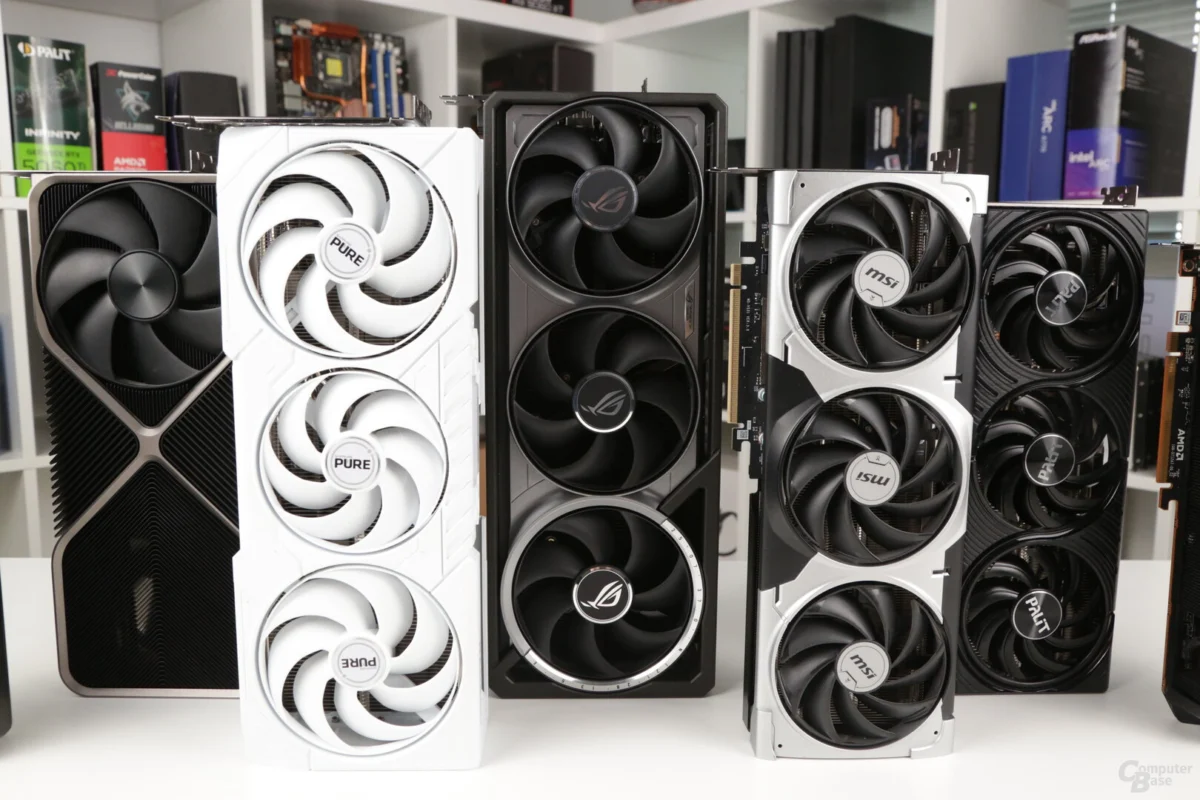
In the landscape of 2026, the PC gaming hardware market has been defined by stagnation. After a year of tepid expectations, where analysts and enthusiasts alike had resigned themselves to a dry spell of innovation, the silence has been broken. AMD has unexpectedly launched the Radeon RX 9070 GRE for the Western market. This release is less a technological breakthrough and more a tactical re-entry, positioning itself between the RX 9060 XT and the flagship RX 9070.
For those tracking the industry, the announcement feels like a déjà vu. Eleven months ago, technical analysts examined the exact same hardware when it launched exclusively in the Chinese market. Now, the “Golden Rabbit Edition” (GRE) has made the leap to global shelves, prompting an immediate re-evaluation of its relevance in today’s evolving gaming ecosystem.
A Stagnant Year: The 2026 Hardware Drought
The year 2026 has been, by many accounts, a dismal period for the high-end gaming enthusiast. Industry giants have largely pulled back; NVIDIA famously canceled its anticipated GeForce RTX 50-series "Super" refresh, citing market saturation and production shifts, while AMD chose to sideline several planned RDNA 4 models.

Only weeks ago, industry consensus suggested that no meaningful new releases from AMD, NVIDIA, or Intel were on the horizon for the remainder of the year. Yet, the tech industry is rarely predictable. Barely days after these assessments were published, AMD pulled the veil back on the RX 9070 GRE. While labeled as a "new" release for European and North American consumers, the underlying silicon is nearly a year old. It represents a strategic pivot—a way for AMD to fill a price-performance gap without the capital expenditure of developing entirely new architectures.
Technical Analysis: The Anatomy of the GRE
The European release of the Radeon RX 9070 GRE is, in every technical sense, identical to its Chinese counterpart. It utilizes the same die, the same power envelope, and the same architectural feature set, including full compatibility with FSR 4.1, FSR Frame Generation 4, and FSR Ray Reconstruction.
Core Specifications
At its heart, the card features 48 active Compute Units (CUs), resulting in 3,072 FP32 cores. This represents a 14 percent deficit in raw unit count compared to the standard RX 9070. However, AMD has managed to mitigate this performance loss by factory-clocking the GRE roughly 11 percent higher than its sibling. Consequently, the theoretical computational power is only about 5 percent lower than that of the RX 9070. Both cards share a 220-watt Board Power limit, maintaining a consistent thermal profile.

The Memory Bottleneck
The most significant divergence between the "vanilla" 9070 and the GRE lies in the memory subsystem. The GRE suffers from a diminished Infinity Cache—shrinking from 64MB to 48MB—which forces the GPU to access the VRAM more frequently. Coupled with a reduction in the memory interface from 256-bit to 192-bit and a slower effective memory speed (18 Gbps vs. 20 Gbps), the card faces a 33 percent reduction in total memory bandwidth.
Furthermore, the GRE is strictly limited to 12GB of VRAM. While competitive in the mid-range, it stands in stark contrast to the 16GB configurations found on the RX 9060 XT, 9070, and 9070 XT. Despite the technical feasibility of a 24GB "Clamshell" configuration, AMD has opted to keep the hardware lean, likely to preserve margins in a price-sensitive market.
Custom Designs: PowerColor vs. Sapphire
The market entry of the GRE is supported by two distinct custom designs: the PowerColor Reaper and the Sapphire Pulse OC.

PowerColor Reaper: The Rational Choice
The PowerColor Reaper is designed for mass appeal and maximum compatibility. With a slim dual-slot cooler and a compact 30cm length, it is engineered for small-form-factor (SFF) builds. The design is utilitarian, avoiding the "cheap" plastic feel often associated with budget cards, and provides a quiet, reliable operation. It adheres strictly to AMD’s reference specifications, making it the standard-bearer for the $559 MSRP.
Sapphire Pulse OC: The Performance Push
In contrast, the Sapphire Pulse OC opts for a more aggressive profile. Featuring a 2.5-slot cooler and larger 100mm fans, it is physically more imposing. Sapphire has increased the boost clock to 2,920 MHz and raised the power limit to 240W. While it sacrifices some of the understated elegance of the PowerColor model for a more plastic-heavy aesthetic, it provides a slight performance uplift for those willing to pay a premium.
Methodology: Testing in the Era of Upscaling
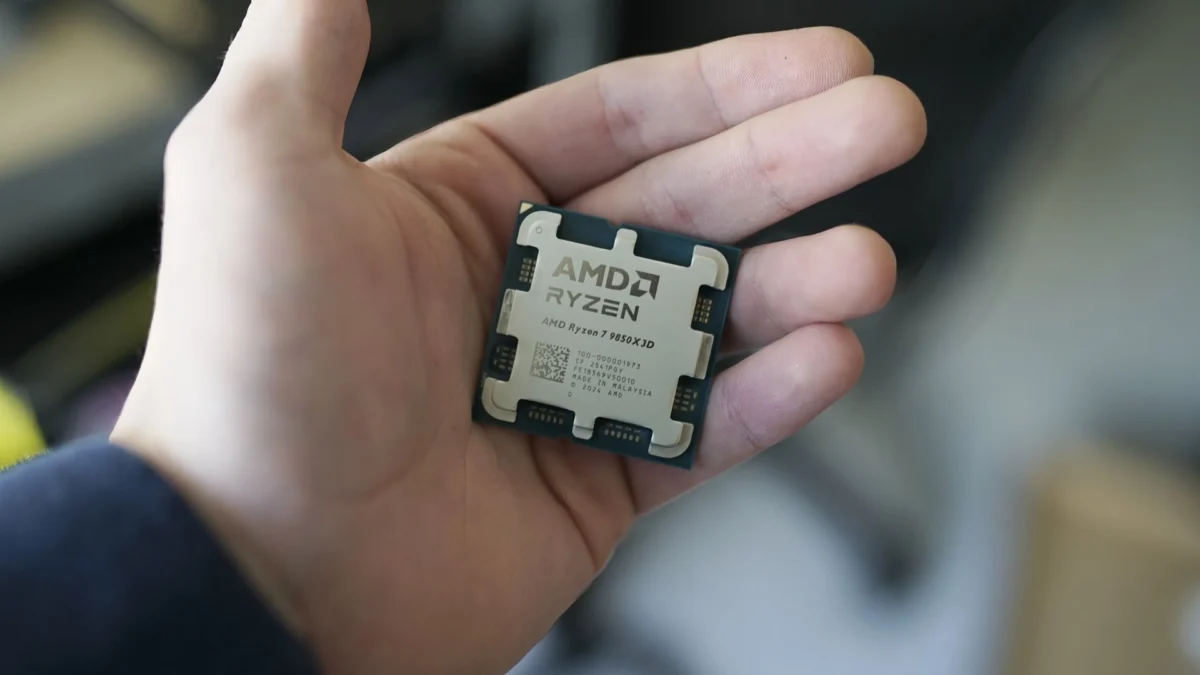
To evaluate the RX 9070 GRE, we utilized an industry-leading testbed featuring the AMD Ryzen 7 9800X3D, widely considered the pinnacle of current gaming CPUs. Testing was conducted on a fresh suite of benchmarks that include both legacy titles and modern, demanding engines like Unreal Engine 5.

The Role of Super Resolution
Modern GPU testing requires a nuanced approach to upscaling. Because native resolution rendering is increasingly decoupled from game quality, we have standardized the use of FSR 4 and DLSS 4 in our "Quality" mode.
The disparity between technologies is stark. While DLSS 4 and FSR 4 offer superior image reconstruction that often outclasses native resolution, older iterations like FSR 3.1 fall significantly behind. Consequently, our testing protocols identify where specific upscaling technologies are required, ensuring that the RX 9070 GRE is tested under conditions that reflect actual user experience. Raytracing is also evaluated separately, with distinct runs for both rasterization and hardware-accelerated raytracing, excluding path-tracing to maintain parity across the hardware spectrum.
The Market Implication: Is the GRE Still Relevant?
The crucial question remains: Does a year-old card have a place in the 2026 market?

At an MSRP of 559 Euro, the RX 9070 GRE is priced 70 Euro below the standard RX 9070. For gamers currently holding onto hardware from the 7000 or 8000 series, this presents an interesting, if not revolutionary, upgrade path. It effectively bridges the gap for those who find the 9070 too expensive but require more than what the 9060 XT can offer.
However, the 12GB VRAM limit is a point of contention. As texture budgets in modern titles continue to climb, the 192-bit memory bus and reduced cache may limit the card’s longevity compared to its 16GB counterparts.
Final Assessment
The Radeon RX 9070 GRE is a "stop-gap" product in the truest sense of the word. It is a reliable, well-understood piece of hardware that offers predictable performance. For AMD, it is a low-risk strategy to move inventory and maintain a presence in the mid-range segment without further R&D expenditure. For the consumer, it is a safe, albeit unexciting, choice—a reliable workhorse that serves the market exactly where it was needed a year ago.

Whether the "German GRE" can capture the hearts of PC gamers will depend entirely on street pricing. If retailers can maintain the aggressive MSRP, it may well become the default recommendation for 1440p gaming. If prices drift upward, however, it risks being overshadowed by the superior longevity of 16GB alternatives. In a year defined by silence, the return of the GRE is at least a conversation, even if it is one we have heard before.










No comments yet. Be the first to join the conversation!