Pevita Pearce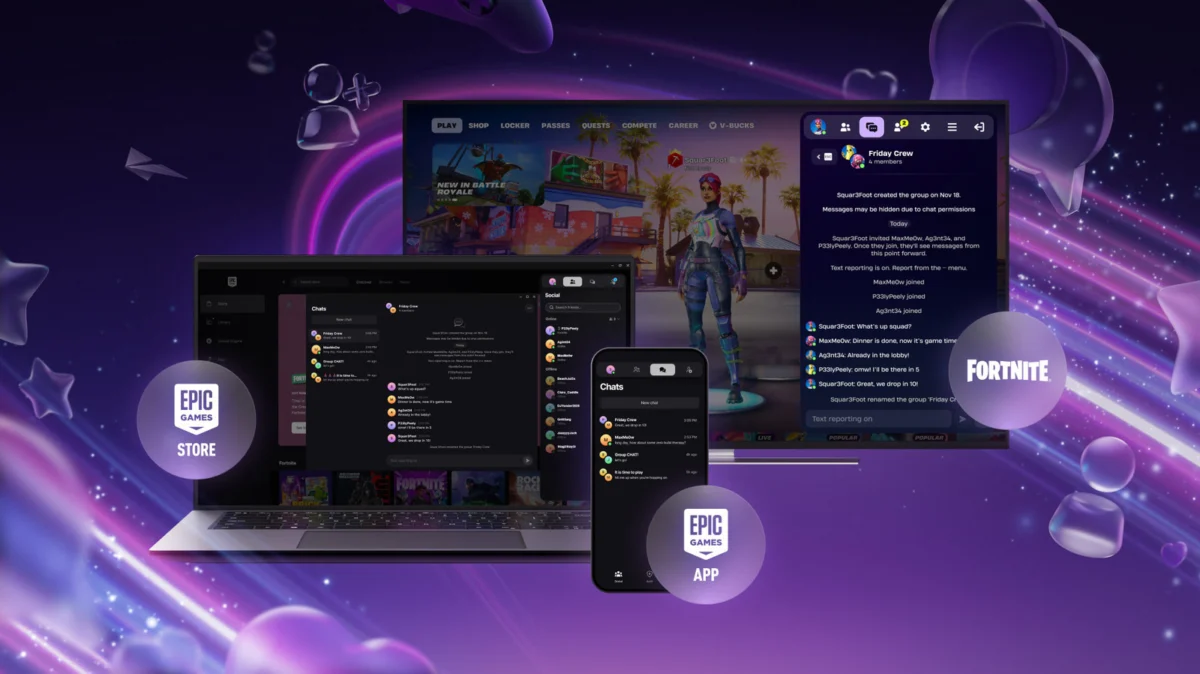
For years, the Epic Games Store (EGS) has occupied a unique, albeit contentious, position in the PC gaming landscape. While it has successfully leveraged its massive library of free weekly titles and high-profile exclusives to challenge Steam’s hegemony, the platform has long been dogged by persistent criticism regarding the performance and usability of its client. Now, after years of user frustration and internal acknowledgement of its technical shortcomings, Epic Games is finally preparing to pull the plug on its current launcher in favor of a “ground-up” rebuild.
Dubbed “Launcher V2,” this ambitious project aims to rectify the sluggish, resource-heavy performance that has plagued the current iteration since its inception. During the recent Unreal Fest, Epic executives unveiled a roadmap that promises not just incremental patches, but a fundamental shift in how players interact with their storefront.
The Core Facts: A New Foundation for Epic Games
The primary directive for Launcher V2 is speed. In a series of presentation slides shared via social media by industry observers, Epic confirmed that the new architecture is designed to address the "cold start" and "system tray restoration" issues that currently frustrate millions of users.
According to the data presented, Launcher V2 is projected to be five times faster during an average cold boot, significantly reducing the time it takes to navigate from a desktop click to the store interface. Perhaps more impressively, the app is expected to restore from the system tray 6.5 times faster than the current version.
These aren’t just cosmetic tweaks; they represent a complete rewrite of the underlying software architecture. By moving away from the legacy framework that has struggled to keep pace with the store’s expanding feature set, Epic hopes to eliminate the "clunky" experience that has driven many players to use third-party workarounds—such as using Steam as a bridge—just to avoid opening the official Epic client.
A Chronology of Discontent and Reform
To understand why this rebuild is so significant, one must look at the timeline of the Epic Games Store’s growth and the mounting pressure from its community.
- 2018: The Launch: Epic Games Store enters the market with an aggressive strategy focused on developer-friendly revenue splits and high-profile exclusives. However, the client is released in a barebones state, lacking basic features found in competitors like Steam.
- 2020–2023: The "Bloat" Era: As EGS adds social features, cloud saves, and achievements, the client begins to suffer from increased memory usage and slow load times. Community sentiment on platforms like Reddit and social media turns increasingly hostile.
- Early 2024: The Admission: In a candid interview with Eurogamer, Epic Games leadership finally acknowledges the elephant in the room. The company admits the launcher "sucks" and promises a year of significant improvements.
- February 2024: Epic issues an official press release outlining a 2025 roadmap, confirming that a rebuild of the underlying architecture is already underway.
- Late 2024 (Unreal Fest): Epic unveils the specific metrics for Launcher V2, confirming a private beta phase will precede a public rollout.
Technical Hurdles and Supporting Data
The technical debt accumulated by the current launcher is significant. Epic’s presentation at Unreal Fest was remarkably transparent, acknowledging that "every developer in this room and every player we have has experienced challenges with the current launcher."
The data provided by Epic highlights a shift toward a modular, more lightweight design. The current launcher, built on older frameworks, often struggles with background processes and high CPU utilization during initial startup. By refactoring the core codebase, Epic is essentially stripping away the “heaviness” that has made the current store feel unresponsive.
Furthermore, the integration of new storefront features—such as in-store patch notes, user-generated reviews, and a personalized home page—suggests that the V2 architecture is being built with scalability in mind. The current launcher often stutters when attempting to pull data from multiple dynamic feeds; the new version is designed to handle these requests asynchronously, ensuring that the interface remains responsive even when loading high-resolution assets or complex store data.
Official Responses: From Denial to Transparency
The change in tone from Epic Games management is perhaps the most striking aspect of this transition. For years, the company focused on its "Store vs. Store" rivalry, often dismissing complaints about the launcher as secondary to their mission of providing better revenue splits for developers.
However, the shift in narrative began when Epic executives realized that user retention isn’t just about the games—it’s about the ecosystem. By admitting that the launcher was a point of friction, Epic moved into a phase of radical transparency. In the February 2025 year-in-review, the company stated clearly: "We are in the process of rebuilding the underlying architecture of the Epic Games Store Launcher and plan to ship improvements this summer."
This proactive approach is intended to signal to both developers and players that Epic is committed to the long-term health of the platform, not just the short-term gains of exclusive distribution deals.
Implications for the Gaming Industry
The rollout of Launcher V2 has profound implications for the digital storefront wars.
1. Reclaiming User Loyalty
A significant segment of the PC gaming population has remained loyal to Steam not just out of habit, but because the Steam client is, objectively, a more robust piece of software. If Epic can close the "performance gap," the barrier to entry for the average gamer to use EGS becomes much lower. When the launcher is fast, reliable, and unobtrusive, the incentive to use third-party "launcher-agnostic" tools drops significantly.
2. Empowering the Storefront Experience
The planned additions—specifically player reviews and in-store patch notes—address two of the most requested features since the store’s inception. Currently, players often have to visit external sites to see what a game update actually changes or to gauge community sentiment before purchasing. By integrating these directly, Epic is attempting to make its store a more comprehensive "hub" for the gaming experience.
3. Developer Relations
For developers, a faster and more functional launcher is a boon. A store that loads faster and features a more intuitive, personalized discovery engine increases the visibility of indie titles. If the "personalized home page" works as intended, it could solve the "discoverability" problem that has long plagued digital storefronts, where smaller games are often buried under a mountain of marketing for AAA titles.
What Lies Ahead: The Beta and Beyond
Epic has not yet provided a hard date for the public release of Launcher V2, though the roadmap remains aggressive. The transition will follow a standard industry protocol: a private beta period, likely involving a subset of power users and testers, followed by a phased public rollout.
For the average user, this means the current launcher will likely receive one final set of stability updates before being entirely superseded. The move to a "ground-up" rebuild is a risky but necessary maneuver. In the software world, rewrites are notoriously difficult and prone to introducing new bugs, but Epic appears to have determined that the technical debt of the current system is too high to justify further patching.
As the industry watches, the success of Launcher V2 will be measured by two metrics: the objective speed of the client and the subjective satisfaction of the community. If Epic succeeds, it will finally transform the Epic Games Store from a "necessary evil" for free games and exclusives into a premium, top-tier storefront capable of standing toe-to-toe with the giants of the industry.
In the final analysis, the story of Launcher V2 is one of corporate maturity. It is a rare instance of a major technology firm admitting that its product failed to meet the standards of its users and investing the time, capital, and engineering talent to make it right. Whether it will be enough to win over the most ardent Steam loyalists remains to be seen, but for the millions of players who use the Epic Games Store, the promise of a faster, cleaner, and more feature-rich experience is a victory worth waiting for.


 Jia Lissa
 Ammar Sabilarrohman