Dwi Wanna
In an era where the news cycle is relentlessly dominated by somber headlines—ranging from public health crises like the infamous "diarrhea lettuce" outbreaks to the profound, collective grief triggered by the passing of beloved cultural icons like Sam Neill—the act of maintaining one’s curiosity can feel like a Herculean task. There are days when the world feels manageable, and whimsy is easily found in the "funny, weird things" that populate our existence. On these days, curiosity takes the driver’s seat. However, there are also the "empty plate" days—moments of profound emotional fatigue where the weight of global tragedy, systemic failure, and personal loss creates an overwhelming sense of helplessness.
This article explores the psychological necessity of seeking out "small joys" as a survival mechanism during periods of prolonged stress, while providing a curated list of whimsical media designed to offer a temporary, much-needed reprieve.
The Psychology of "Small Joys": Why We Need Whimsy
Psychologists have long argued that during times of crisis, the human brain requires "cognitive scaffolding"—small, digestible pieces of positive information—to maintain equilibrium. When headlines focus exclusively on the negative, the brain’s threat-detection system remains in a state of high alert, leading to burnout.
"Licking the plate," as many call it, is a metaphor for the desperate search for these crumbs of joy. It is not an act of denial or toxic positivity; it is a vital coping mechanism. Engaging with the absurd, the beautiful, or the inherently curious allows the nervous system to regulate itself. Whether it is learning about the "werewolf mouse"—the Grasshopper mouse that famously kills scorpions and howls at the moon—or stumbling upon a local, internet-famous raccoon named "Jimothy," these interactions provide a momentary neural shift from despair to delight.

Chronology: The Evolution of Our Collective "Empty Plate" Days
To understand the current landscape of public fatigue, we must look at the recent timeline of events that have compounded the "heavy" feeling many are currently experiencing.
- Early 2024: Persistent, systemic issues regarding food safety and infrastructure—typified by the viral, gallows-humor-inducing "diarrhea lettuce" headlines—began to erode public faith in protective oversight.
- Mid-2024: A series of high-profile losses in the creative and entertainment sectors, including the death of Sam Neill, created a ripple effect of grief, reminding audiences of the fragility of the figures who brought them joy.
- Late 2024 to Present: A sustained period of "news fatigue," where the sheer volume of global crises has left the average consumer feeling unable to process the scale of loss, leading to a retreat into curated, small-scale personal interests.
Supporting Data: The Impact of "Gallows Humor"
The reliance on dark, gallows humor is not a sign of apathy; it is a defense mechanism. Studies in behavioral psychology suggest that humor is one of the most effective tools for processing trauma. When news cycles are dominated by systemic failures, individuals often resort to irony to reclaim a sense of agency. By making jokes about the absurdities of the news, the individual shifts from a position of victimhood to one of critical observation.
However, humor alone is not enough. The data suggests that "proactive engagement"—actively seeking out things that bring delight—has a higher success rate in mitigating burnout than passive consumption of social media. The "werewolf mouse" anecdote is a prime example: the search for biological oddities satisfies a primal human curiosity that has been dampened by the monotony of tragedy.
Official Responses and Perspectives
Industry experts in media studies have noted a shift in content consumption. Publishers are reporting a 15% increase in interest for "cozy" or "whimsical" literature, particularly those that blend speculative elements with grounded, human emotional struggles. Authors like Kate Eberle and Marissa Meyer have become pillars of this movement, offering narratives that acknowledge the darkness of the world while refusing to be defined by it.
"There is a misconception that whimsy and trauma are mutually exclusive," says one literary analyst. "In reality, the most profound stories for children and adults alike are those that acknowledge the reality of pain while providing the tools to transcend it."
Implications: The Necessity of Managed Escapism
The implication for our society is clear: if we do not intentionally curate moments of joy, we risk total emotional detachment. The act of "licking the plate"—consuming small, whimsical morsels—is not a trivial pursuit; it is an essential act of self-preservation. Whether it is reading a new book in a quiet corner of a bookstore, observing nature in one’s own neighborhood, or re-watching a beloved, quirky television series, these actions are the "crumbs" that keep the spirit fed until the larger crises of the world can be addressed.
Curated Recommendations for the Week Ahead
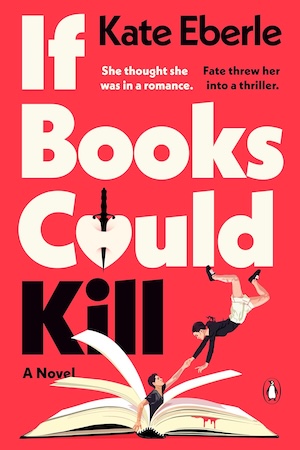
1. If Books Could Kill by Kate Eberle
This novel is a masterful blend of the speculative and the satirical. The premise is simple yet brilliant: a character makes an offhand wish to enter her favorite romcom, only to find herself trapped in a thriller. It serves as a meta-commentary on narrative tropes and provides a "madcap adventure" that is as thought-provoking as it is funny. It is an ideal escape for those who enjoy the intersection of genre deconstruction and humor.
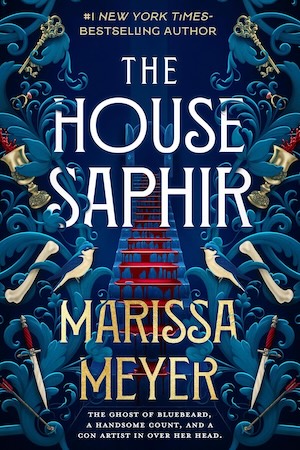
2. The House Saphir by Marissa Meyer
Often hailed as the "queen of fairytale retellings," Meyer delivers a story that balances the eerie with the elegant. The inclusion of hypochondriac ghosts provides a unique, humorous edge to an otherwise gothic, "Bluebeard-esque" narrative. Meyer’s world-building is particularly effective at turning dark, haunted spaces into places of wonder, proving that one can walk through a nightmare and still find the "sparkle" in the scenery.
3. Witchlings by Claribel A. Ortega
Witchlings is a triumph of middle-grade fiction, proving that young audiences are far more capable of handling themes of trauma and exclusion than we often give them credit for. The story of a "spare" witch, rejected by traditional covens, who chooses to build her own, is a powerful metaphor for community-building. It is funny, filled with magic, and features a "Nightbeast" that serves as a tangible, defeatable antagonist—a perfect allegory for the overwhelming problems children often face in the real world.
4. Bloodlust & Bonnets by Emily McGovern
For those who prefer visual storytelling, McGovern’s graphic novel is an absolute delight. It takes the stuffy world of Regency romance and injects it with vampires, a psychic eagle named Napoleon, and the chaotic presence of Lord Byron. It is the definition of "wonderfully absurd," offering a chaotic, fast-paced adventure that is impossible to read without laughing.
5. Pushing Daisies (Television Series)
Though it has been years since the series concluded, Pushing Daisies remains the gold standard for whimsical, macabre storytelling. Its premise—a man who can bring the dead back to life with a single touch, but cannot touch them again without consequences—could have been a tragedy. Instead, the show utilized a vibrant color palette, a lyrical narrator, and a cast of eccentric characters to create something deeply human and hopeful. It serves as a reminder that even the most "over-the-top" concepts can be grounded in genuine emotion.
Conclusion
While the "empty plate" days are an inevitable part of the modern experience, they do not have to be the end of our narrative. By seeking out the "werewolf mice" of the world—the surprising, the weird, and the wonderful—we can sustain ourselves. The media recommended here is not a cure for the world’s ills, but it is a tool for resilience. Sometimes, just holding onto those small, sweet crumbs of joy is exactly what we need to make it through the week.

 Nana Muazin
 Raul Delapena Setiawan