Lina Irawan
The landscape of global entertainment is undergoing a seismic shift, driven not by the traditional bastions of Hollywood or television networks, but by the vertical-scrolling, mobile-first phenomenon known as the webtoon. As South Korean digital comics continue to capture tens of millions of readers worldwide, the industry is entering a new phase of maturity: the high-fidelity screen adaptation.
At the forefront of this movement is Lezhin Entertainment’s critically acclaimed title, Big See. In a landmark development for the digital comic industry, Lezhin has announced a collaborative partnership with tech giant Kakao M to adapt the beloved webtoon into a hybrid digital drama series. This project signifies more than just a simple translation of medium; it represents a bold experiment in merging live-action performances with cutting-edge animation to capture the ethereal, poignant narrative of the source material.
Main Facts: The Intersection of Art and Technology
Big See is not merely a popular comic; it is a cultural touchstone. Originally conceptualized by the visionary writer Kim Botong, the series chronicles the harrowing yet deeply human experience of a young man navigating the terminal stages of cancer. With over 20 million views globally, the narrative’s success lies in its ability to balance the harsh realities of mortality with moments of surreal beauty.
The upcoming digital drama, slated for release in the latter half of 2020, will consist of ten episodes, each running under 15 minutes. This brevity is intentional, designed specifically for the mobile-viewing habits of the modern digital consumer. The series will be hosted on the KakaoTalk platform, cementing the project’s identity as a native mobile experience.
The production boasts a powerhouse creative team. The live-action segments are helmed by director Kim Dong-ha, while the crucial animated sequences—designed to visualize the protagonist’s internal world and dreamscapes—are spearheaded by the renowned animator Han Ji-won. The lead roles will be played by Ji Soo, known for his work in My First First Love, and Lee Seol, who brings a distinct emotional depth to the project.
Chronology: A Trajectory of Success
The road to this adaptation was paved by a series of deliberate strategic moves by Lezhin Entertainment.
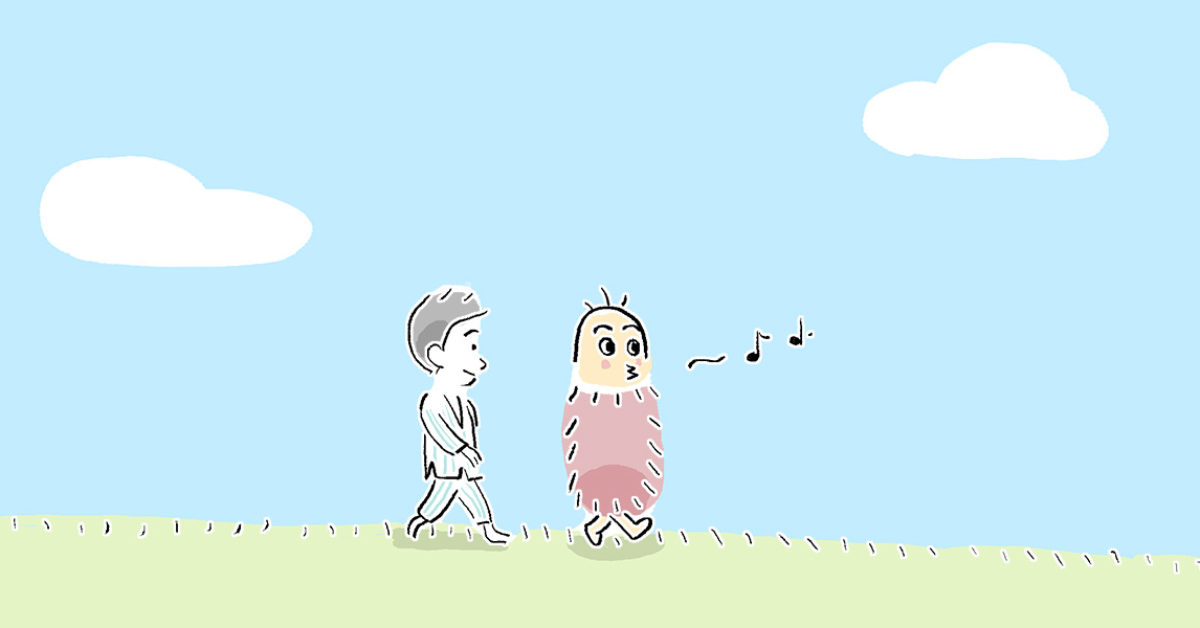
- Initial Acclaim: Big See first garnered mainstream attention by becoming the inaugural title to win the prestigious "Manhwa of the Day" prize in South Korea, a significant milestone that signaled the title’s literary and artistic merit.
- The Expansion of Lezhin Studios: In 2018, Lezhin Entertainment acquired a film production company to form Lezhin Studios. This was a critical pivot, transforming the company from a mere content distributor into a multi-platform powerhouse capable of producing high-end dramas for networks like tvN, including Method and Chomi’s Interest.
- The Pre-production Pipeline: The momentum surrounding Big See is part of a larger trend of adaptations. Kim Botong’s other major work, D.P Dog’s Day, is currently in active pre-production for Netflix. Simultaneously, Lezhin Studios is working on Method: A Second Attempt and the highly anticipated Netflix original series Hell.
- August 4, 2020: The official announcement regarding the Big See adaptation was made, confirming the involvement of Kakao M and the hybrid format of the show.
Supporting Data: The Rise of the Webtoon Economy
To understand the weight of the Big See adaptation, one must understand the economic and cultural velocity of the webtoon industry. Unlike traditional western comics, which have struggled to maintain a mass-market footprint, webtoons are built for the smartphone era.
The vertical-scrolling format allows for a seamless, immersive reading experience that mimics the pace of film editing. Data suggests that this format has become the most successful comics medium in the world, with platforms like Lezhin Comics consistently reporting record-breaking engagement metrics.
The decision to pair Big See with a hybrid animation style is a strategic attempt to leverage this digital-native audience. By utilizing animation to depict the "horizon between the real world and dreams," the production team is essentially attempting to translate the internal monologue of the comic into a visual language that live-action alone cannot express. This reflects a broader trend in the Korean media industry: a willingness to experiment with formal boundaries to maintain the "soul" of the original work during the adaptation process.
Official Responses and Creative Vision
The transition of Big See from the page to the screen has been described by the production team as an exploration of new realities. A representative for Lezhin Studio offered an inside look at the production philosophy:
"We’re excited to see the performances by Lee Seol and Ji Soo combined with the fantastic atmospheres and environments only possible through animation. Our goal is to create a new reality that dives deep into the horizon between the real world and dreams. This project is a testament to the versatility of webtoons as source material."
The choice of Han Ji-won, often cited as one of Korea’s foremost animators, as a co-director is telling. It suggests that the animation is not merely a "special effect," but a core component of the storytelling. The synergy between the directorial vision of Kim Dong-ha (live-action) and Han Ji-won (animation) is expected to set a new standard for how digital dramas are conceptualized, moving away from simple "filmed theater" toward a more kinetic, multimedia experience.
Implications: The Future of Digital Storytelling
The Big See project carries significant implications for the future of the entertainment industry, both in Asia and globally.
1. The Validation of Digital Platforms
By housing this project on KakaoTalk, the producers are signaling a shift away from traditional linear television. As mobile platforms become the primary gateway for entertainment, we are likely to see an increase in "platform-exclusive" high-budget dramas. This challenges the hegemony of traditional cable networks and emphasizes the power of the ecosystem—where the platform, the studio, and the intellectual property are vertically integrated.
2. The "Webtoon-to-Screen" Pipeline
The success of D.P Dog’s Day and now Big See confirms that webtoons have become the premier source of intellectual property for Korean dramas. This creates a feedback loop: webtoon writers are now writing with potential adaptations in mind, while studios are scouring platforms like Lezhin Comics for proven hits that already possess a dedicated, global fanbase.
3. Artistic Innovation in Low-Budget Formats
The 15-minute, ten-episode format proves that "short-form" does not mean "low-quality." By leaning into the limitations of the format, the production is able to deliver a more concentrated, intense experience. The hybrid nature of the show also suggests that future adaptations may rely more heavily on stylized visual effects, blurring the lines between graphic novels and prestige television.
Conclusion
As we look toward the latter half of 2020, Big See stands as a bellwether for the digital age. It represents a synthesis of traditional acting talent, avant-garde animation, and the massive, decentralized power of mobile webtoons. Whether the project succeeds in its ambitious goal of bridging the gap between dreams and reality, it has already achieved something profound: it has proven that the next great revolution in television will not be televised—it will be scrolled, streamed, and shared on the devices in our pockets.
For fans of the original comic, the adaptation serves as a testament to the enduring impact of Kim Botong’s narrative. For the industry at large, it is a blueprint for the future of storytelling in an increasingly connected, digital world.


 Lina Hope
 Reynand Wu