

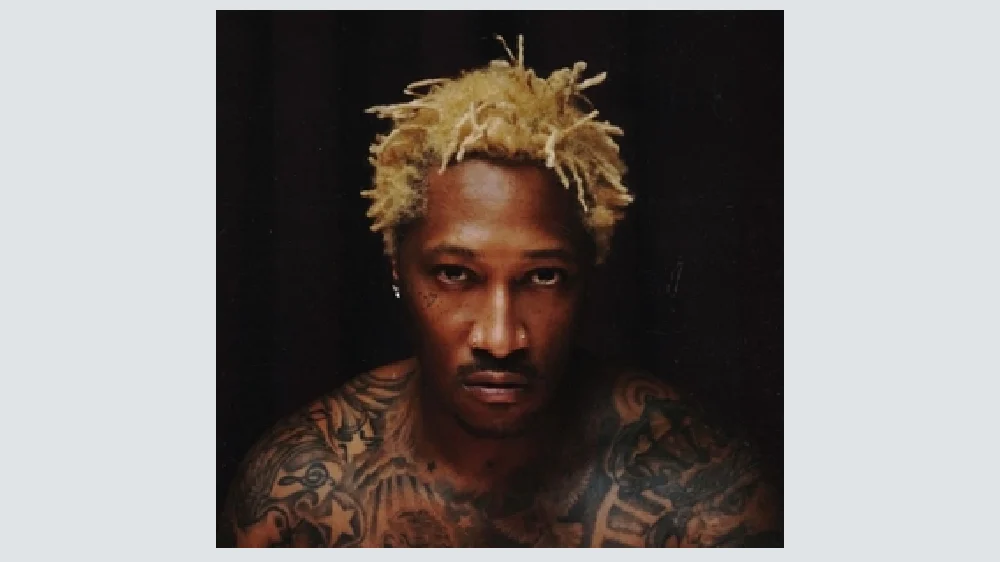
The landscape of music history was reshaped this week as the hip-hop powerhouse known as Future cemented his status as one of the most prolific hitmakers of the modern era. With the debut of his latest studio album, The Real Me, the rapper has secured his 12th No. 1 album on the Billboard 200, an achievement that officially elevates him into sole possession of fifth place on the all-time list of artists with the most chart-topping albums.
This milestone is not merely a reflection of current popularity, but a testament to a career defined by relentless output and an uncanny ability to dominate the streaming era. As the music industry continues to pivot toward data-driven consumption models, Future’s ability to remain at the apex of the charts highlights a seismic shift in how hip-hop commands the cultural zeitgeist.
The Milestone: A Historic Leap into Fifth Place
For months, the industry had been tracking the neck-and-neck race between Future and fellow rap titan Eminem. Both artists entered the week tied with 11 No. 1 albums apiece. However, the arrival of The Real Me—which debuted with a commanding 131,000 equivalent album units—has broken that deadlock.
By surpassing Eminem, Future has solidified his spot in the pantheon of music legends. The leaderboard of artists with the most No. 1 albums remains one of the most prestigious metrics in the industry:
- The Beatles: 19 No. 1 albums
- Drake & Taylor Swift: Tied for 2nd with 15 No. 1 albums each
- Jay-Z: 14 No. 1 albums
- Future: 12 No. 1 albums
This ranking places Future in rarefied air, sitting comfortably ahead of industry titans like Bruce Springsteen, Barbra Streisand, and Madonna. His ascent is particularly noteworthy given that he achieved this milestone within a relatively condensed timeframe compared to the multi-decade tenures of his peers.
Chronology of a Chart-Topping Week
The chart week, which concluded this past Sunday, was defined by a mix of high-profile hip-hop dominance, legendary rock returns, and a unique anomaly in the television soundtrack space.
Future’s The Real Me claimed the top spot with ease, outpacing Olivia Rodrigo’s You Look Pretty Sad for a Girl So in Love. Rodrigo’s project, now in its fifth week on the chart, remains a formidable contender, moving 96,000 units to maintain the No. 2 position.
Further down the list, the week saw two major debuts. The Rolling Stones, ever the enduring force, entered the charts at No. 7 with their latest offering, Foreign Tongues, moving 53,000 equivalent album units. Industry analysts noted that this performance is remarkably consistent with recent output from the band’s contemporaries, such as Paul McCartney, whose June release garnered 63,000 units in its debut frame.
The most peculiar development of the week, however, was the No. 9 debut of the television soundtrack Heated Rivalry. According to Billboard, this represents a rare feat: the first time a television soundtrack has entered the top 10 in over a decade. The last instance of such a feat occurred in 2015 with the soundtrack for the hit series Empire. While the animated series Hazbin Hotel saw its companion album reach the top 10 last year, it did so via a slow climb from a No. 70 debut, making Heated Rivalry the first "instant" impact in the category since the peak of the Empire phenomenon.
Supporting Data: Streaming vs. Physical Consumption
A deep dive into the consumption data for the week reveals the diverging paths different genres take to achieve chart success. The contrast between Future’s strategy and that of the Rolling Stones highlights the bifurcation of the modern music market.
The Hip-Hop Streaming Engine
Future’s The Real Me is a quintessential streaming success story. Of its 131,000 total units, only 13,000 were derived from traditional album sales. The vast majority of the album’s impact came from 120.29 million on-demand streams, which accounted for 118,000 Streaming Equivalent Album (SEA) units. This data reinforces the dominance of the hip-hop demographic in streaming environments, where constant consumption—often fueled by playlist placement and social media virality—drives chart position.
The Physical Resurgence
Conversely, the Rolling Stones continue to rely on a dedicated, physical-media-buying fanbase. Foreign Tongues moved 48,500 copies in traditional sales, compared to just 4,000 SEA units from its 4.48 million streams. This model remains highly viable for legacy acts who have successfully cultivated a collector-focused audience.
The Soundtrack Anomaly
The case of Heated Rivalry serves as a fascinating study in data lag. The album moved 41,000 units, all of which were traditional sales on CD and vinyl. Because the music was released digitally back in January, it had already exhausted its initial streaming momentum. It was only when the physical product hit retail shelves that the sales volume became high enough to propel the project into the top 10, demonstrating that even in a digital-first world, physical scarcity and format preference can still disrupt the Billboard 200.
Official Industry Responses and Market Shifts
While Luminate and Billboard have not issued a formal "official response" regarding the individual performances, industry insiders have been vocal about what this shift implies for the record label system.
The most discussed development is the rapid exit of Madonna’s Confessions II. Having debuted at No. 1 just last week, the album has already fallen out of the top 10. While the exact position for its sophomore session remains under embargo until the full list is published on Monday, the drop is being cited as a cautionary tale regarding the "front-loaded" nature of modern releases. In an era where massive fanbases drive massive first-week numbers, maintaining momentum beyond the initial release window has become the industry’s greatest challenge.
Meanwhile, the remainder of the top 10 continues to reflect the country-crossover dominance of Morgan Wallen, who holds both the No. 3 spot with I’m the Problem and the No. 10 spot with One Thing at a Time. The top 10 is rounded out by Ella Langley (No. 4), Noah Kahan (No. 5), Drake (No. 6), and the timeless Michael Jackson classic Thriller (No. 8).
Implications: What This Means for Future and the Future of Music
Future’s achievement has significant implications for his legacy and the industry at large.
- The "Legend" Status: By moving into fifth place, Future has effectively transitioned from a "hit-maker" to a "historic figure." He is now in a position where he is chasing the records of Jay-Z and the Beatles rather than his contemporaries. This shift will likely influence his future marketing strategies and the level of critical scrutiny his work receives moving forward.
- Genre Dominance: The fact that hip-hop remains the primary driver of streaming units—the most important metric for the Billboard 200—is no longer a surprise, but the scale at which Future manages to mobilize this is unprecedented. Labels will likely continue to model their release strategies after his "high-volume, high-streaming" approach.
- The Stability of the Charts: The rapid turnover in the top 10, as evidenced by Madonna’s sudden decline, suggests a volatile market. The Billboard 200 is becoming an increasingly "winner-takes-all" environment where an album is either a cultural force or quickly forgotten.
As we look toward the coming months, the question remains: Can Future continue this pace to challenge the records held by Drake and Taylor Swift? Given his track record of high-frequency output, it is a possibility that would have seemed impossible a decade ago. For now, however, the industry acknowledges that we are witnessing the prime years of an artist who has become the blueprint for modern chart success.
The music industry is, as always, moving fast—but for this week at least, the future is exactly where the charts say it is.










