

Published: May 25, 2026, 8:30 AM EDT
By Jacob Kleinman
(Image: Netflix)
Mexico Unveils Its First Stop-Motion Feature Film: "I Am Frankelda" Arrives on Netflix
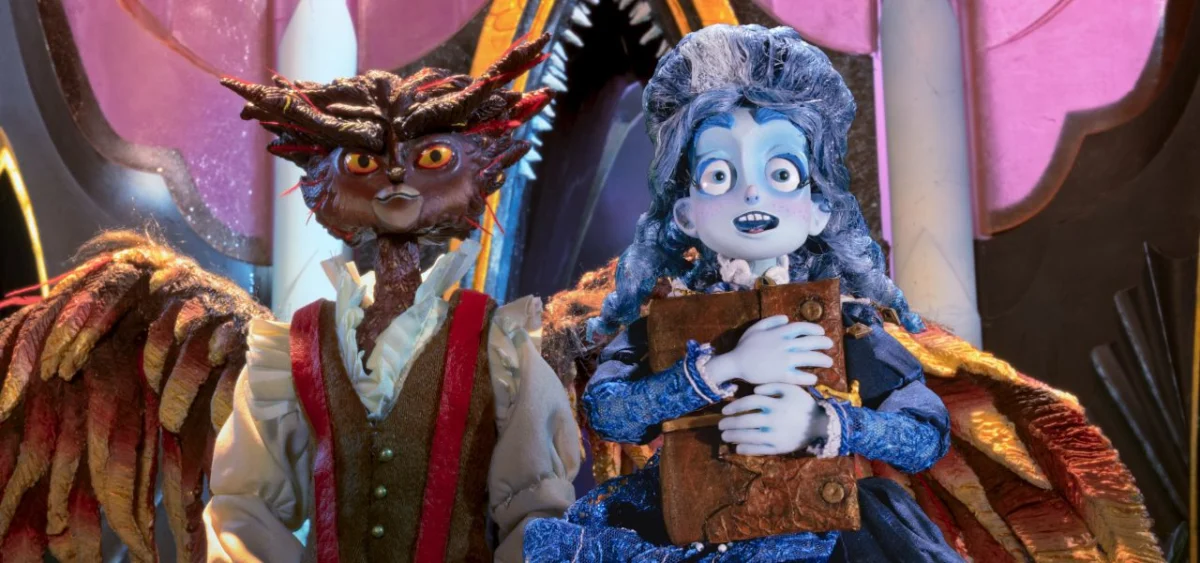
Mexico is poised to make cinematic history with the global debut of "I Am Frankelda," the nation’s inaugural stop-motion animated feature film. Arriving on Netflix this June, the visually stunning and emotionally resonant movie represents a monumental achievement for Mexican animation, a testament to the unwavering vision of brothers Roy and Arturo Ambriz. Their ambitious project, which faced immense creative and financial hurdles, ultimately found a powerful advocate in Oscar-winning director Guillermo Del Toro, whose support proved instrumental in bringing "I Am Frankelda" to an international audience.
The film is an expansion of the beloved "Frankelda" dark fantasy series, which has captivated Mexican audiences since its launch on HBO Latam in 2001. For over two decades, the ghostly author Frankelda has been a household name, inspiring a passionate fanbase that sends fan-made toys, piñatas, and fan-fiction to the Ambriz brothers. Now, with this feature-length narrative, the Ambriz siblings are set to introduce their unique gothic world and its deeply human themes to a global viewership, hoping to replicate and even surpass its domestic success on the world stage.
The Vision Behind the Masterpiece
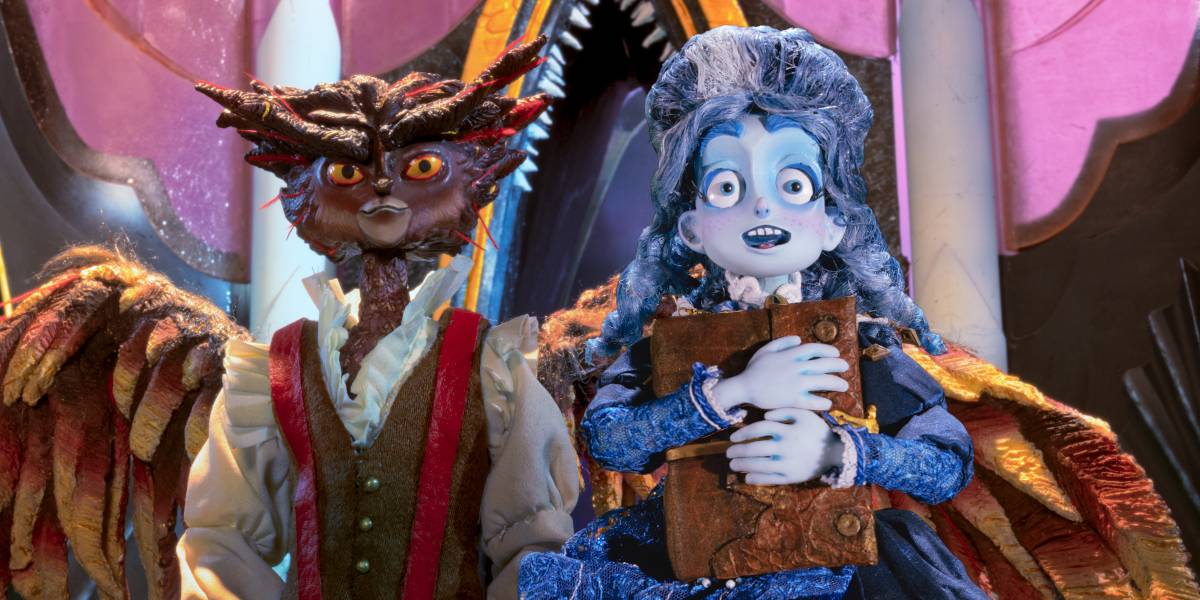
"I Am Frankelda" delves into the origins of its eponymous protagonist, a spectral writer whose fantastical stories form the bedrock of the original series. Set against the richly atmospheric backdrop of 19th-century Mexico, the film takes audiences on a mesmerizing journey into Frankelda’s macabre subconscious. As she navigates this fantastical inner world, she embarks on a perilous adventure to safeguard the very universe her boundless imagination brought into being. The film’s aesthetic is a breathtaking blend of traditional stop-motion artistry and innovative multimedia flourishes, creating a distinctive visual language that is both a treat for longtime fans seeking deeper lore and an accessible entry point for newcomers.
Speaking to Polygon for their 2026 Summer Preview, Arturo Ambriz articulated the driving force behind their cinematic endeavor: "We really wanted to make a big universe. Since we had this opportunity to do a feature film, we really tried to put everything we had in it." This ambition to transcend the episodic format and craft a sprawling, intricate narrative fueled years of painstaking work, pushing the boundaries of what was thought possible within the nascent Mexican animation landscape.
The film’s imminent release is not merely a cinematic event; it is a cultural landmark, signaling a new era for animation in Mexico and underscoring the universal appeal of stories told with "human hands and hearts," a core message passionately conveyed by its creators.
A Journey Through Time: The Chronology of "I Am Frankelda"
The path to creating "I Am Frankelda" was fraught with challenges, marked by years of dedication, personal sacrifice, and an unshakeable belief in the power of their story. It is a narrative of perseverance that began long before the first frame of the feature film was painstakingly animated.
From Cult Series to Feature Ambition (2001-2010s)
The genesis of the "Frankelda" phenomenon dates back to 2001, when the dark stop-motion fantasy series first premiered on HBO Latam. Its unique blend of gothic aesthetics, compelling storytelling, and intricate stop-motion animation quickly garnered a dedicated following across Mexico. The Ambriz brothers, Roy and Arturo, became celebrated figures within the animation community, known for their distinctive style and imaginative narratives.
Despite the success of the series, their aspirations extended beyond the confines of television. Arturo Ambriz openly admits, "A lot of stop-motion creators in Mexico also really enjoy the format of the short film. We do not. We are driven towards great narratives: Long films, long books, trilogies, long series. We always knew we wanted to make feature films. It’s been an obsession for us." This deep-seated desire to tell grander, more expansive stories laid the groundwork for their magnum opus.
The Dauntless Production Phase: Building from Scratch (2010s-2020s)
The decision to embark on a full-length stop-motion feature film in Mexico was, in itself, an act of immense courage. The country simply lacked the established infrastructure and industry expertise required for such an undertaking. "There’s no infrastructure," Arturo observed, highlighting the void they had to fill. This meant building studios, training animators, sourcing specialized equipment, and establishing workflows from the ground up—a Herculean task by any measure.
The project initially began as an ambitious hour-long special, but as the Ambriz brothers delved deeper into Frankelda’s universe, the story demanded a broader canvas. It soon ballooned into a full-fledged feature film, requiring significantly more resources, time, and talent. The painstaking nature of stop-motion animation, where every movement is captured frame by agonizing frame, meant that production stretched over several years. Each second of screen time could require dozens of hours of meticulous work from a dedicated team of animators, puppet makers, set designers, and lighting technicians. The sheer scale of animating a 90-minute film, involving hundreds of thousands of individual frames, was unprecedented in Mexico.
Financial Tightrope and Personal Sacrifice (Mid-2020s)
Funding proved to be one of the most formidable obstacles. While Warner Bros. provided crucial initial support, covering approximately one-third of the budget, the remaining two-thirds fell squarely on the shoulders of the Ambriz brothers. In a move that underscored their profound commitment and unwavering belief in their film, Roy and Arturo made the extraordinary decision to finance the majority of the production themselves. This included mortgaging their family home, a gamble that placed their personal security and financial future on the line for their artistic vision.
"When we finished the film, we had a lot of doubts and a lot of debts," Roy candidly admitted, reflecting on the immense pressure they faced. The completion of production, rather than bringing immediate relief, ushered in a period of uncertainty. With a finished film but no clear path to distribution, the brothers grappled with the enormity of their financial obligations and the unknown fate of their labor of love. "We didn’t know anything about distribution," Arturo added, highlighting the steep learning curve they encountered in navigating the global film market. "It was difficult because nobody believed that this was going to be the success it is now."
Unforeseen Triumph and Netflix’s Intervention (Late 2020s)
Despite the initial skepticism and lack of distribution guarantees, the Ambriz brothers took a leap of faith and released "I Am Frankelda" in Mexican theaters. The response was nothing short of miraculous. The film quickly became a resounding hit, captivating audiences and garnering critical acclaim for its innovative animation, rich storytelling, and cultural significance. This unexpected triumph caught the attention of Netflix, a global powerhouse constantly seeking compelling and diverse content.
It was at this critical juncture that Guillermo Del Toro, then engrossed in the production of his own Oscar-winning stop-motion masterpiece, "Pinocchio," and working on "Frankenstein," entered the picture. Recognizing the immense talent and groundbreaking nature of "I Am Frankelda," Del Toro leveraged his considerable influence and passion for animation to champion the film. Arturo Ambriz confirmed that Del Toro played a pivotal role in "sealing the deal" with Netflix, ensuring that the Mexican film would not only find a global distributor but also receive the platform and resources it deserved. This intervention transformed the film’s trajectory, propelling it from a domestic success story to a highly anticipated international release.
Global Launch and Anticipated Impact (June 2026)
With Netflix onboard, "I Am Frankelda" is now primed for its worldwide debut on June 16, 2026. The streamer is not only distributing the film but is also investing in its global appeal, as Arturo noted, by "creating an amazing dub that might be even better than the original Spanish version." This commitment to quality localization underscores Netflix’s belief in the film’s potential to resonate with diverse audiences across languages and cultures, cementing its status as a major global release.
Supporting Data: A Landscape of Innovation and Challenge
The journey of "I Am Frankelda" is underpinned by several critical factors, ranging from the intricate demands of stop-motion animation to the evolving landscape of the Mexican and global film industries. Understanding these elements provides crucial context for the film’s remarkable achievement.
The Art and Labor of Stop-Motion Animation
Stop-motion is arguably one of the most labor-intensive and time-consuming forms of animation. Unlike CGI, where digital models can be manipulated with relative speed, stop-motion requires physical puppets, meticulously crafted sets, and precise lighting. Animators move these characters incrementally, often just millimeters at a time, capturing each minute adjustment with a still camera. A single second of film typically comprises 24 frames, meaning an animator might capture hundreds of distinct poses for just a few moments of screen time. This process demands extraordinary patience, meticulous attention to detail, and a profound understanding of physics and character performance.
For a feature film like "I Am Frankelda," this translates into years of production, a large team of specialized artists, and substantial material costs. Every prop, every costume, every hair on a puppet’s head must be carefully considered and manipulated. The "hand-made aesthetic" mentioned in the article is not just a stylistic choice; it’s a direct consequence of this demanding artisanal process, imbuing the film with a unique tactile quality that distinguishes it from other animation forms. The Ambriz brothers’ commitment to this traditional yet innovative technique speaks volumes about their artistic integrity.
The Mexican Animation Industry: A Budding Frontier
Historically, the Mexican film industry has produced acclaimed live-action dramas and comedies, but its animation sector, particularly for feature films, has been comparatively nascent. While there has been a vibrant community of short-film animators, the infrastructure, funding mechanisms, and talent pool for large-scale animated features have been limited. This context makes "I Am Frankelda"’s achievement all the more significant. It represents a quantum leap, demonstrating that Mexican artists possess the talent and determination to compete on an international stage in a complex animation medium.
The lack of established stop-motion studios and training programs meant the Ambriz brothers often had to create their own solutions, fostering local talent and developing bespoke techniques. This pioneering spirit has not only delivered a cinematic masterpiece but has also, inadvertently, contributed to building the very infrastructure that was previously absent, laying a potential foundation for future Mexican stop-motion productions.
Guillermo Del Toro: A Champion of Visionary Animation
Guillermo Del Toro’s involvement is a critical piece of the "I Am Frankelda" puzzle. Del Toro has long been a vocal advocate for animation as a serious art form, often lamenting its relegation to "kids’ stuff" in mainstream perception. His passion culminated in his own Oscar-winning "Pinocchio," a stop-motion tour de force that reaffirmed the medium’s artistic potential. Del Toro has also consistently used his platform to uplift and support Mexican filmmakers and artists, embodying a mentorship role for emerging talent from his home country.
His intervention for "I Am Frankelda" is therefore consistent with his established pattern of championing unique, artist-driven projects, especially those that push creative boundaries and come from underrepresented cinematic traditions. His endorsement lent immediate credibility and visibility to the Ambriz brothers’ film, transforming it from a regional success into a global prospect. His ability to "seal the deal" with Netflix highlights the immense power of his influence within the industry and his commitment to fostering diverse storytelling.
The Financial Gamble and Its Rewards
The Ambriz brothers’ decision to mortgage their family home for the film’s budget is a powerful testament to the financial risks often inherent in independent filmmaking, particularly in a capital-intensive medium like stop-motion. While the exact figures remain private, the implication is that the total budget was substantial, with the brothers personally covering a multi-million dollar deficit after Warner Bros.’s contribution. This level of personal investment underscores the profound belief they had in their project, even when "nobody believed that this was going to be the success it is now." The film’s subsequent success in Mexican theaters and its acquisition by Netflix serve as a powerful vindication of their high-stakes gamble, transforming immense debt into a celebrated triumph.
Official Responses: Voices of Vision and Support
The success of "I Am Frankelda" has drawn significant attention, eliciting responses from its creators, its influential champion, and the global platform that will introduce it to the world.
Roy and Arturo Ambriz: The Creators’ Unyielding Spirit
For Roy and Arturo Ambriz, "I Am Frankelda" is more than just a film; it is the culmination of a lifelong obsession and a profound message to fellow creatives. Arturo’s earlier sentiment, "We really wanted to make a big universe… we really tried to put everything we had in it," encapsulates the exhaustive effort poured into the project. The brothers’ candor about their financial struggles—"When we finished the film, we had a lot of doubts and a lot of debts," Roy confessed—highlights the immense personal sacrifice involved. Yet, this struggle forged an unshakeable resolve.
Their ultimate message resonates deeply with the contemporary creative landscape. Roy Ambriz articulates the film’s core purpose: "This film is made for all the creative people that are out there that feel that they are not listened to, that they cannot do their own stories or that also all the people who fear artificial intelligence. This is made with human hands and hearts, and it’s made for them." This statement positions "I Am Frankelda" not just as entertainment, but as an artistic manifesto, a celebration of human ingenuity and resilience against the backdrop of technological advancement and creative self-doubt. Their pride is palpable, not just in the finished product, but in the journey itself and the message it carries.
Guillermo Del Toro: The Esteemed Advocate
While Guillermo Del Toro has not yet released a direct public statement about "I Am Frankelda" for its Netflix launch, his actions speak volumes. His willingness to "help ensure I Am Frankelda got made and shepherded it to Netflix" while deeply immersed in his own projects underscores his profound belief in the Ambriz brothers’ vision and talent. Given his own artistic philosophy, one can infer his admiration for their dedication to the painstaking craft of stop-motion and their commitment to original, culturally rich storytelling.
It is highly probable that Del Toro views "I Am Frankelda" as a significant contribution to the global animation canon, particularly as a testament to the creative power emanating from Mexico. His support is a powerful validation, effectively signaling to the international film community that this is a work of exceptional quality and importance. His involvement elevates the film’s profile considerably, ensuring it receives the attention it rightly deserves.
Netflix: A Global Platform for Diverse Voices
Netflix’s acquisition of "I Am Frankelda" is a strategic move that aligns with its stated commitment to offering a diverse array of global content to its massive subscriber base. While no formal press release has been detailed in the article, their actions demonstrate a clear enthusiasm for the film. Arturo Ambriz’s mention of Netflix "creating an amazing dub that might be even better than the original Spanish version" indicates a significant investment in localization and a belief in the film’s universal appeal.
For Netflix, "I Am Frankelda" represents not just another piece of content, but a groundbreaking cultural export. It allows the platform to showcase original, high-quality animation from a region less known for this specific medium, enriching its catalog and appealing to audiences interested in unique, artist-driven stories. The streamer is likely to promote the film as a testament to global storytelling and artistic innovation, leveraging its status as Mexico’s first stop-motion feature to generate buzz.
Warner Bros.: Initial Backers
Though their financial contribution covered only a third of the budget, Warner Bros.’s initial backing was critical in getting "I Am Frankelda" off the ground. Their early investment provided the crucial seed money that allowed the Ambriz brothers to begin production and build momentum. While their role diminished as the project grew in scope and financial need, their initial belief in the concept was a foundational step in the film’s eventual realization.
Implications: A New Dawn for Mexican Animation and Beyond
The release of "I Am Frankelda" carries profound implications, not only for the Mexican film industry but also for the global animation landscape and the broader discourse on creativity in the modern age.
A Catalyst for Mexican Animation
"I Am Frankelda" is poised to be a transformative moment for Mexican animation. As the nation’s first stop-motion feature film, it sets a new benchmark for ambition, technical prowess, and storytelling. Its success on Netflix could serve as a powerful catalyst, inspiring a new generation of Mexican animators to pursue feature-length projects and experiment with diverse animation techniques.
Crucially, the film’s journey highlights the possibility of overcoming infrastructural challenges through sheer will and talent. It could encourage greater investment in animation studios, training programs, and specialized equipment within Mexico, fostering a more robust and self-sustaining industry. This could lead to an increase in local productions, creating jobs and establishing Mexico as a significant player in the global animation market, much like other countries have done in recent decades.
Elevating Stop-Motion on the Global Stage
In an era dominated by CGI, "I Am Frankelda" reaffirms the enduring magic and artistic viability of stop-motion animation. Following the success of films like Guillermo Del Toro’s "Pinocchio" and works from studios like Laika and Aardman, "I Am Frankelda" demonstrates that innovation and compelling narratives can continue to emerge from this traditional medium, even from regions less known for it. Its unique "hand-made aesthetic" stands in stark contrast to the often slick perfection of digital animation, offering audiences a refreshing and tactile cinematic experience. The film’s global distribution via Netflix will ensure that this distinct artistic contribution reaches millions, potentially broadening the appeal and appreciation for stop-motion worldwide.
A Testament to Independent Filmmaking and Personal Risk
The Ambriz brothers’ story is a powerful narrative of perseverance against overwhelming odds. Their willingness to mortgage their family home and face immense debt for their artistic vision serves as an inspirational example for independent filmmakers globally. It underscores the profound personal sacrifice often required to bring ambitious, unconventional projects to fruition, particularly when industry infrastructure and conventional funding are lacking. Their triumph demonstrates that passion, talent, and an unwavering belief in one’s story can ultimately overcome seemingly insurmountable obstacles, proving that "nobody believed" does not equate to "impossible."
Exporting Mexican Culture and Storytelling
By bringing a story rooted in 19th-century Mexico and its unique gothic sensibilities to a global audience, "I Am Frankelda" acts as a cultural ambassador. It offers a window into Mexican folklore, aesthetics, and narrative traditions, enriching the global cinematic tapestry. The film’s fantastical exploration of the subconscious and imagination, framed within a distinct cultural context, promises to resonate with viewers worldwide while also celebrating its specific heritage. This cultural exchange is invaluable, fostering greater understanding and appreciation for diverse storytelling traditions.
A Message for the Creative Future
Perhaps one of the most poignant implications of "I Am Frankelda" lies in its creators’ explicit message about human creativity in the age of artificial intelligence. Roy Ambriz’s statement, "This is made with human hands and hearts, and it’s made for them," positions the film as a counter-narrative to the growing anxieties surrounding AI’s impact on artistic endeavors. In a world increasingly concerned with automation and synthetic creation, "I Am Frankelda" stands as a powerful testament to the irreplaceable value of human ingenuity, craftsmanship, and emotional investment in art. It is a rallying cry for creatives who feel unheard, a reminder that the most profound stories often emerge from deeply personal, labor-intensive processes.
As "I Am Frankelda" prepares for its global bow on Netflix on June 16, it is clear that this is more than just a movie release. It is a declaration of artistic independence, a celebration of resilience, and a groundbreaking moment for Mexican cinema, destined to leave an indelible mark on the world of animation.










No comments yet. Be the first to join the conversation!