Jia Lissa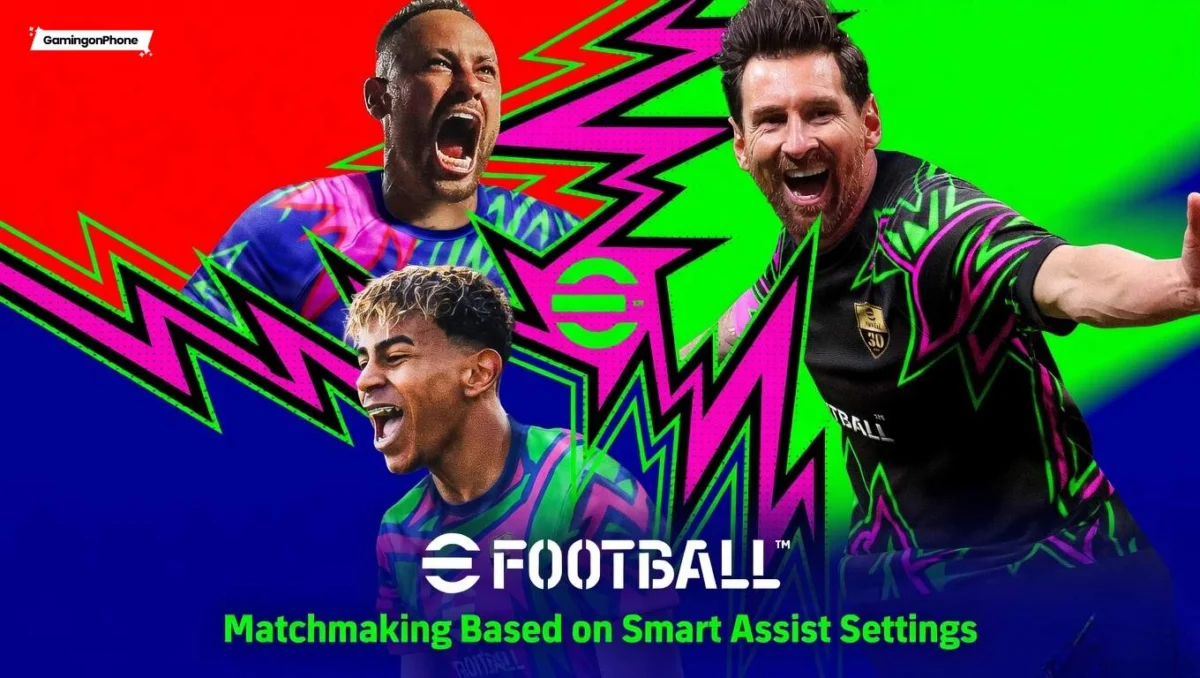
For the competitive eFootball community, the debate surrounding "Smart Assist" has been the single most polarizing issue of the current generation. Since its introduction, the feature—designed to lower the entry barrier for casual players—has been viewed by elite competitors as an intrusion of artificial automation into a skill-based ecosystem. After months of mounting pressure and vocal community feedback, KONAMI has finally signaled a shift in policy.
In a recent official announcement, the developers confirmed that a "Smart Assist" matchmaking filter is set to be implemented for Divisions 1 through 3 in the eFootball League. While this move appears to be a direct concession to the demands of the player base, a deeper look at the technical implementation suggests that the path forward is far from straightforward.
The Core Facts: What Is Changing?
The update, scheduled to roll out between late May and early June 2026, introduces a binary choice for players competing in the highest tiers of the game. When entering the matchmaking queue, users will be presented with two distinct parameters:
- "Same setting as mine": This filter restricts matchmaking to only those opponents who have selected the exact same Smart Assist configuration as the user. If you play with Smart Assist disabled, you will only be paired with other players who have also opted for a manual experience.
- "Matchmake freely": This setting maintains the current status quo, allowing the matchmaking algorithm to ignore Smart Assist status in favor of finding the fastest possible connection, regardless of the opponent’s control settings.
While this promises to create a "purer" competitive environment for those who desire it, the announcement is specifically categorized as a "test implementation." This designation is crucial; it suggests that KONAMI is monitoring the health of the ecosystem before deciding whether to make this a permanent fixture or a broader standard across all divisions.
A Chronology of the Smart Assist Controversy
To understand why this update is so significant, one must look at the timeline of the feature’s integration into the eFootball franchise.
- Initial Launch: When eFootball first introduced Smart Assist, the intent was to bridge the gap between mobile newcomers and console veterans. It was marketed as a way to help casual players execute complex movements and accurate passing sequences without needing years of muscle memory.
- The Competitive Backlash: As the feature gained popularity, it quickly permeated the upper tiers of the eFootball League. Players in Divisions 1, 2, and 3—the tiers representing the top 5% of the player base—began reporting that the game felt less like a test of individual reflex and more like an AI-vs-AI simulation.
- The "Skill Gap" Argument: Throughout 2025, social media channels, Reddit, and Discord servers became hotbeds for complaints. Elite players argued that Smart Assist effectively "nerfed" the value of manual skill, as the AI could often calculate passing lanes or defensive positioning faster than a human could react.
- The Turning Point: By early 2026, the sentiment had become overwhelmingly negative among competitive players. Many streamers and content creators began boycotting ranked play or publicly calling for a segregated queue.
- The May 2026 Announcement: Following sustained pressure, KONAMI issued an official statement via their social channels on May 19, 2026, confirming the test implementation of the filter.
Technical Implications and Supporting Data
While the news is being heralded as a victory, the technical reality is complex. KONAMI’s own announcement contains implicit warnings that the player base needs to heed before celebrating too early.
The Problem of Queue Times
The primary constraint in any competitive multiplayer game is the "Matchmaking Pool." By splitting the player base in half, the time it takes to find a suitable opponent will inevitably increase. In regions where the player count is already low, players choosing the "Same setting as mine" option may find themselves waiting for minutes rather than seconds.
Connection Quality and Stability
Matchmaking algorithms typically prioritize "ping" and geographical proximity to ensure low latency. By introducing an additional layer of filtering, the game’s server logic is forced to sacrifice either wait time or connection quality. If the algorithm cannot find a player with the same Smart Assist setting in a nearby server, it will either force a long wait or expand the search to players in distant regions, leading to the dreaded "laggy" matches that plague online sports titles.
The "Loophole" Dilemma
One of the most pressing concerns raised by the community is the potential for abuse. The current announcement does not explicitly state that Smart Assist settings are locked once the matchmaking process begins. If a player can queue with the setting turned "off" but then toggle it "on" once the game loads, the entire premise of the filter is rendered moot. The integrity of the system relies entirely on whether KONAMI has implemented a "hard lock" that prevents any changes to control settings once a match is initiated.
Official Stance and Corporate Strategy
KONAMI’s decision to label this as a "test" is a classic corporate maneuver. By framing it as a limited implementation, they provide themselves an "out" if the experiment leads to a degraded user experience.

From a developer’s perspective, they are caught between two distinct demographics. The casual player needs Smart Assist to remain engaged; without it, the game is arguably too difficult for newcomers. The professional player, conversely, needs a level playing field to justify the time they spend practicing. By offering the "Matchmake freely" option, KONAMI is attempting to appease both groups: the casuals can play quickly, and the elites can wait for a high-integrity match.
However, the lack of transparency regarding the "loophole" mentioned above suggests that the development team is still working through the technical constraints of the game engine. Integrating a dynamic filter into a live-service environment requires a delicate balance of server-side logic and client-side verification, and it is likely that they are taking a cautious approach to avoid breaking the existing infrastructure.
Looking Ahead: Is the Debate Over?
The reality is that this update is merely the beginning of a much longer conversation. Even if the filter functions perfectly, the fundamental question remains: Should a competitive, ranked mode include AI-assistance at all?
For many, the existence of Smart Assist at the highest levels of competition is a philosophical failure. It creates an environment where the "ranking" no longer reflects pure human ability. If an ELO rating is meant to indicate who the best player is, but that player is receiving automated assistance from the game engine, the value of that rating is inherently diminished.
Furthermore, we must consider the impact on the eSports scene. Professional tournaments generally require "Manual" or "Standard" settings with minimal assists. If the in-game ranked ladder continues to support a "Smart Assist" tier, it creates a disconnect between the casual, ranked, and professional tiers of the game. Aspiring professionals who climb the ladder using Smart Assist may find themselves unable to compete at the same level once they enter a tournament environment where such assists are prohibited.
What to Watch For
As we approach the late May/early June update, players should monitor three key indicators of success:
- Latency Statistics: Will the quality of matches for those using the filter remain stable, or will we see an uptick in packet loss and input delay?
- Wait Times: Will the player base be large enough to sustain two distinct matchmaking pools, or will the "Same setting as mine" queue become effectively dead in smaller regions?
- The "Toggle" Exploit: How quickly will the community discover if the setting can be circumvented, and how fast will KONAMI move to patch it?
Conclusion
The introduction of the Smart Assist filter in eFootball 2026 is a milestone for the franchise. It represents a rare instance where the developers have listened to the grievances of the elite player base and taken tangible action to address them.
However, the implementation of this feature is not a "magic bullet." It carries significant risks regarding match quality and queue times, and the potential for exploitation remains a looming threat. As the community moves into this testing phase, the focus must shift from demanding the feature to ensuring its rigorous enforcement. If KONAMI can successfully lock settings and maintain a stable connection for those who opt for a manual experience, they may finally restore some much-needed balance to the competitive ecosystem.
For now, the eFootball community remains in a state of cautious optimism. The developers have provided the tool we asked for; now, it is up to the players to see if it actually works in the heat of competition. As always, the truth will be found on the virtual pitch, where the only thing that should matter is the player’s skill, not the software assisting them.


 Neng Nana
 Pevita Pearce