
 Siti Muinah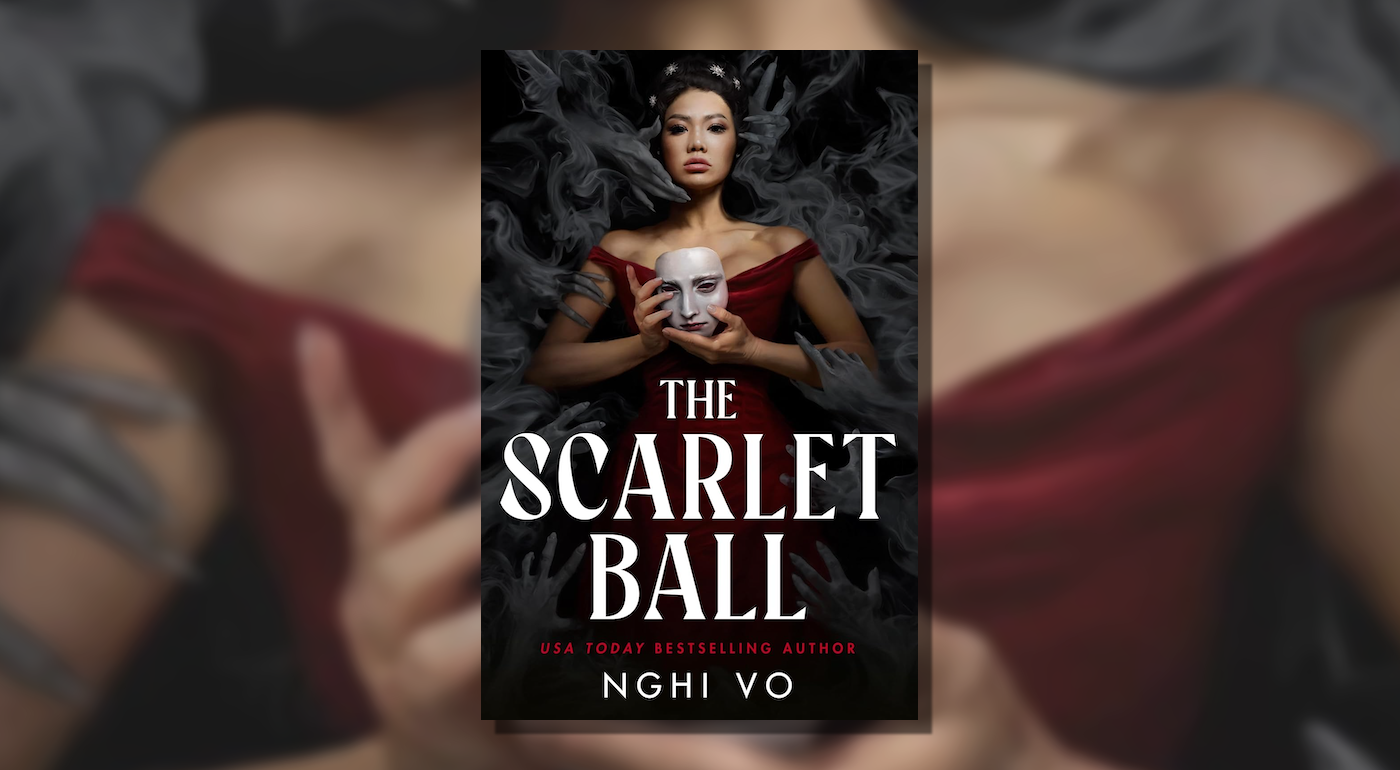
On October 6th, the landscape of historical fantasy is set to shift with the release of The Scarlet Ball, the latest masterwork from Hugo and Nebula Award-winning author Nghi Vo. Published by Tor Books, the novel invites readers into a Gilded Age New York City that is as opulent as it is occult—a world where the elite "Four Hundred" sustain their unchecked power through blood-soaked, gold-etched rituals of demonic marriage. As fans of Vo’s previous works wait with bated breath, the publisher has released a haunting excerpt and an audio preview narrated by Natalie Naudus, offering a chilling glimpse into a narrative defined by transformation, survival, and the high price of social mobility.
A Synopsis of Survival: The Narrative Premise
At the center of The Scarlet Ball is Judith Ban, a protagonist whose life has been defined by the intersections of race, class, and displacement. The daughter of a Vietnamese adventuress and a French naval officer, Judith is a former convent girl, courtesan, and failed thief. Her journey takes a desperate turn when she agrees to a perilous arrangement with the matriarch of the Howard family.
The deal is deceptively simple: Judith must assume the identity of Iphigenia Marshall, the missing Howard granddaughter who was destined for a high-stakes debut. With the physical features of the missing girl stitched onto her own, Judith enters a high-society gauntlet. Her goal is survival and the promise of enough wealth to escape her past; however, the cost of entry is a seat at a table where young women are not just debutantes—they are potential sacrifices to be devoured by entities of "undreamt-of power." To survive the season, Judith must navigate the predatory gaze of the Howards and seduce a "storm in the shape of a man" before the night of the titular Scarlet Ball, where the demons finally claim their brides.
Chronology of a Dark Transformation
The excerpt provided by Tor Books offers a harrowing look at Judith’s "remodeling." The narrative does not shy away from the visceral horror of her transformation.
- The Preparation: Under the cold, calculated guidance of Mrs. Howard, Judith is stripped of her "shopgirl" identity. The process is not merely cosmetic; it is surgical. Mrs. Howard subjects Judith to a grueling beauty regimen, using heated steel tongs and beeswax to craft a veneer of high-society perfection.
- The Encounter: The scene introduces Mr. Howard, a figure whose presence is marked by a "primitive danger." During their meeting, his humanity is shown to be a thin, crumbling facade—a ripple of flesh revealing a mouth incapable of belonging to a human skull. This encounter establishes the stakes: Judith is not just playing a part; she is living among predators.
- The Procedure: The transformation culminates in a scene of body horror. Using a curved needle and black thread, Mrs. Howard applies a literal "skin mask" to Judith’s face, finalizing her transition into Iphigenia Marshall.
- The Aftermath: Following the procedure, Judith experiences a "hot numbness." She finds herself in a carriage, reflecting on the loss of her own face and the terrifying reality that her new identity is held together by mere stitches. Despite the trauma, her internal monologue reveals that her ambition remains untouched.
Supporting Data: The Craft of the World-Building
Nghi Vo has long been lauded for her ability to weave intricate, atmospheric prose that centers marginalized voices within historically inspired settings. In The Scarlet Ball, she leverages the "Gilded Age" aesthetic—velvet, gaslight, silk, and rigid social hierarchies—and subverts it with supernatural dread.
The novel’s themes revolve around the concept of "the mask." By exploring the literal physical modification of the protagonist, Vo provides a brutal metaphor for the assimilation required of immigrants and the working class in 19th-century America. The "Four Hundred"—a real-world historical term referring to the social elite of New York—are transformed here into a coven of sorts, whose wealth is not just inherited but harvested.
The inclusion of an audio excerpt narrated by Natalie Naudus is particularly significant. Naudus, known for her ability to capture complex, multi-layered protagonists, adds a tactile layer of dread to the text. The sound of the "snapping scissors" and the "sizzle of wax" described in the book translate into a sensory experience that heightens the reader’s immersion in Judith’s plight.

Official Perspectives and Industry Reception
The anticipation surrounding The Scarlet Ball is palpable within the literary community. Tor Books, which has positioned the novel as a flagship fall release, emphasizes the book’s unique blend of gothic horror and historical fiction.
"Nghi Vo has created a narrative that is both a love letter to the era and a scathing critique of the monstrous greed that fueled it," says an editor familiar with the project. "Judith Ban is a character who refuses to be a victim, even when her literal face is stripped away. It’s a story about what we sacrifice to belong, and what we gain when we decide we’d rather be monsters than prey."
While the novel is a work of fiction, its historical roots in the Victorian and Gilded Age traditions of "high-society debutante" novels provide a familiar framework that Vo is effectively dismantling. Critics are already drawing parallels between this work and the dark, atmospheric tension found in her previous successes, such as the Singing Hills Cycle.
Implications: A New Standard for Historical Fantasy
The release of The Scarlet Ball signals a significant moment for the genre. By utilizing the "historical fantasy" label to explore themes of body autonomy, racial identity, and systemic corruption, Vo is pushing the boundaries of what these stories can achieve.
- Reclaiming the Gilded Age: By focusing on a character who is explicitly not part of the white elite, Vo challenges the traditional "period piece" narrative that often excludes or romanticizes the era’s inequalities.
- The Horror of Assimilation: The literal stitching of a new face onto the protagonist is a potent, if terrifying, image. It forces the reader to confront the question: how much of oneself must one lose to survive in a system designed to consume you?
- Genre Evolution: As readers move toward more "complex" and "dark" fantasy, The Scarlet Ball provides a mature, unsettling experience that bridges the gap between historical drama and psychological horror.
As the October 6th publication date approaches, the industry is watching closely. If the provided excerpt is any indication, The Scarlet Ball will not merely be a bestseller; it will be a haunting reflection on the nature of identity and the resilience of those who refuse to be erased. Judith Ban, as she waits in the dark, well-sprung carriage, may be terrified, but she is far from helpless—and that is exactly what will make her story essential reading this autumn.
For those looking to secure their copy, pre-orders are currently available through Macmillan and major retailers. The journey into the heart of New York’s darkest season is almost upon us.


 Nana Wu
 Ali Ikhwan





