The intersection of digital culture and political messaging has reached a new, contentious milestone. The Tetris Company, the organization that oversees the licensing and management of one of the world’s most recognizable video games, has issued a sharp rebuke to the White House following the release of an official online arcade. The dispute centers on "Build the Wall," a browser-based game featured on the White House website that bears a striking, and potentially infringing, resemblance to the classic Tetris formula.
This incident marks yet another chapter in an ongoing saga of friction between global entertainment conglomerates and the United States government regarding the unauthorized appropriation of intellectual property (IP). As legal experts weigh in on the boundaries of fair use in the digital age, the incident highlights a growing discomfort among game developers regarding the politicization of their creations.
The Genesis of the White House Arcade
On September 3, the White House unveiled an "online arcade" hosted on its official domain. The platform, aimed at engaging a younger demographic, features five retro-styled browser games designed to highlight President Donald Trump’s political platform.
The games utilize a low-fidelity, nostalgic aesthetic reminiscent of early console gaming. While the site’s stated goal, according to a White House official, is to "showcase a culture of fun and winning," the thematic elements of the games are explicitly tied to the administration’s policy goals. The collection includes titles that task players with patrolling the Rio Grande, sorting school lunches, and managing campaign-style finance collection, all presented through a lens of political gamification.
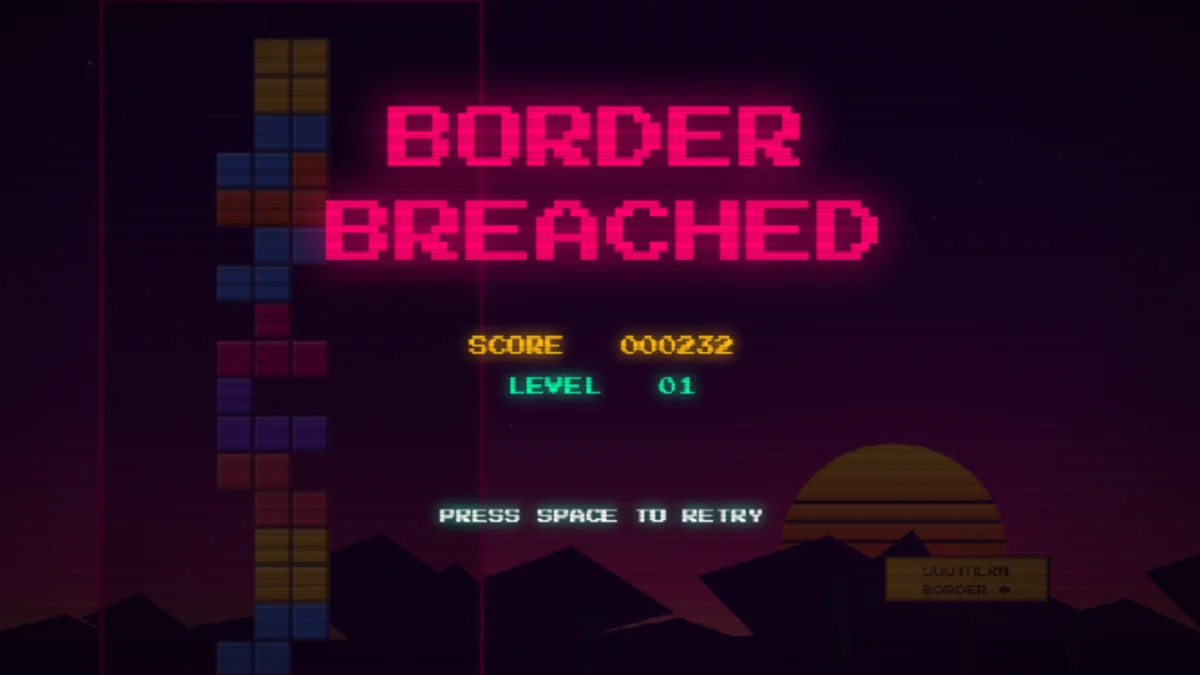
The most controversial entry, "Build the Wall," tasks players with stacking falling blocks to construct a physical barrier. The game’s premise involves defending the southern border against a "zombie border siege." As the game progresses, the speed increases, and failing to effectively clear lines—or in this case, failing to stack the blocks to secure the border—results in a "border breached" notification. The mechanics are, for all intents and purposes, a functional clone of the Tetris gameplay loop, which has been protected by strict copyright and trademark enforcement for decades.
Chronology of the Dispute
The backlash was swift and unequivocal. Shortly after the arcade went live, digital media observers and gaming enthusiasts noted the blatant mechanical similarities between the White House game and the legendary puzzle title.
- September 3: The White House arcade is officially launched, drawing immediate attention for its political themes and nostalgic game designs.
- September 4: Public outcry and media inquiries regarding the unlicensed use of game mechanics reach The Tetris Company.
- September 4 (Afternoon): The Tetris Company releases a formal statement distancing itself from the White House, explicitly stating that it had no involvement in the development or approval of the game.
- September 4 (Evening): The Tetris Company adds a pointed legal warning to its statement, asserting that it takes copyright infringement "very seriously."
While the company has yet to confirm the initiation of formal litigation or the delivery of a cease-and-desist letter, the gravity of their language suggests that the administration may face significant legal pressure if the content remains live.
Supporting Data: The Mechanics of Infringement
In the world of video game law, proving copyright infringement can be complex. While the "idea" of a falling-block puzzle game is not always copyrightable, the specific expression, code, and distinct look-and-feel are heavily protected.
The Tetris Company has historically been one of the most litigious entities in the gaming industry. Their enforcement strategy is rooted in the protection of the Tetris "trade dress." This includes the specific shape of the "Tetriminos," the way they rotate, the "well" in which they fall, and the specific feedback mechanisms (like clearing lines). By replicating these mechanics, the White House’s "Build the Wall" game risks crossing the threshold from "inspired by" to "unauthorized derivative work."
Furthermore, the context of the usage exacerbates the issue. When a commercial entity—or in this case, a government body—utilizes a protected IP to promote a specific political agenda, it creates an association that the IP holder may find damaging to their brand. For a brand like Tetris, which prides itself on universal appeal and inclusivity, being tethered to a polarizing political project is an outcome the company is clearly eager to avoid.
Official Responses and Corporate Stance
The response from The Tetris Company was carefully crafted to balance corporate neutralism with firm legal posturing. In their public statement, the company emphasized their core mission:
"At Tetris, we believe in the power of connection and bringing people together, not dividing them. To our fans everywhere: we love you, we see you, and we’re grateful to have you in our community. The Tetris Company was not involved in the creation of ‘Build the Wall.’ We take copyright infringement very seriously."
This statement does more than just deny involvement; it draws a moral line. By framing Tetris as a force for "bringing people together," the company implicitly critiques the divisive nature of the game in which their intellectual property was co-opted.
The White House, conversely, has remained largely silent on the specific copyright allegations. A spokesperson for the administration reiterated the intent behind the arcade, characterizing it as a method to reach voters through digital engagement, but offered no comment on the potential legal ramifications or the likelihood of removing the games.
The Pattern of Unauthorized Appropriation
This is not the first time the current administration has faced friction regarding the unauthorized use of media properties. The White House has previously been warned by international entities regarding the use of protected cultural assets.
Earlier this year, the Japanese government issued a formal warning to the U.S. government regarding the use of Nintendo and Pokémon characters in political memes. Similarly, the owners of the Yu-Gi-Oh! franchise issued a firm denial of involvement after clips from their anime series were integrated into official White House video communications.
These recurring incidents suggest a systemic disconnect between the administration’s digital strategy team and the realities of modern intellectual property law. Critics argue that the White House appears to operate under the assumption that "fair use" is a broad umbrella that covers political expression, ignoring the reality that commercial and international copyright laws do not grant exemptions simply because the user is a government entity.
Implications for the Future of Political Gaming
The implications of this standoff are twofold. First, it sets a precedent for how global corporations will interact with political institutions that utilize their brands without permission. By going public with their warnings, companies like The Tetris Company are signaling to their shareholders and their fanbase that they will not remain passive in the face of unauthorized brand dilution.
Second, it raises questions about the future of digital political campaigning. As political organizations increasingly turn to "gamification" to reach younger voters, they risk alienating the very creative industries that provide the tools for that engagement. If the White House continues to face legal pushback, it may find itself unable to utilize modern cultural touchstones, forcing a pivot back to more traditional forms of campaigning.
Legal experts note that the White House may eventually be forced to either scrub the site of these games or secure licensing agreements—the latter being unlikely given the political nature of the content. For now, the "Build the Wall" game remains a digital case study in the risks of ignoring intellectual property rights. As the threat of litigation looms, the arcade serves as a stark reminder that in the modern digital economy, even the highest office in the land is not exempt from the laws that protect creative ownership.
Ultimately, the Tetris incident acts as a bellwether for the broader tension between government communications and the private sector. Whether this leads to a courtroom showdown or a quiet removal of the content remains to be seen, but the message from The Tetris Company is clear: they are prepared to defend their brand, regardless of the political power behind the infringing party.