

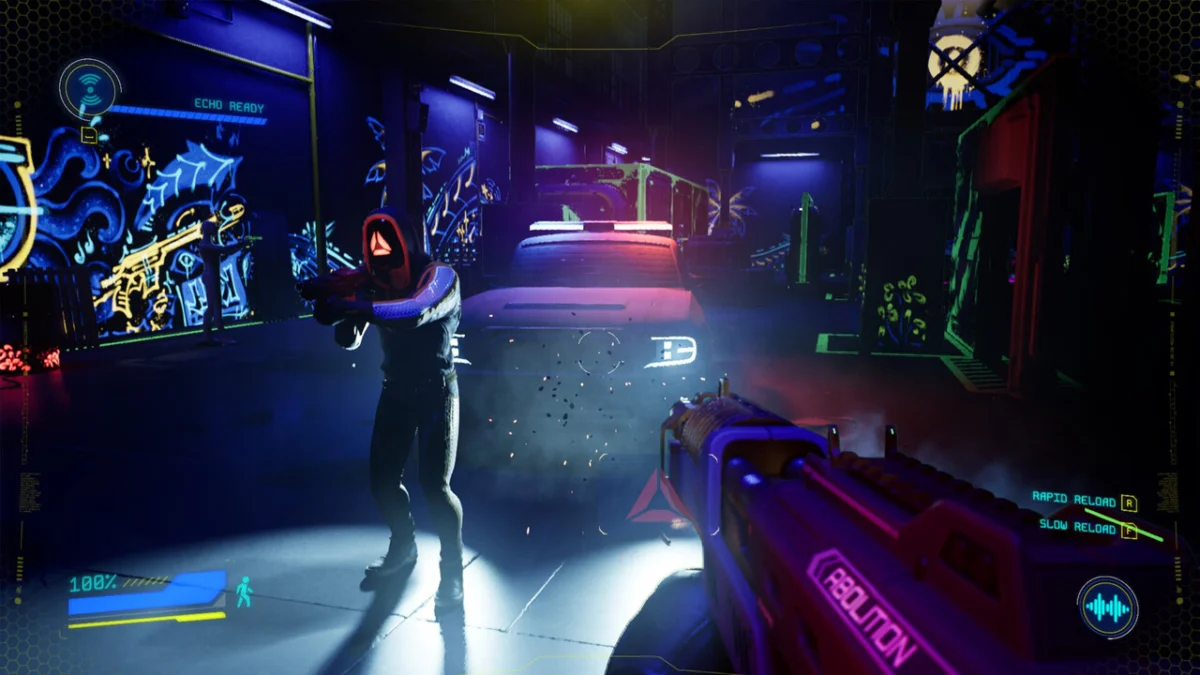
In an industry where the lifecycle of a multiplayer game is often dictated by aggressive monetization, shifting player bases, and the inevitable "sunset" of server infrastructure, developer Double Eleven has taken a radical, refreshingly defiant stance. Their experimental multiplayer shooter, Blindfire, was recently slated for cancellation. However, rather than quietly scrubbing it from digital storefronts and leaving players with nothing but memories, the studio has released the "Lights Out" update. This final iteration transitions the game into a permanent, free-to-play state, ensuring that the project remains accessible to anyone who wishes to experience its unique, pitch-black mechanics.
This decision serves as more than just a swan song for a niche title; it is a profound statement on the nature of digital ownership and the preservation of interactive art.
The Concept: Navigating the Void
At its core, Blindfire is a game defined by sensory deprivation. While modern shooters often focus on lightning-fast reflexes and high-fidelity visuals, Blindfire strips away the player’s primary tool: sight. The maps are almost entirely shrouded in darkness, forcing participants to rely on auditory cues, the brief, blinding flashes of muzzle fire, and tactical light traps to navigate their surroundings.
The gameplay loop is deliberately paced and methodical. Players operate with limited magazine sizes and a heightened vulnerability, turning every encounter into a tense game of cat-and-mouse. Comparisons to the title Superhot are inevitable, not because the mechanics are identical, but because both games force players to reconsider their relationship with space and time. In Blindfire, stillness is not a tactical choice—it is a necessity. To move is to announce your position through sound; to fire is to illuminate your location for a split second, turning yourself into an instant target.
The "Lights Out" Update: Accessibility and Finality
The final update, titled "Lights Out," serves as both a farewell and a refinement of the game’s core vision. Perhaps the most significant addition is the implementation of an "Audio Aim Assist" system. By leveraging complex spatial audio cues, the developers have effectively opened the game to players with visual impairments. This feature provides real-time acoustic feedback, allowing players to orient themselves within the environment and track opponents through sound alone.
In addition to these accessibility improvements, the update introduces two new weapons, a suite of fresh character skins, and new achievements. While the inclusion of skins in a game where players are rarely seen may seem ironic, it speaks to the developers’ desire to provide a complete, polished package for the community. The game now functions as a "living" archive rather than a commercial product.
A Chronology of a Cult Experiment
Blindfire was never intended to be the next Call of Duty or Valorant. It was an experiment in design, born from the desire to explore how soundscapes could dictate combat in a virtual space.
- Development Phase: Double Eleven conceptualized the title as a high-concept, low-visibility shooter that prioritized sound design over graphical fidelity.
- Early Access/Launch: The game entered the market with a unique value proposition, gaining traction among a small but dedicated community of players who appreciated its slow, tactical, and atmospheric nature.
- The "Sunset" Decision: As the player base failed to hit the mass-market metrics required for ongoing live-service support, the team faced the standard industry dilemma: keep the lights on at a loss, or shut it down.
- The "Lights Out" Pivot: Eschewing the industry-standard "shutdown" procedure, the developers opted to patch the game into a permanent, offline-capable and server-persistent state.
- Current State: Blindfire is now available to download for free, with no further monetization, marketing, or development plans. It exists solely to be played.
Technical Accessibility: A Lean Experience
One of the most striking aspects of Blindfire is its technical accessibility. In an era where AAA titles often require massive SSD space and high-end hardware to run, Blindfire is remarkably lightweight. With a total download size of just 3 gigabytes and system requirements that accommodate even modest hardware, the developers have ensured that the game remains accessible to a broad spectrum of users.
This minimalism is a key factor in the game’s longevity. By avoiding the bloat associated with modern live-service updates, the developers have made it significantly easier to maintain the server infrastructure required to keep the game "alive" for years to come.
The Philosophy of Preservation: A Response to Industry Trends
The most poignant aspect of this story is the reasoning provided by the developers. In an official statement, Double Eleven declared: "We refuse to bury our work just because things didn’t go perfectly. We are keeping it alive because we are proud of it."
This sentiment aligns perfectly with the growing Stop Destroying Videogames movement, a grassroots initiative currently gaining traction in the European Union and beyond. The core tenet of this movement is that digital games, as cultural artifacts, should not be rendered unplayable by publishers simply because they are no longer profitable.
Double Eleven’s approach to Blindfire represents a shift in corporate mindset. By treating the game as "art that deserves to be preserved," the developers have bypassed the traditional cycle of hype, monetization, and abandonment. They have made it clear that there will be no future marketing campaigns or revenue-driven updates; the "Lights Out" version is a gift to the community and a statement against the ephemeral nature of modern digital entertainment.
Implications for the Gaming Landscape
What does the "Lights Out" initiative mean for the future of the industry?
First, it highlights the viability of "post-commercial" development. If more studios followed this model, the "digital graveyard" of discontinued games—titles that disappear from history once their servers are pulled—would shrink significantly. While not every studio has the resources to maintain servers indefinitely, the principle of releasing client-side updates or allowing for community-run servers is a viable alternative to total erasure.
Second, it validates the importance of accessibility in unconventional genres. By proving that a shooter based on darkness and sound can be made playable for those with visual impairments, Double Eleven has set a standard for inclusive game design.
Finally, the success of Blindfire’s transition serves as a blueprint for "responsible sunsetting." When a project fails to meet commercial expectations, the respectful way to conclude its lifecycle is not to delete it, but to grant it a permanent home.
Final Thoughts: A Flash in the Dark
As the developers noted in their farewell message, "Blindfire was a flash in the dark. It was weird, loud, and ours."
For players looking for a unique, atmospheric experience that doesn’t require a constant investment of time or money, Blindfire offers a rare opportunity. It is a testament to the fact that games don’t need to be global sensations to be significant. Sometimes, the most meaningful contributions to the medium come from those who, when faced with the end, choose to turn the lights on—ensuring that the work remains for anyone who wishes to step into the darkness and find their way through the sound.
In a digital landscape that is increasingly fleeting, Blindfire stands as a quiet, stubborn monument to the idea that games are, indeed, worth saving.










No comments yet. Be the first to join the conversation!