In a move that signals a profound shift in how professionals leverage their social capital, LinkedIn has officially rolled out a suite of new features designed to bridge the gap between networking and revenue generation. The platform, long regarded as the professional world’s digital storefront, is evolving into a comprehensive ecosystem for consultants, coaches, and recruiters. By introducing in-app 1-on-1 session booking, enhanced mobile content promotion, and advanced AI-driven recruitment tools, LinkedIn is actively attempting to solve the “value proposition” problem that has long plagued its user base.
Main Facts: Converting Social Capital into Revenue
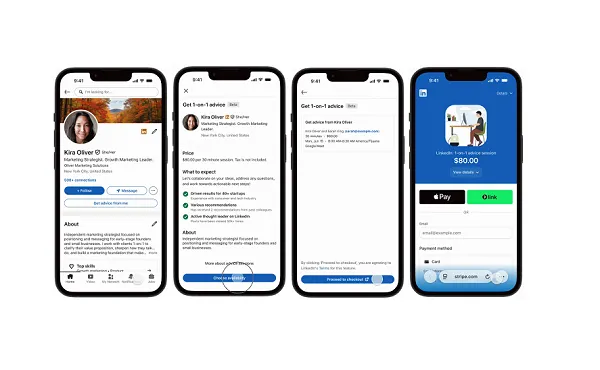
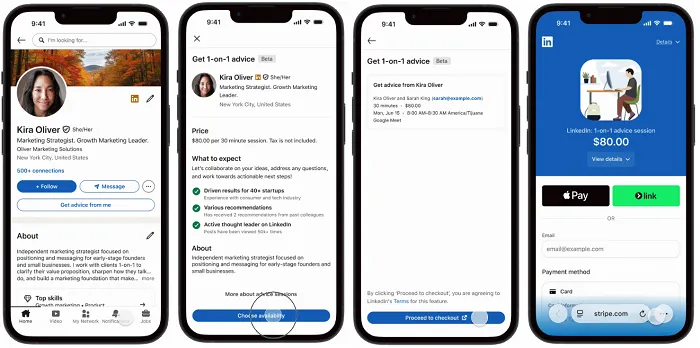
The centerpiece of LinkedIn’s recent update is the introduction of a “Get advice from me” button. This feature allows Premium Business subscribers—and those on more advanced tiers—to integrate a scheduling and payment gateway directly onto their profiles.
Previously, LinkedIn users were forced to funnel prospects through third-party scheduling software, external websites, or clunky email exchanges, creating significant friction in the sales funnel. With the new update, consultants can manage bookings, process secure payments, and host video consultations—all within the LinkedIn interface.
Beyond the consulting sphere, LinkedIn is simultaneously upgrading its HR and marketing tools. Premium All-in-One subscribers now gain the ability to boost posts directly from the mobile app, while the platform’s "Hiring Pro" suite has received a significant AI upgrade. These tools are designed to automate the manual, time-consuming aspects of candidate evaluation, effectively turning LinkedIn from a passive networking site into a dynamic, transactional hub.
A Chronology of Platform Evolution
To understand the significance of these updates, one must look at the trajectory of LinkedIn over the last decade.
2016: Microsoft acquires LinkedIn for $26.2 billion, signaling a shift toward integrating the platform with professional productivity tools like Office 365 and Dynamics.
2019-2021: LinkedIn shifts focus toward "Creator Mode," encouraging users to post original content to increase engagement and reach. However, while reach grew, direct conversion remained elusive for many.
2023: LinkedIn begins heavy investment in generative AI, introducing "AI-powered coaching" and content suggestions to aid users in writing posts and profiles.
2024: The platform introduces a more robust marketplace feel, testing various ways to allow creators to monetize their expertise directly.
2025-2026: The current rollout. LinkedIn moves beyond just being a place to “network” and becomes a place to “transact.” By integrating payments and booking directly into the UI, LinkedIn is effectively shortening the distance between an initial connection request and a paid consultation.
Supporting Data: The Value of the "High-Intent" Connection
For years, the success of a LinkedIn profile was measured in vanity metrics: connection counts and profile views. However, industry analysis has consistently shown that the sheer volume of connections has little correlation with revenue for independent consultants.
According to internal LinkedIn data and industry reports, the "friction cost" of moving a lead from a social interaction to a professional engagement is the primary reason many independent consultants fail to monetize their networks. When a user has to leave the app, visit a website, register for an account, and input credit card details, the "drop-off rate" can exceed 70%.
By embedding the booking and payment process, LinkedIn is aiming to capture that "high-intent" traffic. For the platform, this is a strategic move to increase the stickiness of its Premium tiers. As of current estimates, millions of users have transitioned to Premium models, and by adding utility that directly correlates to income, LinkedIn justifies its subscription price, turning a business expense into a business investment.
Official Responses and Strategic Rationale
LinkedIn’s leadership has framed these changes as an empowerment tool for the “solopreneur” economy. In an official statement, the company noted:
"This new feature lets you offer paid 1-on-1 consultations directly from your LinkedIn profile. You can manage bookings, secure payments, and host video consultations all in one place. For consultants, coaches, and creators, it removes friction right where clients discover you and helps you get paid for what you already know."
Regarding the AI-integrated Hiring Pro tools, the company emphasized a shift toward efficiency:
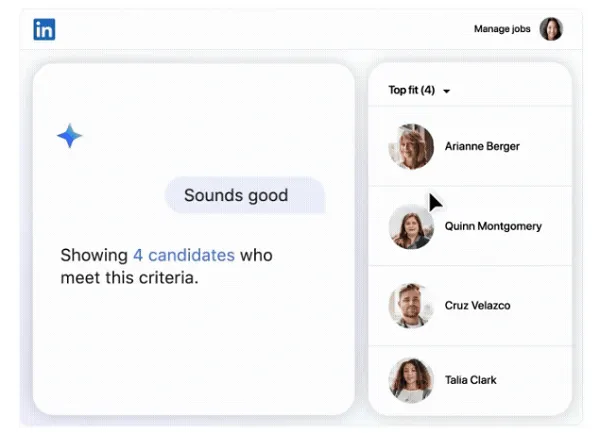
"You can now use plain language to refine qualifications, share feedback, and stay aligned, without the extra manual work. Hiring Pro will also help users create applicant shortlists, and invite others into the conversation to discuss."
The strategic rationale is clear: LinkedIn wants to retain the "time-on-site" of its most valuable users. By automating the recruitment workflow and the consulting booking process, they are positioning themselves as the "operating system" for professional work, rather than just a directory of resumes.
Implications for the Future of Professional Services
1. The Death of the "Lead Gen" Middleman
The most immediate implication of these changes is the potential disruption of third-party scheduling and payment platforms. If a consultant can conduct their entire business cycle—from content discovery to payment—on LinkedIn, the need for fragmented tool stacks diminishes. This is a direct challenge to companies like Calendly, Stripe, and Zoom, as LinkedIn is essentially creating an "all-in-one" environment.
2. The Rise of the "Consultant-Creator"
LinkedIn is signaling that it views individual professionals as brands in their own right. By incentivizing creators to offer paid sessions, the platform is legitimizing the "Expert-as-a-Service" model. This will likely lead to an influx of high-quality educational content, as experts are now incentivized to showcase their knowledge to secure paid consulting gigs.
3. AI as the Great Equalizer in Hiring
The expansion of Hiring Pro AI tools is a double-edged sword. While it dramatically reduces the manual workload for HR departments—allowing them to use plain language to filter, shortlist, and evaluate candidates—it also changes the nature of the application process. Candidates will need to optimize their profiles for AI-driven semantic matching more than ever before. The "human touch" in the initial stages of recruiting is being superseded by machine efficiency, which will require job seekers to adopt more sophisticated, keyword-rich, and context-aware profile strategies.
4. Monetizing the Network
The most significant long-term implication is the change in how users perceive their network. Previously, a 5,000-connection network was a static list. Now, it is a potential customer base. This change is expected to drive higher levels of engagement, as users become more active in their outreach efforts to turn their network into a tangible pipeline of paid sessions.
Conclusion: A Pivot Toward Transactional Utility
LinkedIn’s latest updates represent a pivotal moment in the platform’s history. By transitioning from a social network to a transactional marketplace, the company is attempting to prove that its value lies not in the number of people you know, but in the ease with which you can do business with them.
For the Premium Business subscriber, these tools represent a significant upgrade in operational efficiency. For the average user, it serves as a reminder that the platform is increasingly prioritizing those who are ready to monetize their professional expertise. As these features roll out across the U.S. and eventually global markets, we can expect a shift in the nature of content on the platform—moving away from generic "hustle culture" posts toward specific, value-driven offerings.
Ultimately, LinkedIn is betting that by reducing the friction of business, it can capture a larger share of the global professional economy. If the strategy succeeds, the platform will become indispensable to the modern independent consultant, effectively solidifying its position as the primary engine of the global knowledge economy.














No comments yet. Be the first to join the conversation!