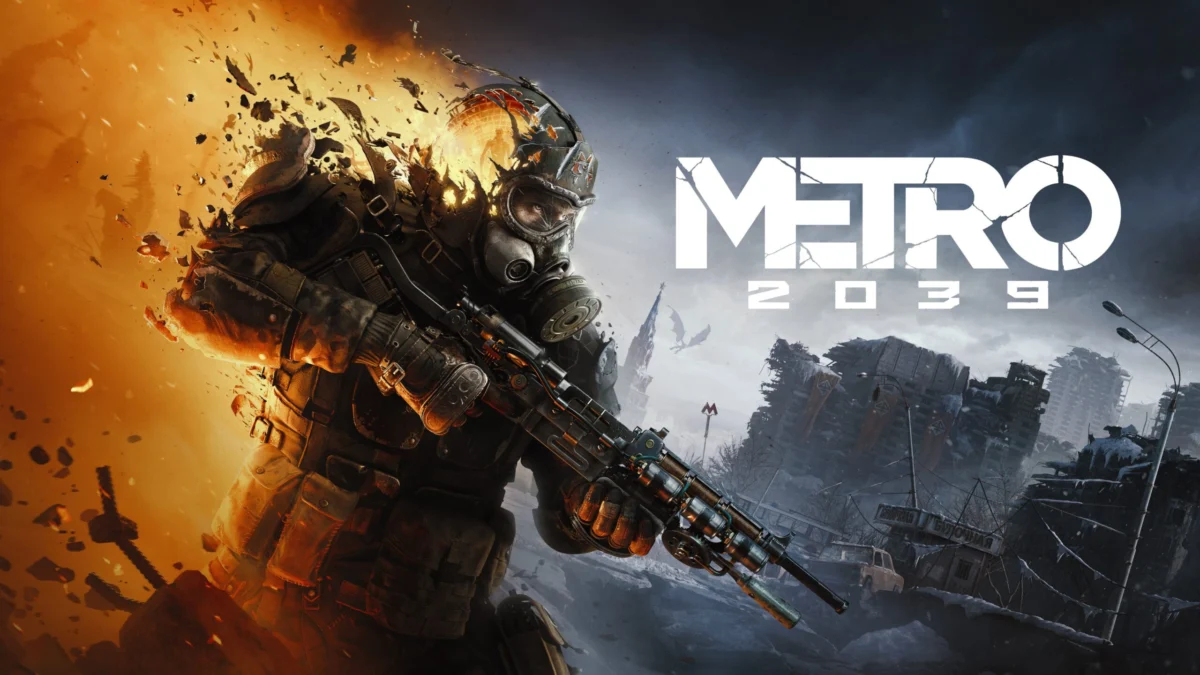
Kyiv, Ukraine / Malta – 4A Games, the acclaimed development studio behind the celebrated Metro series, has officially lifted the veil on its next major installment: Metro 2039. Announced as the direct successor to 2019’s critically lauded Metro Exodus, the new title promises a profound return to the series’ foundational claustrophobic atmosphere within the labyrinthine tunnels of the Moscow Metro. This reveal comes after years of development fraught with unprecedented global challenges, profoundly influencing the game’s narrative and thematic depth.
The announcement positions Metro 2039 not just as a continuation of Artyom’s saga (though details on the protagonist remain somewhat guarded beyond the confirmation of a fully voiced role), but as a deliberate pivot back to the series’ roots. Eschewing the more expansive, semi-open-world design of Exodus, the upcoming game will re-immerse players in the oppressive, subterranean confines that defined Metro 2033 and Metro: Last Light. This strategic decision aims to amplify the intense psychological horror and survival elements that have become synonymous with the franchise, while simultaneously tackling timely and complex themes of authoritarianism, moral compromise, and resilience forged in the crucible of conflict.
Main Facts: Descending Back into the Darkness
Metro 2039 is set to plunge players once again into the irradiated remnants of post-apocalyptic Moscow, where humanity clings to a fragile existence within the vast underground railway network. The core premise, as hinted by its title, places the narrative twenty years after the original events of Metro 2033, pushing the timeline further into a future shaped by nuclear devastation and unending human conflict.
Unlike its immediate predecessor, Metro Exodus, which ventured across the desolate Russian surface in the Aurora locomotive, Metro 2039 signals a deliberate and thematic return to the series’ signature underground setting. This strategic shift promises to rekindle the intense, atmospheric tension and resource-scarcity survival horror that captivated players in the earlier installments. The Moscow Metro, a character in itself, will once again serve as the primary stage for a story-driven, single-player experience, cementing 4A Games’ commitment to immersive, narrative-rich gameplay over open-world exploration.
A significant departure for the series is the introduction of a fully voiced protagonist. While previous games utilized silent protagonists to enhance player immersion, this change suggests a more direct and personal narrative delivery, potentially allowing for deeper character development and emotional resonance. The psychological horror elements, a hallmark of the Metro universe, are slated to be amplified, focusing on the profound and lasting impact of the apocalypse on the human psyche, reflecting the very real-world traumas experienced by the development team.
Underpinning this ambitious project is an extensively upgraded version of the proprietary 4A Engine. Recognising the demands of modern hardware and player expectations, the engine has been meticulously rebuilt, with ray tracing now a fundamental component of its rendering pipeline. This technological leap promises unparalleled visual fidelity, particularly in depicting the stark contrasts of light and shadow, the eerie glow of anomalies, and the grimy realism of the Metro tunnels – elements crucial to the series’ atmospheric storytelling.
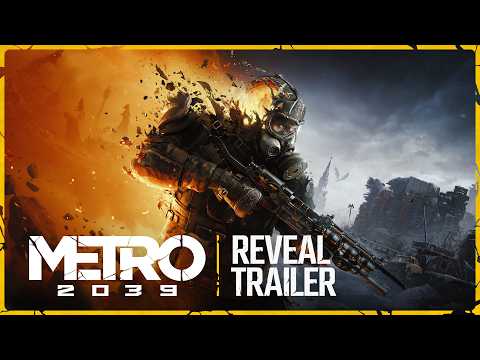
The game is slated for a winter release (Northern Hemisphere) and will be available on PC, Xbox Series X/S, and PlayStation 5, ensuring a broad reach across current-generation platforms. The reveal trailer, while offering only a tantalizing glimpse with a blend of cinematic sequences and brief gameplay snippets, underscored 4A Games’ continued dedication to crafting richly detailed, "cluttered, believable and lived-in environments," a core tenet of their world-building philosophy.
Chronology: A Series Forged in Fire and Resilience
The journey to Metro 2039 is a testament to the enduring vision of 4A Games and the profound literary foundation laid by Dmitry Glukhovsky. The Metro saga began as a series of post-apocalyptic novels, most notably Metro 2033, which painted a bleak yet compelling picture of humanity’s struggle for survival in the irradiated Moscow Metro after a global nuclear war.
From Page to Pixel: The Origins
- Metro 2033 (2010): The first game, developed by 4A Games, faithfully adapted Glukhovsky’s inaugural novel. It introduced players to Artyom, a young survivor from VDNKh station, and established the series’ signature blend of first-person shooter action, stealth, survival horror, and a deeply atmospheric, narrative-driven experience. The game’s reliance on military-grade ammunition as currency, gas mask mechanics, and moral choices immediately set it apart.
- Metro: Last Light (2013): Following the critical success of 2033, Last Light continued Artyom’s story, diverging from Glukhovsky’s second novel, Metro 2034, to craft its own compelling narrative. It refined the gameplay mechanics, enhanced visuals, and further explored the intricate political landscape of the Metro’s warring factions, including the communist Red Line, the fascist Fourth Reich, and the capitalist Hanseatic League.
- Metro Exodus (2019): This installment marked a significant evolution for the franchise. While retaining its narrative focus, Exodus expanded the scope dramatically, taking Artyom and the Spartan Order to the surface and across post-apocalyptic Russia in a modified train, the Aurora. It introduced larger, semi-open-world levels that offered more freedom and exploration, a departure from the linearity of its predecessors, while still retaining the core Metro identity.
A Challenged Development Cycle
The period following Metro Exodus‘s release in 2019 saw the world, and by extension 4A Games, grapple with unprecedented disruptions. The development of Metro 2039 has unfolded against a backdrop of global and regional crises, each leaving an indelible mark on the project and its creators.
- The COVID-19 Pandemic (2020): Like countless studios worldwide, 4A Games transitioned to remote work during the initial outbreaks of COVID-19. Developing a complex AAA title remotely presents immense logistical and collaborative challenges, impacting everything from communication to hardware testing and team morale. The resilience shown by the team during this period laid the groundwork for overcoming even greater adversities.
- Russia’s Full-Scale Invasion of Ukraine (2022): The most profound and harrowing challenge for 4A Games has been Russia’s full-scale invasion of Ukraine. The studio, which maintains a significant presence and a majority of its team in Kyiv, found itself directly impacted by the conflict. Developers faced personal dangers, displacement, and the immense psychological toll of war, all while striving to continue their creative work. This geopolitical catastrophe has not only affected the practicalities of game development but has, by the studio’s own admission, deeply permeated the narrative and thematic core of Metro 2039. The game’s story has taken a darker turn, serving as a poignant reflection of the team’s lived experiences and perspectives. The resilience of 4A Games, continuing to develop a major title under such extreme conditions, is nothing short of remarkable.
This challenging chronology underscores the human element behind game development, particularly for a studio operating at the epicenter of a major international conflict. It imbues Metro 2039 with a gravitas and authenticity that few other titles can claim, promising a narrative steeped in genuine experience and profound reflection.
Supporting Data: Gameplay, Narrative, and Technical Prowess
Metro 2039 is shaping up to be a powerful synthesis of the series’ past achievements and a bold new direction, informed by real-world events.
Reclaiming Claustrophobia and Narrative Focus
The decision to return to the confined spaces of the Moscow Metro is not merely a nostalgic gesture; it’s a deliberate choice to re-emphasize the series’ signature atmosphere. The suffocating darkness, the limited visibility, the echo of unseen threats, and the constant threat of radiation and mutant creatures are all amplified within the tight corridors and sprawling stations of the underground. This approach naturally heightens the psychological horror, forcing players to confront their fears in enclosed, inescapable environments.
The game remains steadfastly a story-driven, single-player experience, a genre often celebrated for its ability to deliver deeply personal and immersive narratives. The confirmation of a fully voiced protagonist is a significant evolution, promising a more direct and intimate connection to the character’s internal struggles and observations. This could allow for more nuanced storytelling and character development, potentially providing a richer internal monologue that complements the external horrors.
A Narrative Forged in Conflict: Glukhovsky’s Return and the Ukrainian Perspective
Dmitry Glukhovsky, the visionary author whose novels birthed the Metro universe, is returning to co-write the narrative for Metro 2039. His involvement ensures a continuity of the series’ philosophical depth and its exploration of complex moral dilemmas. The article explicitly states that the game will delve into "the compromised morality of a post-war society," a theme that resonates deeply with Glukhovsky’s previous works and, tragically, with the current global landscape.
Crucially, the developer has highlighted that the "team’s Ukrainian perspective is molded into the narrative." This is not just a cosmetic addition; it suggests a profound integration of the experiences and insights of the developers into the game’s core themes. The toll of war, the struggle for survival, the nature of authoritarianism, and the resilience of a people under siege are likely to be explored with an authenticity rarely seen in commercial entertainment. This direct connection to real-world trauma promises to make Metro 2039 a uniquely impactful and poignant experience.
The Rise of Novoreich: A New Authoritarian Threat
A pivotal element of Metro 2039‘s narrative is the emergence of the Novoreich. This new, ominous faction represents a unification of the disparate underground groups under a single, authoritarian banner. Led by a former Spartan – a detail that adds an intriguing layer of betrayal or ideological divergence – the Novoreich presents itself as the sole path to salvation. This mirrors historical and contemporary patterns of authoritarian regimes offering order and security in exchange for freedom and individual agency, making it a particularly relevant and chilling antagonist in a world scarred by conflict. The "not-so-subtly named" Novoreich immediately evokes associations with historical fascist regimes, signaling a return to the direct ideological conflicts that characterized early Metro titles, albeit with a fresh, perhaps more chillingly contemporary, twist.
Technical Innovation: The 4A Engine Reimagined
4A Games has always been renowned for its technical prowess, pushing the boundaries of visual fidelity with its proprietary 4A Engine. For Metro 2039, the engine has received a "major upgrade," with ray tracing now integrated as a "core component of the rendering pipeline." This is a significant technical achievement. Ray tracing simulates the physical behavior of light, allowing for incredibly realistic reflections, refractions, shadows, and global illumination. In the context of the dark, claustrophobic Metro, this technology will be transformative, enhancing the atmosphere with lifelike light sources, dynamic shadows cast by flickering torches, and the eerie reflections on damp tunnel walls, further immersing players in the desolate environment.
The emphasis on the engine being "rebuilt to run better on modern hardware" speaks to 4A Games’ commitment to optimization and delivering a high-performance experience on the latest generation of consoles and PCs. This ensures that the visual enhancements are not merely superficial but are integrated into a stable and efficient technical foundation.
Environmental Storytelling: A Core Philosophy
Despite the brief nature of the reveal, 4A Games reiterated its dedication to creating "cluttered, believable and lived-in environments." This commitment to environmental storytelling is crucial for the Metro series, where every detail, from a discarded cigarette butt to a makeshift shrine, tells a part of the larger story of survival and human perseverance. These meticulously crafted spaces not only serve as visually stunning backdrops but also provide critical contextual clues about the world, its inhabitants, and the psychological toll of the apocalypse.
Official Responses: A Studio’s Voice in Tumultuous Times
While the initial announcement of Metro 2039 did not feature direct, attributable quotes from specific individuals at 4A Games, the information conveyed through official channels and press releases carries significant weight, acting as the studio’s collective voice.
The most striking "official response" is the developer’s candid acknowledgment of how real-world events, specifically the 2020 Covid pandemic and the 2022 Russian invasion of Ukraine, have fundamentally reshaped the game’s narrative. This isn’t a mere passing mention; it’s a declaration that the "game’s darker story has changed in response to that," and that the "team’s Ukrainian perspective is molded into the narrative." This statement is a powerful affirmation of artistic integrity and resilience. It signals that Metro 2039 will be more than just a video game; it will be a reflection, an artistic processing, of profound national and personal trauma.
The emphasis that the narrative "more prominently represents the toll the events of the last several years has taken on members of the team, their families and communities" is a direct, albeit generalized, "official response" that highlights the human cost behind the game’s creation. It transforms the development process from a purely commercial endeavor into a deeply personal one, suggesting that players will experience a story imbued with genuine emotion and a unique perspective on human suffering and resilience.
Furthermore, 4A Games’ emphasis on a "bigger emphasis on choice and consequence" combined with Dmitry Glukhovsky’s return to "co-write a narrative that explores the compromised morality of a post-war society" serves as an official guiding principle for the game’s narrative direction. It communicates a commitment to intellectual depth and player agency, reinforcing the series’ reputation for stories that challenge and provoke thought rather than simply entertain.
Finally, the technical "official responses" regarding the 4A Engine’s upgrade, particularly the integration of ray tracing as a "core component" and its rebuilding for "modern hardware," underscore the studio’s ambition to remain at the forefront of graphical innovation. This commitment reassures players that despite external challenges, 4A Games is not compromising on its technical standards, aiming to deliver a visually stunning experience alongside its compelling narrative. The emphasis on "creating cluttered, believable and lived-in environments" further solidifies the studio’s long-standing dedication to immersive world-building.
In essence, these collective "official responses" paint a picture of a resilient, artistically driven studio, confronting adversity head-on and channeling its profound experiences into a game designed to be both technically impressive and deeply resonant on a human level.
Implications: The Future of the Metro, The Power of Narrative, and Ukrainian Resilience
The announcement of Metro 2039 carries profound implications, not just for the franchise itself, but for the broader landscape of video game development and the power of narrative in reflecting real-world struggles.
A Return to Form and Fan Expectations

For long-time fans of the Metro series, the decision to return to the dark, claustrophobic tunnels of the Moscow Metro is likely to be met with immense enthusiasm. While Metro Exodus was lauded for its ambition and scope, many players expressed a yearning for the intense, linear, and atmospheric horror that defined the earlier titles. Metro 2039‘s pivot back to these roots suggests that 4A Games has listened to its community, aiming to recapture the unique tension and sense of vulnerability that made 2033 and Last Light so memorable. This could cement Metro‘s identity as a premier survival horror series, distinguishing it from other post-apocalyptic titles that often lean towards more open-world action.
The introduction of a fully voiced protagonist is a significant shift. While some purists might initially balk at the departure from Artyom’s silent observer role, it opens up new avenues for narrative depth and emotional connection. If executed well, a voiced protagonist could provide a more direct conduit for exploring the psychological toll of the apocalypse and the "compromised morality" at the heart of the story.
The Weight of Reality: War and Art
Perhaps the most significant implication lies in the game’s explicit connection to the real-world events that have impacted 4A Games, particularly the war in Ukraine. This is a rare instance where a major AAA title openly acknowledges how geopolitical conflict has shaped its narrative. By molding the "Ukrainian perspective" into the story and reflecting the "toll" of recent events, Metro 2039 transcends mere entertainment. It becomes a powerful artistic statement, a testament to resilience, and a potential platform for global dialogue on the human cost of conflict and the insidious nature of authoritarianism.
This narrative direction could lend Metro 2039 an unparalleled authenticity and emotional weight. Players might find themselves experiencing a game that feels not just post-apocalyptic, but deeply resonant with contemporary anxieties and struggles. The Novoreich, with its authoritarian ideology and promise of salvation, takes on a chilling relevance, reflecting real-world power dynamics and the seductive allure of strongman leadership in times of crisis.
Technical Ambition and Industry Leadership
4A Games’ continued reliance on and significant upgrade of its proprietary 4A Engine, particularly the deep integration of ray tracing, underscores its technical ambition. In an era where many studios default to third-party engines, 4A’s commitment to its own tech positions them as leaders in engine development, capable of pushing visual boundaries while maintaining creative control. This also implies a long-term investment in their technological foundation, suggesting future iterations of the Metro series, or even new IPs, will benefit from this continued innovation.
Impact on Ukrainian Game Development
Beyond 4A Games, Metro 2039‘s development and eventual release serve as a powerful beacon for the entire Ukrainian game development industry. Despite unimaginable challenges, studios like 4A Games continue to produce world-class entertainment, demonstrating incredible fortitude and talent. The success of Metro 2039 could highlight the resilience and creative spirit of Ukrainian developers, attracting further investment and recognition for a sector that has faced immense hardship. It’s a testament to the idea that even in the darkest of times, art and creativity can thrive.
Anticipation and the Road Ahead
With a "winter" release window, anticipation for Metro 2039 will undoubtedly build as more details, gameplay footage, and narrative insights emerge. The initial reveal, though brief, has set a clear tone: this is a Metro game that honors its legacy while daring to infuse its fiction with the profound and challenging realities of its creators’ experiences. It promises to be a powerful, thought-provoking, and intensely atmospheric journey back into the depths, where the monsters are not just mutated beasts, but the dark reflections of humanity itself. The world awaits a game that is not only a thrilling adventure but also a testament to the enduring power of storytelling in the face of adversity.