

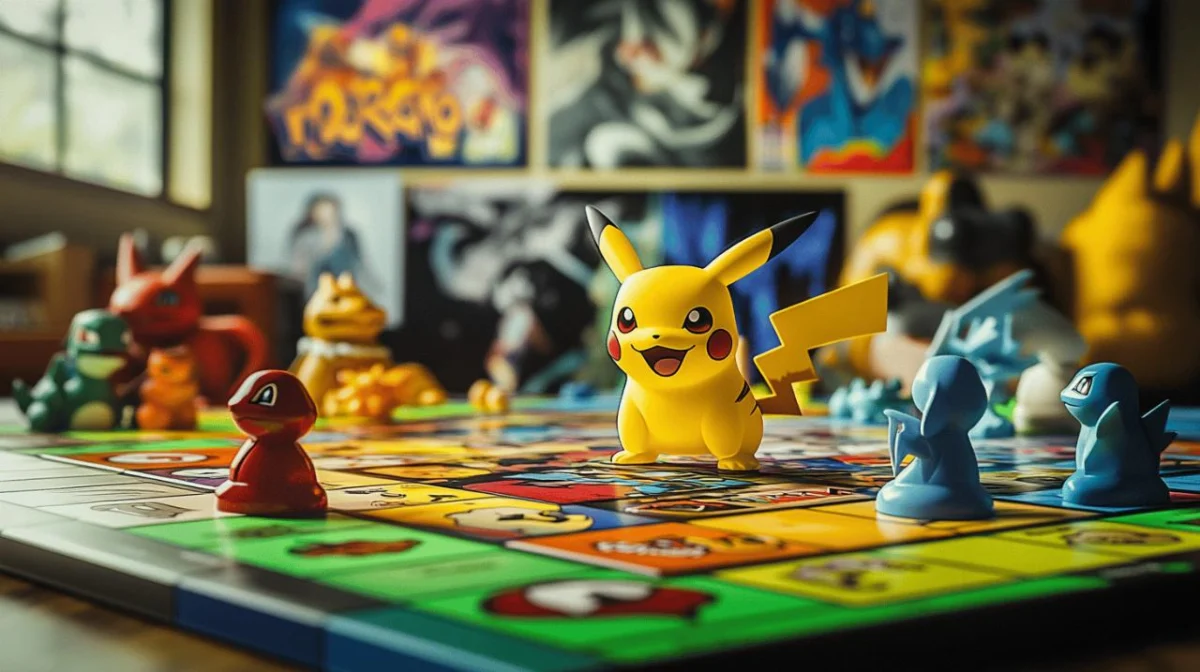
The intersection of two legendary entertainment giants—Hasbro’s Monopoly and The Pokémon Company’s global phenomenon—has resulted in a transformative board game experience that breathes new life into the traditional pursuit of property ownership. By replacing the familiar real estate moguls with the spirit of the Pokémon Trainer, this new edition shifts the objective from accumulating wealth to mastering the art of the capture. Available as of 2025, this cross-franchise collaboration is not merely a reskin; it is a mechanical evolution designed to captivate both nostalgic fans and a new generation of players.
The Core Concept: From Real Estate to Pokémon Training
At its heart, the new Monopoly Pokémon edition reimagines the classic board as a journey through the Kanto region. The iconic streets that once defined the high-stakes world of Atlantic City are now replaced by legendary locales such as Pallet Town and Saffron City.
The traditional currency—the bank notes that have settled countless family disputes—has been retired in favor of Poké Balls. This shift in currency is the most significant change in the game’s logic; players no longer "buy" properties in the traditional sense. Instead, they invest their Poké Balls to "capture" Pokémon. With 48 different creatures to collect across the board, the game shifts from a race for financial dominance to a quest for the ultimate Pokédex completion.
A New Set of Rules for the Modern Trainer
The mechanics have been streamlined to mirror the experience of a Pokémon trainer. Players navigate the board using specialized tokens—Pikachu, Sprigatito (Poussacha), Fuecoco (Chochodile), and Quaxly (Coiffeton). The inclusion of a custom "Capture Die" adds an element of tactical risk. When a player lands on a space, they must choose between passive traversal or attempting a capture. The result of the roll determines whether the creature is successfully caught or escapes, adding a layer of suspense that traditional Monopoly lacks.
Chronology of the Collaboration
The development of this edition represents the culmination of a multi-year partnership strategy between Hasbro and The Pokémon Company.
- Early 2024: Rumors of a major collaborative board game began circulating within hobbyist forums and gaming trade shows.
- Late 2024: Promotional materials confirmed the integration of the Scarlet/Violet starter Pokémon alongside the franchise mascot, Pikachu.
- January 2025: The official commercial launch occurred across major European and North American markets.
- Mid-2025: Expansion of distribution channels to include specialized toy retailers like Smyth Toys and broader e-commerce platforms like Amazon, ensuring accessibility for the holiday season and beyond.
Supporting Data and Market Reception
Since its release, the game has maintained an impressive 4.5/5-star rating on major retail platforms. Market analysts attribute this success to the "accessible complexity" of the new ruleset.
- Target Audience: Designed for ages 8 and up, the game bridges the gap between younger players drawn to the Pokémon IP and older players nostalgic for the original Monopoly gameplay.
- Session Duration: Unlike traditional Monopoly, which can stretch for hours, this edition is calibrated for 45-minute sessions, making it highly suitable for modern, fast-paced family game nights.
- Pricing Strategy: Positioned at an entry-level price point of €29.99, the product avoids the premium pricing trap often associated with collector editions, opting instead for mass-market penetration.
Strategic Implications: How to Win
Winning this version of the game requires a paradigm shift in strategy. While traditional Monopoly players focused on "monopolizing" color sets to force bankruptcy, players of the Pokémon edition must balance resource management with collection goals.
The "Professor Oak" Challenges
The inclusion of mission cards, referred to as the "Professor Oak Challenges," introduces dynamic objectives. Players who successfully capture specific types of Pokémon—such as Grass or Fire types—are rewarded with additional Poké Balls. This forces players to deviate from a linear path around the board and encourages them to take risks on spaces they might otherwise avoid.
Managing the Poké Ball Economy
Because the game ends when a player runs out of Poké Balls or when a trainer achieves a full capture quota, the management of one’s "currency" is paramount. A player who spends too aggressively on rare captures early on may find themselves unable to pay the "tax" of passing through another trainer’s territory. The most successful players are those who treat their Poké Balls as a finite resource rather than an infinite supply of wealth.
Official Perspectives and Expert Analysis
Industry insiders have noted that this collaboration is a masterclass in intellectual property (IP) synergy. By injecting the "collectible" nature of Pokémon into the "competitive" nature of Monopoly, the developers have mitigated the common criticism that Monopoly is purely luck-based.
"The integration of the Capture Die is a brilliant addition," says industry analyst Julian Vance. "It shifts the focus from ‘who has the most money’ to ‘who is the most effective trainer.’ It rewards calculated risks over mindless accumulation."
Implications for Collectors and Families
For the casual family, this game serves as an entry point into the world of strategic board gaming. For the serious collector, the production quality—specifically the custom-sculpted tokens of Pikachu, Sprigatito, Fuecoco, and Quaxly—represents a high-value asset.
Preservation and Long-term Value
As with many limited-run licensed board games, the condition of the components is critical for long-term appreciation. The specialized game board, the Capture Die, and the unique tokens are susceptible to wear. Experts recommend storing the game in a climate-controlled environment, away from direct sunlight, to prevent the fading of the vibrant Kanto-themed artwork. Collectors are also advised to keep the original insert packaging, as the specific layout of the box is often a key indicator of authenticity for future resales on the secondary market.
The Future of Hybrid Board Games
The success of this Monopoly x Pokémon edition signals a broader trend in the tabletop industry. As digital gaming continues to dominate the entertainment landscape, traditional board games are fighting back by incorporating "gamification" elements from their digital counterparts.
By leveraging the deep, established lore of the Kanto region, Hasbro has effectively proven that even a game as old as Monopoly can remain relevant. The transition from a real estate mogul to a Pokémon trainer is more than just a thematic change; it is a cultural adaptation.
Final Verdict
The game stands as a testament to the enduring power of both brands. By adhering to the 45-minute play cycle, keeping the price point accessible, and rewarding player skill through the capture mechanics, this edition succeeds where many other branded board games fail. It is not merely a toy; it is a bridge between the analog past and the digital future of the Pokémon franchise. Whether you are a parent looking for a way to engage your children without a screen, or a veteran fan of the original 1996 games, this Monopoly iteration offers a fresh, tactical, and deeply nostalgic experience that justifies its place on any gaming shelf.










No comments yet. Be the first to join the conversation!