Evan Lee Salim
The countdown to the next Path of Exile 2 league has officially entered its final week, but for the community’s most dedicated theory-crafters, the game has already begun. The release of the comprehensive patch notes for version 0.5, titled "Return of the Ancients," has finally quelled the recent turbulence within the player base. For weeks, early build guide speculators faced intense scrutiny from a community wary of jumping the gun before Grinding Gear Games (GGG) revealed the full scope of their balancing philosophy. With the patch notes now public, the waiting is over—and the changes are nothing short of transformative.
The Core Objectives of Patch 0.5
At the heart of the "Return of the Ancients" update is a massive, structural overhaul of the Path of Exile 2 endgame. Grinding Gear Games has made it clear that their primary goal for this patch is to introduce a more cohesive, rounded, and rewarding experience for players who have conquered the campaign.
The rework addresses two distinct tiers of players. For the hardcore "blasters," the endgame is being expanded to provide more depth and high-end challenge. Conversely, for newer or more casual players, GGG has implemented a new mission structure. This framework provides clear, tangible goals, reducing the intimidation factor often associated with the transition into the Atlas map system. By refining crafting systems and streamlining progression, GGG is attempting to lower the barrier to entry without sacrificing the mechanical complexity that defines the ARPG genre.
A Chronology of the Update Cycle
The path to 0.5 has been a high-stakes journey for the development team.
- Early May: Initial teasers regarding the "Return of the Ancients" theme began circulating, sparking a flurry of community speculation.
- Mid-May: Content creators began publishing "leaked" build guides, leading to heated debates on forums regarding the validity of theory-crafting without official patch notes.
- Late May (Current): The official 0.5 patch notes dropped, providing the definitive roadmap for the upcoming league.
- May 29: The official launch of the Runes of Aldur league, marking what many analysts consider the "pre-final" state of the game.
- November 7–8: The upcoming Exilecon festival, which will serve as the prelude to the game’s official 1.0 release at the end of 2026.
Deep Dive: The Defensive Overhaul
If there is one defining characteristic of the 0.5 patch, it is the deliberate curbing of player power—specifically regarding survivability. GGG is clearly concerned with the current state of "sustain," and they have taken a heavy hand to Energy Shield (ES) and Leech mechanics.
Energy Shield and Evasion Nerfs
For players who relied on rapid Energy Shield recovery to face-tank endgame bosses, the landscape has changed significantly. Many sources of ES recovery have been slashed to 50% or less of their previous effectiveness. Furthermore, the ability to trigger "instant" recovery has been largely stripped from the game. Ghost Dance, a staple node for many evasion-based builds, has seen its ES restoration value plummeted from 5% of Evasion to a mere 2%. This change forces a fundamental shift in how players build for defense, moving away from "recovery-on-hit" towards more active damage mitigation.

The Leech Limitation
The changes to Leech are equally seismic. GGG has introduced a "single-source" rule: players can now only have one active source of Leech per resource (Life, Mana, and Energy Shield). The system will now prioritize the strongest source, nullifying the popular strategy of stacking multiple, smaller sources to achieve infinite sustain. Additionally, a hard cap of 40,000 damage per hit has been placed on what can contribute to Leech, effectively putting a ceiling on the sustain potential of hyper-high-damage builds.
Passive nodes have also seen a total rework. Vaal Pact no longer grants instant leech, instead shifting to an "overleech" mechanic. Fast Metabolism has gained a flat damage buff while leeching life, but has lost its previous overleech capabilities, forcing players to choose between raw offensive power and sustain uptime.
Economic and Crafting Shifts
The economy of Wraeclast is set for a shake-up as well. While basic Runes have received significant buffs to encourage their use in early-game progression, the high-end "greater" and "perfect" currencies have been throttled. The drop rates for Transmutation and Augmentation Orbs have been "significantly" reduced, making the initial quality of gear drops much more important.
Conversely, Divine Orbs are appearing more frequently, suggesting that GGG wants to make high-end item trading more accessible while making the crafting process more deliberate. The removal of the Omen of Corruption and the change to how Sanctifying and Vaal Orbs interact with items mean that "rolling" an item is now a more calculated risk. Since the initial stats of an item now heavily influence the outcome of a corruption, the "blank canvas" of a piece of gear has never been more valuable.
Build-Specific Impact: Winners and Losers
With the full list of changes now available, the meta is shifting in real-time.
- The Poison Pathfinder: Once a dominant force, the Poison Pathfinder has been hit with a series of targeted nerfs. By reducing the potency of several key components of their build, GGG has effectively slowed down their clear speed and lowered their single-target DPS ceiling.
- The Wyvern Transformation: Previously considered a top-tier choice for hybrid damage, the Wyvern has seen Rend, Oil Barrage, and Flame Breath all suffer numerical reductions.
- Gathering Storm: In a rare move of balance, Gathering Storm has been buffed to function correctly, creating massive shockwaves when Tempest Bells are detonated. However, this is tempered by a nerf to the specific Quarterstaff-based build that previously exploited this mechanic.
- Warrior’s Shield Wall: Often overlooked, this skill provided significant passive damage reduction. While the reduction seems minor on the surface, the ripple effect through the damage calculation formulas means that players will likely feel much "squishier" in high-tier maps.
Official Responses and Developer Intent
Game Director Jonathan Rogers has been transparent about the philosophy behind these changes. In several recent interviews, he emphasized that Path of Exile 2 is intended to be a game of choices, not a game of "solved" puzzles. By introducing the new in-game build guide integration, GGG is attempting to bridge the gap between complex theory-crafting and player accessibility.
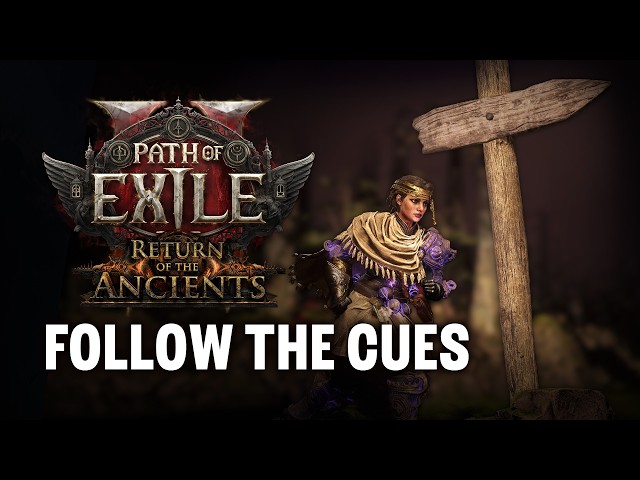
"We want players to feel the weight of their decisions," Rogers noted, "but we don’t want the complexity to be a wall that keeps people from experiencing the depth of the endgame." The inclusion of shared, community-vetted build guides within the game client is a direct response to the frustration of the player base, allowing new players to hit the ground running without spending their first 20 hours reading spreadsheets.
Implications for the Future of PoE 2
The "Return of the Ancients" patch is widely viewed as the "final rehearsal" before the game’s official 1.0 launch. By implementing these sweeping changes now, GGG is stress-testing their vision for the game’s long-term sustainability.
The move away from "instantaneous" mechanics—whether it be instant leech or instant ES recovery—signals a design shift toward a more methodical, skill-expressive combat system. Players will no longer be able to ignore boss mechanics through sheer sustain; they will now be required to engage with the environment, dodge telegraphed attacks, and manage their resources with greater precision.
As we look toward the launch on May 29, the community remains divided but engaged. Some veteran players lament the loss of the "fast and loose" playstyle of the past, while others praise the return of challenge to the endgame. Regardless of which side of the fence you sit on, one thing is certain: the Runes of Aldur league will be a defining moment for the title. With the 1.0 launch scheduled for late 2026, this patch is the foundation upon which the future of Path of Exile 2 will be built. Whether it holds up under the weight of the upcoming expansion remains to be seen, but for now, the path forward is clear: adapt, innovate, or face the consequences of a much more dangerous endgame.

 Basiran
 Asep Darmawan