Lina Irawan
For years, the name ThermoWorks has been synonymous with the gold standard of culinary thermal monitoring. From the lightning-fast Thermapen to the sophisticated multi-probe RFX wireless monitoring systems, the company has built its reputation on the bedrock of "supreme accuracy." However, the Utah-based manufacturer is now signaling a strategic pivot, moving beyond the world of temperature probes and into the realm of mass measurement.
With the launch of the Gravitas, ThermoWorks is officially entering the kitchen scale market. This isn’t just a simple entry-level product; it is a calculated attempt to disrupt the high-end kitchen gear sector by applying the same rigorous, lab-grade calibration standards that defined their thermometers to the process of weighing ingredients.
Main Facts: A New Benchmark for Kitchen Precision
The Gravitas is not merely a tool for weighing flour and sugar; it is an exercise in engineering designed to solve the most common frustrations experienced by professional chefs and home cooks alike.
Core Specifications
- Precision: Measurements down to 0.1 grams (0.001 ounces).
- Capacity: Maximum weight limit of 11 pounds (5 kilograms).
- Calibration: NIST-traceable certified calibration, ensuring accuracy to within 0.7 grams.
- Connectivity: 2.4GHz RF wireless connection (non-Bluetooth/Wi-Fi).
- Durability: IP66 water-resistance rating.
- Battery Life: 300 hours for the base unit; 350 hours for the display.
- Price: $119, available in five colors (charcoal, red, white, blue, and yellow).
The most striking departure from traditional scale design is the detachable, wireless display. By utilizing a proprietary 2.4GHz RF connection—a deliberate choice to avoid the pitfalls of finicky Bluetooth pairing or Wi-Fi latency—ThermoWorks allows users to separate the readout from the base. This solves the "oversized bowl" problem, where the contents of a mixing bowl often obscure the digital display, leading to measuring errors or the need for awkward, neck-craning adjustments.
The Chronology of Development
The journey of the Gravitas began long before its public unveiling. For years, ThermoWorks has been collecting feedback from its professional user base—caterers, bakers, and pitmasters—who consistently noted that while their temperature control was perfect, their weighing tools were often inconsistent or fragile.
- The Research Phase (2021–2022): ThermoWorks engineers began analyzing the failure points of industry-standard scales. Common complaints centered on "auto-off" features that cut power too quickly, fragile construction, and lack of water resistance.
- The Prototyping Phase (2023): The company pivoted to a modular design. The challenge was maintaining a stable wireless connection between the base and the display without requiring the user to "pair" devices. The 2.4GHz RF solution was selected for its instant-on capability.
- The Calibration Testing (Early 2024): Applying their experience with NIST-traceable thermal calibration, the team developed a rigorous testing protocol for the Gravitas load cells. This ensures that the scale provides consistent, repeatable results under various environmental conditions.
- The Official Launch (Late 2024): The Gravitas was officially announced to the market, marking the most significant product expansion in the company’s recent history.
Supporting Data: Why Accuracy Matters
In the world of high-end baking and molecular gastronomy, weight is the only currency that matters. While home cooks often rely on "cups" and "spoons," these volumetric measurements are notoriously inaccurate due to the density of ingredients.
ThermoWorks’ decision to highlight NIST-traceable calibration is a direct appeal to the "data-driven" cook. By guaranteeing accuracy to within 0.7 grams, the Gravitas positions itself as a scientific instrument rather than a kitchen gadget.
Furthermore, the scale’s memory function addresses a common workflow interruption. The Gravitas enters a standby mode after five minutes of inactivity, but it retains the last measurement in its memory for an additional 15 minutes. This 20-minute window is designed for bakers who may need to step away from the bench to attend to other tasks—such as checking a roast in the oven—without returning to find a blank screen and an empty memory.
Official Perspectives: The Philosophy of Design
ThermoWorks has long maintained that their products are designed for "the hardest working kitchens." Their design language—utilizing industrial-grade plastics, tactile buttons, and high-visibility backlighting—is fully present in the Gravitas.
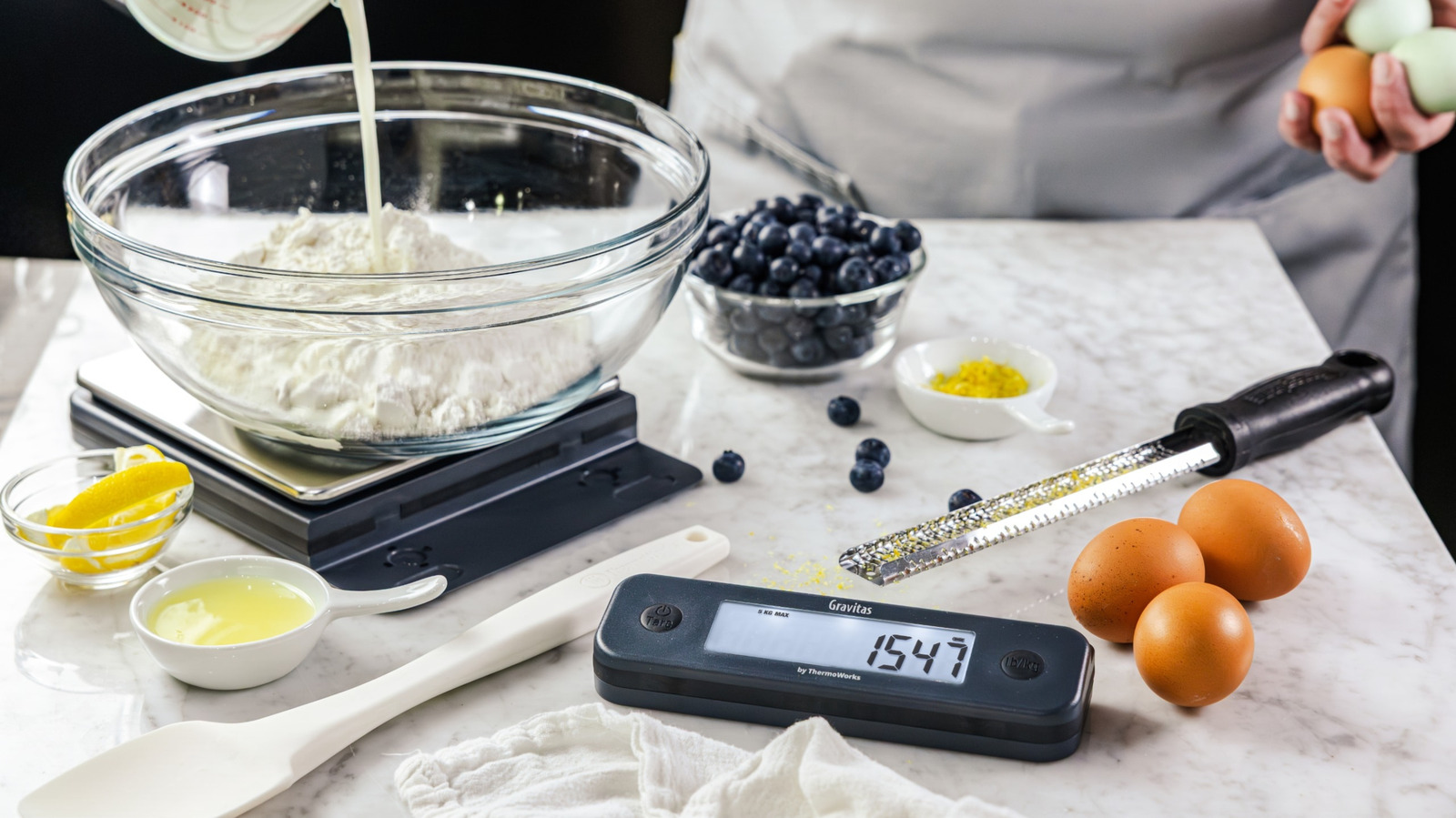
According to internal statements, the design team focused heavily on the ergonomics of the display. Beyond the wireless capability, the display includes integrated magnets, allowing it to be mounted to the side of a refrigerator or a stainless steel workstation. The 180-degree auto-rotation ensures that no matter how the display is oriented—upside down, sideways, or tucked into a corner—the numbers remain readable.
The IP66 rating is also a significant point of pride for the company. IP66 indicates that the unit is "dust-tight" and protected against powerful water jets. In a professional kitchen, where flour dust and liquid spills are constant, the ability to clean a scale without fear of internal circuitry damage is a massive leap forward in longevity.
Implications for the Kitchen Tech Market
The launch of the Gravitas has several significant implications for the future of kitchen hardware:
1. The Death of Bluetooth?
By bypassing Bluetooth in favor of 2.4GHz RF, ThermoWorks is making a statement about reliability. Users have grown weary of "smart" kitchen devices that require smartphone apps, firmware updates, and constant troubleshooting. By creating a self-contained, "it just works" ecosystem, ThermoWorks is betting that consumers value reliability over the aesthetic of app-based connectivity.
2. Standardizing Calibration
By bringing the concept of NIST-traceable calibration to a mass-market kitchen scale, ThermoWorks is raising the bar for competitors. Other manufacturers may soon find themselves under pressure to provide similar certifications, effectively forcing a "quality arms race" in the kitchen gadget industry.
3. Cross-Category Synergy
ThermoWorks is clearly aiming to capture the entire "prep" workflow. By owning the temperature measurement market and now entering the mass measurement market, they are becoming a one-stop-shop for the serious home cook. If a user already trusts their Thermapen, the "Gravitas" becomes the obvious, low-risk choice for their next equipment upgrade.
Conclusion: A New Standard?
The ThermoWorks Gravitas is an ambitious product that successfully balances high-level engineering with the practical needs of the culinary world. Its wireless, detachable display is a genuine innovation that removes a decades-old friction point in the kitchen.
While $119 is a premium price point for a kitchen scale, the combination of industrial durability (IP66), long battery life, and the peace of mind offered by certified calibration suggests that the Gravitas is not just another kitchen tool. It is an investment in consistency. As the company ventures into this new category, the industry will be watching closely to see if their "thermometer-grade" reputation translates to the scale. If the early response is any indication, ThermoWorks may have just secured another essential spot on the kitchen counter.

 Jia Lissa
 Neng Nana