

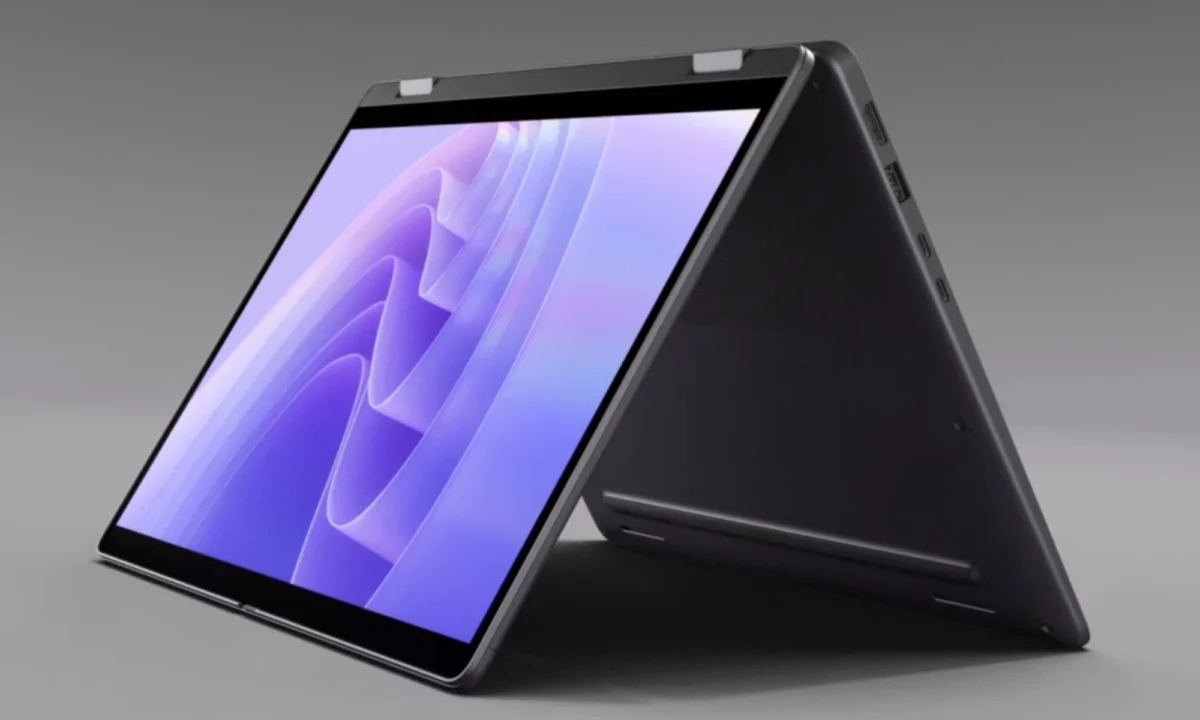
In a move that signals a fundamental shift in the landscape of mobile computing, Dell has unveiled a comprehensive update to its business laptop portfolio. Announced on May 29, 2026—just days before the industry spotlight shifts to Computex 2026 in Taipei—the new range of devices marks a clear departure from the traditional paradigm of cellular connectivity. By integrating 5G as a staple, rather than a specialized luxury, across its flagship Pro 7 Series, Dell is asserting that high-speed, persistent internet access is no longer a niche enterprise requirement; it is a baseline necessity for the modern professional.
Main Facts: The New Standard for Connectivity
Dell’s latest release represents a high-water mark for hardware versatility. While the tech industry has long debated the utility of cellular-enabled laptops, Dell has effectively ended the conversation by embedding 5G options into the very heart of its flagship 2-in-1 lineup.
The new batch of devices is led by the Pro 7 Series 13 and Pro 7 Series 14 2-in-1s, which serve as the standard-bearers for this new strategy. These machines are not merely "connected laptops"; they are high-performance mobile workstations designed to eliminate the reliance on public Wi-Fi or tethering to a smartphone. By prioritizing 5G integration in these premium chassis, Dell is catering to a workforce that is increasingly untethered from the office, demanding reliable, secure, and lightning-fast connectivity regardless of their geographic location.

Chronology: A Calculated Lead-up to Computex 2026
The timing of this announcement is far from coincidental. By launching on May 29, Dell has successfully captured the attention of the tech press and corporate procurement officers ahead of the chaotic influx of news expected from Computex, which begins on June 2.
- Early May 2026: Speculation mounts regarding Dell’s roadmap for the second half of the year as leaked certification documents hint at new cellular-enabled hardware.
- May 29, 2026: Official launch of the Pro 7 Series 13 and 14, along with the Pro Precision 5 and Pro 3 Series.
- May 30–June 1, 2026: Initial industry analysis begins to coalesce around the "Always-Connected" initiative.
- June 2, 2026: Formal showcase at Computex in Taipei, where Dell is expected to provide live demonstrations of the 5G capabilities in real-world environments.
Supporting Data: Specifications and Configurations
The technical specifications of the new 5G-enabled fleet reflect a commitment to cutting-edge performance. Dell has not sacrificed power for connectivity; instead, they have managed to house sophisticated modems alongside the latest silicon from Intel and AMD.
The Pro 7 Series 13 2-in-1
The 13-inch variant is a marvel of miniaturization and power. Available in two distinct silicon configurations, it offers users a choice between Intel’s latest architecture and AMD’s Ryzen AI prowess.

- Intel Panther Lake Configuration: Starting at $2,539 (custom) or $2,989 (pre-configured), this model can be pushed to a staggering $6,353. Key specs include a 16-core Intel Core Ultra 7 366H processor, 64GB of LPDDR5X RAM, and a 2TB PCIe Gen 5 SSD.
- AMD Ryzen AI 400 Configuration: Starting at $2,421, this model is built for efficiency, featuring the Ryzen AI 9 HX Pro 470, 64GB of LPDDR5X-8533 RAM, and similarly high-speed storage.
- Shared Connectivity: Both models feature Wi-Fi 7 and the critical optional 5G module, ensuring that users have the fastest local and wide-area network options available.
The Pro 7 Series 14 2-in-1
For professionals requiring a larger canvas, the 14-inch model offers the same flexibility as its smaller sibling.
- AMD Variant (P704265): Starts at $2,552.
- Intel Variant (P704260): Starts at $2,719.
Both models support the same robust 64GB RAM and 2TB SSD ceilings, solidifying their status as top-tier productivity tools.
The Non-5G Workstations: Performance Without the Cellular Premium
Dell also recognized that not every role requires cellular mobility. The Pro Precision 5 Series 14 (PW514261), starting at $2,577, targets high-end workstation users who operate primarily in fixed locations. Notably, this model includes an option for Ubuntu Linux 24.04 LTS, signaling continued support for the developer and data science communities.
At the entry level, the Pro 3 Series 14 and 16 ($1,579 and $1,569 respectively) utilize Intel’s "Wildcat Lake" processors. While these lack the 5G option, they provide an attractive price-to-performance ratio, boasting 120Hz displays and up to 48GB of RAM.

Official Responses and Strategic Rationale
While Dell’s spokespeople have kept their comments strictly focused on the product capabilities, the subtext is clear. By integrating 5G, Dell is positioning itself as the primary partner for organizations engaged in "Digital Transformation 2.0."
In the wake of global shifts in work patterns, corporate IT departments have struggled with the security risks associated with public Wi-Fi. 5G, with its inherent encryption and private network capabilities, offers a "Zero Trust" hardware solution. By making it a standard option in the Pro 7 series, Dell is essentially making it easier for IT managers to deploy "always-secure" machines. The strategy is clear: provide the hardware that allows employees to work anywhere, with the security protocols that keep the enterprise safe.
Implications: The Death of the "Niche" Laptop
The broader implications of this release are profound. For years, cellular connectivity in laptops was restricted to "Executive Class" ultraportables, often costing a significant premium and requiring specialized IT provisioning.

1. The Normalization of Always-Connected Tech
Dell’s decision to move 5G into its mainstream business lines will inevitably put pressure on competitors like Lenovo and HP to follow suit. When a premium business laptop is defined by its ability to remain connected, the lack of 5G will start to look like a hardware deficiency rather than a cost-saving measure.
2. The Impact on Infrastructure
As more laptops ship with 5G, demand for 5G data plans will grow, incentivizing telecommunications providers to expand coverage and offer more flexible enterprise data tiers. This creates a virtuous cycle: better laptop connectivity drives better network adoption, which in turn justifies the development of even more capable, data-hungry mobile applications.
3. The Future of the "Office"
The office is no longer a building; it is the sum of the connections between a user and the cloud. By ensuring that its most powerful laptops are inherently connected to the fastest mobile networks, Dell is leaning into a future where the desk is wherever the user happens to be.

4. A Challenge to Apple
While the Apple ecosystem remains dominant in certain creative sectors, the "always-connected" argument is one that Windows manufacturers like Dell are currently winning. By offering granular choices—Intel vs. AMD, 13-inch vs. 14-inch, 5G vs. standard Wi-Fi—Dell provides a level of customization that the rigid, singular product strategy of the MacBook often lacks.
Conclusion
The launch of the Pro 7 Series is a definitive statement from Dell. It is a recognition that the modern professional is a digital nomad, whether they are working from a high-speed train, a remote job site, or an airport lounge. By lowering the barrier to entry for 5G-capable devices, Dell is not just selling laptops; it is selling the infrastructure of modern business. As Computex 2026 begins, all eyes will be on whether the rest of the industry accepts this new, connected reality as the standard for all, or if they will continue to view 5G as an outlier. For now, Dell has firmly claimed the high ground.












No comments yet. Be the first to join the conversation!