

For over a decade, Ubisoft’s Far Cry franchise has occupied a peculiar space in the gaming industry. It is a series defined by a reliable, albeit predictable, formula: drop a player into a sprawling, gorgeous, and dangerous open world, task them with dismantling a megalomaniacal regime, and provide an arsenal of toys to facilitate the ensuing chaos. With the release of Far Cry 6, the developer has attempted to iterate on this well-worn path. While the result is technically superior to its predecessor, it remains a product caught between the desire for serious narrative weight and the impulse for arcade-like absurdity.
The State of the Island: A Familiar Foundation
At its core, Far Cry 6 is an exercise in continuity. It is an absurdly large open-world shooter that demands the player capture checkpoints, dismantle propaganda infrastructure, and engage in skirmishes with hostile forces while navigating a ecosystem teeming with dangerous wildlife. The gunplay—the series’ bedrock—remains crisp and satisfying. However, these mechanical strengths are frequently obscured by Ubisoft’s characteristic design philosophy: a map so densely populated with icons and objectives that the sense of discovery is often replaced by a feeling of administrative duty.
When compared directly to Far Cry 5, the sixth installment is marginally more polished, offering a smoother traversal experience and a more vibrant, cohesive map in the island nation of Yara. Yet, the innovation is subtle. Most of the "new" features feel experimental or secondary, suggesting that the franchise is struggling to reconcile its identity as a gritty guerrilla war simulator with its legacy as a sandbox for explosive, emergent gameplay.
Chronology of a Revolution: The Narrative Arc
The narrative of Far Cry 6 is anchored by the presence of Giancarlo Esposito, whose portrayal of Anton Castillo provides the game with its most compelling element. Castillo, the dictator of Yara, is a figure of cold, calculated malice—a departure from the flamboyant, unstable villains of previous entries like Vaas Montenegro or Joseph Seed.
As the protagonist, Dani Rojas—a former military conscript turned guerrilla fighter—the player embarks on a 30 to 50-hour journey to liberate Yara from Castillo’s iron grip. The narrative structure follows a traditional path: the player must unite the island’s disparate guerrilla factions, each located in a sprawling province governed by one of Castillo’s three ruthless lieutenants.
The Tobacco Conundrum
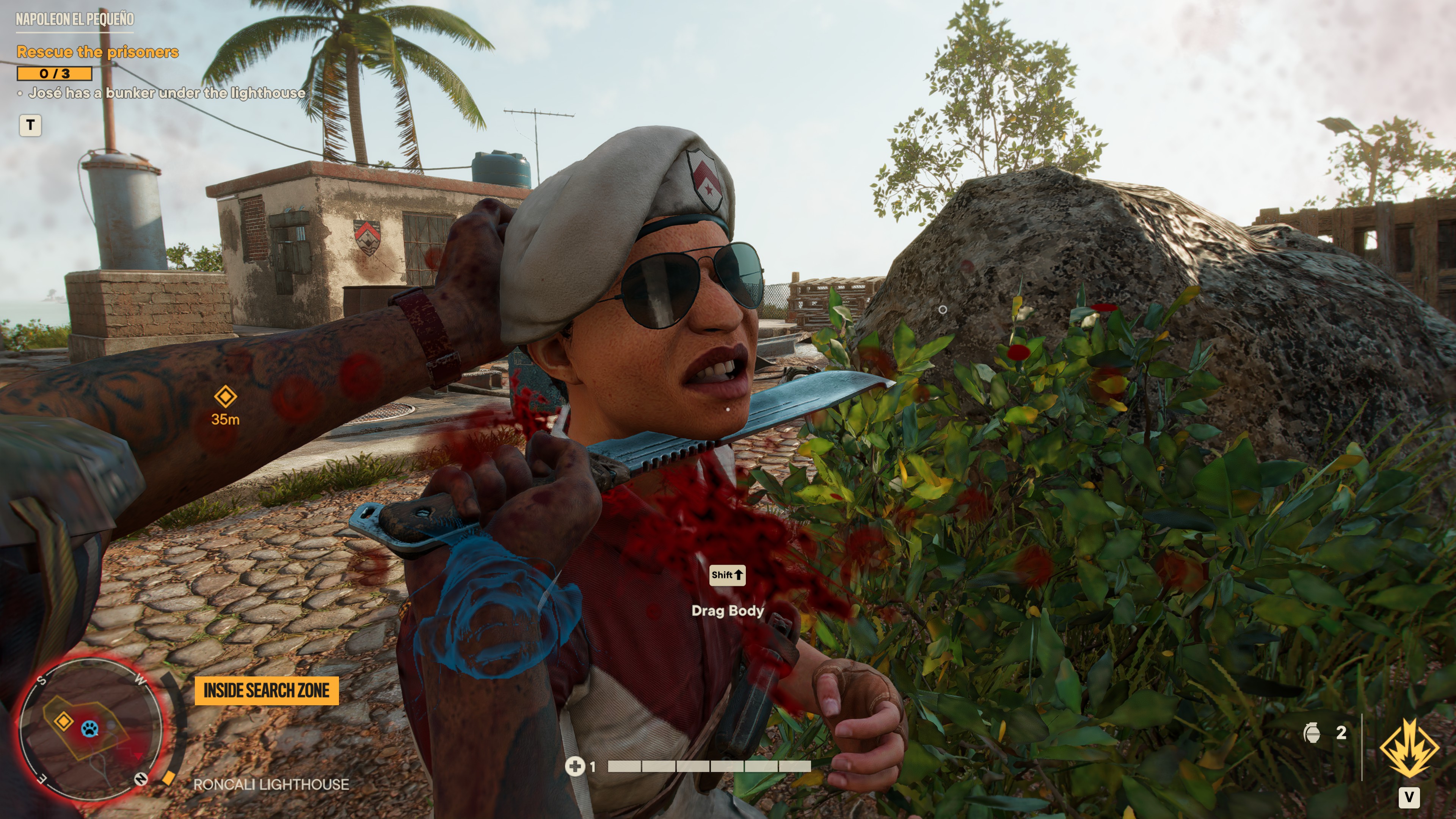
The plot itself is, frankly, a stumbling block. It centers on a dubious premise involving a revolutionary tobacco hybrid, Viviro, which is purported to cure cancer but requires a highly toxic fertilizer to cultivate. This MacGuffin serves as the catalyst for the conflict but lacks the gravity necessary to ground the player in the stakes of the revolution. The narrative frequently suffers from tonal dissonance, shifting jarringly between grim reflections on the cost of war and slapstick, "knockabout" action sequences that undermine the weight of the revolution.
Supporting Systems: Guerrilla Tactics and Technical Innovation
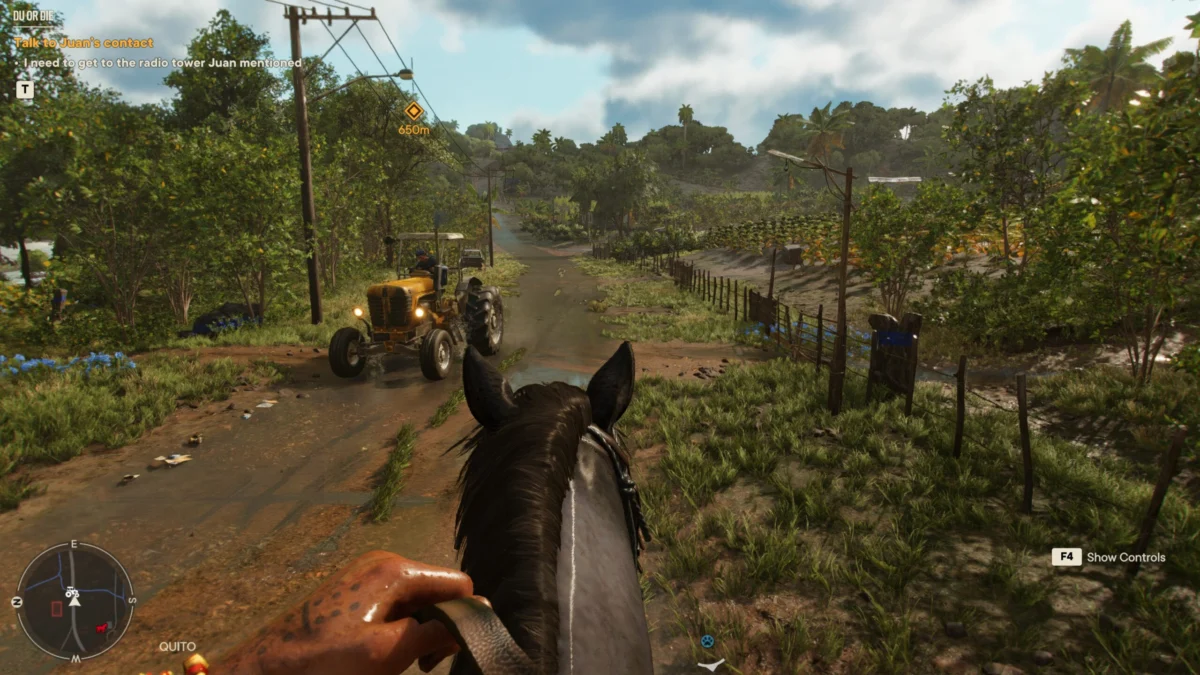
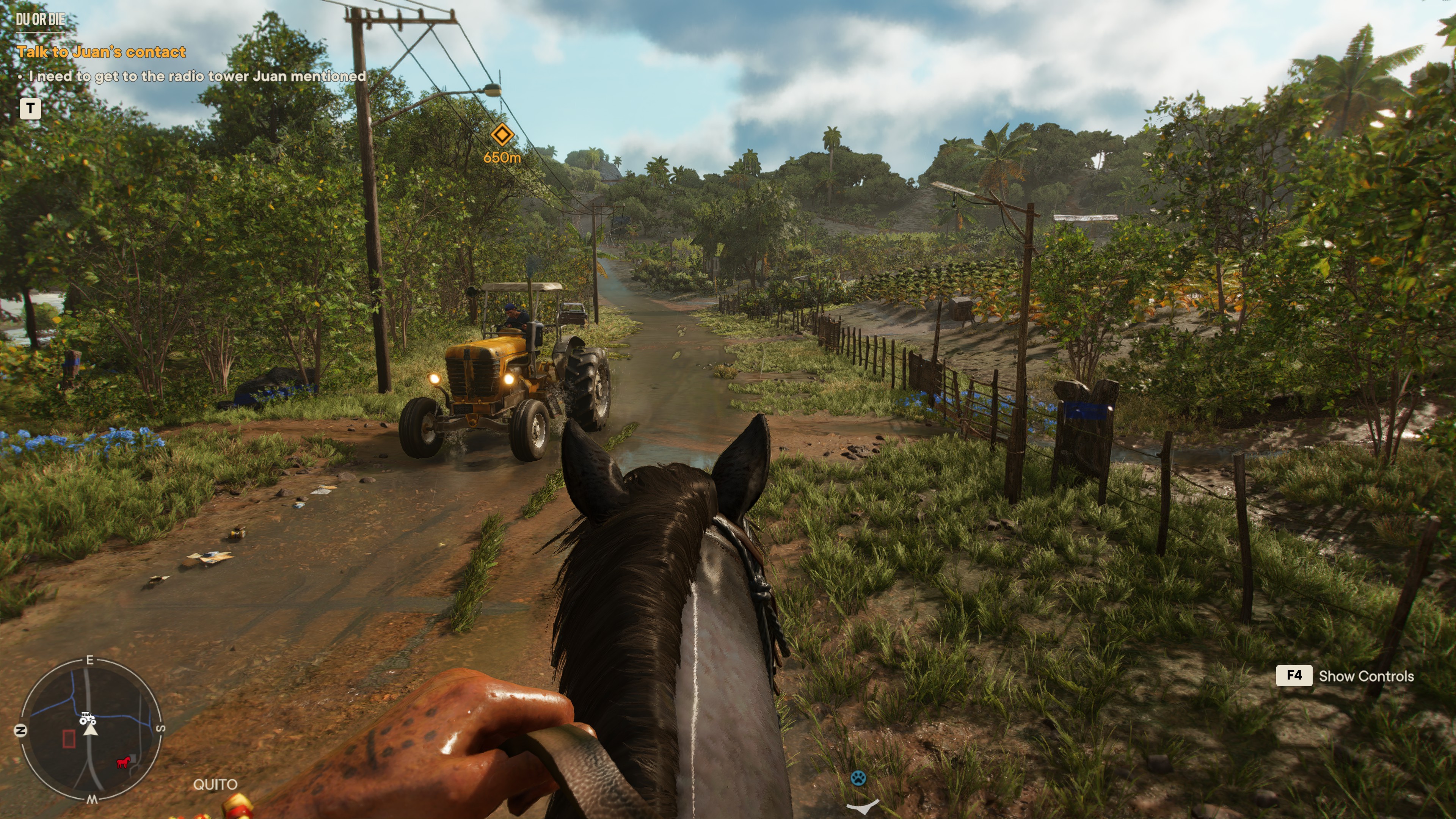
Despite the narrative inconsistencies, Far Cry 6 introduces several mechanics that attempt to embrace the theme of asymmetrical warfare. The most successful of these is the "guerrilla paths"—a network of winding, flower-lined dirt tracks that allow players to traverse the map without constantly triggering military patrols. This encourages a slower, more tactical approach to exploration, emphasizing the use of the environment through climbing, grappling, and horseback riding.
The "Resolver" Philosophy
The game introduces a new crafting and weaponry philosophy dubbed "Resolver." According to the game’s lore, the weaponsmith Juan Cortez constructs these tools from scrap metal and discarded technology. While the concept of scavenging is thematic, the execution is divisive. Some tools, such as the nailgun, feel appropriately gritty. Others, like the CD-firing launcher or the Mad Max-inspired spike thrower, lean so heavily into the absurd that they fracture the immersion of the world.
The Supremo Problem
Perhaps the most contentious addition is the "Supremo"—a modular, weaponized backpack that grants the player devastating special abilities. Whether it is a barrage of auto-targeting rockets or a ring of fire, the Supremo feels like an intrusive "press-to-win" mechanic. By providing such immense power, the game inadvertently discourages the creative, system-based problem-solving that made earlier Far Cry titles so rewarding. It is a feature that feels better suited to a sci-fi looter-shooter than a grounded guerrilla warfare game.
The Magic of Emergent Systems
When the player stops worrying about the map icons and the "Supremo" cooldowns, Far Cry 6 occasionally produces moments of genuine gaming magic. The dynamic engine that powers the island creates scenarios that are as dramatic as they are unpredictable.
In one instance, a mission to destroy a fleet of planes carrying toxic fertilizer spiraled into a complex aerial dogfight. After a stealth approach failed, the player was forced to commandeer one of the very aircraft they were tasked to destroy, using it to take down enemy air support before executing a final, explosive maneuver against the remaining grounded fleet. This capacity for spontaneous, high-stakes storytelling is the true heart of the franchise.
Similarly, smaller interactions often lead to unexpected outcomes. A simple encounter on a roadside—where a guard holds a hostage—can devolve into a chaotic scene involving the player’s crocodile companion, Guapo, and a pack of wild dogs, resulting in a series of events that feel unique to that specific moment of play.
Implications for the Series
The existence of Far Cry 6 raises significant questions regarding the future of the open-world genre. By sticking so closely to the Ubisoft formula, the game avoids the risks of failure but also misses the opportunity to evolve.
Official Perspectives and Community Reception
Ubisoft has positioned Far Cry 6 as the ultimate iteration of the series, citing the depth of the world and the flexibility of the combat as primary selling points. The inclusion of high-profile talent like Esposito was intended to elevate the storytelling, and in terms of performance, the move was successful. However, the critical consensus remains divided. Many reviewers and fans alike have noted that while the game is "fun" in the traditional sense, it feels increasingly like a product of a checklist-driven design culture.
The Cost of Iteration
The implication for the industry is clear: players are beginning to suffer from "formula fatigue." When a game has to be "pushed" to produce moments of magic, it suggests that the core loop is becoming tired. The reliance on excessive crafting resources, cryptic upgrade paths, and a bloated UI serves as a reminder that more content does not always equate to better content.
Conclusion: A Worthy, If Flawed, Experience
Is Far Cry 6 a good game? Yes. If you are looking for an open-world playground that offers a robust sandbox for chaos, it is undeniably effective. It provides hours of content, a beautifully realized tropical setting, and a refined combat engine that remains the industry standard for first-person shooters.
However, it is not the evolution that the series arguably needs. It is a game of two halves: one that is deeply concerned with the gritty, desperate nature of a revolution, and another that is preoccupied with being a noisy, colorful, and occasionally nonsensical amusement park. If you enjoyed the previous entries, Far Cry 6 is a refinement that will keep you occupied for dozens of hours. But if you were hoping for the series to break its chains and find a new identity, you may find yourself feeling as trapped as the people of Yara. Despite its flaws and its tendency to be "wilfully silly," it is a game that—when everything clicks—reminds us why we keep coming back to the Far Cry experience in the first place.











No comments yet. Be the first to join the conversation!