

In the modern professional landscape, the boundary between the office and the "remote workspace" has all but evaporated. Whether you are a digital nomad working from a bustling metropolitan coffee shop, an architect presenting at a client site, or a financial analyst juggling complex spreadsheets in a hotel lobby, the limiting factor is almost always screen real estate. For years, mobile professionals have had to choose between the portability of a single laptop screen and the productivity of a multi-monitor desktop setup.
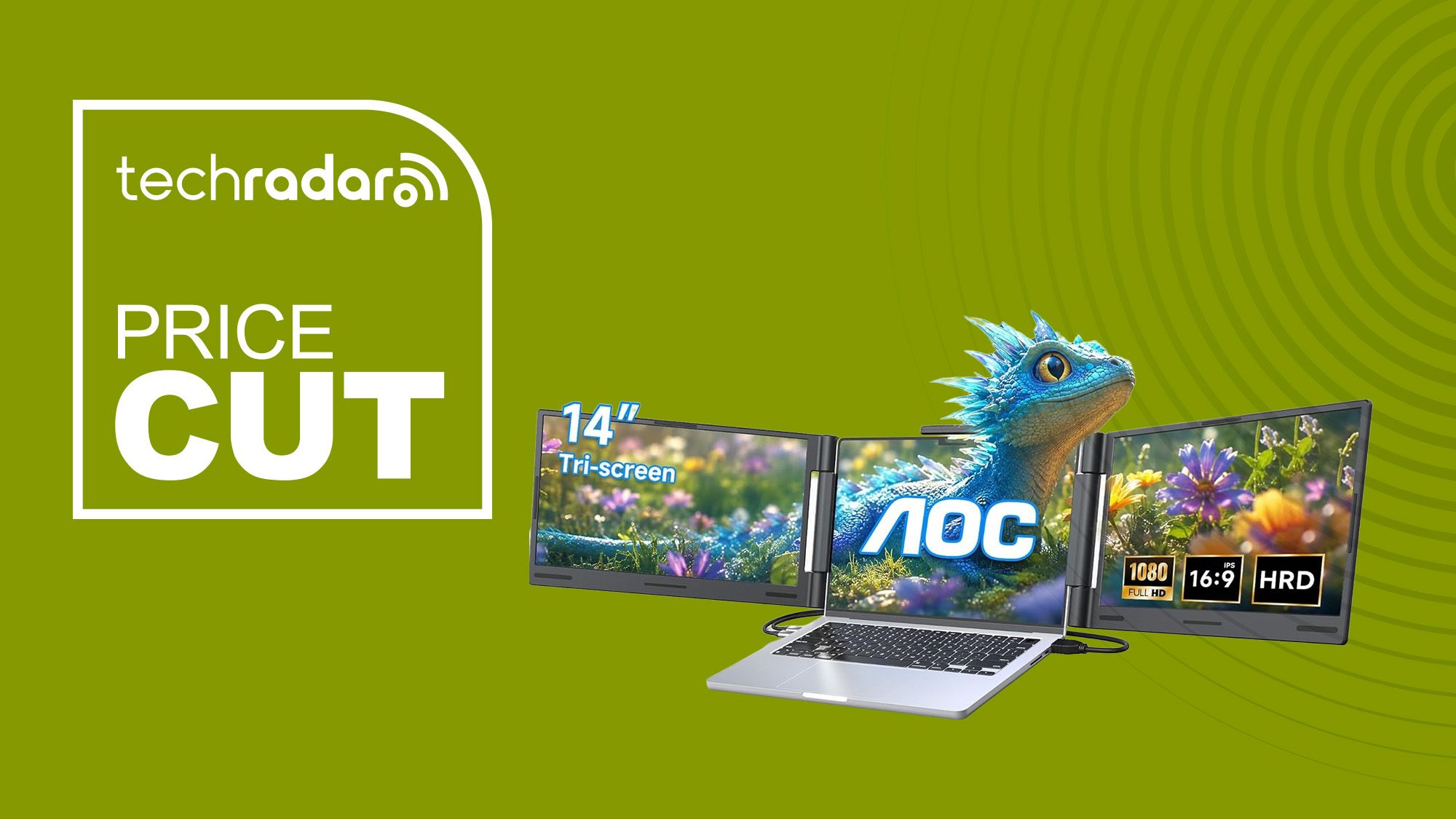
AOC, a leader in display technology, has bridged this divide with its 14-inch laptop screen extender, a device currently available at a compelling price point. For a limited time, you can snag this AOC 14-inch triple-monitor solution for $230 at Amazon, a significant $70 discount off its standard $300 retail price. This article explores why this hardware is becoming a staple for the modern professional and what you need to consider before making the upgrade.
The Core Concept: Desktop Power in a Backpack
The primary challenge of mobile computing has always been the "one-screen tax." Studies have consistently shown that multi-monitor setups increase productivity by allowing users to reference source material on one screen while drafting content on another, effectively eliminating the need for constant window switching.
The AOC 14-inch extender addresses this by clipping onto your existing laptop lid. Once deployed, the two side monitors swing out to create a seamless, three-screen panoramic workspace. The genius of the design lies in its portability; when the workday concludes, the panels fold flat against the back of your laptop, occupying a minimal footprint in your bag.
Supporting Data: Why Extra Screen Real Estate Matters
According to various workplace efficiency studies, users who transition from a single monitor to a multi-monitor setup experience a performance gain of roughly 20% to 30%. This is attributed to:
- Reduced Cognitive Load: Users don’t have to "remember" what was on the other tab.
- Faster Navigation: Reducing Alt-Tab fatigue saves precious seconds per minute, which aggregates to hours over the course of a work week.
- Enhanced Multitasking: The ability to keep communication apps (like Slack or Teams) open on a side monitor while focusing on primary tasks reduces the risk of missing critical updates.
Chronology of the Portable Monitor Evolution
The trajectory of portable displays has been rapid. In the early 2010s, "portable monitors" were heavy, clunky, and required their own bulky power bricks. They were impractical for anything other than static, long-term setups.
- The "USB-Monitor" Era (2012–2016): These early iterations were plagued by poor resolution and massive latency, often requiring proprietary drivers that frequently crashed or caused system instability.
- The Rise of USB-C Power Delivery (2017–2020): The standardization of USB-C (DisplayPort Alt Mode) revolutionized the industry. Suddenly, a single cable could carry both video data and sufficient power to light up a secondary display.
- The "Triple-Display" Breakthrough (2021–Present): AOC and other manufacturers capitalized on the slim-bezel trend to create "fold-out" systems. The current AOC model represents the culmination of this evolution, offering 1080P IPS quality with true "plug-and-play" functionality.
Technical Specifications and Performance
The AOC 14-inch extender is not just a novelty; it is a high-functioning piece of equipment designed for professional use.
Display Quality
The panels are FHD (1920 x 1080) IPS units. The choice of In-Plane Switching (IPS) technology is critical here. Unlike TN (Twisted Nematic) panels, which suffer from color inversion when viewed from an angle, IPS panels maintain color accuracy and brightness even at wide viewing angles. This is vital for a triple-monitor setup, where the side screens are inherently angled toward the user.
Connectivity and Compatibility
The device utilizes a plug-and-play architecture. On most modern Windows and Chrome OS devices, the screens are recognized immediately upon connection via HDMI or USB-C. No software installation is required, which is a major advantage for corporate employees who often face locked-down IT environments that prevent the installation of third-party drivers.
Important Considerations for Apple Users
While the hardware is highly compatible with Windows, Mac users must exercise caution. Apple’s silicon (the M1, M2, and M3 chips) poses a specific challenge to this multi-monitor setup.
The Apple Silicon Constraint
Due to technical limitations within the base-model Apple silicon chips, the machines only support one external display natively via their Thunderbolt/USB-C ports. If you plug in both panels of the AOC extender, you may find that they either mirror each other or only one functions.
- The Workaround: To use both screens on a base-model MacBook, you will need a DisplayLink-compatible adapter. DisplayLink bypasses the standard video output limitations by using a software-based "virtual" graphics card to send video data over a standard USB stream.
- The Exception: Users with M-series "Pro," "Max," or "Ultra" chips, as well as those on older Intel-based Macs, do not face this limitation and can typically use the setup natively.
We strongly advise checking your specific machine’s capabilities before purchasing to ensure you aren’t disappointed by the "plug-and-play" experience.
Implications for the Modern Workplace
The shift toward hybrid and remote work has made the "mobile office" a permanent fixture of our professional lives. The implications of owning a triple-monitor portable setup are twofold:
1. Increased Professional Flexibility
The ability to replicate a "desk" environment anywhere removes the geographic constraints of work. If you can set up a stable workspace in a hotel, you are no longer limited to working from home or a traditional office.
2. Ergonomics and Health
While portability is the main selling point, users should also consider the ergonomic benefits. By raising your primary laptop screen to eye level and utilizing the side monitors, you can create a more ergonomic viewing angle that reduces neck strain—provided you have a portable laptop stand to match.
Conclusion: Is it Right for You?
The AOC 14-inch laptop screen extender at $230 is an investment in your own efficiency. It is ideally suited for:
- Coders and Developers: Keeping documentation or terminal windows open on side screens.
- Financial Analysts: Keeping Excel sheets visible while reviewing market data.
- Content Creators: Managing editing timelines across multiple panes.
While the "Apple silicon" caveat is a point of friction for some, for the vast majority of Windows users, this device offers an unparalleled boost to screen real estate without the weight of carrying an extra monitor. In a world where time is our most valuable currency, the ability to work faster and more efficiently is worth every penny of the $230 investment.
Disclaimer: Prices and availability are subject to change. This article contains affiliate links that help support our editorial team.











