Siti Muinah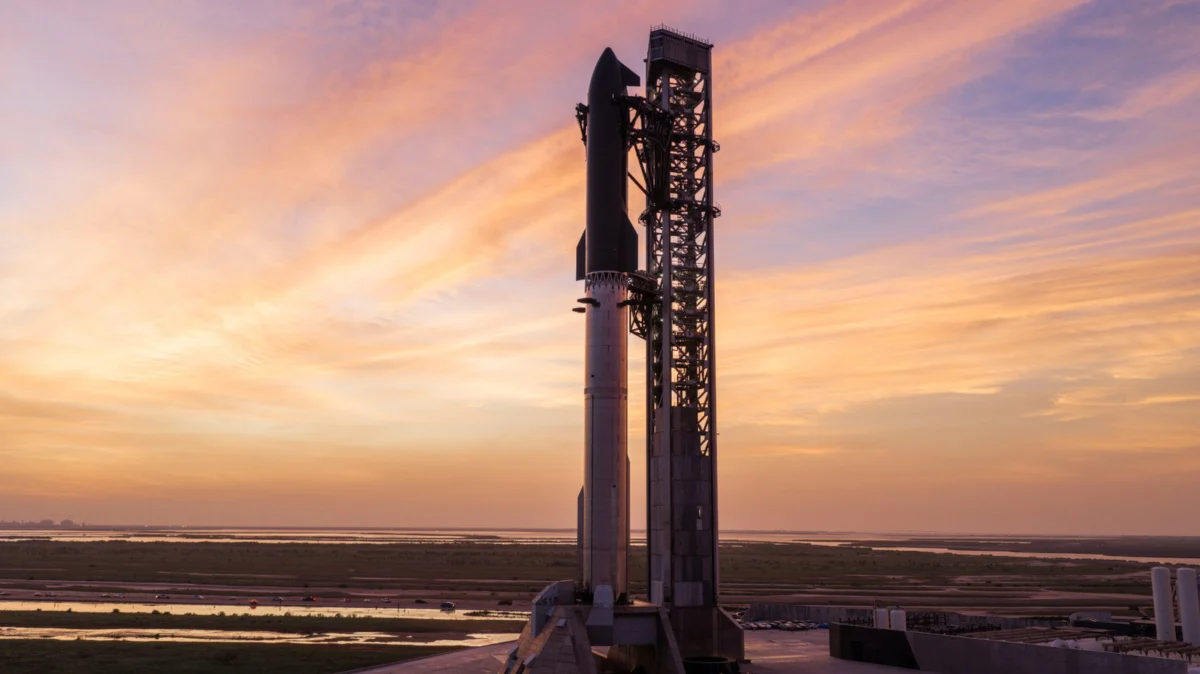
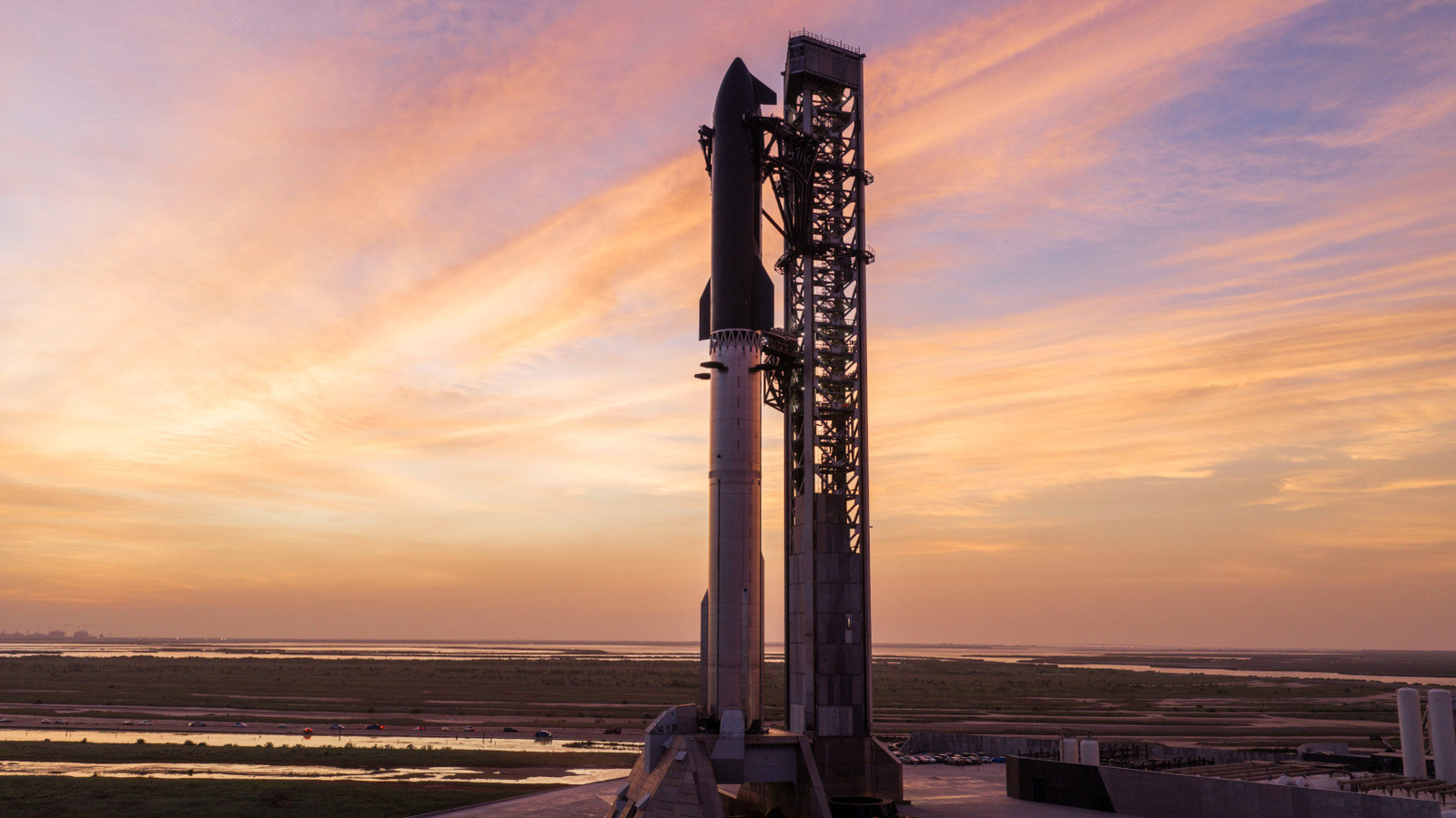
In the ongoing saga of the most ambitious aerospace project in human history, SpaceX has successfully completed the 13th test flight of its Starship launch vehicle. Following a series of weather-related delays that kept the massive rocket grounded at Starbase, Texas, the V3 iteration of the Starship roared to life, carrying with it a payload that signals the future of global satellite internet: the next-generation V3 Starlink satellites. While the mission provided critical data for SpaceX’s iterative engineering process, it also highlighted the inherent risks of testing experimental technology, as both the satellite payload and the Super Heavy booster met dramatic ends.
Main Facts: The Mission Profile
The 13th flight test was characterized by two primary objectives: validating the high-capacity performance of the V3 Starlink architecture and further refining the recovery systems for the Super Heavy booster.
The Starlink V3 satellites represent a quantum leap in orbital connectivity. According to SpaceX, these units are designed to deliver up to 1 Tbps of downlink capacity—a tenfold increase over the current V2 fleet—and 160 Gbps of uplink capacity, representing a staggering 22-fold improvement. These metrics are essential for SpaceX as it attempts to move beyond providing simple consumer internet and into the realm of enterprise-grade, high-throughput global connectivity.
However, the 20 satellites deployed during this mission were never intended for long-term orbital service. They served as "pathfinders," designed to test the deployment mechanism, solar array extension, and high-capacity laser inter-satellite links. Perhaps most innovatively, two of these satellites were equipped with specialized cameras designed to inspect the Starship vehicle’s heat shield during flight, providing ground control with real-time imagery of the ship’s structural integrity under extreme conditions.
Chronology of the 13th Flight
The mission began with a smooth lift-off from Starbase, marking the second outing for the refined V3 Super Heavy booster.
T+0 Minutes: Ignition and Liftoff. The 33 Raptor engines on the Super Heavy booster ignited, propelling the massive stack into the sky.
T+2 Minutes 45 Seconds: Stage Separation. The Super Heavy booster successfully separated from the Starship upper stage. Following separation, the booster executed a precise directional flip maneuver to prepare for its return to Earth.
T+3 Minutes: Boostback Burn. The booster attempted a high-thrust boostback burn utilizing its full complement of 33 engines. However, telemetry indicated that the burn was terminated prematurely due to an undisclosed technical anomaly.
T+8 Minutes: Deployment and Inspection. The Starship upper stage deployed the 20 V3 Starlink satellites. The satellites immediately deployed their arrays and initiated inter-satellite laser handshakes. Meanwhile, the specialized "spy" satellites began transmitting high-definition imagery of the Starship’s heat shield back to the ground.
T+28 Minutes: Re-entry. In accordance with the mission plan, the 20 Starlink satellites were allowed to de-orbit, entering the atmosphere where they burned up. This was a planned "disposable" test to ensure no debris remained in orbit.
T+30 Minutes: Final Descent. The Super Heavy booster attempted a controlled landing burn in the ocean. However, only a subset of the 33 engines successfully re-ignited. The resulting imbalance caused the booster to lose stability, leading to a high-velocity impact and subsequent explosion upon contact with the water.
Supporting Data: The Leap in Satellite Performance
The transition from V2 to V3 Starlink hardware is not merely an incremental update; it is a fundamental shift in how SpaceX views space-based infrastructure.
Performance Comparison Table
| Metric | V2 Satellite | V3 Satellite | Improvement |
|---|---|---|---|
| Downlink Capacity | 100 Gbps | 1,000 Gbps (1 Tbps) | 10x |
| Uplink Capacity | 7.2 Gbps | 160 Gbps | ~22x |
| Design Intent | Consumer Broadband | Enterprise/Heavy Data | Massive Scaling |
The data collected from the V3 satellites—specifically their ability to handle massive throughput while maintaining precise laser alignment—will be crucial for the company’s plans to expand its network to support mobile backhaul, maritime logistics, and aviation connectivity on an unprecedented scale.
Official Responses and Engineering Challenges
SpaceX has maintained a transparent, if stoic, stance regarding the mission’s outcome. Through their official communication channels, including live streams and social media updates, the company emphasized that the mission was, by design, a "test flight."
"Each flight is an opportunity to collect data that we cannot simulate on the ground," a company spokesperson noted. The loss of the Super Heavy booster is viewed not as a failure, but as a "necessary cost of rapid iteration." Engineers are currently analyzing the data logs from the 33-engine array to understand why a portion of the engines failed to relight. The goal remains consistent: perfecting a fully and rapidly reusable launch system that can land, refuel, and launch again within hours, rather than months.
Implications for the Future of Spaceflight
The implications of this 13th flight are broad, affecting both the commercial space industry and the future of global telecommunications.
1. Reusability and Economic Viability
The ultimate goal of the Starship program is to drive the cost of orbital payload delivery down to a point where space becomes accessible for large-scale industrial and scientific missions. The failure of the Super Heavy booster to land safely reminds stakeholders that the "rapid" part of "rapid reusability" is still an elusive target. SpaceX’s competitors are watching closely; if SpaceX masters the landing of a rocket of this scale, the traditional aerospace model—reliant on expensive, expendable boosters—will be rendered obsolete.
2. The Global Connectivity Race
With the successful validation of the V3 architecture’s laser links, SpaceX has effectively secured its lead in the global satellite internet race. By increasing capacity by such a significant margin, SpaceX is positioning itself to compete not just with satellite providers, but with terrestrial fiber-optic networks. The ability to scan and inspect the launch vehicle in real-time using its own satellite network further proves the ecosystem-based approach of Elon Musk’s companies.
3. Safety and Environmental Considerations
The incineration of 20 satellites upon re-entry is a standard procedure for test units, but as the scale of Starlink expands to tens of thousands of satellites, questions regarding space debris and atmospheric impact will continue to grow. SpaceX is under increasing pressure to demonstrate that its "disposable" approach to testing and hardware rotation does not contribute to long-term orbital pollution.
Conclusion
The 13th Starship test flight was a masterclass in the "fail fast, learn faster" philosophy that has defined SpaceX’s trajectory. While the explosion of the Super Heavy booster served as a sobering reminder of the extreme physics involved in landing a skyscraper-sized machine, the mission was a qualified success in its primary goals. The V3 Starlink satellites successfully proved their high-capacity communication capabilities, and the integration of orbital inspection technology promises to revolutionize how engineers monitor spacecraft during flight.
As SpaceX pivots toward the 14th flight, the focus will undoubtedly be on engine reliability and perfecting the landing sequence. The path to the Moon, Mars, and beyond is paved with the charred remains of test articles, and Flight 13 has provided the necessary data to ensure that the next version of the Starship is closer to the final, reusable design that will fundamentally change the nature of human activity in space.

 Ali Ikhwan
 Asep Darmawan