Laily UPN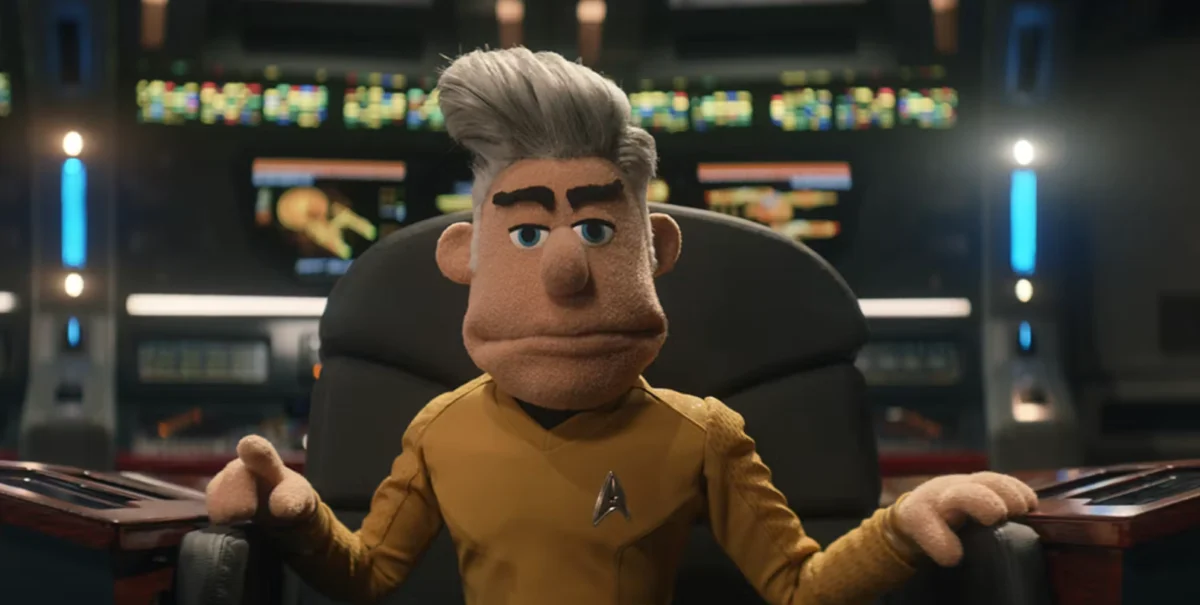
For fans of Star Trek: Strange New Worlds, the episode "Level-Five Transporter Accident" remains one of the most polarizing entries in the series’ sophomore season. The episode, which saw the crew of the U.S.S. Enterprise transformed into literal puppets, was met with a mixture of delight, confusion, and mild frustration regarding its narrative resolution. The revelation that the entire puppet-based ordeal was, in fact, a dream experienced by Commander Spock struck many as a classic, if somewhat exhausted, television trope.
Yet, beneath the surface of the "it was all a dream" conclusion lies a complex web of creative intent, technical ambition, and the show’s ongoing struggle to balance high-concept experimentation with the established canon of the Star Trek universe. In a recent interview, showrunner Henry Alonso Myers and executive producer Akiva Goldsman opened up about the logistical, creative, and philosophical hurdles that brought this unconventional hour of television to life.
The Core Concept: Why Puppets?
The primary criticism directed at "Level-Five Transporter Accident" concerns its narrative utility. Why subject the audience—and the characters—to a puppet-based reality only to reveal it as a subconscious fabrication? According to Henry Alonso Myers, the answer lies in the show’s mission to constantly push the boundaries of what a modern Star Trek episode can be.
"We spent a lot of time trying to basically make sure that it worked and felt genuinely like a Star Trek episode," Myers stated in his interview with TV Insider. "Yes, we were going to have fun. Yes, we were going to do all of these things, but if it doesn’t feel like Star Trek, what are we doing? That was what we had to hold to throughout the entire episode."
The decision to utilize puppets wasn’t a whimsical whim; it was a deliberate choice to explore the "transporter accident" sub-genre of the franchise. While transporters are central to the Star Trek mythology, they have historically been used for dramatic, scientific, or occasionally tragic ends. By shifting the consequences of a transporter malfunction into the realm of the absurd, the writing team sought to pay homage to the series’ history of "big and bold" storytelling.
A Chronology of Chaos: From Script to Screen
The development of the episode was a feat of coordination. The script, co-written by Myers and Dana Horgan, was designed specifically to capitalize on the unique visual language of puppetry. Unlike traditional episodes that rely on actors’ nuanced facial expressions and blocking, this episode required the crew to adapt their performances to suit the limitations and potential of puppets.
Phase 1: Conceptualization
The writers identified a gap in the Strange New Worlds anthology format: they had yet to tackle a classic, high-stakes transporter malfunction. The team challenged themselves to move past the traditional "split personality" or "displaced in time" tropes, opting instead for a complete physical transmutation.
Phase 2: Technical Execution
The physical creation of the puppets involved a massive collaborative effort between the art department and professional puppeteers. The goal was to ensure the puppets were recognizable as the characters (Spock, Chapel, M’Benga, etc.) while retaining the charm of the medium. This required extensive rehearsals, as the cast had to learn to move in synchronization with the puppet operators.
Phase 3: The Narrative Pivot
As the story reached its climax, the team faced a dilemma: how to reset the U.S.S. Enterprise to its status quo without spending half the episode on medical hand-waving. The dream sequence served as the "narrative reset button." While this decision has been flagged by critics as a "dodgy trope," the writers argue it allowed them to lean into the absurdity without permanently altering the character dynamics of the show.
Supporting Data: The "Big and Bold" Mandate
The internal logic of Strange New Worlds has always been to experiment with tone. The show has successfully balanced horror, lighthearted comedy, and hard sci-fi within a single season. The "puppet episode" is the extreme end of this spectrum.
Myers explained that a single puppet would have been insufficient for their creative vision: "If you just had one puppet, that wouldn’t be us rising to the occasion. We really wanted to try to make it as big and as bold and push the edges of it as much as we possibly could."
This "go big" mentality is reflective of the show’s broader strategy. By committing fully to the bit—having the entire main cast portrayed as puppets—they avoided the "half-measure" criticism that often plagues experimental episodes. The episode succeeds not by being grounded, but by being unreservedly committed to its own conceit.
Official Responses: Are Dreams Always Just Dreams?
Perhaps the most intriguing part of the post-episode discourse is the ambiguity regarding the reality of the experience. While the narrative framing presents the events as a dream, Henry Alonso Myers offered a cryptic addendum that has kept the fandom buzzing: "And as for the dream, dreams are dreams, I don’t know, sometimes they’re real. That I’ll say."
This statement effectively complicates the viewer’s interpretation. Is it a tease for a future plot point? Is it a way of validating the episode’s events as having a tangible, if non-physical, impact on the crew? Or is it simply a playful, meta-commentary on the nature of television, where the "reality" of an episode is entirely dependent on the audience’s engagement with the premise?
Furthermore, Akiva Goldsman revealed that the episode’s iconic Wrath of Khan callback—a moment that sent social media into a frenzy—was not a meticulously planned plot point but an "on-the-day" decision. Spotting the visual potential of the puppets to mirror the emotional weight of the 1982 film, the team decided to lean into the parody. This underscores the collaborative, improvisational spirit that defines the production environment of Strange New Worlds.
Implications for the Future of the Franchise
The "puppet episode" signals a shift in how modern Star Trek approaches its legacy. By embracing the freedom to break the "fourth wall" of tone, the show is signaling that Star Trek is not just a rigid procedural or a space opera—it is a malleable platform for storytelling.
However, the divisiveness of the episode brings up a valid concern: at what point does experimentation undermine the emotional stakes of the series? If the audience knows that any high-concept, high-risk situation can be dismissed as a "dream," does it cheapen the tension in future episodes?
The implication here is that the Strange New Worlds creative team is operating on a trust-based relationship with the audience. They are gambling that the fans will appreciate the audacity of the experiment more than they will resent the "it was all a dream" resolution. Given the generally positive reception to the show’s willingness to take risks, it is likely that future seasons will continue to experiment with format-breaking episodes.
Conclusion
"Level-Five Transporter Accident" serves as a microcosm of the Strange New Worlds philosophy: be bold, be strange, and never be afraid to play with your toys. While the dream-based ending remains a point of contention, it is clear that the creative choices made were intended to push the boundaries of what is possible in the Star Trek universe.
Whether or not the audience views the episode as a masterpiece of creative experimentation or a frustrating detour into trope-heavy territory, the episode serves as an important document of a show that refuses to sit still. As the series moves forward, it is likely that the "puppet episode" will be remembered as a hallmark of the show’s confidence—a moment where Star Trek looked at its own history, saw the potential for absurdity, and decided to pull the strings.


 Nana Wu
 Asro
Asro