

The 1990s was an era defined by a unique brand of aesthetic excess—neon-drenched animation, radical antiheroes, and a fascination with anthropomorphic creatures that defied logic but captured the hearts of a generation. Perhaps no series embodied this “Saturday morning mayhem” better than Biker Mice from Mars. Running for three seasons on Fox Kids from 1993 to 1996, the show chronicled the high-octane exploits of Throttle, Vinnie, and Modo, three motorcycle-riding alien rodents who fought to defend their home planet from the environmental pillaging of the fish-like Plutarkians.
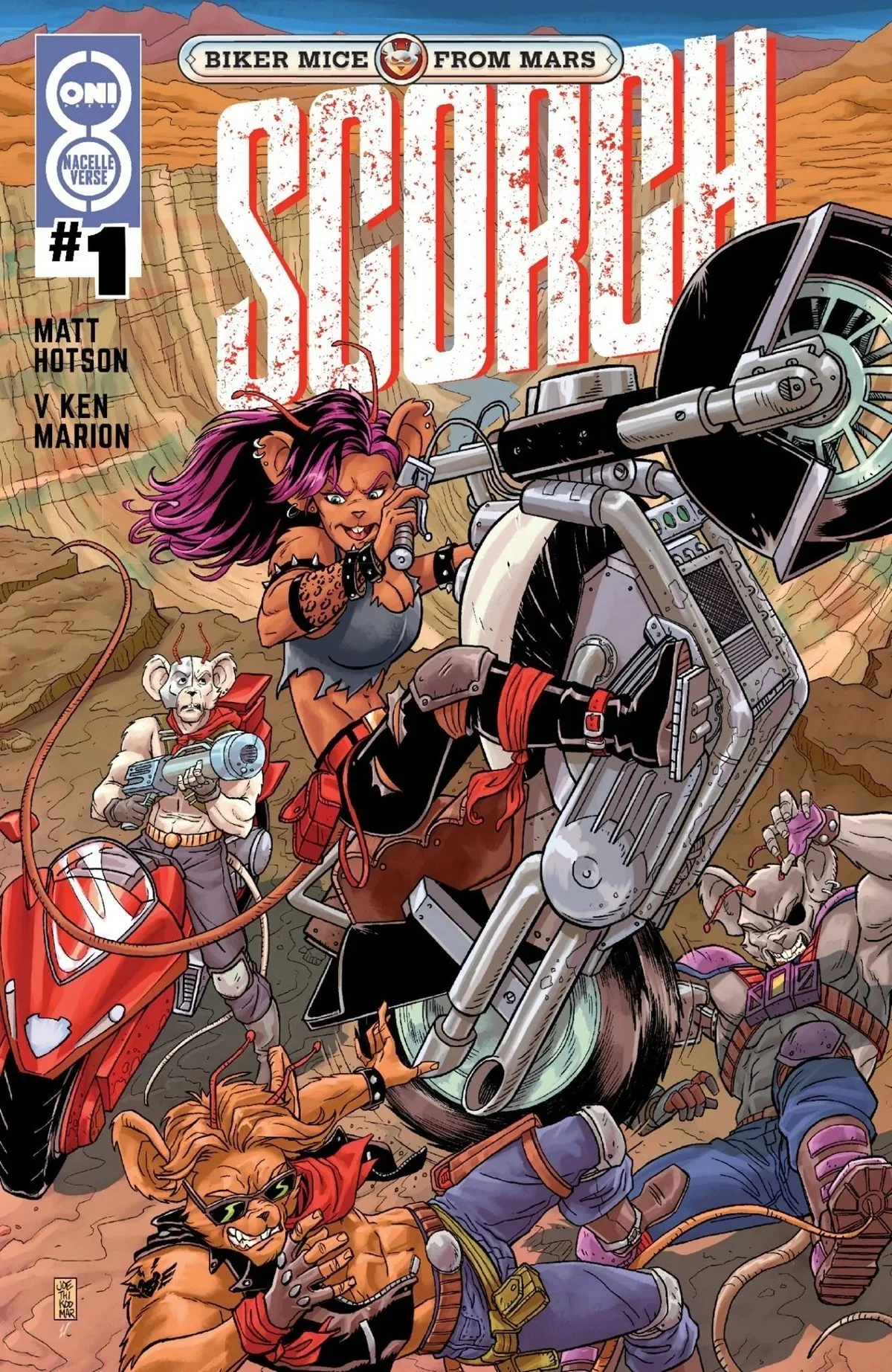
Now, as the cultural appetite for 90s nostalgia hits a fever pitch, those leather-clad freedom fighters are shifting gears into a new medium. In a strategic partnership between Oni Press and the Nacelle Company—the creative powerhouse behind the acclaimed documentary series The Toys That Made Us—the Biker Mice are set to return in an explosive new four-issue comic book miniseries. Titled Biker Mice from Mars: Scorch, this series promises to not only reignite the franchise but to introduce a pivotal new character who will bridge the gap between the printed page and a forthcoming animated reboot.
The Core Facts: A New Chapter on the Red Planet
Biker Mice from Mars: Scorch is officially slated to hit comic book shelves on August 12. This four-issue limited series is designed to serve as a foundational narrative for the franchise’s modern iteration. By launching the character of Scorch in comic form before her debut in the new animated series, the creative team is mirroring the strategic rollout of the original 1993 series, which utilized a Marvel comic book launch to build momentum months before the television premiere.
The creative team behind this project is formidable. Matt Hotson, known for his work on Power Rangers: The Return, takes the lead as the series writer, while interior art duties are handled by V Ken Marion, whose dynamic, high-energy style—seen previously in DC Comics’ Nightwing—is perfectly suited for the kinetic, gravity-defying motorcycle combat that defines the property.
The series is not merely a nostalgia trip; it is an expansion of the Biker Mice mythology. The titular new character, Scorch, is described as a mysterious, hard-charging antihero whose connection to the established trio remains a central mystery. Whether she arrives as a potential ally or a devastating threat to the Red Planet remains to be seen, but the narrative stakes are clearly positioned to be higher than ever.
Chronology: From 1993 to the Modern Era
To understand the weight of this revival, one must look back at the franchise’s unconventional origins.
The 1993 Genesis
Created by Rick Ungar, the original Biker Mice from Mars was a staple of the Fox Kids lineup. It debuted at a time when the “extreme” character trope was reaching its zenith. The show’s premise—Martian mice fleeing a war-torn home planet to protect Earth from the same bureaucratic, greedy Plutarkians who destroyed their own civilization—provided a surprisingly dark subtext hidden beneath leather jackets and heavy-metal soundtracks.

The Wilderness Years
Following the series finale in 1996, the property experienced several dormant periods punctuated by sporadic revivals. A short-lived reboot aired in 2006, attempting to modernize the animation and character designs, but it failed to capture the lightning-in-a-bottle success of the original series. For nearly two decades, the Biker Mice existed largely in the collective consciousness of “90s kids,” relegated to reruns and the secondary market for vintage action figures.
The Nacelle Era
The acquisition of the Biker Mice brand by The Nacelle Company signaled a change in strategy. Known for their meticulous attention to pop-culture history through The Toys That Made Us, Nacelle has positioned themselves as the stewards of 90s intellectual property. By partnering with Oni Press for a comic book launch, they are essentially “field-testing” the audience’s appetite and establishing the lore before the heavy lifting of the new animated series begins. This represents a sophisticated transmedia approach that was unavailable to creators in the early 90s.
Supporting Data: Why Now?
The return of Biker Mice from Mars is not occurring in a vacuum. It is part of a larger, systemic shift in the toy and entertainment industry toward “30th Anniversary” legacy revivals.
According to industry analysts, the “nostalgia economy” currently favors properties that can bridge the gap between adult collectors—who now have the disposable income to purchase high-end figures—and their children. The success of the Street Sharks 30th Anniversary line, also managed by Mattel, proved that there is a massive, untapped market for the “radical” aesthetics of the early 90s.
Furthermore, the comic book medium has become a vital proving ground for rebooted properties. By launching Scorch in August, the publishers are engaging in a low-risk, high-reward strategy. The comic allows the creators to experiment with tone and character depth in a way that television production budgets might not allow. If the comic succeeds, it provides a built-in fan base and a proven narrative roadmap for the upcoming animated show.
Official Perspectives and Creative Vision
The creative team has expressed a deep, almost reverent, commitment to the source material while acknowledging the need for evolution.
Matt Hotson, in a recent statement, emphasized the organic nature of the new character’s development. "We’ve had plans for the next chapter of the Biker Mice story for a long time," Hotson noted. "But Scorch had plans of her own. Whenever we thought the story was going one way, Scorch veered us in another direction."

This suggests that Scorch is not merely a supplementary character but a driving force in the narrative. Hotson’s description of her weapon of choice—a flamethrower-hammer—hints at the level of intensity readers should expect. The focus on her "never-before-revealed origin" indicates that the creative team is looking to fill in gaps in the franchise’s history, providing a richer, more serialized experience than the episodic adventures of the 90s series.
The visual component of the reveal has also generated significant buzz. The inclusion of an Akira-inspired variant cover by legendary artist Simon Bisley—famous for his work on Lobo—serves as a direct nod to the fans who grew up on the grittier, hyper-stylized comic art of the 90s. It is a calculated aesthetic choice that bridges the gap between the franchise’s past and its potential future.
Implications for the Franchise and the Industry
The launch of Biker Mice from Mars: Scorch carries several implications for both the franchise and the wider comic industry.
- Transmedia Integration: The most significant implication is the formalization of the “Comic-to-Screen” pipeline. By using the comic book as a prequel or a pilot of sorts, the producers are reducing the risk associated with the animated series. This model could become the gold standard for reviving defunct intellectual properties.
- The Evolution of the Antihero: The shift from the 90s “extreme” archetype to a more nuanced, character-driven story is essential for modern audiences. If Scorch is truly a character who defies the traditional “friend or foe” dichotomy, the series could elevate the Biker Mice from a simple action show to a more complex science-fiction drama.
- Market Sustainability: The success of this series will likely dictate the pacing of the new animated show. If the comic manages to reach beyond the nostalgic demographic and attract new readers, it validates the Nacelle Company’s broader strategy of reviving mid-tier 90s franchises.
- The Role of the Artist: By highlighting the contributions of industry veterans like V Ken Marion and iconoclasts like Simon Bisley, the series is positioning itself as a "prestige" book. This is a deliberate move to distance the property from the "cheap tie-in" label that often plagues licensed comic books.
Final Verdict: A Ride Worth Taking?
For those who spent their Saturday mornings watching the Biker Mice battle the Plutarkians, the return of the franchise feels like a long-overdue reunion. However, the success of Biker Mice from Mars: Scorch will depend on its ability to balance the inherent absurdity of the premise with a narrative that feels fresh and modern.
The inclusion of a mysterious new character, the high-profile artistic contributions, and the strategic timing all point toward a project that is being treated with genuine care. As the comic rolls into shops on August 12, it will represent more than just a trip down memory lane. It will be the first test of whether the Biker Mice can find their place in the modern landscape—or if they are better left in the rearview mirror of the 90s.
If the promise of the solicitation—a story that spans from the Martian open roads to the wastelands of Planet Plutark—holds true, then the Biker Mice may be set for their most daring adventure yet. For fans, the message is clear: lock your helmets and keep your engines running, because the Red Planet is calling once again.










No comments yet. Be the first to join the conversation!