

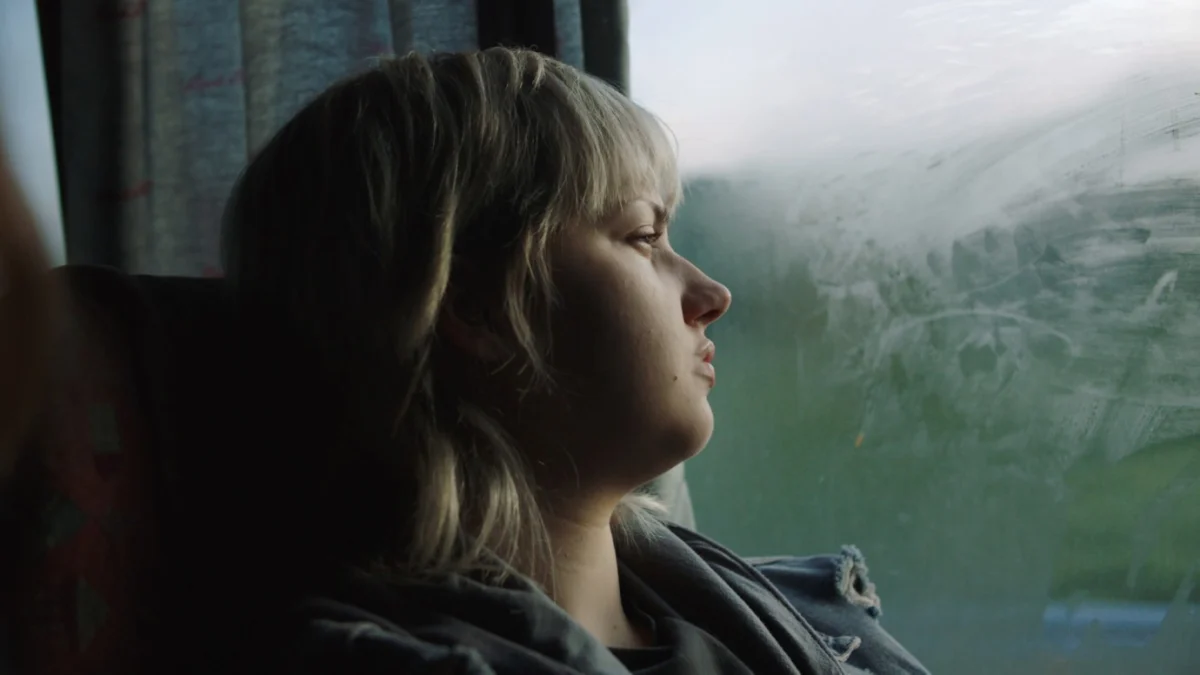
In the landscape of contemporary European cinema, few debut features arrive with the visceral, unrelenting force of Kosara Mitic’s 17. Premiering in the Berlinale’s Perspectives section and subsequently capturing the Best Actress prize at the Sarajevo Film Festival, 17 is a harrowing exploration of trauma, systemic silence, and the precariousness of coming of age in a culture where masculine entitlement often supersedes accountability. By eschewing the comforts of traditional narrative resolution, Mitic delivers a bracing, if at times punishing, portrait of a Macedonian high-schooler trapped in the aftermath of a life-altering assault.
The Architecture of Trauma: Main Facts and Premise
The film refuses to ease the audience into its central conflict. From its opening frame, 17 plunges viewers into the immediate, violent aftermath of a sexual assault involving Sara (Eva Kostić), a high-school student, and two of her peers. Rather than focusing solely on the forensic or legal fallout, the film pivots several months later, tracking Sara during a pivotal two-day class excursion to Greece.
The tension of the film is derived from a claustrophobic proximity: Sara must endure the trip alongside one of her assailants, Filip (Dame Joveski), who remains insulated by his social standing and the collective ignorance of their classmates. What follows is not a mystery, but a study in psychological endurance. Through the lens of cinematographer Naum Doksevski, whose use of jaundiced light and suffocating shadows transforms a mundane hotel stopover in Bitola into a purgatorial space, Mitic captures the physical and emotional weight of a secret that threatens to consume the protagonist from the inside out.
A Chronological Descent: The Anatomy of a School Trip
The narrative structure of 17 follows a tight, agonizing timeline. When the class arrives at their hotel, Sara is presented as a shell of herself, clad in baggy clothing that serves as armor against both the world and the growing, secret reality of her pregnancy. The setting—a chaotic, unrefined school trip—serves as a pressure cooker.
The trip begins with the friction of adolescence: teachers who have surrendered their authority to the whims of entitled students, and a social hierarchy that demands conformity. Sara’s situation is complicated further by the indignity of a hotel management blunder, which forces her into a room with her friend Lina (Martina Danilovska) and her former best friend, Nina (Eva Stojcevska).
As the trip progresses toward the Greek border, the film’s "don’t-ask-don’t-tell" atmosphere intensifies. Filip’s presence is a constant, looming threat. His behavior—apish, aggressive, and shielded by the complicity of his peers—is contrasted against the teachers’ gross resignation to student misconduct. The journey acts as a literal and metaphorical transition; the border checkpoint, looming in the final act, becomes the ultimate crucible where Sara must decide whether to continue burying her trauma or to finally bring it to the surface, regardless of the social cost.
The Performance of Pain: Supporting Data and Craft
At the core of the film’s success is the breakout performance of Eva Kostić. Her portrayal of Sara is defined by a "coiled rage" that simmer beneath a surface of frayed reticence. Kostić’s ability to communicate the exhaustion of a survivor—the "veteran soldier" look she gives those who misunderstand her behavior—is what anchors the film’s bleakest moments.
Comparisons have been drawn to other festival standouts like La Gradiva, which also utilizes fluid, restless camerawork to expose the anxieties of a group on a foreign excursion. However, 17 differentiates itself through its uncompromising aesthetic. While La Gradiva captures the frantic energy of youth, 17 captures the decay of it. The reliance on nonprofessional actors adds an uncomfortable layer of authenticity to the ensemble, particularly in the scenes depicting the toxic, yappy entitlement of the students.
Technically, the film is a masterclass in mood. Doksevski’s cinematography is not merely a tool for observation but a narrator in its own right. The jaundice-tinted lighting of the hotel interiors underscores the sickness at the heart of the school’s culture, suggesting that the rot is not just within the individuals, but within the environment itself.
Societal Echoes: Masculine Privilege and the Culture of Silence
The script, co-written by Mitic and Ognjen Sviličić, serves as a scathing critique of Eastern European social dynamics. The film explicitly tackles the "culture of shame" that forces victims of sexual violence into silence. Through the interactions between the girls, the film illustrates how peer pressure—and the fear of slut-shaming—functions as a mechanism of control, ensuring that the "cruel code of silence" remains unbroken.
The character of Filip represents a form of unchecked masculine privilege that is both sociopathic and systemic. In one of the film’s most jarring sequences—a violent assault on a hotel worker in full view of partying classmates—Mitic highlights the collective paralysis of the group. The teacher’s comment, suggesting that the students should behave because Greece is a "civilized country with real rules," functions as a biting piece of irony. It suggests that the violence inherent in these young men is seen as a byproduct of their "uncivilized" home environment, rather than a symptom of a broader, more pervasive patriarchal structure that rewards cruelty.
Implications: The Moral Crossroads
The implications of 17 extend far beyond the borders of Macedonia. The film forces the audience to consider the cost of silence. As the reality of her pregnancy presses upon her "body and soul," Sara’s journey becomes one of reclaiming agency.
There are brief, fragile moments of respite: a moment of tenderness with an outcast classmate, and the slow-building solidarity between Sara and the guileless Lina. These moments, while small, act as a counterweight to the prevailing despair of the film. They represent the possibility of connection in a world designed to isolate the victim.
The final scene, set at the border, is a tour de force of tension. It is a symbolic crossroads where the "brazing, breath-held" conclusion leaves the viewer with an open question. Mitic does not provide an easy redemption arc or a cathartic legal triumph. Instead, she presents the raw, terrifying, and necessary act of a survivor deciding that her truth is more valuable than the comfort of her abusers.
In conclusion, 17 is a profound, if difficult, watch. It is a film that refuses to be ignored, utilizing the medium of cinema to hold a mirror up to a society that often prefers to look away. Through its unflinching gaze, expert performances, and sharp socio-political commentary, it cements Kosara Mitic as a vital new voice in international cinema. It is a stark reminder that when the system fails to protect the vulnerable, the only path to survival is often the most dangerous one: speaking the truth, regardless of the consequences.










