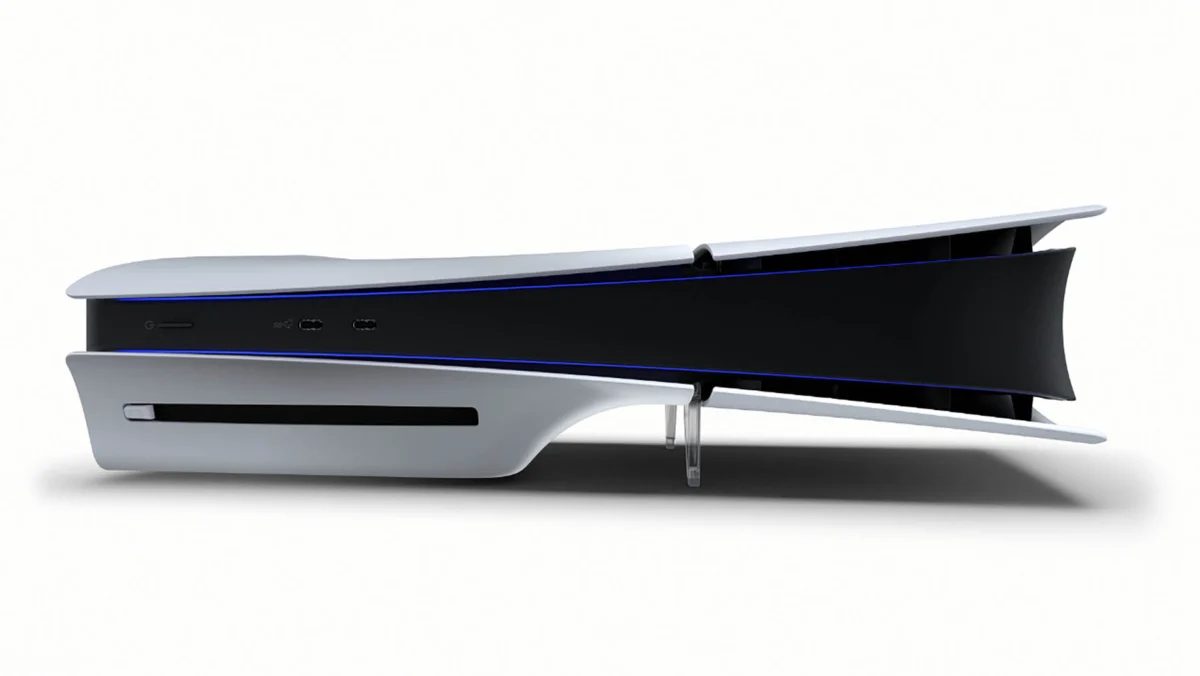
In an era of economic volatility and shifting consumer behavior, Sony Interactive Entertainment (SIE) finds itself at a critical crossroads. Despite mounting evidence of a substantial cooling in hardware demand, the tech giant remains steadfast in its commitment to a premium pricing strategy for the PlayStation 5. During a recent investor Q&A session, Sony leadership addressed the elephant in the room: the disparity between the company’s internal growth projections and the harsh reality of plummeting retail sales.
While Sony maintains that the PS5’s current market position is sustainable, analysts and industry observers are sounding the alarm. As the console enters the latter half of its lifecycle, the friction between rising manufacturing costs and shrinking consumer discretionary spending is creating a complex narrative for the gaming titan.
The Core Conflict: Profitability vs. Market Reach
The primary tension driving Sony’s current corporate strategy is the fundamental conflict between hardware profitability and market penetration. For years, the standard industry model for console gaming involved selling hardware at a loss (or at cost) to capture a massive install base, which would then be monetized through software sales, digital storefront transactions, and subscription services.
However, Sony’s recent disclosures suggest a pivot in philosophy. The company explicitly stated that it is "not realistic" to continue absorbing the rising costs of semiconductors, logistics, and raw materials internally. Consequently, the burden has been shifted directly to the consumer, with the base price of the PlayStation 5 climbing to $650 in various global markets.
Sony insists that this strategy is a necessary defensive measure against macroeconomic pressures. By refusing to sacrifice hardware margins, the company aims to insulate its balance sheet from inflation. Yet, this decision risks alienating the very audience Sony relies on to fuel its lucrative ecosystem of first-party exclusives and digital services.
Chronology of Price Escalation
The journey to the current $650 price point was not an overnight shift, but rather a calculated series of adjustments that began to manifest in the post-pandemic economic landscape.
- Late 2022: Facing supply chain bottlenecks and inflationary pressures, Sony announced its first major regional price hikes for the PS5, marking a significant departure from the historical trend of console prices dropping over time.
- 2023–2024: As component costs fluctuated, Sony introduced localized adjustments across Europe, Asia, and North America. The company cited the "global economic environment" and the strength of the US dollar as primary drivers for these, often unpopular, decisions.
- Mid-2025: Sony shifted its focus toward hardware "value," introducing hardware iterations that balanced cost-cutting in manufacturing with higher retail price points, ostensibly to ensure the sustainability of the hardware division.
- June 2026: In the most recent investor briefing, Sony executives addressed the "long-term costs" associated with the eventual PlayStation 6, doubling down on the stance that hardware must be self-sustaining, effectively signaling that the era of aggressive "loss-leader" pricing for PlayStation consoles may be coming to an end.
The Data Gap: When Internal Optimism Meets External Reality
The most striking aspect of Sony’s recent investor presentation is the disconnect between the company’s official outlook and the actual market data. Sony executives maintained that sales performance remains "in line with expectations," yet the numbers paint a starkly different picture of the current console market.
Domestic Decline
In the United States, the world’s most significant gaming market, the data is particularly sobering. Recent industry tracking reports indicate that for the month of May 2026, the PlayStation 5 recorded its weakest performance in terms of unit sales since the turn of the century. The figures are startling:
- Year-over-Year Unit Sales: A 58% decrease.
- Total Consumer Spending: A 43% contraction.
These figures represent more than just a seasonal dip; they suggest a fundamental shift in consumer sentiment. If a console in its prime is seeing a nearly 60% decline in unit movement, it indicates that the hardware has likely reached a saturation point among "early adopters" and "core gamers," and the current price point is effectively barring the mass market from entry.
The UK Market Snapshot
The trends observed in the United States are mirrored in the United Kingdom. Sales in the region plummeted by approximately 50% during the same May period. Perhaps most concerning for Sony is the narrowing gap between the PS5 and Microsoft’s Xbox Series X|S. While the PS5 remains the market leader, the rapid deceleration of its sales trajectory brings it uncomfortably close to its direct competition, suggesting that the "console war" in the current generation is being decided more by price sensitivity than by exclusive software quality or platform loyalty.

Official Responses and Strategic Rationale
Sony’s defense of its pricing model rests on three pillars: value proposition, cost management, and long-term ecosystem health.
During the Q&A, Sony representatives were quick to highlight that the PS5 still offers a "premium experience." They argue that the console’s technology, including its proprietary SSD architecture and high-fidelity graphical capabilities, justifies the premium price tag. Furthermore, the company emphasized that it continues to "monitor market conditions," implying that future price adjustments remain on the table should the economic landscape shift.
However, the tone of the response was notably firm regarding the potential for price cuts. By signaling that hardware profitability is non-negotiable, Sony is effectively telling investors that they should not expect a return to the aggressive price-slashing tactics of the PS3 or PS4 eras. Instead, the company seems to be betting on the idea that the "PlayStation brand" is resilient enough to withstand price increases without suffering a catastrophic loss in market share.
Implications for the Industry and the Future of PlayStation
The implications of Sony’s current strategy are profound, not just for the PS5, but for the trajectory of the entire gaming industry.
1. The Death of the Loss-Leader
If Sony successfully maintains high hardware prices without a total collapse in sales, it could set a precedent for the entire industry. Competitors like Microsoft and Nintendo may feel emboldened to move away from low-margin hardware models, leading to a permanent increase in the cost of entry for console gaming.
2. Pressure on Software and Services
With hardware growth slowing, Sony’s focus will inevitably shift even more aggressively toward software and subscription services like PlayStation Plus. If the hardware install base stops expanding, the only way to increase revenue is to extract more value from existing users. This could lead to more aggressive microtransactions, higher-priced first-party titles, and a greater reliance on "live service" games, which have historically been a point of contention for the PlayStation community.
3. The PlayStation 6 Outlook
The most critical implication concerns the upcoming hardware cycle. By establishing that hardware must be profitable, Sony is setting the stage for a very expensive PlayStation 6. If the company continues to prioritize its bottom line over broad market accessibility, it risks creating a "premium-only" gaming ecosystem, potentially leaving the door wide open for competitors who may choose to prioritize accessibility, such as handheld devices or cloud-based gaming solutions.
Conclusion
Sony Interactive Entertainment finds itself in a precarious position. While the company’s internal metrics suggest a level of stability, the external data serves as a stern warning that the current pricing strategy may be reaching its limit. The 58% year-over-year sales decline in the US is not a trend that can be ignored indefinitely.
As the industry watches to see how the holiday season unfolds, the question remains: Can Sony continue to demand a premium for its hardware, or will the weight of economic reality eventually force a strategic retreat? For now, the company is doubling down on its commitment to profit, betting that the value of the PlayStation brand is sufficient to override the rising cost of play. Only time—and the next round of quarterly earnings—will reveal if this gamble will pay off or if Sony is alienating the very fans who built the PlayStation empire.