Rifan Muazin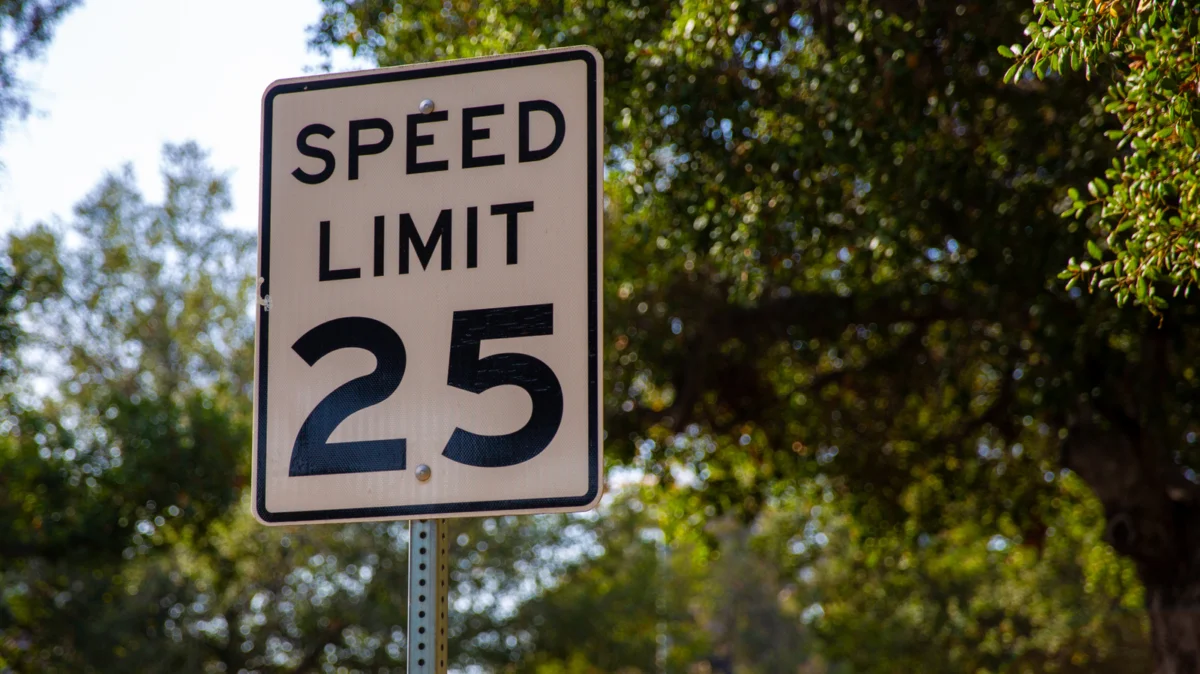
In the quiet corners of suburban neighborhoods, frustration often reaches a boiling point. Whether it’s commuters taking shortcuts to avoid rush-hour traffic or delivery drivers rushing to meet deadlines, the sight of vehicles speeding past residential driveways is a common grievance. For many homeowners, the instinct is to take direct action. A quick search on e-commerce platforms like Amazon reveals a plethora of official-looking, reflective speed limit signs available for purchase.
However, before you grab a hammer and a post-hole digger, it is vital to understand that installing your own traffic signage is not merely a nuisance—it is frequently illegal and potentially dangerous. While your intentions may be rooted in public safety, the unauthorized installation of traffic control devices undermines a complex, federally regulated system designed to keep roads predictable and safe.
The Legal Reality: Who Owns the Road?
The fundamental rule of traffic management is simple: the government, not the individual, dictates the rules of the road. Speed limit laws in the United States have a lineage tracing back to the dawn of the automotive age, with the first recorded speed limit in the U.S. appearing in 1901 in Connecticut. Since that time, the authority to regulate speed has been firmly held by state and local transportation agencies.
On any public road—whether it is a bustling state highway or a quiet cul-de-sac—the right to erect signage is exclusive to the governing body with jurisdiction over that thoroughfare. This includes municipalities, counties, and state departments of transportation. Even if you are the president of your Homeowners Association (HOA), you generally lack the legal standing to post official-looking speed limit signs on public streets.
The Dangers of Unauthorized Signage
When a private citizen installs a homemade speed limit sign, they are creating a "distraction" rather than a solution. Official traffic signs follow strict mandates regarding reflectivity, font size, placement height, and material durability as outlined in the Manual on Uniform Traffic Control Devices (MUTCD). These standards ensure that drivers can process information at high speeds without confusion.
A store-bought sign that does not meet these federal standards can create visual clutter. Worse, if a driver relies on a fake sign and is involved in an accident—or if the sign itself obscures a legitimate warning sign or blocks a line of sight at an intersection—the installer could face significant civil liability. In many jurisdictions, unauthorized signage is classified as a public nuisance or even a misdemeanor, subject to removal by the city and potential fines for the homeowner.
How Speed Limits Are Scientifically Established
Speed limits are not plucked from thin air; they are the result of rigorous engineering studies. According to the Federal Highway Administration (FHWA), local transportation agencies determine speed limits based on a variety of technical factors.
The Engineering Study Process
The primary method for determining a speed limit is the "85th percentile speed" study. Engineers measure the speed at which 85% of traffic travels under free-flowing conditions. The theory is that the vast majority of drivers are reasonable and will choose a speed that feels safe for the road’s design. By setting the speed limit at or near this percentile, the law aligns with the natural flow of traffic, which significantly reduces the risk of collisions caused by drivers moving at vastly different speeds.
Other factors included in these assessments are:
- Roadway Geometry: The number of curves, hills, and intersections.
- Collision History: Data regarding past accidents and the causes behind them.
- Pedestrian and Cyclist Volume: Areas with high foot traffic, such as schools or parks, may see lower limits despite the road’s design.
- Roadside Development: Driveway density and the proximity of homes to the road.
This is why, when you cross a state line or move from a rural county to an urban city center, the speed limit changes. It is a dynamic, localized decision-making process that requires professional expertise.
Supporting Data: The Prevalence of Speeding
The urgency felt by homeowners is backed by sobering statistics. The AAA Foundation for Traffic Safety reports that approximately 36% of drivers admit to exceeding the speed limit by at least 10 mph on residential streets. This behavior is particularly prevalent among younger male drivers.
Furthermore, data suggests that a significant percentage of accidents occur within close proximity to a driver’s home. This is often attributed to "complacency bias"—a psychological state where drivers feel so comfortable in their own neighborhood that they let their guard down, ignoring the very real risks of children playing, pets crossing, or vehicles pulling out of driveways. With nearly 30% of all crash fatalities involving speed-related factors, the frustration of residents is valid, even if the method of addressing it is misguided.
Navigating the Bureaucracy: Official Channels for Change
If you are convinced that the speed limit on your street is inherently dangerous, you are not without recourse. However, the path to change requires patience and civic engagement rather than a DIY hardware store trip.
Step 1: Document Your Concerns
Before approaching local government, gather evidence. Keep a log of near-misses, observe times of day when speeding is most frequent, and if possible, petition your neighbors to sign a document expressing a shared concern.
Step 2: Request a Traffic Study
Contact your local Department of Public Works or City Engineering Department. Formally request a traffic safety assessment. Explain that you believe the current speed limit does not reflect the current usage of the street. The municipality will then conduct their own study to determine if a speed limit reduction or the installation of traffic-calming measures—such as speed humps, traffic circles, or electronic speed feedback signs—is warranted.
Step 3: Utilize "Children at Play" Signage
While standard speed limit signs are strictly regulated, many municipalities allow for the installation of "Children at Play" or "Watch for Pedestrians" signs. Unlike speed limits, these are often categorized as "cautionary" signs. However, even these must be requested through your local government; you cannot simply bolt one to a utility pole on your own.
Implications and Final Thoughts
The desire to protect one’s neighborhood is a noble instinct. However, the rule of law exists to ensure that our public infrastructure remains predictable and legally defensible. When individuals take it upon themselves to "regulate" traffic, they introduce ambiguity into a system that relies on consistency to function.
If an unauthorized sign leads to a driver slamming on their brakes, causing a rear-end collision, or if it confuses a driver who then fails to notice a legitimate stop sign, the consequences fall squarely on the homeowner who installed it. Beyond the legal ramifications, the effectiveness of "fake" signs is statistically negligible. Drivers who habitually speed are rarely deterred by store-bought placards; they are, however, deterred by physical traffic-calming infrastructure or the presence of law enforcement.
If you find that vehicles are consistently endangering your street, engage with your local representatives. Attend city council meetings, present your data, and advocate for professional traffic-calming solutions. By working within the system, you turn your frustration into effective, legal, and truly safer streets for everyone.


 Raul Delapena Setiawan
 Asep Darmawan